Infectious diseases pose growing threats to wildlife populations, yet baseline data on pathogen presence in reptiles are lacking. Moreover, snakes may be particularly understudied in the context of disease because their cryptic behavior and low detectability can limit our ability to assess pathogen prevalence and effects. Reptile disease surveillance is increasing, but given the diversity of habitats occupied by reptiles, more studies across diverse habitats are needed. We conducted pathogen surveillance of free-ranging snakes at Tall Timbers in the Red Hills region of Florida, a fire-managed ecosystem, to establish baseline prevalence and evaluate potential host and habitat associations. Using drift-fence arrays across upland pine, old-field, and bottomland forest habitats, we sampled 120 snakes during the 2024 and 2025 field seasons and screened swabs and fecal samples for Ophidiomyces ophidiicola, Cryptosporidium serpentis, and Raillietiella orientalis using quantitative PCR. Nineteen individuals tested positive for O. ophidiicola, mostly at trace levels, whereas C. serpentis and R. orientalis were not detected. Detections occurred primarily in Southern Black Racers (Coluber constrictor) and Florida Cottonmouths (Agkistrodon conanti). Overall, our results indicate low pathogen presence and establish an important regional baseline for future monitoring. Our findings suggest that patterns of pathogen detection observed in this actively managed, frequently burned system may be influenced by land-management practices; however, we did not directly compare these patterns with those in unmanaged systems, and additional study is warranted.
This Wildlife of Florida Factsheet is one in a series of publication that were created to provide the public with a quick and accurate introduction to Florida's wildlife, including both native and invasive species. We hope these factsheets inspire people to investigate wildlife in their own backyard and communities to understand the amazing biodiversity of wildlife in the state of Florida.
This publication summarizes general knowledge about the greenhouse frog, a species introduced and established in the United States. Our target audience is primarily homeowners in Hawaii and Florida where the greenhouse frog is most common, but residents in other Southeastern states will also find this publication useful. Greenhouse frogs have been documented in several other states in this region and continue to expand their range. Homeowners usually encounter greenhouse frogs in their gardens and among potted plants, and sometimes in their swimming pools when the frogs fall in. Curious people then seek information on the frog’s identity. Our goals are to provide tips on greenhouse frog identification, to show the frog's geographic range in the United States, and to describe its biology and known or potential impacts.
Wildlife living within human-dominated and/or modified landscapes may explore and use unconventional habitats. Our study investigates the overlooked potential of stormwater sewer systems (SSSs) as habitat for two urban-dwelling species: raccoons (Procyon lotor) and southeastern myotis bats (Myotis austroriparius). Here we focus specifically on the construction-based factors that most greatly affect the occupancy of these two species within the SSS of Alachua County, Florida. With many vertebrates using SSSs for movement, foraging, and roosting, knowing what factors influence a system’s usability is important when designing urban corridors. Our findings suggest that raccoon occupancy in SSSs was most closely related to the proximity to the nearest exit, while bats seem to select roosting sites based on the level of impervious surface aboveground. Raccoons have a preference to remain near an exit suggesting that their presence in SSSs may be exploratory or constrained by food or light availability. Southeastern myotis prefer limited impervious surface disturbance aboveground, potentially because of reduced noise pollution, aiding in roosting site preference, or resource availability. We use these findings to discuss ways that construction design and stormwater management can be more wildlife friendly.
Movement is a key driver of population dynamics. Movement ability and propensity often vary among populations and individuals. These differences may be particularly strong in aquatic species, where the ability to move within a site is not necessarily correlated to the ability to move between sites. In periods of range expansion, these differences can lead to non-equilibrium dynamics, whereby more mobile phenotypes arrange themselves spatially. This can be even more pronounced when dispersal success is nonrandom with respect to a heritable trait, thus acting as an agent of selection. This process-dubbed spatial sorting-can be particularly pronounced in non-native species, often hastening the speed of invasion spread. However, before spatial sorting occurring, there must first be individual differences in traits that confer greater movement success. Recently, a high-density breeding and expanding population of the non-native pipid frog, Xenopus tropicalis, in west-central Florida, offering a great opportunity to test whether movement success is predicted by individual differences in morphology or locomotor capacity. To test this, we compared the morphology, maximal exertion capacity, and jumping performance of movers and residents. We found that relative to residents, movers had longer hindlimbs, wider ilia, and traveled for greater time intervals before reaching exhaustion. These results suggest functional morphological and physiological traits are important in determining inter-site movement success.
Siendo uno de los reptiles más grandes Norteamérica, los caimanes se encuentran en la cima de la cadena alimenticia. En general, los caimanes no representan una amenaza para las personas. Sin embargo, en ciertas situaciones pueden ser un peligro tanto para personas como para mascotas. En esta publicación presentamos algunos datos sobre los caimanes, describimos los posibles riesgos que representan y ofrecemos sugerencias sobre cómo manejar estos riesgos. La audiencia objetivo de este artículo incluye a todas las personas que viven o visitan las áreas geográficas donde habitan los caimanes americanos.
As one of the largest reptiles in North America, alligators are situated at the top of the food chain. In general, alligators do not pose a threat to people. However, alligators can pose potential dangers to people in some situations. In this publication, we present some facts about alligators, describe their potential threats to people and pets, and provide suggestions on how to cope with these risks. Our target audience includes anyone living in or visiting the geographic range of American alligators.
Thermal tolerance data are important for identifying the potential range of non-native species following introduction and establishment. Such data are particularly important for understanding invasion risks of tropical species introduced to temperate climates and identifying whether they can survive outside tropical regions. A breeding population of the tropical clawed frog (Xenopus tropicalis) was recently discovered in west-central Florida, U.S.A. This fully aquatic species is native to the rainforest belt of west Africa and has not been documented outside its native range. Because of the lack of invasion history, data are sparse on the thermal limits for this species. We used chronic lethal and critical thermal methodologies to investigate thermal tolerance on adult stages and critical thermal methods on tadpoles. Because of our use of both chronic and critical methodologies, we also examined the literature to reveal common methods used to investigate thermal minimum and maximum temperature in amphibians, which were found to be dominated by the critical maximum. Chronic lethal temperatures for adult X. tropicalis were 9.73°C and 36.68°C. Critical temperatures were affected by acclimation temperature and life stage; adults were more tolerant of extreme temperatures. Based on these critical thermal data and the fact that breeding tends to occur when temperatures are suitable for survival, tadpole stages are unlikely to be affected by extreme temperatures. Instead, range expansion in Florida will likely be limited by the adult stages. Our findings indicate that the tropical clawed frog could occupy much of southern Peninsular Florida and other tropical and subtropical regions worldwide.
La forma más efectiva de proteger a los niños de la mordedura de serpientes es simplemente evitar que interactúen con ellas. En este documento se recomiendan medidas que pueden tomar las escuelas para prevenir el ingreso de serpientes a la propiedad escolar. Además se ofrecen algunas ideas para desarrollar programas educativos sobre estos reptiles y para entrenar a los niños sobre qué hacer si se encuentran con una serpiente en su escuela o en otro lugar. Se incluye un programa educativo breve que los maestros pueden utilizar con los estudiantes.
Esta publicación resume el conocimiento general sobre el tegu Argentino blanco y negro (Salvator merianae) en Florida. Es parte de una serie de publicaciones similares sobre reptiles establecidos en el estado. Este documento está dirigido a una audiencia general.
Species of Pterygodermatites are spirurid nematodes that have expanded their geographic distribution worldwide. They infect a variety of mammalian definitive hosts with few reports of potential paratenic infections in amphibian and reptile hosts. In this study, we report Pterygodermatites sp. larvae identified in free-ranging, invasive Cuban treefrogs (Osteopilus septentrionalis), from central Florida, United States. Encysted larvae were recovered from the skeletal muscle and/or the coelomic cavity of three frogs; molecular characterization of the small subunit (18S) ribosomal RNA and cytochrome oxidase I genes of the parasites matched reported sequences of Pterygodermatites (Mesopectines) whartoni (Tubangui, 1931). This is a parasite native to Southeastern Asia and to the best of the authors’ knowledge, it is the first report of the species in the New World. The recovery of invasive Pterygodermatites from invasive Cuban treefrogs in North America highlights the growing concern regarding the potential impact non-native parasites and invasive species may have on native wildlife populations.
Nectarivory has independently evolved about 30 times within birds, yet little is known about the nectar-feeding mechanisms used by these very different types of birds. Multiple groups have relatively long bills and tube-like tongues hypothesized to be adaptations for nectar extraction. Sunbirds are the group that exhibits the largest bill and tongue convergence with the well-studied hummingbirds. Using microCT scans we characterize the details of the sunbird feeding apparatus and using high-speed video experiments we describe their nectar-feeding mechanism. Sunbirds collect nectar through their bi-cylindrical tongues reciprocating them around 9 times per second. Multiple lines of kinematic evidence and further fluid dynamics modeling indicate that sunbirds use a unique drinking mechanism not found in any other bird: suction feeding through the tongue. These findings are consistent across a wide sampling of sunbird species from the geographical extremes of their range, implying that these mechanics are shared by the entire Nectariniidae family. Our findings describe a heretofore undescribed feeding mechanism in vertebrates, suction through the inside of the tongue, and sets the stage for investigating the physical limitations imposed by flowers and fluid dynamical effects of different nectar types in the flowers that sunbirds visit in nature.### Competing Interest StatementThe authors have declared no competing interest.
Urban landscapes are expanding, increasing the wildland-urban interface and leading to more frequent wildlife-human conflict. This publication discusses how to reduce conflict venomous snakes. We first discuss the ecological benefits of these species and then provide suggestions on how to limit conflicts with them. The overarching goal of this publication is to increase the likelihood of coexistence between humans and venomous snakes.
New Mexico is home to many incredible and unique landscapes inhabited by many equally incredible animals. Some of these animals, however, may be an unwelcome sight to many visitors and residents of the Land of Enchantment. Eleven venomous snakes and one venomous lizard call New Mexico home. This document presents information on identification, range, and natural history of the fascinating reptiles.
While biotic-abiotic interactions are increasingly documented in nature, a process-based understanding of how such interactions influence community assembly is lacking in the ecological literature. Perhaps the most emblematic and pervasive example of such interactions is the synergistic threat to biodiversity posed by climate change and invasive species. Invasive species often out-compete or prey on native species. Despite this long-standing and widespread issue, little is known about how abiotic conditions, such as climate change, will influence the frequency and severity of negative biotic interactions that threaten the persistence of native fauna. Treefrogs are a globally diverse group of amphibians that climb to complete life-cycle processes, such as foraging and reproduction, as well as to evade predators and competitors, resulting in frog communities that are vertically partitioned. Furthermore, treefrogs adjust their vertical position to maintain optimal body temperature and hydration in response to environmental change. Here, utilizing this model group, we designed a novel experiment to determine how extrinsic abiotic and biotic factors (changes to water availability and an introduced predator, respectively) interact with intrinsic biological traits, such as individual physiology and behaviour, to influence treefrogs' vertical niche. Our study found that treefrogs adjusted their vertical niche through displacement behaviours in accordance with abiotic resources. However, biotic interactions resulted in native treefrogs distancing themselves from abiotic resources to avoid the non-native species. Importantly, under altered abiotic conditions, both native species avoided the non-native species 33$$ 33 $$%-70%$$ 70\% $$ more than they avoided their native counterpart. Additionally, exposure to the non-native species resulted in native species altering their tree climbing behaviours by 56%-78%$$ 56\%\hbox{--} 78\% $$ and becoming more vertically dynamic to avoid the non-native antagonist. Our experiment determined that vertical niche selection and community interactions were most accurately represented by a biotic-abiotic interaction model, rather than a model that considers these factors to operate in an isolated (singular) or even additive manner. Our study provides evidence that native species may be resilient to interacting disturbances via physiological adaptations to local climate and plasticity in space-use behaviours that mediate the impact of the introduced predator.
Roads impact a disproportionately larger area than the land area that they occupy, often called the road effect zone. This effect extends to wildlife populations. Impacts on federally listed species include habitat loss and fragmentation, road mortality, the barrier effect, and the habituation effect. Per the Endangered Species Act, these impacts must be assessed before roadway impacts occur. This publication provides an overview of the potential impacts to 29 of Florida’s threatened and endangered animal species from roads. Potential mitigation options include road configuration, signage, speed limits, habitat protection, improved technology, wildlife fencing, and wildlife crossing structures. The goal is to educate transportation engineers and planners to allow for sustainable transportation infrastructure growth while protecting, conserving, and ultimately recovering Florida’s threatened and endangered species.
Florida is the global epicenter for introduced nonnative reptiles and amphibians. These include well-known species such as Burmese pythons and green iguanas as well as dozens of other species of snakes, lizards, and frogs. There are four species of nonnative frogs currently established in Florida. The purpose of this publication, a UF/IFAS numbered Organism ID., is to summarize the status, biology, and impacts of one of those frogs, the Cuban treefrog. The publication also presents strategies to manage Cuban treefrogs to help alleviate human conflicts and benefit native species. The main target audience is homeowners who suspect they have Cuban treefrogs on their property and/or need technical assistance dealing with these often-problematic frogs. Environmental educators, natural resource managers, and professional scientists will also find the information herein of interest.
Geological processes influence water chemistry and biological productivity along the Suwannee River and divide the mainstem of the river into 6 distinct ecological reaches ( ERs) in Florida. Because of these distinctions, we hypothesized that the Macrochelys suwanniensis (Suwannee Alligator Snapping Turtle) population varies among ERs. During 2011-2013, we sampled two 5-km sites in each ER to investigate spatial variation in relative abundance, sex ratio, size-class distribution, and body size of M. suwanniensis. Capture rates and male body sizes were greater in the middle ERs than in the upstream and downstream ERs. Sex ratios were male-skewed only in the middle ERs. Additional research is needed to understand the ecological drivers of M. suwanniensis population dynamics in this river.
 Monica McGarrity合作论文数26
 Miguel Acevedo合作论文数9
 Taegan A McMahon合作论文数Dept Biol, Univ Tampa8
 Martin B. Main合作论文数University of Florida8
 Jason Rohr合作论文数Department of Biological Sciences, College of Science, University of Notre Dame;Center for Rare and Neglected Diseases, University of Notre Dame;Berthiaume Institute for Precision Health, University of Notre Dame8Neal T. Halstead合作论文数8
 Thomas R Raffel合作论文数7
 Elizabeth A. Roznik合作论文数Department of Wildlife;Ecology and Conservation;University of Florida;Department of Wildlife, University of Florida7None Alejandra Areingdale合作论文数6C. Jane Anderson合作论文数6
 Lora L. Smith合作论文数Ecological Research Center6Gabriel J. Miller合作论文数5William J. Barichivich合作论文数5
 Natalie M Claunch合作论文数Corresponding author.4
 Lynn Martin合作论文数Department of Molecular Medicine, Morsani College of Medicine, University of South Florida4
 Mark Hostetler合作论文数Department of Wildlife;Ecology & Conservation;Southwest Florida Research and Education Center;Institute of Food and Agricultural Sciences;University of Florida;Assistant Professor;School of Forest Resources and Conservation;Cooperative Extension Service;Institute of Food;Department of Agriculture;Cooperative Extension Se;University of Florida, University of Florida4Jeffrey E. Hill合作论文数Aquaculture Laboratory;Institute of Food and Agricultural Sciences;University of Florida;Institute of Food and Agricultural Sciences, University of Florida4
 Basil V. Iannone合作论文数4Jennifer S. Staiger合作论文数4David Cuban合作论文数3
 Alejandro Rico Guevara合作论文数Department of Biology, University of Washington3
 John Romansic合作论文数3Suarez Eric合作论文数3
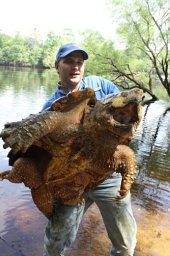 Thomas Travis M合作论文数Department of Wildlife Ecology &University of Florida, University of Florida;Email: travis.thomas@myfwc.com.;University of Florida, University of Florida3
 Kristine E Hoffmann合作论文数3Patrick W. Crumrine合作论文数Department of Biology, University of Kentucky3
 Kevin Enge合作论文数3
 Michael G. Andreu合作论文数School of Forest Resources and Conservation, University of Florida3Dennis L. Soden合作论文数3
 Raoul K. Boughton合作论文数Archbold Biological Station3
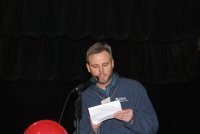 Todd Campbell合作论文数Utah State University3mary maguire合作论文数2erick f weiland合作论文数2Kenneth T. Gioeli合作论文数2Nina Thompson合作论文数2
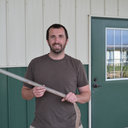 Colin Goodman合作论文数2Armando Ubeda合作论文数2Paige Borcyk合作论文数2Gay Donaldson-Fortier合作论文数2Walter Givens合作论文数2Kristin A. Loerns合作论文数2
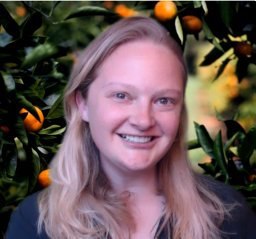 Shannon Carnevale合作论文数Inst Food & Agr Sci, Univ Florida2
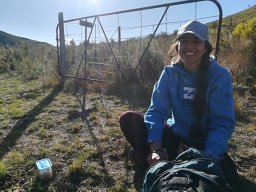 Carla Dodd合作论文数Inst Coastal & Marine Res CMR, Nelson Mandela Univ2Heather D S Walden合作论文数2
 Karena H Nguyen合作论文数Univ S Florida, Dept Integrat Biol, Tampa, FL 33620 USA2
 Justin Remais合作论文数School of Public Health, University of California, Berkeley2
 Christopher Michael Hoover合作论文数University of California2
 Susanne H. Sokolow合作论文数School of Veterinary Medicine, University of California2
 David J. Civitello合作论文数Department of Integrative Biology, University of South Florida;Department of Integrative Biology, University of South Florida2




