We discuss a successful intervention in the management of Internet infrastructure - a campaign which has achieved genuine traction against a cybercrime issue that has dogged the network engineering community for more than thirty years. Internet infrastructure is often characterised as beset by perverse incentives which frustrate the achievement of common goods - establishing fixes to deep design issues with Internet architecture involves communal action at scale which is hard to manage in a decentralised, competitive, and marketized ecosystem of providers. While much scholarship has sought to establish the incentives frustrating action against cybercrime and identify possible ways to alter these, in this case we observe a community acting to short-circuit them entirely. We develop the concept of infrastructural capital to explain how key actors were able to relocate the issue of spoofing away from the commercial incentive structures of a decentralised ecosystem of competing providers with little motivation to solve the issue and into the incentive structures of a far more densely networked and centralised professional community of network engineers. This extends previous work applying theory from infrastructure studies to cybercrime economies, developing a new account of how power can be asserted within infrastructure to achieve change, apparently against the grain of other long-standing incentives.
The targeted digital advertising infrastructures on which the business models of the social media platform economy rest have been the subject of significant academic and political interest. In this paper, we explore and theorise the appropriation of these infrastructures — designed for commercial and political advertising — by the state. In the U.K., public sector bodies have begun to repurpose the surveillance and messaging capacities of these social media platforms, along with the influencer economy, to deliver targeted behaviour change campaigns to achieve public policy goals. We explore how frameworks of behavioural government have aligned with Internet platforms’ extensive infrastructures and the commercial ecologies of professionalised strategic marketing. We map the current extent of these practices in the U.K. through case studies and empirical research in Meta’s Ad Library dataset. Although the networks of power and discourse within the ad infrastructure are indeed acting to shape the capacities of the state to engage in online influence, public bodies are mobilising their own substantial material networks of power and data to re-appropriate them to their own ends. Partly as a result of attempts by Meta to restrict the targeting of protected characteristics, we observe state communications campaigns building up what we term patchwork profiles of minute behavioural, demographic, and location-based categories in order to construct and reach particular groups of subjects. However, rather than a clear vision of a ‘cybernetic society’ of reactive information control, we instead find a heterogeneous and piecemeal landscape of different modes of power.
This paper conceptualizes an emerging model of algorithmic policing; 'influence policing'. This harnesses the affordances of Internet platforms to conduct domestic digital influence campaigns for crime prevention. These campaigns use sophisticated targeted messaging to directly 'nudge' behaviour and shape the culture of specific groups. By targeting people using micro-level behavioural, personal-interest and location-based data, influence campaigns aim to employ insights from behavioural psychology to prevent crime at a distance. We theorize this with an analysis of a dataset of more than 12,000 adverts and in-depth fieldwork with a dedicated police strategic communications team. Influence policing provides law enforcement with new capacities to craft and manicure hidden digital encounters with targeted publics, raising questions about its democratic character and police accountability.
Several scholarly studies and journalistic investigations have found that automated decision-making in welfare systems burdens claimants by forecasting their behaviour, targeting them for sanctions and surveillance and punishing them without revealing the underlying mechanisms driving such decisions. This article develops an analytical framework combining three areas of concern regarding automation: how it might introduce surveillance and social sorting, how it can entail the loss of human discretion, and how it requires new systems of governance and due process. This framework steers investigations into whether and how automated decision-making welfare systems introduce new harms and burdens for claimants. A case study on automation processes in Germany’s unemployment benefit service’s IT system ALLEGRO applies this approach and finds that this system does allow for broad human discretion and avoids some forms of surveillance, such as risk-assessments from historic data, though it nevertheless increases surveillance of claimants through sharing data with external agencies. The developed framework also suggests that concerns raised in one area – whether loss of human discretion, surveillance, or lack of due process – can be mitigated by attending to the other two areas and urges researchers and policy-makers to attend to the mitigating or reinforcing factors of each concern.
We have identified an emerging tool being used by the UK government across a range of public bodies in the service of public policy - the online targeted advertising infrastructure and the practices, consultancy firms, and forms of expertise which have grown up around it. This reflects an intensification and adaptation of a broader ‘behavioural turn’ in the governmentality of the UK state and the increasing sophistication of everyday government communications. Contemporary UK public policy is fusing with the powerful tools for behaviour change created by the platform economy. Operational data and associated systems of classification and profiling from public bodies are being hybridised with traditional consumer marketing profiles and then ‘projected’ onto the classification systems of the targeted advertising infrastructures. This is not simply a case of algorithms being used for sorting, surveilling, and scoring; rather this suggests that targeted interventions in the cultural and behavioural life of communities are now a core part of governmental power which is being algorithmically-driven, in combination with influencer networks, traditional forms of messaging, and frontline operational practices. We map these uses and practices of what we describe as the ‘Surveillance Influence Infrastructure’, identifying key ethical issues and implications which we believe have yet to be fully investigated or considered. What we find particularly striking is the coming-together of two separate structures of power - the governmental turn to behaviourism and prevention on one hand, and the infrastructures of targeting and influence (and their complex tertiary markets) on the other. We theorise this as a move beyond ‘nudge’ or ‘behavioural science’ approaches, towards a programme which we term ‘influence government’.
This paper explores, through empirical research, how values, engineering practices, and technological design decisions shape one another in the development of privacy technologies. We propose the concept of “privacy worlds” to explore the values and design practices of the engineers of one of the world’s most notable (and contentious) privacy technologies: the Tor network. By following Tor’s design and development we show a privacy world emerging—one centered on a construction of privacy understood through the topology of structural power in the Internet backbone. This central “cipher” discourse renders privacy as a problem that can be “solved” through engineering, allowing the translation and representation of different groups of imagined users, adversaries, and technical aspects of the Internet in the language of the system. It also stabilizes a “flattened,” neutralized conception of privacy, risking stripping it of its political and cultural depth. We argue for an enriched empirical focus on design practices in privacy technologies, both as sites where values and material power are shaped, and as a place where the various worlds that will go on to cluster around them—of users, maintainers, and others—are imagined and reconciled.
This paper explores conceptually and empirically the complex and multi-layered networks of interaction where personal data is shared across different platforms. This is explored through the vocabulary and tensions established by 'seamful' and 'seamless' design approaches and their limitations in allowing people to track the flow of personal data across complex assemblages of digital services. These ideas are explored using a participatory method to support the design of Inclusive Digital Services where a prototype of seamless service related to data reuse and sharing is co-designed to address friction, effort, risk and cost (FERC) inherent to third sector services. The conclusion suggests that we need to foster a new attitude towards the development of trust in human-computer interaction, this can be achieved by promoting the turn to privacy by design and addressing the gap between 'seamless' and 'seamful' design through participatory methods.
We describe the work of an Action Group on Governance and Ethics in assessing the use of a new Internet of Things (IoT) infrastructure in the University of Edinburgh. We review three use cases of IoT at the University in the context of a framework for ethical and responsible IoT that could be generalised to the University’s wider programme of data-driven innovation and to universities and research centres. We also explore a broader set of issues in ethical practice that reach beyond the boundaries of IoT in research and education.
Importance:Depressive disorders arise from a combination of genetic and environmental risk factors. Epigenetic disruption provides a plausible mechanism through which gene-environment interactions lead to depression. Large-scale, epigenome-wide studies on depression are missing, hampering the identification of potentially modifiable biomarkers. Objective:To identify epigenetic mechanisms underlying depression in middle-aged and elderly persons, using DNA methylation in blood. Design, Setting, and Participants:To date, the first cross-ethnic meta-analysis of epigenome-wide association studies (EWAS) within the framework of the Cohorts for Heart and Aging Research in Genomic Epidemiology (CHARGE) Consortium was conducted. The discovery EWAS included 7948 individuals of European origin from 9 population-based cohorts. Participants who were assessed for both depressive symptoms and whole-blood DNA methylation were included in the study. Results of EWAS were pooled using sample-size weighted meta-analysis. Replication of the top epigenetic sites was performed in 3308 individuals of African American and European origin from 2 population-based cohorts. Main Outcomes and Measures:Whole-blood DNA methylation levels were assayed with Illumina-Infinium Human Methylation 450K BeadChip and depressive symptoms were assessed by questionnaire. Results:The discovery cohorts consisted of 7948 individuals (4104 [51.6%] women) with a mean (SD) age of 65.4 (5.8) years. The replication cohort consisted of 3308 individuals (2456 [74.2%] women) with a mean (SD) age of 60.3 (6.4) years. The EWAS identified methylation of 3 CpG sites to be significantly associated with increased depressive symptoms: cg04987734 (P = 1.57 × 10-08; n = 11 256; CDC42BPB gene), cg12325605 (P = 5.24 × 10-09; n = 11 256; ARHGEF3 gene), and an intergenic CpG site cg14023999 (P = 5.99 × 10-08; n = 11 256; chromosome = 15q26.1). The predicted expression of the CDC42BPB gene in the brain (basal ganglia) (effect, 0.14; P = 2.7 × 10-03) and of ARHGEF3 in fibroblasts (effect, -0.48; P = 9.8 × 10-04) was associated with major depression. Conclusions and Relevance:This study identifies 3 methylated sites associated with depressive symptoms. All 3 findings point toward axon guidance as the common disrupted pathway in depression. The findings provide new insights into the molecular mechanisms underlying the complex pathophysiology of depression. Further research is warranted to determine the utility of these findings as biomarkers of depression and evaluate any potential role in the pathophysiology of depression and their downstream clinical effects.
Our previous study of the Open Content Film-making (OCF) community Revolution Postponed? Tracing the development and limitations of open content filmmaking, Information, Communication & Society, (10.1080/1369118X.2018.1464590) had shown how early expectations that Creative Commons (CC) licences would enable a viable alternative to mainstream film production, comparable to free/libre open source software (FLOSS), were challenged, in particular, by the difficulties experienced in establishing viable livelihoods with OCF. A narrative of the apparent failure of OCF may be premature, however. This paper reports on a subsequent study of how OCF practices became adopted as mundane elements in a film production and distribution system that itself has been, and continues to be, dramatically changed by digitisation. These developments broke down the dichotomy that had been drawn between existing commercial practices and visions of a new system of decentralised, non-proprietary, peer production. First, we show that OCF practices are conceptualised by our informants in relation to the mainstream independent film industry. Second, we account for how OCF tools and practices become adopted within the mainstream independent film production/distribution system. These observations highlight that limiting the scope of investigation (e.g., by only undertaking short term ?snapshot? studies, limited to particular settings or groups) may yield flawed interpretations based on narrow viewpoints and premature judgements. Instead, we flag the need to extend research ? both longitudinally and across a range of settings/viewpoints ? applying methodological templates from the Biography of Artefacts and Practices perspective (Hyysalo, 2010; Pollock & Williams, 2008).
Networked information technologies have brought about extensive changes in the production and distribution of creative cultural work. Inspired by the widespread success of Free-Libre/Open Source Software (FLOSS), many proponents of open access advocate reconceptualisation of existing legal protection frameworks in creative works. This paper traces the attempted appropriation of Creative Commons (CC) licences by filmmakers and the consequent formation of an Open Content Filmmaking (OCF) movement. OCF proponents articulated notions of technology-enabled transformation in content creation and distribution, similar to those that inspire the visions of FLOSS and CC advocates. It examines how these creators attempted to address the relevance of openness to their own activities and develop practical open models for filmmaking. Difficulties experienced in establishing viable livelihoods with OCF (as FLOSS developers had done), created tensions between those with a pragmatic or more ideological orientation. The initial vision of a consistent OCF movement, enabled by CC, thus became fragmented. In contrast to FLOSS, where many actors were able to find ways to develop sustainable careers within the industry while contributing to Open Source Software, such generic strategies have not readily emerged for OCF. Drawing insights from Sorensen's (1996) Social Learning framework (Learning technology, constructing culture. Sociotechnical change as social learning: University of Trondheim, STS working paper 18/96) in this paper we untangle the elaborate but often messy strategies deployed by Open Content Filmmakers (OCFs) and trace the multiple and often partial ways they have worked out to utilise CC elements and tools in producing, monetising and distributing their films.
Digital games are increasingly used in initiatives promoting personal empowerment and social inclusion (PESI) of disadvantaged groups. There is a lack of knowledge regarding best practices however. The literature on game-based learning insufficiently addresses the process and context of intervention and the diversity of contexts and intermediaries involved. This paper addresses this knowledge gap based on literature review, case studies, and expert consultation. The seven cases studied represent various application domains of empowerment and inclusion. Case studies were conducted using documentation and interviews, covering background and business case, game format/technology, user groups, usage context, and impact assessment. They provide insight into each case’s strengths and weaknesses, allowing for a meta-analysis of the important features and challenges of using digital games for PESI. This analysis was extended and validated in two expert workshops. Results show that a substantial challenge lies in selecting or designing a digital game that strikes a balance between enjoyment, learning and usability in the given use context. The particular needs of the target group and those that help implement the digital game intervention often require a case-specific approach. Projects benefit from involvement of intermediaries and target groups contributing to the game design. Furthermore, there is a need for interdisciplinary research to facilitate the use and development of game-based practice. Integrating game use in the operation of formal and informal intermediary support organizations increases the chances at reaching, teaching and empowering those at risk of exclusion. The teachers, caregivers and counselors involved in the implementation of a game-based approach should be supported through documentation, training and structural support.
The aim of this study was to explore the benefits of information and communication technologies (ICT)-based services for informal carers and paid assistants of older people living in the community. We cross-case analysed the effects of twelve initiatives in the EU, the USA and Canada, based on their individual analysis documented through interviews with promoters and a literature review. We carried out the cross-case analysis following a variables-oriented strategy on seven dimensions of impact at micro-, meso- and macro-levels: the quality of life of informal carers and paid assistants, quality of life of care recipients, quality of care, care efficiency and sustainability, acceptability, and infrastructure and accessibility. ICT-based services for informal carers and paid assistants improve the quality of life of older people and their carers and access to qualified care. They also generate savings which contribute to the sustainability of the care systems. These findings constitute a first look at the benefits of the use of ICT-based services for informal carers and paid assistants. Nevertheless, more research using experimental methods is needed to demonstrate the impact of these ICT-based services at meso- and macro-levels. This would help to support policy-makers to deploy these technologies for long-term care delivery.
The book focuses on Social Collective Intelligence, a term used to denote a class of socio-technical systems that combine, in a coordinated way, the strengths of humans, machines and collectives in terms of competences, knowledge and problem solving capabilities with the communication, computing and storage capabilities of advanced ICT. Social Collective Intelligence opens a number of challenges for researchers in both computer science and social sciences; at the same time it provides an innovative approach to solve challenges in diverse application domains, ranging from health to education and organization of work. The book will provide a cohesive and holistic treatment of Social Collective Intelligence, including challenges emerging in various disciplines (computer science, sociology, ethics) and opportunities for innovating in various application areas. By going through the book the reader will gauge insight and knowledge into the challenges and opportunities provided by this new, exciting, field of investigation. Benefits for scientists will be in terms of accessing a comprehensive treatment of the open research challenges in a multidisciplinary perspective. Benefits for practitioners and applied researchers will be in terms of access to novel approaches to tackle relevant problems in their field. Benefits for policy-makers and public bodies representatives will be in terms of understanding how technological advances can support them in supporting the progress of society and economy.
Introduction: Research acknowledges the relevance of social support and coping strategies to manage the pressure of care experienced by informal carers, where ICT-based services like telecare and telehealth can provide more effective and efficient support to individuals compared with traditional interventions. Nevertheless there is still little evidence of their benefits of these technological services for informal carers and on the factors associated with their successful development and transfer. Aims and objectives: The aim of this study was to study how the technologies for independent living of the elderly affect the informal carers, and to identify the policy role to develop and scale these technological services in the European Union. Methods: The methodology was to map the most relevant ICT-based initiatives existing in Europe to support informal carers of older people living in the community. We develop an impact assessment methodology that identified the most relevant factors of impact. We then carried out them an in-depth analysis of 5 selected good practices of telecare and telehealth in European countries to better understand the impact of such services. Moreover, we crossanalysed of 12 good practices of ICT based services for informal carers to identify the key success factors to develop such services. Results: We found that telecare and telehealth provide relief, independence and peace of mind for informal carers. This allows carers to have more active social lives and more time for themselves. These tools can guarantee a decreased in demand by carers and care recipients for support and care services. The research also evidenced that key issues for the success of telecare and telehealth is to articulate a multi-level policy framework based mainly on policy leadership, combination of funding programmes, and support of intermediaries (in particular the third sector). Conclusions: Telecare and telehealth are technologies for elderly people that can also benefit informal carers. Challenges still exist for their development, but a multi-level policy framework can help for the success.
Digital games are being increasingly used in initiatives to promote personal empowerment and social inclusion (PESI) of disadvantaged groups through learning and participation. There is a lack of knowledge regarding best practices, however. The literature on game-based learning insufficiently addresses the process and context of game-based practice and the diversity of contexts and intermediaries involved in PESI work. This paper takes an important step in addressing this knowledge gap using literature review, case studies, and expert consultation. Based on our findings, we formulate a set of best practices for different stakeholders who wish to set up a project using digital games for PESI. The seven cases in point are projects that represent various application domains of empowerment and inclusion. Case studies were conducted using documentation and interviews, covering background and business case, game format/technology, user groups, usage context, and impact assessment. They provide insight into each case’s strengths and weaknesses, allowing a meta-analysis of the important features and challenges of using digital games for PESI. This analysis was extended and validated through discussion at two expert workshops. Our study shows that a substantial challenge lies in selecting or designing a digital game that strikes a balance between enjoyment, learning and usability for the given use context. The particular needs of the target group and those that help implement the digital game require a highly specific approach. Projects benefit from letting both intermediaries and target groups contribute to the game design and use context. Furthermore, there is a need for multi-dimensional support to facilitate the use and development of game-based practice. Integrating game use in the operation of formal and informal intermediary support organiszations increases the chances at reaching, teaching and empowering those at risk of exclusion. The teachers, caregivers and counsellors involved in the implementation of a game-based approach, in turn can be helped through documentation and training, in combination with structural support.
 Robin A Williams合作论文数Institute for the Study of Science Technology & Innovation, School of Social and Political Science, University of Edinburgh16
 henrik ekeus合作论文数9
 Mark Wright合作论文数Liverpool Sch Art & Design, Liverpool John Moores Univ9
 Richard Coyne合作论文数Edinburgh School of Architecture and Landscape Architecture, The University of Edinburgh8Penny Travlou合作论文数School of Architecture and Landscape Architecture, Edinburgh College of Art, The University of Edinburgh6
 Ben Collier合作论文数Department of Computer Science and Technology, University of Cambridge5Roger Slack合作论文数5Lizzy Bleumers合作论文数IBBT-SMIT, Vrije Universiteit Brussel5
 Clara Centeno合作论文数5Dana Schurmans合作论文数4
 Ian Graham合作论文数Entrepreneurship And Innovation, Business School, University of Edinburgh4
 Jan Van Looy合作论文数iMinds MICT, Ghent Univ4
 Xiaobai Shen (沈小白)合作论文数Business School,University of Edinburgh,Edinburgh EH8 9AL,UK4
 Ilse Marien合作论文数IBBT SMIT, Vrije Universiteit Brussel4
 Daniel R. Thomas合作论文数Comp Lab, Univ Cambridge3
 Rob Procter合作论文数The Alan Turing Institute;Department of Computer Science, University of Warwick3Anissa All合作论文数3
 Gianluca Misuraca合作论文数European Commission, JRC-IPTS3
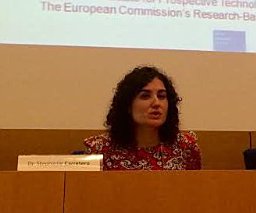 Stephanie Carretero合作论文数3Michael C Franklin合作论文数2
 Shane Horgan合作论文数2Evi Giannatou合作论文数2
 An Jacobs合作论文数Vrije Univ Brussel, IBBT SMIT, Brussels, Belgium2
 Gian Marco Campagnolo合作论文数Science, Technology and Innovation Studies, School of Social and Political Science, The University of Edinburgh2
 Koen Willaert合作论文数2Ed Tittel合作论文数Austin, TX2
 Daniele Miorandi合作论文数U-Hopper srl2
 Meik Poschen合作论文数2
 Frederik De Grove合作论文数iMinds Research Group for Media and ICT, Ghent University2H Newington合作论文数1lamontagnegodwin frederique合作论文数1
 Xiuqing Guo合作论文数The Lundquist Institute1Andrew Aftelak合作论文数1Soares Luis合作论文数1
 Alex Voss合作论文数1Michelle Luciano合作论文数1Louisa Well合作论文数1Olivera Story Jovanova合作论文数1K-H Ladwig合作论文数1Andrés Domínguez Hernández合作论文数1Brigitte Kühnel合作论文数1Brenton R Swenson合作论文数1Ivana Nedeljkovic合作论文数1Jennifer A Brody合作论文数Univ Washington, Dept Med, Cardiovasc Hlth Res Unit, Seattle, WA USA1Hongsheng Wu合作论文数Wentworth Inst Technol, Comp Sci & Networking, Boston, MA 02115 USA1
 Mark Winskel合作论文数Science, Technology and Innovation Studies, School of Social and Political Science, The University of Edinburgh1
 Morgan Currie合作论文数Science, Technology and Innovation Studies, School of Social and Political Science, The University of Edinburgh1




