Invasive species are currently a concern for fish conservation efforts in the eastern United States. As an example, consider the New and Potomac River drainages of West Virginia, where non-native fishes outnumber natives, and many species are considered as invasive, such as the Rainbow Darter. We examined the range expansions of the Rainbow darter populations in both river systems with an emphasis on comparison of invasion curve models, including a spatial assessment at sub-watershed scales. Similarities between the New and Potomac River drainages will be discussed, including a comparison between the Greenbrier and South Branch Potomac drainages, with emphasis on lag times, and exponential and asymptotic population growth. Documentation of changes in distribution ranges of the Rainbow Darter relative to invasive species concerns may inform management decisions for the New and Potomac River drainages.
Invasive species are often central to conservation efforts, particularly when concerns involve potential impacts on rare, endemic native species. The lower New River drainage of the eastern United States is a watershed that warrants conservation assessment, as the system is naturally depauperate of native fish species and it is nearly saturated with non-native fish species: there are 31 natives, including at least nine endemic taxa, and 63 non-natives. For endemic taxa, we examined temporal distribution shifts (range expansions or contractions) based on percent change in the occupied watershed area. We contrasted these findings with time series analyses on distribution trends of non-native minnows (Leuciscidae) and darters (Percidae) based on growth curve models of the cumulative sum of the total area of occupied 12-digit hydrologic unit codes. We documented range reductions for six of nine endemic taxa. We determined that 11 of 18 non-native minnows and 6 of 8 non-native darters were invasive based on range expansions and associated invasion curve models. The endemic taxa are of conservation concern given the limited distribution ranges and documented population declines. Although among-species comparisons of range shifts do not support causal inference, documentation of changes in distribution ranges of endemic and invasive species is critical to inform conservation efforts.
Designing aquatic nest boxes is rarely afforded detailed scientific account. Here we provide some historical context for nest boxes used in production of large-bodied fishes of the Australian freshwater cod genus Maccullochella. Our experience with eastern freshwater cod is used as a case study to: (a) convey aspects of the complexity of the nest box design process and to (b) demonstrate the importance of visual literacy in project communication across the variety of contributors to the eco-design process. Specifically, we describe a new, two-variant, triangular nest box design for application in rivers and modifications to a standard stainless steel nest box for hatchery-pond-based spawning of eastern freshwater cod M. ikei. We designed the boxes to test adult preference for single versus double entrance/exits to cavities in hatchery and field environments. An important consideration specific to hatchery production is harvesting demersal, adhesive eggs prior to hatching to minimise fungal infection of eggs and physical loss of larvae, in addition to providing critical first feeding of larvae. In contrast, field nest box design incorporated multiple factors and associated trade-offs related to both internal and external design, ranging from manufacturer capability, material types, cost, transportability, hydrological performance, biodegradability, retrievability, as well as biological and ecological function. Only preliminary findings from field nest box deployments are provided here, and we focus primarily on elements of visual language in the form of conceptual drawings, sketches and final schematics which have been central to our process. We emphasise the benefit of harnessing input from multiple fields of expertise and documenting and testing designs of nest boxes for cavity nesting fishes, under both controlled hatchery and more complex field conditions.
The management and conservation of faunas at regional scales depend on current data on species diversity and distribution. Relative to the ichthyofauna of West Virginia, few studies have recently documented the richness and distribution of fishes in the state, with even the most comprehensive publications rarely discussing either the conservation status of individual fishes or historical sportfish stockings. In this paper, we review the state's historic sportfish stockings. We also clarify inconsistent published data and present new information for several species, delete 3 species from the West Virginia ichthyofaunal list, and add 35 species representing extant or extirpated populations. Lastly, we provide a checklist of 195 species by major drainage of West Virginia's fishes, including their origin (i.e., native or introduced).
The Paddlefish (Polyodon spathula), a large-bodied and highly migratory species of large river systems, has experienced population declines or extirpation in parts of its native range. As an effort to reestablish a Paddlefish population in the Ohio River of West Virginia, the West Virginia Division of Natural Resources has stocked fingerling Paddlefish in the previous two decades. Post-stocking studies could assess the status of the reintroduced population, which includes collecting information on their seasonal movements and dam passage frequency through navigation dams of the Ohio and Kanawha Rivers. Using acoustic telemetry techniques, we monitored seasonal movements and assessed dam passage of five Paddlefish in the Robert C. Byrd Pool of the Ohio and Kanawha rivers. Paddlefish were highly mobile with two individuals using the entire R.C. Byrd Pool during the 11-month study period. Most movements occurred during the expected spawning period of April and May, where all individuals frequented the upper section of the pool in the Kanawha River. Downstream passage was documented for one individual at the R.C. Byrd lock during July 2023, but no evidence of upstream passage was documented for the locks at Racine (Ohio River) or Winfield (Kanawha River). Tagging of additional Paddlefish would be beneficial to increase sample size for future assessments and continue efforts toward the long-term conservation and management of Ohio River Paddlefish.
In a laboratory experiment, we quantified microhabitat use of small yellow-phase American eels (Anguilla rostrata, n = 130, 224–338 mm TL) conditional on five benthic substrate types common to rivers within their geographic range. During nine, 4-day trials replicated with three aquaria, American eels were given a choice to burrow into five equally available benthic substrates: cobble (90–256 mm), gravel (4–16 mm), sand (0.125–1 mm), silt/clay (< 0.0625 mm), and leaf pack. Five American eels were used per aquarium for each trial, and individuals were used one time only. All eels were injected with PIT tags prior to the study, which allowed for determination of lengths and otolith-based ages of each individual following each trial. Leaf pack was selected with a significantly higher probability than other substrates (63 of 130 individuals). However, other substrates were also used (cobble, 21 of 130; silt/clay, 18 of 130; gravel, 16 of 130; and sand, 12 of 130). Length and age covariates were not associated with substrate selection. Selection of leaf pack habitat supports the importance of forested riparian zones and terrestrial organic material to yellow-phase American eels in riverine systems.
The Appalachia Darter, Percina gymnocephala, is an endemic fish of the New River drainage in North Carolina, Virginia, and West Virginia. Within the lower New River watershed, this species has a limited distribution range in the Gauley and Greenbrier river drainages, and conservation of the species could benefit from population status and threat assessments. We documented temporal changes in distribution range based on historic and current fish survey data. The range reduction of the Appalachia Darter is consistent with patterns found for other New River endemics, including the Candy Darter, New River Shiner, and Kanawha Minnow. The range reduction of the Appalachia Darter and other New River endemics in West Virginia waters likely has multiple causes, where threats could include land use, impacts to habitat and water quality, and nonnative species.
Historically, the Monongahela, Tygart, and Cheat River watersheds in West Virginia were impaired by acidification from acid mine drainage and Walleye Sander vitreus were extirpated from these watersheds by the 1940s. Walleye were reestablished after water quality improvements following passage of environmental legislation and subsequent reintroduction efforts. We compared population characteristics, with emphasis on growth, of Walleye and used modeling to predict the potential effects of harvest regulations in the Monongahela River and two main-stem reservoirs in the Cheat River and Tygart River watersheds. Statistical comparisons of von Bertalanffy growth curves and relative growth indices indicated that Walleye growth significantly differed across all water bodies. Relative growth index results suggested that Walleye growth was above average in Cheat Lake, average in the Monongahela River, and below average in Tygart Lake relative to other North American populations. Growth was negatively correlated with Walleye relative abundance and positively correlated with estimates of productivity (total phosphorus, chlorophyll a). Walleye diets significantly differed across all water bodies, with diets dominated by Yellow Perch Perca flavescens and Gizzard Shad Dorosoma cepedianum in Cheat Lake, where growth was fastest. Population modeling suggested that effects of exploitation on yield, spawning potential, and size structure were similar under regulations of no length limit and a minimum length limit (381 mm). Models suggested that removing length limits in Tygart Lake could increase angler harvest opportunities and pose minimal threat to the fishery. Models suggested that a protected slot limit could provide increased protection to the spawning potential of Cheat Lake and the Monongahela River populations. Additionally, models predicted that a protected slot limit could increase the number of large (>630-mm) Walleye in these waters. Our findings demonstrate the different characteristics that Walleye populations can develop after reestablishment based on abiotic and biotic conditions and the need for watershed-specific management.
Aquatic habitat assessments encompass large and small wadeable streams which vary from many meters wide to ephemeral. Differences in stream sizes within or across watersheds, however, may lead to incompatibility of data at varying spatial scales. Specifically, issues caused by moving between scales on large and small streams are not typically addressed by many forms of statistical analysis, making the comparison of large (>30 m wetted width) and small stream (2 values of large and small stream streams. Results also provided a much needed method for comparison of large and small wadeable streams. Our results have merit for aquatic resource managers, because they demonstrate ability to spatially model and compare substrate on large and small streams. Using depth to guide substrate modeling by geographically weighted regression has a variety of applications which may help manage, monitor stream health, and interpret substrate change over time.
Crayfish are an aquatic fauna of conservation concern, yet regional studies are lacking on zoogeography and life history. We compared recent and historical species distribution data and assessed conservation standings of native and nonindigenous crayfish of the Potomac River Basin in West Virginia. From 2007–2011, a total of 1764 crayfish were collected from 159 sites. Data collection included species abundance, morphometrics, and life history parameters. Percentages of the number of individuals of each species of the total catch were 36.3% (Cambarus bartonii), 34.6% (Faxonius obscurus), 23.4% (Faxonius virilis), 3.6% (Procambarus cf. zonangulus) and 2.0% (Cambarus carinirostris). Cambarus bartonii was present throughout the drainage, F. obscurus was collected primarily from the North Branch, South Branch, and Cacapon river watersheds, and C. carinirostris was only collected in the South Branch watershed. Two nonnative species, F. virilis and P. cf. zonangulus, were only present in tributaries downstream of the Cacapon River watershed. Spinycheek crayfish (Faxonius limosus) were not collected during our survey, which suggests its possible extirpation from the West Virginia portion of its range. Our zoogeographic and life history data could serve as a baseline for future conservation-oriented monitoring efforts of the Potomac River watershed.
Water level fluctuations alter reservoir ecosystems causing direct and indirect effects on fish populations. The dewatering of eggs, a direct impact of lake level drawdowns, can affect reproductive success of species that spawn in littoral zones, such as Yellow Perch. I examined relationships between water level fluctuations and spawning characteristics of Yellow Perch in a Central Appalachian hydropower reservoir, where water levels were permitted to be drawn down to 4 m and 2.1 m below the full pool elevation in March and April, respectively. Daily presences of egg masses were recorded on artificial spawning structures at two sites for the spring spawning seasons of 2019 and 2020. Spawning structures were placed at different distances from the shoreline, spanning water depths with and without the potential for dewatering based on the lowest permitted levels for lake elevation drawdowns. Generalized Estimation Equations (GEE) were used to analyze egg mass presence and six covariates: Secchi disk depth, distance to the shore, water temperature, water depth, lunar illumination, and lake level fluctuation. I also examined the proportion of egg masses in potential dewatering zones based on the minimum lake elevation drawdowns permitted for March and April. Data supported an additive effects model of Year + Water depth + Lunar illumination + Water temperature. The predicted probability of egg mass presence was negatively associated with water depth and lunar illumination, and positively associated with water temperature. A year effect, in part, reflected a between-year difference in the timing of spawning, where the number of egg masses during April exceeded that of March in 2019, a relationship that was reversed in 2020. During the 27-day spawning period in 2019, 52% (54 of 104) of egg masses had the potential to be dewatered, whereas 70% (30 of 43) had the potential to be dewatered in the 22-day spawning period of 2020. Our results have direct implications for fishery and hydropower management, as data on the characteristics and timing of spawning of yellow perch relative to water level fluctuations inform decisions regarding management of fish populations and lake level drawdown regulations.
The disjunct distribution of Cambarus monongalensis has led to speculation about its taxonomic status. An Appalachian Plateau population occurs in northern and central West Virginia and Southwestern Pennsylvania, and a mountain population occurs in the Allegheny Mountains and Ridge and Valley physiographic provinces of the Virginias. Herein we describe the mountain population as Cambarus fetzneri sp. nov. The two species differ genetically and morphologically, and have different color patterns. Specifically, C. fetzneri sp. nov. chelae lack extensive red coloration on the distal end of the propodus and dactyl, possess rostral margins that lack any red coloration, compared to C. monongalensis, which has extensive red coloration on the dactyl and propodus, as well as red rostral margins. Morphologically, the rostrum of C. fetzneri sp. nov. is shorter and wider than that of C. monongalensis. Also, adult C. fetzneri sp. nov. are considerably smaller in body size than those of C. monongalensis.
Candy Darters (Etheostoma osburni) and Variegate Darters (E. variatum) are both native to West Virginia and Virginia. The geographic ranges of these two species were historically separated by Kanawha Falls, a natural barrier to fish dispersal located at Glen Ferris, WV. In the early 1980s, Variegate Darters or putative hybrids (E. osburni × E. variatum) were first collected at locations upstream of Kanawha Falls, and have since undergone range expansion. Hybridization with the Variegate Darter was one of the threats that led to the Candy Darter being listed as Endangered under the U.S. Endangered Species Act in 2018. Genetic and morphologic data were examined for individuals from the New, Gauley, and Greenbrier river drainages. Individuals were genotyped using a suite of 5 diagnostic microsatellite loci to investigate potential hybridization. Widespread hybridization was found throughout populations of Candy Darters, with the geographic range of hybridization expanding from 2004 to 2014. A hybrid zone was observed, with the highest levels of Variegate Darter introgression representing the kernel within this zone and the locations of first-generation (F1) hybrids at the periphery. F1 hybrids were morphologically intermediate within and across characters for parental species. Introgressive hybridization threatens the genetic integrity of the Candy Darter, and may lead to population extirpation or extinction.
Lake sturgeon Acipenser fulvescens populations show a variety of movement patterns that are poorly understood. To compare two migratory phenotypes of A. fulvescens in the St. Clair River, MI, USA, multiple data types were analysed. Individual fish were classified into migratory phenotypes based on acoustic telemetry data collected 2012–2015. Acipenser fulvescens consistently showed movement from the St. Clair River upriver into Lake Huron or downriver into Lake St. Clair. The two migratory phenotypes were then compared for differences in morphometrics, genetics and epigenetics. Morphological differences based on linear measurements were not detected between phenotypes. Microsatellite data from 11 loci suggested one population with no genetic differentiation between migratory phenotypes. Our epigenetic results indicated that the migratory phenotypes are differentially methylated (P < 0.05), thus epigenetics may be associated with migratory differences in A. fulvescens. Only one restriction site was identified to be driving the differential methylation (P < 0.05). While little evidence at neutral loci occurred for genetic differentiation of A. fulvescens, DNA methylation may play a role in the observed movement pattern variation. When combined with microsatellite and morphometric analyses, our results suggested that different migratory patterns may reflect phenotypic plasticity, allowing A. fulvescens to acclimate to short‐term environmental variability. Without an integrated approach, the role of epigenetics in the migratory phenotype of A. fulvescens may have been overlooked. Further characterization of migratory phenotypes could be important for management to conserve behavioural variation across the distribution of A. fulvescens and for design of stocking guidelines.
1. Connectivity among stream fish populations allows for exchange of genetic material and helps maintain genetic diversity, adaptive potential and population stability over time. Changes in species demographics and population connectivity have the potential to permanently alter the genetic patterns of stream fish, although these changes through space and time are variable and understudied in small-bodied freshwater fish. 2. As a spatially widespread, common species of benthic freshwater fish, the variegate darter (Etheostoma variatum) is a model species for documenting how patterns of genetic structure and diversity respond to increasing isolation due to large dams and how scale of study may shape our understanding of these patterns. We sampled variegate darters from 34 sites across their range in the North American Ohio River basin and examined how patterns of genetic structure and diversity within and between populations responded to historical population changes and dams within and between populations. 3. Spatial scale and configuration of genetic structure varied across the eight identified populations, from tributaries within a watershed, to a single watershed, to multiple watersheds that encompass Ohio River mainstem habitats. This multiwatershed pattern of population structuring suggests genetic dispersal across large distances was and may continue to be common, although some populations remain isolated despite no apparent structural dispersal barriers. Populations with low effective population sizes and evidence of past population bottlenecks showed low allelic richness, but diversity patterns were not related to watershed size, a surrogate for habitat availability. Pairwise genetic differentiation (F-ST) increased with fluvial distance and was related to both historic and contemporary processes. Genetic diversity changes were influenced by underlying population size and stability, and while instream barriers were not strong determinants of genetic structuring or loss of genetic diversity, they reduce population connectivity and may impact long-term population persistence. 4. The broad spatial scale of this study demonstrated the large spatial extent of some variegate darter populations and indicated that dispersal is more extensive than expected given the movement patterns typically observed for small-bodied, benthic fish. Dam impacts depended on underlying population size and stability, with larger populations more resilient to genetic drift and allelic richness loss than smaller populations. 5. Other darters that inhabit large river habitats may show similar patterns in landscape-scale studies, and large river barriers may impact populations of small-bodied fish more than previously expected. Estimation of dispersal rates and behaviours is critical to conservation of imperilled riverine species such as darters.
Estimates of population characteristics of sport fishes inform fisheries management decisions and provide feedback on management strategies. Cheat Lake provides an unusual fishery in West Virginia because the hydropower reservoir supports a Yellow Perch Perca flavescens population. We estimated age structure, size structure, condition, total instantaneous mortality, growth, and summer diet for Cheat Lake Yellow Perch based on electrofishing collections in 2012. From 302 individuals, we observed a maximum age of 9 y. Maximum age, average size, and growth of females in the sample exceeded those of males. Cheat Lake Yellow Perch scored low on the relative weight index, but generally exhibited faster growth than other populations, even when compared by sex. Estimated annual survival was 0.63 (95% CI = 0.51-0.78), which is comparable to other exploited populations. These data support the presence of an ontogenetic diet shift from consumption of zooplankton to macroinvertebrates and fishes as Yellow Perch age. This study is the first evaluation we are aware of on Yellow Perch population characteristics in West Virginia, providing baseline data to enhance management decisions and direct future studies.
Extreme flood events can substantially affect riverine systems, modifying in-stream habitat and influencing fish assemblages and densities. Rare species are especially vulnerable to these disturbance events because of their small population size and often reduced phenotypic heterogeneity. In June 2016 the lower Elk River in West Virginia experienced severe flooding, resulting in a peak discharge that exceeded the 0.005 annual exceedance probability (>200 y flood) in the main stem. We obtained pre-flood and post-flood population count data and estimated abundances for one cohort of the federally endangered Diamond Darter (Crystallaria cincotta) at 15 sites. While both the total count data and total estimated abundance decreased following the flood, our analyses did not indicate the extreme flood event strongly impacted Diamond Darter abundance. This indicates individuals are able to withstand high velocities and resist displacement or mortality. In addition site-level abundances were estimated at three sentinel sites during 2015 and 2016 using a multinomial N-mixture model that accounted for variation in detestability resulting from water temperature. Mean estimated abundance varied among the three sites and between the 2 y. Our results suggest there is substantial variation in year-class strength between the two cohorts we sampled. It is suggested that survey efforts at established sentinel sites be continued on an annual basis in order to help determine factors influencing year-class strength.
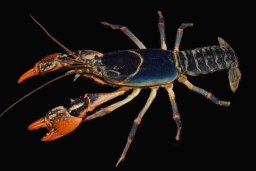
A new species of crayfish, Cambarus loughmani sp. nov., is described from the preglacial Teays River Valley of Cabell, Kanawha, Lincoln, Mason, and Putnam counties, West Virginia. The species was previously considered to be part of the Cambarus dubius complex. Loughman et al. restricted C. dubius to an orange colour morph found in central and northern portions of the Allegheny Mountains and Appalachian Plateau in central West Virginia, western Maryland, and south-central Pennsylvania. The new species described herein can be distinguished from all other members of Cambarus Erichson, 1846 by a double row of cristiform tubercles on the palm, an open areola with two rows of punctations, and a consistent blue colouration.
The western sand darter Ammocrypta clara, and eastern sand darter Ammocrypta pellucida, are sand-dwelling fishes of conservation concern. Past research has emphasized the importance of studying individual populations of conservation concern, while recent research has revealed the importance of incorporating landscape scale processes that structure habitat mosaics and local populations. We examined habitat use and distributions of western and eastern sand darters in the lower Elk River of West Virginia. At the sandbar habitat use scale, western sand darters were detected in sandbars with greater area, higher proportions of coarse grain sand and faster bottom current velocity, while the eastern sand darter used a wider range of sandbar habitats. The landscape scale analysis revealed that contributing drainage area was an important predictor for both species, while sinuosity, which presumably represents valley type, also contributed to the western sand darter’s habitat suitability. Sandbar quality (area, grain size, and velocity) and fluvial geomorphic variables (drainage area and valley type) are likely key driving factors structuring sand darter distributions in the Elk River. This multiscale study of within-river species distribution and habitat use is unique, given that only a few sympatric populations are known of western and eastern sand darters.
 Zachary J. Loughman合作论文数20
 Lara B. Hedrick合作论文数10Dustin M. Smith合作论文数9
 James Thomas Anderson合作论文数Division of Forestry and Natural Resources, West Virginia University8Daniel A. Cincotta合作论文数6
 Roger F. Thoma合作论文数6
 Austin Rizzo合作论文数5Thomas P. Simon合作论文数5Kenneth R. Sheehan合作论文数4Patricia A. Thompson合作论文数4
 Corbin D. Hilling合作论文数Dept Fish & Wildlife Conservat, Virginia Polytech Inst & State Univ4
 Lian-Shin Lin合作论文数School of Civil Engineering, Purdue University4David A. Foltz合作论文数3
 Nicole Sadecky合作论文数3
 Joni Aldinger合作论文数3
 James W Fetzner Jr合作论文数3Ronald H. Fortney合作论文数3jessica smith合作论文数2R. Katie Scott合作论文数2
 Zachary Dillard合作论文数2
 Melissa A. Braham合作论文数Conservat Sci Global Inc2
 Turk Philip合作论文数2Ruble Crystal合作论文数2John R. Shute合作论文数2
 Donald E. Brown合作论文数Translation Health Institute of Virginia, University of Virginia;Data Science Institute, University of Virginia;School of Engineering and Applied Science, University of Virginia2
 Yushun Chen合作论文数Institute of Hydrobiology, Chinese Academy of Sciences2
 Xinchao Wei合作论文数School of Science and Engineering, Duquesne University2
 Robert M. Wood合作论文数2Sue A. Perry合作论文数2Dan A. Cincotta合作论文数2
 Dean R. Jerry合作论文数School of Marine and Tropical Biology, James Cook University2James D. Hedrick合作论文数2Patrick L. Rakes合作论文数2
 Amy B. Welsh合作论文数Division of Neumpsychiatry, Walter Reed Army Institute of Research2John F. Switzer合作论文数2Damien Burrows合作论文数2
 George Merovich合作论文数2stephen m selego合作论文数1
 Greg Myers合作论文数1sheila eyler合作论文数1albert j spells合作论文数1David I. Wellman合作论文数1Laura Villegas-Ortiz合作论文数1
 Evan Lau合作论文数1Justine Whitaker合作论文数1
 Mael G. Glon合作论文数Dept Evolut Ecol & Organismal Biol, Ohio State Univ1
 Paul Angermeier合作论文数Department of Fish and Wildlife Conservation, College of Natural Resources and Environment, Virginia Polytechnic Institute and State University1Gavin L. Butler合作论文数1




