Partnerships between agencies and academicians to develop solutions for environmental problems have faced substantial difficulties. Often, the relationship is based on specific research questions supported by grants. Federal agencies responsible for environmental monitoring often form partnerships with state and local agencies to accomplish large-scale projects. However, collaboration among agencies with differing objectives often leads to conflict. Differences in missions or legislative mandates among agencies are often the basis for the inability to collaborate on mutually beneficial projects. The development of regionally based biological expectations or "biocriteria" is an important stepping stone in reaching a consensus and consolidating objectives among agencies. This approach could bridge conflicting monitoring strategies and objectives and provide common ground for assessment and interpretation of the biological data among local, state, and federal agencies. Frequent conversation and open dialogue, including both telephone and face-to-face meetings, will build partnerships and establish trust among cooperators.
This chapter examines several properties of the Large and Great River Index of Biotic Integrity (IBI) to provide guidelines for some of the more pressing questions regarding its application and interpretation. It addresses the following questions: What sampling decisions are relevant to minimizing contributions to inherent natural variation in the final IBI score? How is the IBI affected by sampling effort, and what is a minimum sampling-reach length required for an adequate assessment? and What are the effects of excluding select abundant species from IBI computations, and how important are these effects in interpreting the IBI? The last two questions concern problems that affect data collection and interpretation and are not specific to ecological assessment studies and IBI. Simon showed that detection of subtle differences at Large River sites required collection of a "representative" sample of the entire fish community. Assessment differences in Large and Great Rivers are often due to seasonal considerations.
This chapter develops potential Index of Biotic Integrity (IBI) metrics to evaluate the Lake Agassiz Plain ecoregion (formerly the Red River Valley ecoregion) within the Red River Basin. It expands on the conceptual framework laid out by Goldstein et al. by developing an IBI for the rivers and streams of the Lake Agassiz Plain ecoregion of Minnesota and North Dakota. The list of tolerant species for the Lake Agassiz Plain is based on Ohio Environmental Protection Agency data and on expert consensus opinion between Minnesota and North Dakota ichthyologists. Historical fish community data exist for the Red River and some of its larger tributaries, but the smaller streams have generally been neglected. The use of minnows to evaluate pools in the Lake Agassiz Plain is suggested because in this ecoregion minnows, rather than sunfish, are the dominant inhabitants of stream pool habitats.
This chapter compiles much of the known information on diet, morphology, and behavior for over 400 North American species based on literature and personal investigation to develop a trophic guild classification that might satisfy the needs of other North American investigators for use in biocriteria development. S. D. Gerking compiled much of the known information on the feeding ecology of fishes, and found that the field is badly splintered and needs consolidation. He presented a series of definitions that have solidified the field and assisted in the development of hierarchical classification. Herbivores are primary consumers that eat green plant biomass made by photosynthesis. Green plants are divided into four broad categories of trophic guild classification: phytoplankton, epilithic algae, epiphytic algae, and macrophytes. Particulate feeders typically have thick-walled, muscular stomach and use sand particles for grinding. If the species has morphological and physiological capability to feed on certain types of organisms, then it probably will do so at some instant in time.
This chapter describes the development, validation, and testing of a metric-rich coldwater Index of Biotic Integrity (IBI) based solely on fish assemblages and designed for use within the upper midwestern United States, specifically the states of Minnesota, Wisconsin, Michigan, and Indiana. The coldwater IBI was used to compare stream sites with different types of salmonid assemblages to determine whether the type of assemblage present was related in any way to biotic integrity. Coldwater streams in regions lacking a warmwater fish fauna, or those with steeper gradients, might not display an increase in species richness with impairment. Abundance or catch-per-effort metrics are common in most versions of the IBI because degraded stream sites generally are expected to yield fewer fish than are higher-quality sites. Both coldwater and warmwater fish abundance metrics were able to discriminate between impaired and reference sites, and both responded to impairment as expected.
The use of fish communities as indicators of biological integrity was documented as early as the turn of the century on the Illinois River. Fish have been and remain a major part of any aquatic study designed to evaluate water quality. Not only are fish a highly visible component of the aquatic resource, but they are one component that is easily sampled by professional biologists. This chapter discusses the evaluation of fundamental considerations of biological integrity at multiple hierarchical levels of ecosystem integration. Focus on biological evaluations enables integration of water-body change, since living systems assimilate the range of site-specific biotic and abiotic conditions. Karr et al. suggest that narrow chemical criteria assume declining water resource conditions have only been caused by chemical contamination. Water quality standards contain rules that define minimum stream flows above which chemical and narrative criteria must be met.
Catostomids are a major component of the Ohio River community and, because of their importance, they are considered reliable environmental indicators. This chapter evaluates longitudinal and ecological patterns, and the influence of the family on individual Index of Biotic Integrity (IBI) metrics. Historical information for the Catostomidae enables long-term temporal trend assessment; and the overall knowledge for each of the species defines community function. The Ohio River fish community was sampled using boat electrofishing methods at 339 locations along the mainstem between 1990 and 1996. A total of 339 stations were collected using standardized field, laboratory, and data processing methods. Fifteen species of sucker have been collected from the Ohio River. Suckers can be categorized into two groups based on body morphology: deep-bodied and round-bodied. Karr suggested that the family Catostomidae is an important measure of flowing rivers in the midwest; suckers as a component of a freshwater stream and small river community were used when developing the IBI.
Total length (LT) and standard length (LS)(mm) were compared to weight MB(g) in the Spottail Shiner, Notropis hudsonius (Clinton 1824), in the Western Basin of Lake Erie. Length and weight relationship (n = 529), length-frequency distribution, and sex ratio were evaluated for tributary habitats and compared to coastal habitats. The total population had a positive correlation between log normalized LT and MB (y = 3.0902x-5.2289, R2= 0.995) and a positive correlation between LS and MB (y=3.1397x-5.0501, R2= 0.996). Male Spottail Shiner had a positive correlation between log normalized LT and MB (y = 3.0984x-5.2465, R2=0.995,) and a significant positive correlation between log normalized standard length and body weight (y = 3.1551x-5.0775, R2=0.996). Female Spottail Shiner had a positive correlation between log normalized LT and MB (y = 3.078x-5.2034, R2=0.993) and a positive correlation between log normalized LS and MB (y = 3.1338x-5.0393, R2=0.996). Males and females were not significantly different in LT or LS (F-test = 1.020, df = 260, 267, p = 0.437). Sex ratio was 1:1. Spottail Shiner exhibit indeterminate growth and did not exhibit gender influenced growth patterns. Tributary individuals were significantly smaller than coastal individuals (F-test = 0.346, df = 65, 202, p = < 0.001). Male age I individuals ranged from 12-54 mm, age II individuals ranged from 57-99 mm, and age III individuals ranged from 99-132 mm. Female Age I individuals ranged from 12-48 mm, age II individuals ranged from 53-102 mm, and age III individuals ranged from 102-129 mm.
In this chapter, we describe the use of fishes to assess the condition of wadeable streams via the Index of Biotic Integrity (IBI). The IBI is a multimetric bioassessment technique that seeks to diagnosis cause-and-effect relationships between biological criteria and environmental stressors via the evaluation and integration of multiple measures of fish assemblage structure and function. This chapter focuses on the methods necessary to develop and implement bioassessment using stream fish IBIs. We detail the major steps involved in developing and testing a stream fish IBI including reference standards, multimetric calibration, and IBI validation. Moreover, we describe the history of the IBI as a bioassessment tool and discuss the strengths and limitations of using IBIs to determine whether stream reaches are meeting designated uses for aquatic life.
The Grand Calumet River is an industrial river and a Great Lakes Area of Concern in southwestern Lake Michigan, USA. Recovery end points require well-formulated designs to assess the use of occurrence of internal and external anomalies, fluctuating asymmetry, and population indicators to determine recovery from the water-quality Beneficial Use Impairments of fish tumors and deformities. A paired-watershed approach using three reaches within the study area was sampled weekly and separated into near- and far-field reaches, whereas the Little Calumet River, Indiana Dunes National Lakeshore, served as a control. Field-collected Pimephales notatus were inspected for occurrence of deformities, erosion, lesion, and tumor (DELT) anomalies, measured for body symmetry, and dissected to ascertain sex and the condition of internal organs. Morphometric measurements (p ≤ 0.000), internal organ conditions (p = 0.001), and sex ratios of the fish (p = 0.001) were significantly different between the control and P. notatus test populations. The near-field individuals had the highest incidence of DELT occurrence (70 %) followed by the far-field reaches at Roxana Marsh (45 %) and Kennedy Avenue (41.9 %). Morphometric analysis showed significant differences between body size and shape and age class structure between populations. No test-reach individual lived to reach age >2 years. Gonads and livers from Grand Calumet individuals were found to be blackened, ruptured, and decreased in thickness. None of the fish from test study reaches displayed sexual structure in a 1:1 ratio. High sediment-contaminant concentrations for polycyclic aromatic hydrocarbon metals in the Grand Calumet River correlated (r (2) = 0.998) with decreased population fitness and decreased individual reproductive health.
Fish assemblage structure has changed dramatically in the Western Basin of Lake Erie since Trautman’s revision of the Fishes of Ohio. Fish surveys near the Bass Islands and adjacent mainland tributaries documented fish faunal distributional patterns during the last three decades. Recent collections (n=1,719 sites) from 1982-2014 indicate that 123 fish species are extant and 27 species have been extirpated from the Bass Islands and nearby tributaries draining the western basin. Extirpation of Polyodon spatula, Alosa sapidissima, Moxostoma lacurum, and Sander glacum occurred; however, A. sapidissima and members of genus Oncorhynchus were introduced and unable to naturalize. Recent collection of A. fulvescens in Schoolhouse bay near Middle Bass Island in May 2012; Umbra limi populations on Middle Bass Island and Kelley’s Island; and Lepisosteus oculatus populations along the southeastern shoreline of North Bass Island are stable in Lake Erie despite increased eutrophication. The current Western Basin fish assemblage includes 107 native, 26 nonindigenous, and 6 alien fish species. Twenty-one native species have been extirpated from Lake Erie, while 6 nonindigenous species have not naturalized and have been extirpated. Six additional species known from within the Lake Erie basin have not been collected from the Western Basin during the study period and current status is unknown. Introduced non-indigenous and alien species are responsible for increased species richness including Neogobius melanostomus, Proterorhinus semilunaris, Salmo trutta, Carassius auratus, Cyprinus carpio, Ctenopharyngodon idella and four records for Hyphthalmichthys molatrix since 1981. Brief comments on distribution, relative abundance, and status are provided for each species.
Three lakes in Hoosier National Forest, Perry County, southern Indiana, were studied for changes in dissolved oxygen, temperature, pH, oxidation-reduction potential, salinity, specific conductance, and total dissolved solids because they have experienced recent fish kills. These lakes were evaluated for patterns in their chemical limnology over a 24–hr period during September 2005. The shallow nature of these three lakes has caused dramatic shifts in pH, dissolved oxygen, oxidation-reduction potential, and specific conductance. The largest changes in dissolved oxygen and pH occurred at dawn and dusk when aquatic plants switched from photosynthesis to respiration. Changes in oxidation-reduction and specific conductance were the result of the loss of dissolved oxygen in the lake sediment microzone. As the lake substrate changed from a reducing environment to an oxygenated environment, total dissolved solids and specific conductance increased as these materials were released into the water column. Low night-time dissolved oxygen levels and associated chemical stressors associated with aquatic plant respiration could explain the recent fish kills.
Three lakes in Hoosier National Forest were created by the impounding of several creeks within the Middle Fork Anderson River watershed. All three lakes were created during the early 1960s to provide recreational opportunities for the public. Only a single study by the Indiana Department of Natural Resources provides data about a decade after the lakes were created on the historical fish assemblage of the lakes prior to reclamation. The current study found that the three reservoirs possess simple fish assemblage structure and are dominated by sunfish species. The lakes do not possess many benthic species or obligate lake species. The index of biotic sustainability classified the lakes as poor for all three lakes. Scores ranged from 28 to 31, with the mode 29. The majority of the sites in Hoosier National Forest lakes scored between 29 and 30 IBS points. Both Indian and Tipsaw lakes had sustainability scores of 30, while Celina Lake had a mean IBS score of 28.5. Tipsaw Lake ranked the highest with an IBS score of 31.
Gender relationships between total length (LT) and standard length (LS) (mm) were compared to weight (MB)(mg) in the round goby, Neogobius melanostomus, for tributary and harbor embayment habitat in southern Lake Michigan. Length and weight relationship (n = 413), LT length-frequency distribution, and sex ratios were determined. A strong positive correlation (P>0.001) was found between length (LT and LS) and weight for both males and females. Male populations showed positive allometric growth rates with b-values and Fulton Condition indices above 3.0, females populations showed positive allometric growth in the tributary populations, but a negative allometric growth rate in the harbor population.
Three reservoirs, Tipsaw, Indian, and Celina lakes, are located in Hoosier National Forest in Perry County, Indiana, have experienced annual fish kills for over a decade. These lakes were evaluated for patterns in their physical and chemical limnology to characterize morphometrics of length, depth, and width and water quality. Chemical variables, including pH, conductivity, major ions, and nutrients, were measured to evaluate water quality differences among lakes. The study lakes were shallow depressions (Zmean 5 3.06–5.60 m; Zmax 5 7.9–17.0 m) and classified as polymictic. The shallow depths typically enabled dissolved oxygen to be distributed throughout the water column and prevented thermal stratification, although pronounced thermoclines developed during 1989, 1991, and 2001. The Carlson trophic index classified these lakes as mesotrophic with the highest index being calculated for Tipsaw (22– 52 TI), followed by Indian (12–13 TI), and Celina (5–14 TI). The highest morphoedaphic index (MEI) was observed in Tipsaw (24.3 (mg/L)/ m), followed by Indian (16.8 (mg/L)/m), and Celina (9.1 (mg/L)/m). The MEI values observed in the three lakes translate to catch yields of 20–30 kg/ha. General chemical patterns are towards a stable state or reduction in nitrogen or phosphorus concentrations. No statistically significant trend based on regression of chemical variable by lake over time was observed for any parameter during the study period (ANOVA, P .0.05). The shallow reservoir depths, changing thermocline and oxycline, and reduction in dissolved oxygen can result in increased potential for continuing conditions promoting fish kills.
Hard structures along the southern shore of Lake Michigan restrict natural longshore sediment transport, destabilizing the shoreline, and dissecting the coast into localized shoreline reaches. A geometric design was used to sample (n = 590 nodes) at nine shoreline reaches near the Indiana Dunes National Lakeshore to characterize existing sediment in the offshore and onshore zones. Cluster Analysis grouped shoreline sites into two clusters. Factor Analysis showed that 35 % of the sand fractionation’s cumulative variance across all sites was explained by an increased loading on medium sand (0.250 mm) with a corresponding decrease loading on small pebbles (4.750 mm), and an additional 30 % of the cumulative variance was explained by a negative loading on very fine sand (0.075 mm). Individual clusters showed that 43 % of the cumulative variance within cluster one could be explained by increased loadings on fine and medium sand (0.149–0.250 mm) with a corresponding negative loading on small pebbles (4.75 mm). An additional 22 % of the cumulative variance was explained by the positive loading on coarse sand (0.850 mm). Cluster two was explained by a single factor (62 % cumulative variance) highlighting an increased loading on small pebbles and coarse sand, and decreased loadings on medium to very fine sand. Principal component analysis showed that sediment characterization of the swash zone provided the best explanation of between site variance.
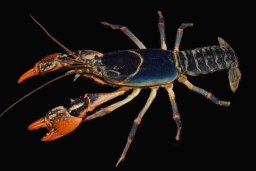
Abstract The Mud River crayfish, Orconectes ronaldi Taylor, is a native crayfish species found in the Midwestern United States in Kentucky and Indiana. Length-weight relationship, body morphometric relationship, and condition within the species native range in south-central Indiana were studied. Growth, size relationships based on gender, sexual phase for adults and juveniles and chelae-length/width relationships were used to interpret patterns in sexual dimorphism. Carapace length (CL)–wet weight (Wwt) relationships for all genders (i.e., male, female, juvenile) and all male forms (form I and II) had positive allometric growth. Male individuals were not significantly heavier than females of the same length. The maximum length and weights of males (35.1 mm CL) were longer and heavier (11.8 g) than the longest female (31.5 mm) weighing 8.3 g. No statistical difference in mean weight was observed; however, this is attributed to the accelerated development of the chelae in sexually mature form I males, whereas chelae of females grow slower throughout life. Chelae length was significantly different between male form II and male form I, and male form II and females (P = 0.004, and P <0.001, respectively). The relatively longer chelae of form I and form II males are due to sexually dimorphic change.
The National Wildlife Refuge system is a vital resource for the protection and conservation of biodiversity and biological integrity in the United States. Surveys were conducted to determine the spatial and temporal patterns of fish, macroinvertebrate, and crayfish populations in two watersheds that encompass three refuges in southern Indiana. The Patoka River National Wildlife Refuge had the highest number of aquatic species with 355 macroinvertebrate taxa, six crayfish species, and 82 fish species, while the Big Oaks National Wildlife Refuge had 163 macroinvertebrate taxa, seven crayfish species, and 37 fish species. The Muscatatuck National Wildlife Refuge had the lowest diversity of macroinvertebrates with 96 taxa and six crayfish species, while possessing the second highest fish species richness with 51 species. Habitat quality was highest in the Muscatatuck River drainage with increased amounts of forested habitats compared to the Patoka River drainage. Biological integrity of the three refuges ranked the Patoka NWR as the lowest biological integrity (mean IBI reach scores = 35 IBI points), while Big Oaks had the highest biological integrity (mean IBI reach score = 41 IBI points). The Muscatatuck NWR had a mean IBI reach score of 31 during June, which seasonally increased to a mean of 40 IBI points during summer. Watershed IBI scores and habitat condition were highest in the Big Oaks NWR.
The Rusty crayfish, Orconectes rusticus Girard, is an invasive crayfish species found in the Midwestern United States and Canada. O. rusticus has displaced native crayfish species throughout its range. Length-weight relationship, body morphometric relationship, and condition within the species native range in south-central Indiana were studied. Growth, size relationships based on gender, sexual phase for adults and juveniles and chelae-length, width relationships was used to interpret patterns in sexual dimorphism. Carapace length (CL)-wet weight (Wwt) relationships for all genders (i.e., male, female, juvenile) and all male forms (form I and II) had positive allometric growth. Native O. rusticus were found to be larger in all measurements and heavier than the O. rusticus collected in the invasive range. Orconectes rusticus has a smaller mean carapace length and had a mean weight less than Orconectes limosus, Procambarus acutus, Procambarus fallax, and Procambarus clarkii. Orconectes rusticus shows strong sexual dimorphism patterns, but compared to other freshwater crayfish it is generally smaller. To establish populations in occupied areas O. rusticus may use a combination of competitive and aggressive behaviors. Orconectes rusticus should be managed with depletion trapping and by restoring native predatory fish populations
Evaluation of trait robustness based on environmental fluctuation in ontogenetic life stages are needed to evaluate stability and trait response during critical developmental events. Hardness, alkalinity, acidity, light intensity, and thermal differences were studied for trait canalization variation in morphometric, meristic, ontogenetic processes, and pigment characteristics. Trait canalization was observed with no statistical differences (p > 0.05) in mixed random two-way ANOVA comparisons between various block and treatment effects for hardness, alkalinity or acidity. Thermal block variation differences in six measures, including mandible length, yolk sac length, midpostanal depth, and head width, incubation, and hatching length, varied significantly (p ≤ 0.05) with declining temperatures. Water quality and thermal attributes exhibited trait canalization and did not increase character state variation in the early life stage morphological expression, which result in stable phenotypic inheritance rather than variable environmental conditions during embryonic and larval development.
 charles c morris合作论文数14Robert Wallus合作论文数8
 Zachary J. Loughman合作论文数6
 Stuart A. Welsh合作论文数West Virginia Cooperative Fish and Wildlife Research Unit, West Virginia University5Jacob L. Burskey合作论文数4
 Roger F. Thoma合作论文数4Robert M. Goldstein合作论文数From Transplantation Services, Baylor University Medical Center4
 Paul M. Stewart合作论文数University of Leeds4
 Dan Sparks合作论文数3Daniel W. Sparks合作论文数3Stewart Paul M合作论文数3
 Jason T. Butcher合作论文数Biology Department, Lake Superior State University3
 Emmanuel A. Frimpong合作论文数Department of Forestry and Natural Resources, Purdue University3
 Trent M. Sutton合作论文数School of Fisheries and Ocean Sciences, University of Alaska Fairbanks3Erich B. Emery合作论文数3
 Michael J. Wiley合作论文数Department of Surgery, University of Toronto3Jonathan M. Miller合作论文数2R. A. Lindskoog合作论文数2D. D. MacDonald合作论文数2BE Sullivan合作论文数2Wendy Anderson合作论文数2leah s rigsby合作论文数2melissa joneswuellner合作论文数2J R Smith合作论文数2Thompson H A合作论文数2Paul M Stewart合作论文数2
 Christopher G Ingersoll合作论文数Columbia Environmental Research Center, U.S. Geological Survey2
 Lizhu Wang合作论文数Biology Department, Montana State University2Paul D. Mcmurray合作论文数2Amanda M. Baker合作论文数2Thomas E. Lauer合作论文数2T. M. Brandt合作论文数2Paul W. Rasmussen合作论文数2
 Paul Rothrock合作论文数2
 Bernie Engel合作论文数Center for Technology Transfer and Pollution Prevention, Purdue University;Agricultural and Biological Engineering Department, Purdue University2D. E. Smorong合作论文数2B. G. Whiteside合作论文数2Peter J. Hrodey合作论文数2
 Mark Pyron合作论文数Department of Biology, Aquatic Biology and Fisheries Center, Ball State University2William H. Heath合作论文数2Nathan T. Evans合作论文数1Edward A. Baker合作论文数1RF JEZERINAC合作论文数1Daniel J. Faber合作论文数1Nelson Rios合作论文数1James R. Gammon合作论文数1A J Strong合作论文数1tiffany atkinson合作论文数1Robert Ovies合作论文数1




