Montanite, named by Frederick August Genth over 150 years ago for the Montana Territory was the world's first naturally occurring tellurium oxysalt, but was designated 'Q' (questionable) by the IMA-CNMNC until our study in 2022. Like many minerals described in the 19th century it had no designated type specimen. Interrogation of institutional archives, contemporaneous publications and specimen labels reveals three distinct early occurrences, two of which are interpreted as co-type localities. In lieu of being able to conclusively identify or access the original type specimens for research, suitable surrogates were defined as neotypes that respected the historical precedence of the initial discoveries enabling montanite to be formally established as a mineral species. Especially for this historically themed edition of Mineralogical Magazine, this paper presents the process and a case-study of the historical research and decision-making required for new minerals, redefinitions or discreditations that are often out-of-scope of the academic journals that publish the resulting scientific research.
A plutonium-rich carbide, (U,Pu)(Al,Fe)3C3, was discovered in a hot particle from the Maralinga nuclear testing site in South Australia. The particle was produced between 1960 and 1963 and has been exposed to ambient conditions since then. The new phase belongs to a group of ternary carbides known as 'derivative-MAX phases'. It formed at high temperature within an explosion cloud via rapid eutectic crystallisation from a complex Al–Fe–U–Pu–C–O melt, and is the major Pu host in this particle. Despite signs of volume expansion due to radiation damage, (U,Pu)(Al,Fe)3C3 remains highly X-ray crystalline 60 years after its formation, with no evidence of Pu leaching from the crystals. Our results highlight that the high-energy conditions of (sub-)critical explosions can create unexpected species. Even micro-particles of a derivative-MAX phase can effectively retain low-valence (metallic-like character) Pu under environmental conditions; the slow physical and chemical weathering of these particles may contribute to the slow release of radionuclides over decades, explaining constant low-levels of radionuclides observed in fauna. This study further suggests that rapidly quenched eutectic melts may be engineered to stabilise actinides in nuclear waste products, removing the need for hydrometallurgical processing.
An abstract is not available for this content so a preview has been provided. As you have access to this content, a full PDF is available via the 'Save PDF' action button.
Environmental context Cobalt is a technologically critical element due to its uses in the green energy transition, but its cycling is poorly constrained in surface environments. We determined the form of cobalt in naturally enriched soils and found that it is commonly associated with manganese as mixed oxide nanoparticles. These findings demonstrate that the behaviour of critical elements such as cobalt in the environment is in part governed at the nanoscale.Rationale Cobalt (Co) faces increasing demand for use in batteries and alloys, but its environmental behaviour in terrestrial surface environments is poorly constrained. This study analyses cobalt regolith mineralogy and nanoparticulate phase transitions to address this knowledge gap.Methodology We studied Co-enriched environments across six localities and four distinct deposit types in arid and semi-arid Australian regolith environments to analyse its environmental behaviour. We used a combination of single particle inductively coupled plasma-mass spectrometry (SP ICP-MS) and synchrotron X-ray techniques (fluorescence microscopy, X-ray flouresence microscopy and X-ray absorption spectroscopy).Results We discovered the presence of Co oxide-based nanoparticles in soils surrounding cobalt-rich rocks at all of our studied locations, to our knowledge the first detection of terrestrial Co oxide-based nanoparticles. The extractable concentration of Co in the nanoparticles varied from 0.7 ng of nanoparticulate Co per gram of soil (ng Co g-1), up to 1390 ng Co g-1, the latter soil containing 1 x 10⁹ extractable Co-based nanoparticles per gram of soil.Discussion Nanoparticulate cobalt was typically closely associated with manganese (Mn) in the form of natural Co-Mn oxide phases, with only two of the studied locations not showing a close Co-Mn association. We discuss the environmental drivers that may facilitate formation of Co-Mn oxide nanoparticles. Our study suggests that Co may be more mobile in surface environments than previously thought, with Co-Mn oxide nanoparticles found around all four analysed types of Co-rich outcrops.
An abstract is not available for this content. As you have access to this content, full HTML content is provided on this page. A PDF of this content is also available in through the 'Save PDF' action button.
An abstract is not available for this content. As you have access to this content, full HTML content is provided on this page. A PDF of this content is also available in through the 'Save PDF' action button.
Wortupaite (IMA2022-107) is a new hydrated magnesium nickel tellurite mineral with a zemannite-like structure, described from the Wortupa gold mine, South Australia, Australia. Wortupaite forms needles up to 25 mu m in length, generally clustered and sometimes in blocky masses of shorter (10-15 mu m) crystals. Wortupaite is found growing on melonite, from which the component nickel and tellurium are derived, and is associated with calcite. The strongest powder diffraction lines are [dobs angstrom(Iobs)(hkl)]: 8.059 (93) (100), 4.034 (92) (200), 2.832 (43) (211 and 121), 2.769 (100) (202) and 1.920 (45) (213 and 123). The empirical formula of wortupaite as determined by electron probe microanalysis is (Mg0.57Ni0.39Mn0.04)sigma 1(Ni2+1.87Fe3+0.13)sigma 2(Te4+O3)3 center dot 3H2O, simplified to the ideal formula of MgNi2+2(Te4+O3)3 center dot 3H2O with H2O content calculated from the crystal structure. The average crystal structure of wortupaite was determined by single-crystal X-ray diffraction with synchrotron radiation (R1 = 0.0558 for 100 independent reflections). Wortupaite is hexagonal, crystallising in the space group P63/m, with a = 9.2215(13) angstrom, c = 7.5150(15) angstrom, V = 553.43(19) angstrom 3 and Z = 2. Wortupaite has a microporous structure, with the negatively charged zemannite-like framework formed by Te4+O3 trigonal pyramids and Ni2+O6 octahedra. For charge balance, Mg2+ and Ni2+ dominant sites are assumed to be located on central sites in the channels, coordinated by 6 H2O groups. An OW site was refined around the Mg2+ dominant site, but OW position(s) were not locatable around the Ni2+ dominant site. A discussion of the different models for crystallographic arrangement of channel species is provided, taking into account possible Fourier truncation effects. Unlike the other four minerals with zemannite-like structures which have a near 50% split of divalent and trivalent framework cations, wortupaite is the first natural phase to have only divalent cations in the framework sites.
An abstract is not available for this content. As you have access to this content, full HTML content is provided on this page. A PDF of this content is also available in through the ‘Save PDF’ action button.
An abstract is not available for this content. As you have access to this content, full HTML content is provided on this page. A PDF of this content is also available in through the 'Save PDF' action button.
AbstractThe new mineral tombstoneite (IMA2021-053), (Ca0.5Pb0.5)Pb3Cu2+6Te6+2O6(Te4+O3)6(Se4+O3)2(SO4)2⋅3H2O, occurs at the Grand Central mine in the Tombstone district, Cochise County, Arizona, USA, in cavities in quartz matrix in association with jarosite and rodalquilarite. Tombstoneite crystals are green pseudohexagonal tablets, up to 100 μm across and 20 μm thick. The mineral has a pale green streak and adamantine lustre. It is brittle with irregular fracture and a Mohs hardness of ~2½. It has one perfect cleavage on {001}. The calculated density is 5.680 g cm–3. Optically, the mineral is uniaxial (–) and exhibits pleochroism: O = green, E = light yellow green; O > E. The Raman spectrum exhibits bands consistent with Te6+O6, Te4+O3, Se4+O3 and SO4. Electron microprobe analysis provided the empirical formula (Ca0.51Pb0.49)Σ1.00Pb3.00Cu2+5.85Te6+2.00O6(Te4+1.00O3)6(Se4+0.69Te4+0.24S0.07O3)2(S1.00O4)2⋅3H2O. Tombstoneite is trigonal, P321, a = 9.1377(9), c = 12.2797(9) Å, V = 887.96(18) Å3 and Z = 1. The structure of tombstoneite (R1 = 0.0432 for 1205 I > 2σI) contains thick heteropolyhedral layers comprising Te6+O6 octahedra, Jahn-Teller distorted Cu2+O5 pyramids, Te4+O3 pyramids and Se4+O3 pyramids. Pb2+ cations without stereoactive 6s2 lone-pair electrons are hosted in pockets in the heteropolyhedral layer. Pb2+ cations, possibly with stereoactive 6s2 lone-pair electrons, are located in the interlayer region along with SO4 tetrahedra and H2O groups. Within the heteropolyhedral layer, the Te6+O6 octahedra and the Te4+O3 pyramids form finite Te6+O3(Te4+O3)3 clusters with a pinwheel-like configuration. This is the first known finite complex including both Te4+ and Te6+ polyhedra in any natural or synthetic tellurium oxysalt structure.
The re-investigation of [Bi2O2(OH)](NO3), dioxidodibismuth(III) hydroxide nitrate, on the basis of single-crystal X-ray diffraction data revealed an apparent structural phase transition of a crystal structure determined previously (space group Cmc21 at 173 K) to a crystal structure with lower symmetry (space group Pna21 at 100 K). The Cmc21 → Pna21 group–subgroup relationship between the two crystal structures is klassengleiche with index 2. In contrast to the crystal structure in Cmc21 with orientational disorder of the nitrate anion, disorder does not occur in the Pna21 structure. Apart from the disorder of the nitrate anion, the general structural set-up in the two crystal structures is very similar: [Bi2O2]2+ layers extend parallel to (001) and alternate with layers of (OH)− anions above and (NO3)− anions below the cationic layer. Whereas the (OH)− anion shows strong bonds to the BiIII cations, the (NO3)− anion weakly binds to the BiIII cations of the cationic layer. A rather weak O—H...O hydrogen-bonding interaction between the (OH)− anion and the (NO3)− anion links adjacent sheets along [001].
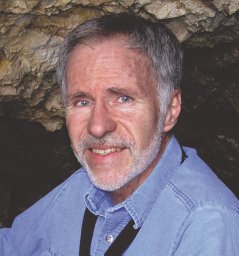 Anthony R. Kampf合作论文数Mineral Sciences Department, Natural History Museum of Los Angeles County105
 Marco Pasero合作论文数64
 Frederic Hatert合作论文数Laboratoire de Minéralogie, Université de Liège61
 Owen Missen合作论文数Geosci, Museums Victoria36Robert M. Housley合作论文数36
 Andrew G. Christy合作论文数Dept . of Applied Maths;School of Physical Sciences, Research;Australian National University;Research School of Physical Sciences, Australian National University34William D. Birch合作论文数30Ritsuro Miyawaki (宮脇律郎)合作论文数Division of Mineral Sciences, Department of Geology and Paleontology, National Museum of Nature and Science30
 John Spratt合作论文数28Mati Raudsepp合作论文数28
 Ulf Halenius合作论文数Department of Geosciences, Swedish Museum of Natural History27Ian E. Grey合作论文数24
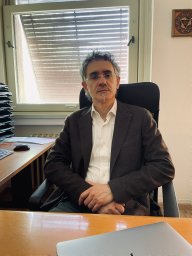 Ferdinando Bosi合作论文数Dipartimento Sci Terra, Univ Roma La Sapienza18Frédéric Hatert合作论文数17Brent Thorne合作论文数16Matthias Weil合作论文数Technische Universitat Wien14
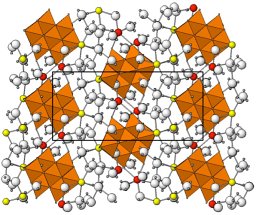 Barbara P Nash合作论文数Dept Geol & Geophys, Univ Utah14
 Michael Rumsey合作论文数13
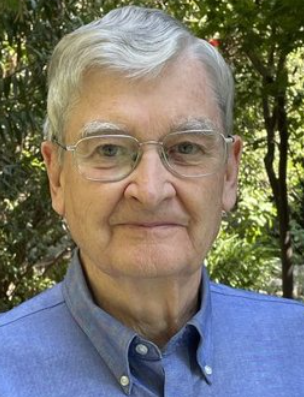 George R. Rossman合作论文数Division of Geological and Planetary Sciences, California Institute of Technology13M. Pasero合作论文数12Georges Favreau合作论文数12Uwe Kolitsch合作论文数12
 C. M. MacRae合作论文数CSIRO Mineral Resources11
 Joël Brugger合作论文数School of Earth Atmosphere and Environment, Faculty of Science, Monash University11Marty Joseph合作论文数11
 Ray Frost合作论文数School of Chemistry & Physics, Faculty of Science, Queensland University of Technology10Guillaume Favreau合作论文数10
 Chi Ma合作论文数9
 Jens Najorka合作论文数9P. A. Williams合作论文数8
 Barbara Etschmann合作论文数Monash Univeristy8Pamela S. Whitfield合作论文数8Pa Williams合作论文数7M. S. Rumsey合作论文数7
 Allan Pring合作论文数South Australian Museum, South Australian Museum7Peter Leverett合作论文数7Joe Marty合作论文数6M. Dini合作论文数6Rumsey Michael S合作论文数6
 Werner Artner合作论文数6Ian M. Steele合作论文数6
 Gregory Dipple合作论文数Department of Earth, Ocean and Atmospheric Sciences, Faculty of Science, The University of British Columbia6J. J. Pluth合作论文数6Pavel M. Kartashov合作论文数6
 Catherine Bougerol合作论文数NEEL6Jeanmarie Génin合作论文数ESSTIN Laboratoire CNRS Maurice Letort UP 6851, Université de Nancy 16
 Fabrizio Nestola合作论文数Dipartimento di Geoscienze, Università di Padova6Glenn Poirier合作论文数6
 Marco E. Ciriotti合作论文数6




