Upcycling fly ash is a key challenge in supporting the circular energy production of biomass power plants. Using a mixture of palm ash (PA) and rubberwood ash (RA) in the production of lightweight geopolymer offers an innovative pathway for converting industrial waste into a valuable construction material. The study demonstrates that up to 40% of mixed PA and RA can be utilized for metakaolin (MK) replacement in lightweight geopolymer production. The geopolymer formulation was examined at various mass ratios of MK:PA:RA using sodium hydroxide or potassium hydroxide combined with sodium silicate as alkaline activators. The suitable formulation was further applied for lightweight geopolymer production, comparing two types of surfactants—anionic and nonionic surfactants. Combining anionic and nonionic surfactants at a mass ratio of 1:3 resulted in a more stable foam than using a single surfactant alone. The formulated lightweight geopolymer has a density of 1,544kg/m³, a compressive strength of 5.41MPa, and a water absorption rate of 23.61% by weight, meeting the standard for lightweight non-load-bearing concrete, with a dry density below 1680kg/m³ and an average net-area compressive strength above 4.14MPa, as specified in ASTM C129. Its thermal conductivity was 0.741W/m·K, making it suitable for thermal insulation.
Inorganic constituents, particularly potassium at 2.0-2.5 %, in palm empty fruit bunches cause slagging and fouling in boilers, reducing combustion efficiency in biomass-fired power plants. To incentivize palm oil mills to adopt hydrothermal treatment of this residue, this study demonstrates a process that lowers potassium content to improve fuel quality and generates methane from the leachate. Palm empty fruit bunch fibers were treated with deionized water, anaerobic digester effluent, or final polishing-pond effluent under varying temperatures, reaction times, and liquid-to-solid ratios. At the selected condition (60 degrees C, 30 min, liquid-to-solid ratio 3.3), the anaerobic digester effluent achieved 40.8 % potassium removal and extracted 60.9 kg of organics (chemical oxygen demand) per ton of palm empty fruit bunches into the liquid phase, providing a low-cost option that utilizes existing mill effluent for solid-fuel upgrading. Co-digestion of hydrothermal treatment leachate with palm oil mill wastewater increased methane yield and methane content by up to 6.7 % and 4.3 %, respectively. A mass-energy balance showed that, per ton of residue processed, the combined outputs of upgraded solid fuel and additional biomethane reached 19,089 MJ, representing a 3.1 % loss relative to the energy content of the untreated material (19,700 MJ/ton). Elevated potassium concentrations resulting from leachate addition induced enrichment of hydrogenotrophic methanogens based on high-throughput sequencing of the microbial community analysis. Overall, the integrated hydrothermal treatment and anaerobic digestion pathway offers a practical circular strategy that motivates palm oil mills to valorize their residues for cleaner biofuel production and enhanced biogas recovery.
Sulfide autotrophic denitrification (SADN) is a promising strategy for integrating biogas desulfurization with nitrogen removal in anaerobic digestion-based treatment systems. However, its application in moving bed biofilm reactors (MBBRs) remains limited by biosulfur (S0) accumulation and nitrous oxide (N2O) emissions. This study investigated the operational tradeoffs governing SADN performance in an MBBR under different nitrate-to-sulfide (NO3−/S2−) ratios, electron acceptors (NO3− or NO2−), and hydraulic retention times (HRTs). Batch assays, microbial community analysis, and techno-economic evaluation were also conducted to elucidate biofilm–planktonic biomass interactions and operational feasibility. Complete sulfide removal (>99%) was achieved under all tested conditions. Increasing the NO3−/S2− ratio reduced S0 accumulation from 16.5% to 5.2%, mitigating carrier clogging, but simultaneously promoted incomplete denitrification and N2O formation. In contrast, operation at an NO3−/S2− ratio of 1.6 achieved complete denitrification without detectable N2O emissions while maintaining effective sulfur control, representing the optimal techno-economic condition. Using NO2− as electron acceptor enabled complete denitrification and suppressed N2O emissions, but increased S0 accumulation due to limited electron-accepting capacity for complete sulfide oxidation. Microbial analysis identified Sulfurimonas as the dominant sulfur-oxidizing genus, while mixotrophic denitrifiers contributed to residual sulfur formation. Activity assays showed that biofilm biomass dominated electron transfer, whereas planktonic biomass enhanced reactor performance through synergistic interactions. HRT optimization identified 12 h as the minimum threshold for maintaining efficient sulfide and nitrate removal while reducing reactor footprint. These findings demonstrate that sustainable SADN-MBBR operation requires balancing sulfur control, denitrification completeness, greenhouse-gas mitigation, and reactor stability for scalable low-carbon biogas upgrading applications.
Biological methanation in ex situ biotrickling filter reactors (BTFRs) is a promising power-to-gas solution for converting renewable H₂ and CO₂-rich gas streams into biomethane under mild operating conditions. However, cross-study comparison remains difficult because reactor configurations, operating definitions, normalization bases, and performance metrics are reported inconsistently. This review critically synthesizes up-to-date evidence linking gas–liquid–biofilm mass transfer, hydrogenotrophic metabolism, reactor design, and operating conditions to CH₄ productivity, H₂ utilization, CO₂ conversion, product-gas quality, and long-term stability. Quantitative evidence reveals recurring process-intensification trade-offs: shorter gas residence time can increase productivity but reduce substrate utilization, while pressurization can improve conversion at the expense of compression and pressure-rated equipment. Packing architecture and liquid delivery enhance biofilm retention and effective contact but may also increase pressure drop, liquid hold-up, and diffusion resistance. Pilot and field-integrated studies demonstrate real-biogas utilization, recovery after H₂ interruptions, modular operation, and extended production of high-CH₄ gas. Although biological methanation has reached commercial application in other reactor configurations, publicly documented ex situ BTFR biomethanation remains predominantly at pilot scale. By consolidating the latest quantitative evidence and reporting needs, this review provides a knowledge base to guide scale-up and commercial development.
This study presents a novel hybrid membrane treatment train that integrates an anaerobic membrane bioreactor (AnMBR) with a fluidized bed membrane bioreactor enriched with partial nitritation and anammox (FMBRPN/A) for the treatment of industrial wastewater. The system was evaluated in terms of pollutant removal performance, microbial community structure, and energy efficiency, and benchmarked against a conventional full-scale aerobic/anoxic activated sludge system with an integrated constructed wetland (ASN/DN+Wetland). The AnMBR+FMBRPN/A achieved high removal efficiencies for COD (91.1 %) and total nitrogen (70.1 %), matching the performance of the conventional system while operating under low-carbon effluent conditions. Strategic aeration of FMBRPN/A enabled spatial separation of partial nitritation and anammox zones, promoting syntrophic coexistence of ammonium-oxidizing (AOB), nitrite-oxidizing (NOB), denitrifying (DN), and anammox (AMX) microbes in direct contact with the membrane surface, contrasted with microbial dynamics in traditional systems. The AnMBR+FMBRPN/A process had better energy performance, with 26.6 % reduction in electricity consumption (0.55 vs. 0.74 kWh/m3) and added benefits in biomethane recovery and reduced greenhouse gas emissions. These findings point to the potential of hybrid membrane bioreactors to transform industrial nitrogen management towards more efficient and sustainable solutions.
Sulfide-driven autotrophic denitrification (SADN) can reduce oxidized nitrogen (NOx-; NO3- + NO2-) using sulfide (S2-) as an electron donor while selectively recovering elemental sulfur (S-0). In anaerobic digestion (AD)-based treatment trains, sulfur is released as H2S in biogas and captured as sulfide in bioscrubber liquor, whereas nitrogen remains in the digestate and is typically removed via aerobic nitrification-denitrification with substantial aeration demand. This study evaluates SADN as an integration lever by defining operating conditions that couple sulfide management and NOx- reduction. An anoxic column CSTR (HRT 1 d) was used to (i) quantify how [NO3-]/[S2-] (0.2-0.8) governs sulfur and nitrogen products under electron-acceptor limitation and (ii) assess partial substitution of nitrate by nitrite at constant ([NO3-] + [NO2-])/[S2-] = 0.6 as a proxy for partial nitrification. At [NO3-]/[S2-] = 0.6, S2- and NO3- removal were >99%, and 80.9% of influent S2- was recovered as S-0 without NO2- accumulation. Lowering the ratio to 0.2 left residual S2- and redirected 12.1% of nitrate reduction to DNRA, yielding 0.26 mM-NH4+. Increasing to 0.8 caused incomplete denitrification with 0.74 mM-NO2- accumulation and greater SO42- yield. Under mixed NO3-/NO2- feeding, NO2- fractions >0.2 reduced S-0 precipitation because of incomplete S2- removal, whereas a 0.4 + 0.2 split fraction maintained complete N and S removal, improved S-0 recovery by 5.5%, and reduced aeration demand for nitrification by 8.7% versus nitrate-only operation. Sulfurimonas and Thiobacillus dominated under adequate electron acceptor supply, while sulfate reducers and DNRA-associated taxa increased under stronger limitation. The identified control window supports integrating SADN into bioscrubber-based desulfurization and downstream nitrogen management.
A large volume of undesired chemical liquid generated by ethanol distillation is known as sugarcane vinasse. It is an acidic, dark brown distillery spent wash rich in organic compounds that can cause toxicity to living organisms, soil and water acidification, and groundwater contamination. This study introduces a hybrid chemical and biological treatment approach combining photocatalysis and a sequencing batch biofilm reactor (HP-SBBR). Chemical coagulation with alum was applied as a pretreatment due to its compatibility and low cost. Subsequently, the bio-photocatalytic reaction in HP-SBBR with zinc oxide (ZnO) photocatalyst achieved substantial degradation, evidenced by 93.1 % COD reduction and 99.7 % decolourisation at a low loading rate of 0.024 kg center dot COD/m3 center dot day. Kinetic studies and UV-vis spectra confirmed that the combination of light and microorganisms effectively reduce COD of sugarcane vinasse and improved the biodegradation index. Microbial analysis using 16S rDNA revealed predominant bacterial genera, including Pseudomonas sp. (28 %), Bacillus sp. (8 %), Tissierella sp. (7 %), and Azoarcus sp. (6 %). To assess toxicity, a phytotoxicity test using mung bean (Vigna radiata) showed an 85 % reduction in toxicity based on germination rate, indicating that treated vinasse is more suitable for reuse in agriculture. Although the integrated pre-coagulation and HP-SBBR system demonstrated strong technical feasibility and treatment performance, further studies on operating costs and technical constraints are necessary to evaluate its applicability and impact in full-scale vinasse management.
This study investigates the potential of hydrothermal pretreatment to enhance the energy recovery and waste management of Napier grass (Pennisetum purpureum) as a co-substrate in pig farming operations. Pig farms in Thailand generate wastewater rich in organic matter and nutrients, and efficient treatment is essential for meeting environmental discharge standards and reducing greenhouse gas emissions. Two pretreatment strategies were evaluated: a low-temperature hydrothermal fermentative pretreatment (HFP) and a high-temperature thermal hydrolysis pretreatment (THP). Napier grass, characterized by its high lignocellulosic content and rapid growth, was processed at various temperatures (35-100 °C for HFP; 125-200 °C for THP) and reaction times (6-72 h) to produce distinct liquid and solid fractions. Biochemical methane potential (BMP) assays demonstrated that HFP at 35 °C for 12 h yielded the highest overall methane production (184.5 m3 CH4 per ton of dry biomass), reflecting a 65 % increase in biodegradability relative to untreated grass. Regression analysis further elucidated the interactive effects of temperature and reaction time on methane yields, while mass balance evaluations compared alternative pathways for the valorization of the HFP solids. Notably, converting the solids into biomass pellets delivered a superior net energy output compared to further anaerobic digestion. Overall, the integrated approach of using hydrothermal pretreatment, especially via HFP, not only improves biogas yields but also aligns with sustainable agricultural practices by reducing waste, mitigating environmental impacts, and enhancing the energy efficiency of pig farming systems.
This research explored hydrothermal carbonization to enhance digestate from lignocellulosic biogas power plants as a soil amendment for low-carbon agriculture. Hydrochar was produced from real digestate via hydrothermal carbonization at 225–265 °C, hydrothermal carbonization at 265 °C demonstrating optimal properties for agricultural use. Key benefits include enhanced phosphorus retention, controlled-release nutrient behavior as indicated by Chlorella vulgaris cultivation in its water-soluble fraction, and safe application as a soil amendment, with heavy metal concentrations within regulatory limits and absent in the water-soluble fraction. Based on theoretical calculations, labile carbon—represented by the water-soluble organic carbon fraction in hydrochar—was reduced 15-fold at 265 °C compared to the digestate. This reduction could decrease greenhouse gas emissions from 441 to 29 tons CO2-equivalent annually in a 1 MW biogas plant scenario, while sequestering 766 tons of carbon in cropland soils. Additionally, theoretical calculations suggest co-digestion with hydrothermal wastewater could enhance nutrient recovery and methane production, contributing to low-carbon emissions. These findings underscore hydrothermal carbonization’s potential for sustainable biogas power plant, agriculture, and climate change mitigation.
This research aims to develop the appropriate biorefinery process integrating anaerobic digestion (AD) and hydrothermal carbonization (HTC) to recover the highest energy from the pretreated elephant dung. Initially, the raw elephant dung was physically processed by washing with water to generate the liquid waste, i.e., washing water (WW), and solid waste, i.e., washed fiber (WF). The appropriate substrate-to-inoculum ratio (SIR) and the inoculum source of the AD of WW were determined and the HTC temperature of WF was also examined. The results indicated that the AD of WW with the SIR of 1:2 and anaerobically digested swine manure as the inoculum presented the highest methane and energy yields of 412.3 f 9.9 N mL/g VS added and 2,220.1 f 53.03 MJ/ton dry wt., respectively. For HTC of WF, the optimum condition was the hydrothermal temperature of 170 degrees C at the residence time of 60 min. The highest hydrochar and energy yields were 76.8 % f 1.9 % dry wt. and 12,067.0 f 452.1 MJ/ton dry wt., respectively. Thus, this biorefinery process could simultaneously treat elephant camp- derived waste and produce clean energy.
This study addresses sustainability challenges in Southern Thailand, particularly the scarcity of biomass fuel and animal feed. It investigates the integration of Leucaena leucocephala cultivation with hydrothermal carbonization. The research compares the biomass yield and economic feasibility of growing Leucaena as a sole crop versus intercropping it with Para rubber trees. Sole cropping Leucaena produces higher biomass yields and is more economically viable. The wood stem of Leucaena is competitive with other biomass fuels used in local power plants, while its leaves, with over 14 % protein content, meet local animal feed market standards. Additionally, branches, which constitute 15.15 %-30.58 % of the total biomass, are usually left as residue but can be used for hydrochar production. The study examines the effects of temperature (235 degrees C and 265 degrees C) and retention time (1, 2, and 3 h) on hydrochar properties. Optimal condition (265 degrees C for 1 h) produces hydrochar with high heating value and energy yield. Using these branches for hydrochar can significantly boost total revenue, with hydrochar contributing 54.9 % to overall revenue (4522.00 USD/ha). Integrating Leucaena cultivation with hydrothermal carbonization offers a sustainable solution, enhancing revenue, supporting local energy and feed needs, and promoting environmental sustainability.
Improving energy content and hydrophobic nature of woody biomass can be pursued through torrefaction. This gives torrefied biomass with a low bulk density, potentially increasing storage and transport costs. To overcome this issue, densifying the torrefied biomass is necessary. However, poor binding of particles makes densification challenging without using a binder. Therefore, the aim of this study was to investigate the physicochemical characteristics and techno-economic aspects of torrefied rubberwood biomass (TRWB) when pelletized using various cassava-based binders at different blending ratios. The selected binders included cassava starch (CS), cassava pulp (CP), and cassava chip (CC). Each binder at 5
Inorganic elements in palm empty fruit bunch (EFB) are problematic in boiler operation, causing slagging fouling deposits. The first pilot-scale hydrothermal treatment (HTT) system was commenced in a palm oil remove undesirable elements. Fuel properties, combustion behavior, and fouling deposition of HTT-EFB investigated. Liquid temperatures and treatment times in the HTT system significantly altered EFB-fuel erties. At >= 60 degrees C, potassium removals of at least 78 % were achieved, generating EFB-fuel containing potassium below 0.5 %wt. Later, a series of EFB combustion experiments were conducted in a specially designed fixed reactor to simulate the tube surface of industrial boilers. Fouling deposition from HTT-EFB combustion reduced to below half of untreated EFB at all HTT conditions and combustion temperatures studied. The deposit-to ratio of HTT-EFB combusted at 1,000 degrees C was 37.3 % lower than untreated EFB combusted at a typical EFB at 800 degrees C. Results demonstrated great potential for HTT-EFB in industrial applications.
This work investigated the effects of superabsorbent polymers (SAPs) as pore-forming agent and palm oil fuel ash (POFA) as sand replacement (0-100% by weight) on the strength, economic feasibility, and CO2 emissions for lightweight concrete production. The product properties were compared with the traditional aerated concrete (with aluminum powder), which aimed to shed light on the use of SAPs and POFA for manufacturing a more sustainable lightweight concrete. The use of POFA to replace sand increased the cost of production by approximately 1-7% and CO2 emissions by approximately 3-12% due primarily to the transportation of the POFA from the oil palm fuel power plant, which could be avoided if produced on site of or near the power plant. The use of SAPs in the preparation of the lightweight concrete led to a reduced compressive strength compared to the aerated concrete, especially in the autoclaved samples, calculated as 15-33% for 28 days and 44-56% for autoclaved curing, possibly due to a collapse of the porous structure under high temperature and pressure. These drawbacks could be eliminated if the natural SAPs in the form of fine particle size were treated with Ca2+ in agro-waste ash so as to facilitate and enhance the pozzolanic reaction during the curing phase. The fossil-based SAPs could then be replaced with the organic-based ones, which would be a more sustainable construction material for a lower-carbon society. However, further investigations into other aspects of these materials should be conducted.
Thailand has plentiful rubberwood biomass for biofuel and bioenergy applications, as well as for carbon material production. One of the keys to choosing a biomass conversion process is its effects on the physicochemical properties. In addition, thermochemical conversion of biomass also requires knowledge of its thermal decomposition behavior and kinetics for reactor design; and specification of operating conditions. Thus, the aims of this research were to explore the physicochemical properties of rubberwood biomasses (RWBs) generated alternatively from branches, trunks, and roots. The rubberwood biomass with the best energy properties was then selected to investigate its thermal decomposition behavior and kinetics. The physicochemical properties of RWBs determined were the gross and elemental components, energy properties, lignocellulosic components, and major noncombustible elements. Thermal decomposition observations were carried out by using the thermogravimetric analyzer under a nitrogen atmosphere at heating rates of 5, 10, 20, and 30 °C min−1. The kinetic analysis was conducted by applying the iso-conversional model-free methods of Friedman, Kissinger–Akahira–Sunose (KAS), and Ozawa–Flynn–Wall (OFW). Based on statistical analysis, the results highlighted that the trunks (RTT) possessed the best energy properties. The lignocellulosic and elemental components of RWBs had small differences. The activation energy derived from iso-conversional methods demonstrated consistency with previous studies. The activation energies were in the ranges 159.11–210.61, 168.89–175.06, and 169.96–176.01 kJ mol− 1 according to the Friedman, KAS, and OFW methods, respectively. These explorations are useful for applying the RWB as feedstock in torrefaction and pyrolysis applications.
The purpose of this research was to develop an integrated biorefinery process of solid-state anaerobic digestion (SS-AD) and hydrothermal carbonization (HTC) for the co-production of methane and hydrochar using elephant dung (ED) as substrate. With a leachate recirculation rate of 4 times/day, the SS-AD presented the highest cumulative methane yield of 83.2 ± 1.7 NmL/g volatile solid (VS)added and VS removal efficiency of 53.9 ± 0.3
Energy produced from renewable sources such as sun or wind are intermittent, depending on circumstantial factors. This fact explains why energy supply and demand do not match. In this context, the interest in biomethanation has increased as an interesting contribution to the Power-to-gas concept (P2G), transforming the extra amount of produced electricity into methane (CH4). The reaction between green hydrogen (H2) (produced by electrolysis) and CO2 (pollutant present in biogas) can be catalysed by different microorganisms to produce biomethane, that can be injected into existing natural gas grid if reaching the standards. Thus, energy storage for both hydrogen and electricity, as well as transportation problems would be solved. However, H2 diffusion to the liquid phase for its further biological conversion is the main bottleneck due to the low solubility of H2. This review includes the state-of-the-art in biological hydrogenotrophic methanation (BHM) and membrane-based technologies. Specifically, the use of hollow-fiber membrane bioreactors as a technology to overcome H2 diffusion limitations is reviewed. Furthermore, the influence of operating conditions, microbiology, H2 diffusion and H2 injection methods are critically discussed before setting the main recommendations about BHM.
Sulfide autotrophic denitrification (SADN) is a biological process performed by sulfur-oxidizing nitrogen-reducing (SO-NR) cultures in an anoxic environment. This process can effectively remove both sulfide (S-S2−), nitrate (N-NO3−) and nitrite (N-NO2−), which is an alternative technology in mainstream biological sulfide and nitrogen removal. The study aim is to determine the optimal operating condition of a SADN-Continuous Stirred Tank Reactor (CSTR) that can effectively eliminate S-S2− while also generating elemental sulfur (S-S0) and nitrogen gas (N2) as bioproducts. To investigate the performance and biological sulfur and nitrogen conversion processes, a laboratory-scale SADN-CSTR was employed to treat high S-S2− wastewater and vary nitrate and nitrite per sulfide molar ratios ([N-NO3−] + [N-NO2−]/[S-S2−] ratios) ranging from 0.6 + 0.0 to 0.0 + 0.6. The results illustrated that when fed wastewater at [N-NO3−] + [N-NO2−]/[S-S2−] ratios at 0.6 + 0.0 to bioreactor achieved the S-S2− removal rate (SRR) around 7.74 ± 0.10 mol-S/L·d and sulfide removal efficiency (SRE) was 99.8
Solids concentration, temperature, and digester configuration were subjected to biomethanation study to identify effective retrofitting schemes for old swine waste digesters. Batch assays were commenced to determine an appropriate scenario at 30-55 degrees C and total solids 1-3 %TS. Sub-thermophilic temperature (45 degrees C) was found desirable with an additional 11.1 % methane yield, while digestion at higher TS induced ammonium inhibition. Subsequent batch experiments lasted 72 hrs for hydrolytic-acidogenic assessment under various temperatures. Heating control at 45 degrees C and 55 degrees C for 24 hrs increased hydrolysis efficiency 4.6-5.7 folds above control but showed no significant difference (alpha = 0.05) between them. Limited heat supply from biogas engine dictated the continuous digestion study to operate pre-hydrolysis reactor at maximum temperature of 45 degrees C. The two-stage strategy demonstrated best overall performances at the sub-thermphilic combination, raising methane yield by 35.4 %. Next-Generation Sequencing indicated remarkable shifts in abundance and diversity, especially for hydrolytic organisms, which expanded from 54 to 70.2 % by sub-thermophilic temperature.
 Boonya Charnnok合作论文数24
 Kanyarat Saritpongteeraka合作论文数Faculty of Environmental Management, Prince of Songkla University19
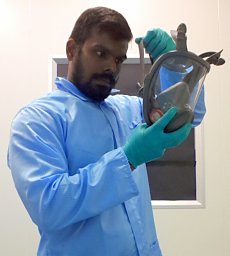 Santhana Krishnan合作论文数Energy Systems Research Institute (PERIN),, Prince of Songkla University14
 Piyarat Boonsawang合作论文数12Duangporn Kantachote合作论文数11
 Mohd Nasrullah合作论文数Faculty of Civil Engineering Technology, Universiti Malaysia Pahang (UMP),8
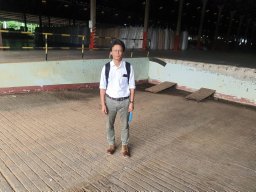 Arkom Palamanit合作论文数Fac Engn, Prince Songkla Univ8
 Chayanon Sawatdeenarunat合作论文数College of Agriculture, Forestry and Natural Resource Management, University of Hawaii at Hilo7
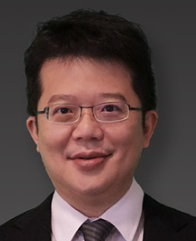 Ben Shao-Yuan Leu (呂紹元)合作论文数Department of Civil and Environmental Engineering, Faculty of Construction and Environment, The Hong Kong Polytechnic University7Chettaphong Phuttaro合作论文数6Pumin Kongto合作论文数5
 Reza Salehi合作论文数Dept Civil & Environm Engn, Prince Songkla Univ5
 Alissara Reungsang合作论文数Khon Kaen University5
 David Gabriel合作论文数Escola d'Enginyeria, Universitat Autònoma de Barcelona5
 Krishna Kumar Yadav合作论文数4Worakan Chetawan合作论文数4
 Hesam Kamyab合作论文数Malaysia Japan Int Inst Technol, Univ Teknol Malaysia4
 Suratsawadee Kungsanant合作论文数4
 John J. Classen合作论文数4
 Nakorn Tippayawong合作论文数Department of Mechanical Engineering;Faculty of Engineering;Chiang Mai University;Faculty of Engineering, Chiang Mai University4
 Araya Thongsai合作论文数3nastee kornochalert合作论文数3
 Jarunee Khempila合作论文数3
 Muhammad Ahmar Siddiqui合作论文数Dept Civil & Environm Engn, Hong Kong Univ Sci & Technol3Pongsak Lek Noophan合作论文数Faculty of Engineering, Kasetsart University3
 Rehman Shazia合作论文数Microbiology University of Karachi, University of Karachi3Bae Jaeho合作论文数3
 Jiayang Cheng (成家杨)合作论文数School of Environment and Energy, Peking University3
 Sumeth Dechrugsa合作论文数3
 Mohd Fadhil Md Din合作论文数Fac Civil Engn, Univ Teknol Malaysia3
 Shihwu Sung合作论文数Iowa State University, Iowa State University3
 Samir Kumar Khanal合作论文数Department of Molecular Biosciences and Bioengineering, University of Hawaii at Manoa3
 Benjamas Cheirsilp合作论文数Faculty of Agro-Industry, Prince of Songkla University3
 Ruengwit Sawangkeaw合作论文数Faculty of Science, Chulalongkorn University3
 Anukool Kietkwanboot合作论文数2
 Lee-Hyung Kim合作论文数2
 Shreeshivadasan Chelliapan合作论文数2Makatar Wae-hayee合作论文数2Chhenglong Tan合作论文数2Sasithorn Saipa合作论文数2tarinee sasibunyarat合作论文数2
 Amornpan Thaemngoen合作论文数2
 Ekasit Anancharoenwong合作论文数Fac Sci & Ind Technol, Prince Songkla Univ2
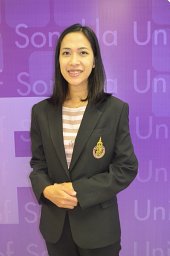 Sutida Marthosa合作论文数Fac Sci & Ind Technol, Prince Songkla Univ2
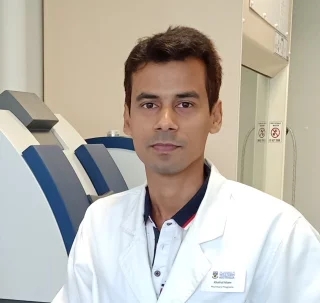 Md Khairul Islam合作论文数School of Allied Health, The University of Western Australia2
 Chakrit Tongurai合作论文数2Amel Gacem合作论文数2
 Ismat H Ali合作论文数2
 Noman Khalid Khanzada合作论文数School of Energy and Environment, City University of Hong Kong2




