目的 比较电磁导航机器人辅助与C形臂引导经皮微创空心钉内固定治疗Tile C型骨盆骨折的早期疗效.方法 采用回顾性队列研究分析2020年1月至2022年3月威海市中心医院收治的32例Tile C型骨盆骨折患者的临床资料,其中男18例,女14例;年龄36~60岁[(44.1±3.9)岁].17例采用电磁导航机器人辅助经皮微创空心钉内固定治疗(电磁导航组),15例采用C形臂引导经皮微创空心钉内固定治疗(C形臂引导组).比较两组手术时间、术中出血量、骶髂螺钉置入时间、耻骨支螺钉置入时间、下床活动时间、骨折愈合时间;术后1 d、6个月、12个月及末次随访时视觉模拟评分(VAS)和Majeed功能评分;术后并发症发生率.结果 患者均获随访12~24个月[(15.4±0.5)个月].电磁导航组手术时间和术中出血量分别为(42.0±2.5)min、(10.9±2.6)ml,短于或少于C形臂引导组的(50.0±3.5)min、(14.9±3.1)ml(P均<0.01).电磁导航组骶髂螺钉置入时间和耻骨支螺钉置入时间分别为(12.4±0.2)min、(10.1±0.3)min,短于 C 形臂引导组的(15.3±0.3)min、(13.2±0.3)min(P均<0.01).电磁导航组下床活动时间为(3.2±0.4)周,早于C形臂引导组的(3.5±0.4)周(P<0.05).两组骨折愈合时间差异无统计学意义(P>0.05).电磁导航组术后1d、6个月VAS分别为(4.4±0.3)分、(1.1±0.1)分,低于C形臂引导组的(4.8±0.4)分、(1.2±0.3)分(P<0.05或0.01);电磁导航组术后1 d、6个月Majeed功能评分分别为(37.3±1.1)分、(88.5±1.4)分,高于C形臂引导组的(30.7±4.2)分、(82.6±1.8)分(P均<0.01).两组术后12个月、末次随访时VAS和Majeed功能评分差异无统计学意义(P均>0.05).两组术后并发症发生率差异无统计学意义(P>0.05).结论 与C形臂引导相比,电磁导航机器人辅助经皮微创空心钉内固定治疗Tile C型骨盆骨折,可减少手术时间、术中出血量及螺钉置入时间,利于患者更早下床活动、早期缓解疼痛并促进功能恢复.
目的 探讨微创经皮钢板内固定术(minimally invasive percutaneous plate osteosynthesis,MIPPO)联合应用富血小板血浆(platelet-rich plasma,PRP)治疗闭合性胫骨干骨折的临床疗效.方法 选取青岛大学附属威海市中心医院自2019年1月到2020年5月收治的62例新鲜闭合胫骨干骨折患者.按照随机数字表法将患者分为对照组和治疗组,每组各31例.治疗组采用MIPPO的同时骨折断端应用PRP治疗,对照组为单纯用MIPPO治疗,不应用PRP.治疗组男19例,女12例;年龄19~60岁,平均(38.48±12.01)岁.对照组男21例,女10例;年龄19~57岁,平均(39.77±12.31)岁.记录并比较两组患者手术时间、术中出血量、骨折愈合时间、完全负重时间、并发症发生情况、术后12个月Johner-Wruhs优良率等.结果 患者均获随访,随访时间12个月以上.治疗组完全负重时间、骨折愈合时间、切口愈合情况均优于对照组,差异均有统计学意义(P<0.05).术后12个月采用Johner-Wruhs标准评价疗效,治疗组:优27例,良2例,中2例,优良率为93.55%;对照组:优19例,良3例,中5例,差4例,优良率70.97%.治疗组疗效优于对照组,差异有统计学意义(P<0.05).治疗组患者骨折均愈合,术后无明显并发症发生.对照组1例浅表感染,经换药切口愈合;1例延迟愈合,术后11个月骨折愈合.结论 PRP联合MIPPO技术能明显缩短骨折愈合时间,减少骨折延迟愈合,减少术后并发症,提高患肢功能活动,且未出现明显并发症,具有临床应用价值.
目的 探讨改良魔力螺钉技术治疗累及四方区髋臼骨折的临床疗效.方法 回顾性分析2016年9月至2019年12月采用改良魔力螺钉技术治疗的15例髋臼四方区骨折患者的临床资料.骨折按Letournel-Judet分型:双柱骨折8例,前柱骨折5例,横行骨折2例.术前采用3D打印技术打印骨折模型,模拟复位和螺钉置入位置、角度及长度.术中采用髂腹股沟入路暴露骨折,复位后行螺钉固定.结果 本组患者手术切口长8~11 cm,平均9.3 cm;术中透视次数6~9次,平均7次;手术时长95~130 min,平均112 min;出血量250~600 mL,平均400 mL.所有患者均随访3~12个月,平均6.8个月.术后复查X线,按Matta标准评价骨折复位:优11例,良4例,优良率100%.末次随访按改良Harris评分评价髋关节功能:优10例,良4例,可1例,优良率为93.3%.15例患者伤口均一期愈合,无切口感染、血管神经损伤、复位不良、延迟愈合、创伤性关节炎、股骨头坏死等并发症发生.1例患者出现股神经粘连卡压损伤,术后2个月行股神经粘连松解术,恢复良好.结论 改良魔力螺钉技术治疗髋臼四方区骨折是一种良好的选择,可有效提高复位质量,减少手术时间,降低手术风险.
Background: The lower leg joint is a pivot type talocrural or synovial joint situated at the crossroads of the tibia, fibula (leg bones), and bone (foot bone). When the lower appendage of a foot, suddenly, rolls or curves, a lower leg sprain occurs; which might even indicate lower leg joint fractures. Objective: To contemplate the therapeutic impacts of foundational, practical recovery combined with anticoagulant treatment in the post-operative time of lower leg fractures. Materials and Methods: A total of 231 patients with lower leg fractures who were previously treated in the clinic's muscular office from January 2017 to June 2019 were divided into the benchmark group and the exploratory gathering. The benchmark (control) group received regular restoration treatment, while the experimental group received foundational, practical recovery combined with anticoagulant medication. Results: Univariate investigation showed no significant difference for the clinical information like age and sex between the two groups (p> 0.05). The Wilcoxon rank whole test indicated that the trial group had a preferable treatment impact over the benchmark group (p<0.05). The endurance bend additionally uncovered that the frequency of postoperative unfavorable inconveniences in the trial group was lower than that in the benchmark group (p = 0.047). Fourteen days after the medical procedure, the serum factor levels (D-dimer content, fibrinogen) in the exploratory group were lower than those in the benchmark group (p<0.05), and the consequences of vascular shading Doppler ultrasound indicated that the occurrence of profound vein apoplexy in the trial group was lower than that in the benchmark group (p<0.05). Conclusion: Fundamental utilitarian restoration combined with anticoagulation treatment can improve the postoperative recovery impact of lower leg patients, decrease careful entanglements, and the event of profound vein apoplexy of the lower appendages.
1 病例介绍 患者 女,50岁.因“交通事故致全身多处疼痛、活动受限2.5h”于2019年8月入院.人院查体:患者下颌部、双膝、左踝皮肤挫伤并少量渗血;腰椎叩击痛,骨盆挤压分离试验(+),双髋关节因疼痛不能活动;右小腿近端轻度肿胀,可触及骨擦感;双足活动良好,足背动脉搏动有力.骨盆CT平扫+三维重建显示骨盆粉碎性骨折(TileC3型),其中耻骨上、下支骨折,右侧骶髂关节脱位伴右髂骨骨折(图la).初步诊断为左侧耻骨上、下支骨折,左侧坐骨骨折,左髋臼骨折,骶椎多发骨折,右侧耻骨下支骨折,右骶髂关节脱位,右腓骨近端骨折,以及左膝前、下颌部皮肤裂伤.
Among various fractures, ankle fracture is the most common one, and can be identified by X ray or CT. About 66% of ankle fractures are single fractures, and surgical treatments for them can be Kirschner wire, hollow screw, and steel plate internal fixations; and most of which require to be completed by C-arm fluoroscopy. However, there have been few reports on surgical treatment by magnetic navigation system. We herein report a case of closed reduction and Kirschner wire internal fixation for fracture of lateral ankle by magnetic navigation system.
目的 探析晚期类风湿性关节炎患者应用全膝关节置换术治疗的早期临床随访情况.方法 随机选择2015年2月-2016年8月我院收治的60例晚期类风湿性关节炎患者为研究对象,均给予全膝关节置换术治疗,随访3~6个月,观察评估患者治疗效果.结果 患者治疗前HSS评分为(58.6±4.2)分,治疗后HSS评分为(84.6±4.0)分,前后对比具有明显差异(P<0.05),其中优、良、差各38例、17例、5例,优良率达91.7%.结论 晚期类风湿性关节炎患者施行全膝关节置管术治疗的效果良好,可在临床中进一步应用与普及.
目的 观察低分子肝素钠预防全髋关节置换术后深静脉血栓的临床效果.方法 选取医院收治的人工髋关节置换术患者60例为研究对象,随机分为观察组和对照组,每组30例.均在术后进行相同的康复运动和物理治疗,观察组则加入低分子肝素钠,对照组采用阿司匹林;观察比较2组术后引流量、并发症发生率及深静脉血栓发生情况.结果 观察组术后引流量为(421.7±58.6) ml,高于对照组的(309.4±47.3) ml(P<0.01);观察组并发症发生率为6.7%,低于对照组的16.7%(P<0.05);观察组血栓发生率为13.3%,低于对照组的53.3%(P<0.01).结论 对全髋关节置换术患者使用低分子肝素钠能有效降低患者术后深静脉血栓的发生率,值得在临床实践中予以借鉴和推广.
目的 观察显微外科术后应用注射用七叶皂苷钠的治疗效果.方法 选取医院收治的择期显微外科手术患者96例,随机分为对照组和观察组,每组48例.对照组采取常规围手术期治疗,观察组在常规治疗的基础上术后应用注射用七叶皂苷钠治疗,在治疗后并针对采用预防并发症的护理措施.观察2组患者术后出现肿胀和血液回流情况,采用疼痛测评量表对2组术后疼痛情况进行测评,对患者血液内血清C-反应蛋白检测分析,并对2组治疗效果进行评价.结果 术后3 d、7 d,观察组肿胀评分低于对照组(P<0.05);观察组C-反应蛋白数值低于对照组(P<0.05);观察组VAS评分低于对照组(P<0.05).观察组总有效为91.67%,高于对照组的72.91%(P<0.05).结论 针对显微外科手术患者术后采用注射用七叶皂苷钠药物治疗并在术后采用预防并发症的护理措施,能有效减轻患者术后肿胀情况,加快患者静脉血流恢复正常,且帮助降低患者炎性反应水平,提高疾病治疗有效率.
As a specific inhibitor of neutrophil elastase, sivelestat sodium hydrate has primarily been used in the treatment of acute lung injury caused by various factors since its approval in 2002. Sivelestat sodium hydrate also improves post-traumatic knee osteoarthritis (KOA), although its underlying mechanisms of action have yet to be elucidated. The aim of the current study was to determine if sivelestat sodium hydrate improves post-traumatic KOA through nuclear factor (NF)-κB in a rat model. Treatment with sivelestat sodium hydrate significantly inhibited the induction of structural changes and significantly increased the vertical episode count and ipsilateral static weight bearing of the joint in KOA rats (all P<0.01). Sivelestat sodium hydrate significantly inhibited tumor necrosis factor-α and interleukin-6 production, serum nitrite levels, inducible nitric oxide synthase protein expression and high mobility group box 1 (HMGB1) secretion in KOA rats compared with the model group (all P<0.01). Sivelestat sodium hydrate also significantly suppressed p50/p65 DNA binding activity and NF-κB and phosphorylated inhibitor of κB protein expression in the joints of KOA rats compared with the model group (all P<0.01). These results suggest that sivelestat sodium hydrate improves post-traumatic KOA through HMGB1 and NF-κB in rats.
Objective To describe the method and review the complex thumb defect repaired by combine tissue flap transplantation with the hallux nail flap, the intrinsic muscle of foot and free the second toe. Methods From August 2010 to October 2014, 17 cases with radial side large skin defett combined the thumb Ⅳ degree、Ⅴ degree defect (the big thenar muscle was complete), were reconstructed by the second digit combination femoral anterolateral flap graft. Radial side large skin defect and big thenar muscle defect with thumb Ⅴ degree、 Ⅵ degree defect in 4 cases were used flap combined with thumb, toe short extensor second digit transplantation to repair and reconstruction. Results Followed-up for 2 years, the reconstruct fingers and transplant flap restored good feeling function, two points discrimination was 3~7 mm. The pinch distanced was reconstructed thumb and fingers less than 1 cm in 7 cases, less than 2 cm in 12 cases, less than 3cm in 2 cases; opposing function of thumb was Ⅲ degree in 16 cases, Ⅱ degree was in 4 cases, Ⅰ degree was in 1 case. Kawabate grading evaluation of hand function was adopted, excellent in 11 cases, good in 9 cases, and poor in 1 case, the good and excellent rate of 95.2%. Reconstructing thumb BMRC sensory function scores, giving a good to excellent rate was 95.2%. Conclusion It's an ideal method to repair the complex thumb defect by combine transplantation of theanterolateral thigh flap, the intrinsic muscle of foot and other tissue--transplanting the second toe, hallux nail flap.
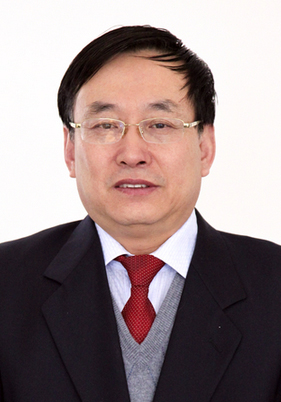 Haibo Cong (丛海波)合作论文数Shandong Wendeng Osteopathic Hospital;Shandong University of Traditional Chinese Medicine8
 ZhiPing Yu (余志平)合作论文数7Li-fang ZHOU (周立芳)合作论文数3jianfei bi (毕建飞)合作论文数3haitao wang (王海涛)合作论文数3Changzheng Yu合作论文数2Xiaofeng Yu合作论文数2Pengyu Hu (胡鹏宇)合作论文数2YingJie Ding (丁英杰)合作论文数2Cong Zhichao (丛志超)合作论文数1Lijun Zhao合作论文数1Haitao Wang合作论文数1GuoFei Xing (邢国飞)合作论文数1XiaoKe Wang (王晓科)合作论文数1ZhiHao Wang (王志浩)合作论文数1




