In the original article, there were some errors in the list of authors and affiliations. Their correct version is given in this erratum.
针对强流质子同步加速器中的束流负载效应,基于中国散裂中子源/快循环同步加速器射频系统样机,在不降低腔体Q值的前提下,以数字化低电平控制为主要技术手段,对束流负载效应进行补偿.提出完整的由多控制环路组成的束流负载效应补偿方案.该方案主要由引入自适应算法的束流前馈和高带宽低延时的射频直接反馈,以及在束流负载下对腔体谐振状态进行控制的腔体预失谐和动态调谐等组成.
利用同轴线理论分析了扫频工作的中国散裂中子源(CSNS)铁氧体加载同轴谐振腔的主要性能参数.给出了铁氧体加载腔在三维电磁场仿真计算中的建模过程,在场分析的基础上提出了陶瓷介质等效谐振电容的方法.将模拟计算得到的腔体的谐振特性与同轴线理论计算和实际腔体测量结果相比较,三者吻合得非常好.通过对腔体样机母排引入的寄生模的实验和模拟研究,提出了解决寄生模问题的方法;通过对腔体内铁氧体环的填充系数的研究,给出了短尺寸腔的扫频工作方案.
为测试环射频铁氧体加载同轴谐振腔中铁氧体环的性能和批量筛选铁氧体环,研制了铁氧体双环测量系统.与国内外同类设备相比,该系统采用了扫频测量的闭环控制,可以模拟射频腔的运行工况、实现对铁氧体环性能的动态测量.扫频范围测量结果表明:该测试系统满足在0~3 000 A偏流调谐范围内的1.02~2.44 MHz频率覆盖要求,固定频率点的高功率测量结果和材料性能参数与日本J-PARC测量数据吻合.
The random aggregate model was used to simulate the structure of concrete, and microscopic damage and crack of concrete in splitting tensile tests were simulated by Finite Element Method. The process of splitting tensile damage for concrete was studied. The result shows that the method of numerical simulation based on random aggregate model is mainly feasible, and the surface between concrete aggregate and mortar is the weak part
介绍了中国散裂中子源/快循环质子同步加速器射频同步相位环路的数字化控制系统设计方案,并利用ALTERA公司的现场可编程门阵列开发面板进行了系统开发,完成了控制回路的编程与仿真,进行了桌面实验和低功率实验,并对其进行了分析与讨论.实验结果表明:同步相位环路运行稳定,控制误差小于1°,满足物理设计要求.
CSNS accelerator mainly consists of an H linac and a proton rapid cycling synchrotron. It is designed to accelerate proton beam pulses to 1.6GeV kinetic energy at 25 Hz repetition rate, striking a solid metal target to produce spallation neutrons. The accelerator is designed to deliver a beam power of 120 kW with the upgrade capability up to 500 kW, The CSNS accelerator is the first large-scale, high-power accelerator project to be constructed in China and thus we are facing a lot of challenges in some key technologies. A series of R&D for major prototypes have being conducted since 2006, including an H ion source, DTL tank, RF power supply for the linac, injection/extraction magnets and its pulse power supplies, dipole and quadrupole prototype magnets in the ring and its power supplies, ferrite-loaded RF prototype cavity, ceramic vacuum chamber, control and some beam diagnostics. This paper will briefly introduce the design and R&D status of the CSNS accelerator.
A proton therapy facility based on a linac injector and a slow-cycling synchrotron is proposed. To obtain good treatments for different cancer types, both the spot scanning method and the double-scattering method are adopted in the facility, whereas the nozzles include both gantry and fixed beam types. The proton accelerator chain includes a synchrotron of 250 MeV in maximum energy, an injector of 7 MeV consisting of an RFQ and a DTL linac, with a repetition rate of 0.5 Hz. The slow extraction using the third-order resonance and together with the RFKO method is considered to be a good method to obtain a stable and more-or-less homogenous beam spill. To benefit the spot scanning method, the extraction energy can be as many as about 200 between 60 MeV and 230 MeV. A new method - the emittance balancing technique of using a solenoid or a quadrupole rotator is proposed to solve the problem of unequal emittance in the two transverse planes with a beam slowly extracted from a synchrotron. The facility has been designed to keep the potential to be upgraded to include the carbon therapy in the future.
The China Spallation Neutron Source (CSNS) complex consists of an H- linear accelerator, a rapid cycling synchrotron accelerating the beam to 1.6 GeV, a solid tungsten target station and instruments for spallation neutron applications. The facility operates at a 25-Hz repetition rate with an initial design beam power of 120 kW and is upgradeable to 500 kW. The primary challenge is to build a robust and reliable user-friendly facility with upgrade potential at a fraction of the "world standard" cost. Success of the project relies on the results of prototyping research & development (R&D) of key technical systems and components. This paper discusses the prototyping experiences of the past two and a half years.
The China Spallation Neutron Source (CSNS) is an accelerator based multidiscipline user facility planned to be constructed in Dongguan, Guangdong, China. The CSNS complex consists of an negative hydrogen linear accelerator, a rapid cycling proton synchrotron accelerating the beam to 1.6GeV energy, a solid tungsten target station, and instruments for spallation neutron applications. The facility operates at 25Hz repetition rate with an initial design beam power of 120kW and is upgradeable to 500kW. The primary challenge is to build a robust and reliable user's facility with upgrade potential at a fraction of “world standard” cost. We report the status, design, R&D, and upgrade outlook including applications using spallation neutron, muon, fast neutron, and proton, as well as related programs including medical therapy and accelerator-driven sub-critical reactor (ADS) programs for nuclear waste transmutation.
Beam loss control is a key point in the design of high power facilities like the Rapid Cycling Synchrotron(RCS) of the China Spallation Neutron Source(CSNS).The patterns of the RF acceleration voltage,frequency and phase are the main factors to determine the longitudinal motion of beam and the beam loss level.Therefore,the low-level RF system(LLRF) control system of CSNS/RCS must be stable and precise.In this paper,the design of the LLRF control system of CSNS/RCS was presented,especially the voltage control loop.In the loop,the difference between the deteeted voltage and a pattern is fed to a PI compensation function,and the PI output controls the amplitude of the RF signal.Through the modeling and analysis of each part of the control loop,a proper PI controller design was obtained.Simulations on the digital control system were also carried out by using DSP builder of ALTERA corporation.The simulation results indicate that the voltage control loop can run steadily for the step response error would return to zero in about 10 μs(400 system clock periods).
The China Spallation Neutron Source (CSNS) is a high-power, accelerator-based project currently under preparation. The accelerator complex consists of an H- ion source, an H- linac, a rapid-cycling proton synchrotron, and the transport lines. During the past year, the design of most accelerator systems went through major iterations, and initial research and developments was started on the prototyping of several key components.
 Jingyu Tang (唐靖宇)合作论文数School of Nuclear Science and Technology, University of Science and Technology of China10
 shi caitu合作论文数5Changdong Deng (邓昌东)合作论文数5Xiao Li (李晓)合作论文数5
 Jing Zhang (张旌)合作论文数5Haiyi Dong (董海义)合作论文数5
 Shinian Fu (傅世年)合作论文数Institute of High Energy Physics, Chinese Academy of Sciences5Yanghuafu Ou (欧阳华甫)合作论文数中国科学院大学高能物理研究所4
 Wen Kang (康文)合作论文数University of Chinese Academy of Sciences;Institute of High Energy Physics, Chinese Academy of Sciences4Yunlong Chi (池云龙)合作论文数4
 Shouxian Fang (方守贤)合作论文数Institute of High Energy Physics, Chinese Academy of Sciences4
 Jie Wei合作论文数Department of Computer Science, Grove School of Engineering, The City College of New York4Zonghua Zhang合作论文数3Kaixi Huang合作论文数3Zhongxiong Xu合作论文数3Huamin Qu合作论文数3
 Taoguang Xu (徐韬光)合作论文数中国科学院大学高能物理研究所3
 Sheng Wang (王生)合作论文数Institute of High Energy Physics, Chinese Academy of Sciences;University of Chinese Academy of Sciences3
 Lan Dong (董岚)合作论文数Institute of High Energy Physics, Chinese Academy of Sciences;University of Chinese Academy of Sciences3
 Qing Qin (秦庆)合作论文数School of Physics, Peking University;Institute of High Energy Physics, Chinese Academy of Sciences;University of Chinese Academy of Sciences3Yanwei Chen合作论文数3QIU Ying-wei合作论文数2
 Tao Zhu (朱涛)合作论文数Institute of Physics, Chinese Academy of Sciences;University of Chinese Academy of Sciences2
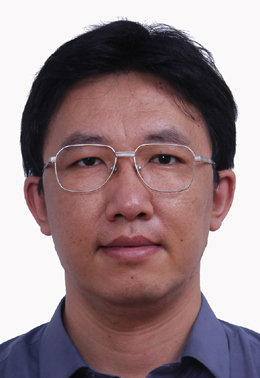 Tianjiao Liang (梁天骄)合作论文数中国科学院大学高能物理研究所2Weiling Huang (黄蔚玲)合作论文数2
 Xuejun Yin (殷学军)合作论文数Institute of Modern Physics, Chinese Academy of Sciences;University of Chinese Academy of Sciences2
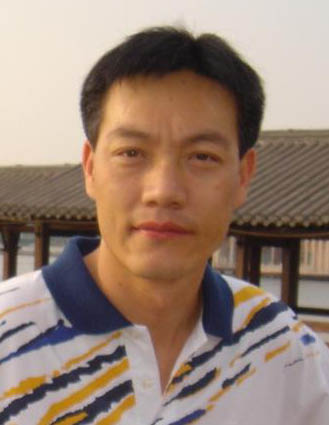 Xuejun Jia (贾学军)合作论文数Institute of Physics, Chinese Academy of Sciences2
 Chunhong Wang (王春红)合作论文数Institute of High Energy Physics, Chinese Academy of Sciences2
 Juzhou Tao (陶举洲)合作论文数中国科学院高能物理研究所2
 Hua Shi (施华)合作论文数Institute of High Energy Physics, Chinese Academy of Sciences;University of Chinese Academy of Sciences2
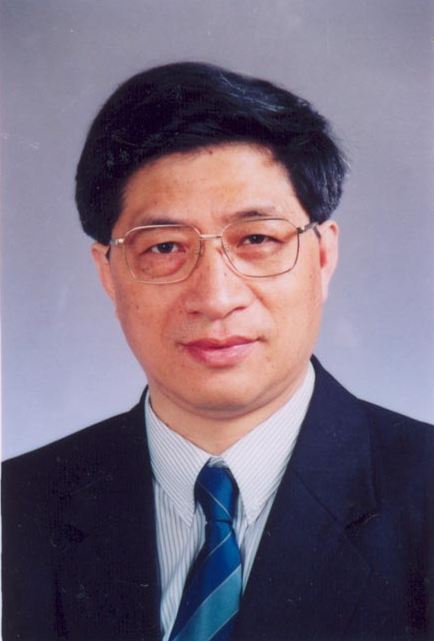 Hesheng Chen (陈和生)合作论文数Institute of High Energy Physics, Chinese Academy of Sciences2Xiangcheng Kong合作论文数2Zuying Zhou (周祖英)合作论文数1Mingtao Kang (康明涛)合作论文数1Yingtan Zhao (赵映潭)合作论文数1Zhongwei Wen (温中伟)合作论文数1Yinglin Ma (马应林)合作论文数1Likun Xie合作论文数1Danyang Zhu (朱丹阳)合作论文数1Xiaoyang Sun (孙晓阳)合作论文数1Binbin Qi (齐斌斌)合作论文数1Zhaohui Song合作论文数1Min Zhou合作论文数1Guo-Ping Lin (林国平)合作论文数1Zhao Fa-Cheng合作论文数1Xialing Guan合作论文数1Hongqing Tang (唐洪庆)合作论文数1Huaiyong Bai合作论文数1Mei Yang合作论文数1




