Multi-view unsupervised feature selection enhances model interpretability by extracting salient features from unlabeled, heterogeneous data. Existing algorithms heavily rely on local graph construction, which inherently suffers from a severe truncation effect. By forcing the similarities beyond local neighborhoods to zero, they inevitably discard valuable global structural information. Furthermore, the intrinsic diversity of cross-view data fundamentally stems from the diversity of their underlying bases—a critical aspect that remains largely overlooked in current literature. To address these issues, we propose a novel algorithm that simultaneously uses Local and Global clustering to guide Multi-view unsupervised Feature Selection (LGMFS). Specifically, within the projected space, we employ multi-view simultaneous orthogonal basis clustering to capture the diversity of the orthogonal bases while maintaining the consistency of the clustering indicator matrix. Then, LGMFS learns the global structure information by global subspace clustering and learns the optimal clustering structure by nonnegative structured graph learning to guide feature selection. An efficient alternating iterative algorithm is designed to solve the optimization problem, and we verified the convergence of the algorithm from theoretical analysis and experimental results. Systematic experimental results proved the effectiveness and advancement of LGMFS. We have successfully applied the unsupervised LGMFS to single-cell multi-omics and identified a large number of marker genes. It can effectively distinguish cell subpopulations and reveal the practical application value of LGMFS.
As a fundamental task in image processing, blind image restoration (BIR) faces significant challenges due to the unknown nature of the degradation process. While transformer-based methods have shown promise in various applications, they encounter difficulties in BIR. One key challenge is that the complexity of degradation easily leads to incorporate irrelevant information into their attention mechanisms, thereby hindering restoration performance. To address this challenge, sparsification strategies have been commonly adopted. However, existing sparse transformer-based methods typically determine sparse members through fixed patterns such as constant thresholds or predefined sources, making their sparsification strategies too rigid. To tackle this issue, we propose WSformer, a Wavelet-based Sparse transformer tailored for BIR, which offers three key advantages. First, we design a Sparse Reciprocal Multi-head Self-Attention (SR-MSA) mechanism in the attention layer. This mechanism employs sparse and reciprocal strategies to adaptively select reliable information, while operating across channels to reduce computational complexity. Second, recognizing that feed-forward networks in existing transformer blocks fail to effectively leverage global information, we develop a Recalibrated Feed-Forward Network (RFFN). It fully exploits the fusion of local and global information, enhancing the robustness of feature learning. Finally, to mitigate the increased computational burden introduced by these innovations, we equip WSformer with wavelet transform. Combined with a U-shaped architecture, it enables WSformer to achieve an optimal balance between performance and inference time. Extensive experiments on multiple BIR tasks validate WSformer’s effectiveness in both quantitative metrics and visual quality. The code is available at https://github.com/CanZhang01/WSformer.
Dictionary learning (DicL) is a fundamental technique in sparse representation, widely applied in image processing. As a promising deep extension of traditional DicL, Deep K-SVD (DKSVD) inherits the interpretability of classical models while benefiting from the strong learning capacity of deep networks. However, its reliance on static dictionaries limit adaptability in complex scenarios. To overcome this limitation, we propose DS-DKSVD, a dynamic-static extension of DKSVD, which integrates a hybrid dictionary composed of static and dynamic components. The static component, represented by network parameters, captures global features from training data, while the dynamic component, generated by a dedicated sub-network, adapts to specific input characteristics. During patch averaging, DS-DKSVD dynamically assigns weights, enhancing inter-patch variation handling. Extensive experiments on non-blind and blind image denoising demonstrate its superiority over existing methods. DS-DKSVD achieves up to 0.46 dB and 0.42 dB improvements in PSNR over the original DKSVD and its adaptive variant (AKSVD), respectively. Beyond denoising, a preliminary image classification task highlights the broader applicability of DS-DKSVD. Complementing these quantitative results, visualizations of the learned hybrid dictionary provide qualitative evidence of its interpretability, revealing the complementary roles of static and dynamic components. The source code for the DS-DKSVD is publicly available at https://github.com/yaojingzeo/DS-DKSVD .
Plug-and-Play Forward-Backward Splitting (PnP-FBS) leverages one off-the-shelf denoiser for image reconstruction in an iterative fashion. With this paradigm, the same denoiser can be employed for various reconstruction tasks without requiring any modification. Due to the simplicity and effectiveness, PnP-FBS has attracted widespread attention in imaging community. As the iteration style in implementation, its stability analysis has become a fundamental topic. However, this issue is particularly challenging, especially for powerful deep convolutional neural network (DCNN) denoisers, since they usually lack closed-form expressions. Recently, opening a new path different from DCNNs, researchers have proposed a novel fixed deep denoiser by unfolding FBS. Encouragingly, for PnP-FBS with this denoiser, the outputs of iterations converge to a high-quality reconstruction, thereby ensuring the stability. Notably, it is well known that, benefiting from flexibility, replacing a fixed denoiser with its adaptive version generally yields superior performance in practice. Motivated by this viewpoint and the unfolding FBS strategy in existing work, in this paper, we propose a method for constructing adaptive deep denoisers. For the constructed denoisers, it is theoretically proven that, under a mild assumption, there exists an upper bound on the distance between the outputs of the PnP-FBS iterations and the ground-truth image. That is, the stability of PnP-FBS is guaranteed. To validate the theoretical results, we develop a specific instance of the denoisers following the proposed construction method and plug it into PnP-FBS for image reconstruction. Experimental results demonstrate the stability of the iterations. Additionally, as expected, with the developed adaptive instance, the PnP-FBS achieves more accurate reconstructions than the one with the fixed version.
As the use of geometric scanners for 3D model creation continues to grow, there arises an increasing requirement for efficient mesh smoothing algorithms. Balancing the quality of smoothing and processing speed involves a tradeoff. Achieving high-quality results typically requires a substantial investment in computational resources, which can have an impact on processing speed. Motivated by recent progress in image smoothing techniques, we present a novel global optimization-based approach designed to concurrently deliver high-quality smoothing and expedited processing speed. The proposed method relies on a non-convex optimization, enforcing mesh smoothness through generalized Charbonnier penalty. To address the non-convex optimization problem, we introduce an efficient algorithm termed iterative least squares, which is based on additive half-quadratic minimization and variable-splitting. Initially, this optimization can be applied to the normal field, and subsequently, the vertex positions are reconstructed from the updated normal field. This process is essential for preserving mesh geometry features during smoothing. The experimental results illustrate the flexibility, effectiveness and efficiency of the proposed approach.
Plug-and-Play alternating directions method of multipliers (PnP-ADMM) is an emerging paradigm for image reconstruction. It is obtained by replacing the proximal operator (associated with the regularizer) in ADMM with a powerful denoiser. Remarkably, it has exhibited great success in many imaging applications. Owing to its iterative manner, convergence analysis has been an active research topic. Recently, the convergence of PnP-ADMM with fixed linear symmetric denoisers has been proved. Notably, an adaptive denoiser generally achieves superior performance compared to its fixed version. Inspired by this observation, we extend the fixed linear symmetric denoisers to adaptive ones in this paper. Under a mild assumption, the convergence of PnP-ADMM with adaptive linear symmetric denoisers is proved for inpainting, deblurring, and superresolution. Experimental results on the above three tasks demonstrate our convergence theory. Meanwhile, PnP-ADMM with adaptive linear symmetric denoisers displays an enormous improvement over the one with the fixed version.
Non-local block (NLB) is a breakthrough technology in computer vision. It greatly boosts the capability of deep convolutional neural networks (CNNs) to capture long-range dependencies. As the critical component of NLB, non-local operation can be considered a network-based implementation of the well-known non-local means filter (NLM). Drawing on the solid theoretical foundation of NLM, we provide an innovative interpretation of the non-local operation. Specifically, it is formulated as an optimization problem regularized by Shannon entropy with a fixed parameter. Building on this insight, we further introduce an adaptive regularization strategy to enhance NLB and get a novel non-local block named ARNLB. Preliminary experiments on semantic segmentation demonstrate its effectiveness.
As a well-known nonlinear tool, mathematical morphology (MM) is still active in image processing. Benefiting from the fixed structuring element (SE), traditional MM (TMM) gets solid theoretical foundation. However, due to the inherent diversity of pixels in an image, the rigid SE paradigm is not always practical. As a result, the development of morphology with adaptive SE, known as adaptive MM (AMM), has been a significant challenge. In this work, we present a novel approach for designing adaptive SE using the alpha-cut of a fuzzy set. By implementing dilation and erosion operations serially, we obtain an AMM (named SAMM) that is both adaptive to image content and robust to noise. Additionally, the operators in SAMM inherit important properties from TMM as much as possible. We provide theoretical proofs and simulated results to support our conclusion. Preliminary experiments on edge detection and noise reduction confirm the effectiveness of our SAMM both quantitatively and perceptually. In the denoising experiments, SAMM achieves the best performance in the nine algorithms involved, with its PSNR value surpassing the second -ranked approach by more than 0.6 dB overall. Additionally, its SSIM quantification metric also ranks prominently among the top performers.
. The attention mechanism has become a crucial technique in deep feature representation for computer vision tasks. Using a similarity matrix, it enhances the current feature point with global context from the feature map of the network. However, the indiscriminate utilization of all information can easily introduce some irrelevant contents, inevitably hampering performance. In response to this challenge, sparsing, a common information filtering strategy, has been applied in many related studies. Regrettably, their filtering processes often lack reliability and adaptability. To address this issue, we first define an adaptive-reciprocal nearest neighbors (A-RNN) relationship. In identifying neighbors, it gains flexibility through learning adaptive thresholds. In addition, by introducing a reciprocity mechanism, the reliability of neighbors is ensured. Then, we use A-RNN to rectify the similarity matrix in the conventional attention module. In the specific implementation, to distinctly consider non-local and local information, we introduce two blocks: the non-local sparse constraint block and the local sparse constraint block. The former utilizes A-RNN to sparsify non-local information, whereas the latter uses adaptive thresholds to sparsify local information. As a result, an adaptive sparse attention (ASA) module is achieved, inheriting the advantages of flexibility and reliability from A-RNN. In the validation for the proposed ASA module, we use it to replace the attention module in NLNet and conduct experiments on semantic segmentation benchmarks including Cityscapes, ADE20K and PASCAL VOC 2012. With the same backbone (ResNet101), our ASA module outperforms the conventional attention module and its some state-of-the-art variants.
针对传统数学形态学(TMM)细节保持能力较差,以及现有自适应改进方法数学性质丢失的问题,提出了一种针对多模态图像的自适应引导形态学(GAMM).首先,通过考虑输入图像和引导图像的联合信息进行结构元素的构建,从而在一定程度上增强了相应算子对噪声的鲁棒性;其次,借助3σ原则,使结构元素成员的选取能够自适应于图像内容;最后,利用稀疏矩阵的哈达玛积对结构元素施加一个对称性约束.理论证明和仿真实验均表明所提形态学的相应算子能够同时具备保序性和附益性等重要数学性质.在多模态图像上进行去噪实验,结果表明GAMM比TMM以及近年所提出的鲁棒自适应形态学(RAMM)在峰值信噪比(PSNR)上高出约2~3 dB;同时,主观视觉效果对比表明了GAMM在噪声去除、结构保持方面明显优于TMM和RAMM.
Human society always wants a safe environment from pollution and infectious diseases, such as COVID-19, etc. To control COVID-19, we have started the big effort for the discovery of a vaccination of COVID-19. Several biological problems have the aspects of symmetry, and this theory has many applications in explaining the dynamics of biological models. In this research article, we developed the stochastic COVID-19 mathematical model, along with the inclusion of a vaccination term, and studied the dynamics of the disease through the theory of symmetric dynamics and ergodic stationary distribution. The basic reproduction number is evaluated using the equilibrium points of the proposed model. For well-posedness, we also test the given problem for the existence and uniqueness of a non-negative solution. The necessary conditions for eradicating the disease are also analyzed along with the stationary distribution of the proposed model. For the verification of the obtained result, simulations of the model are performed.
Leveraging the capabilities of traditional dictionary learning (DicL) and drawing upon the success of deep neural networks (DNNs), the recently proposed framework of deep convolutional dictionary learning (DCDicL) has exhibited remarkable behaviours in image denoising. Note that, the application of the DCDicL method is confined to single modality scenarios, whereas the images in practice often originate from diverse modalities. In this paper, to broaden the application scope of the DCDicL method, we design a multi-modal version of it, dubbed MMDCDicL. Specifically, within the mathematical model of MMDCDicL, we adopt an analytical approach to tackle the sub-problem linked to the guidance modality, harnessing its inherent reliability. Meanwhile, like in DCDicL, we utilize a network-based learning approach for the noisy modality to extract trustworthy information from the data. Based on the solution, we establish an interpretable network structure for MMDCDicL. Additionally, wherein, we design a multi-kernel channel attention block (MKCAB) in the structure to efficiently integrate the information from diverse modalities. Experimental results suggest that MMDCDicL can reconstruct higher-quality outcomes both quantitatively and perceptually. Code is available at http://www.diplab.net/lunwen/mmdcdicl.htm.
In recent years, image denoising algorithms has witnessed remarkable advancements, largely driven by the speedy development of deep learning techniques. Among these advancements, Denoising Convolutional Neural Network (DnCNN) is a milestone, owing to its powerful performance. However, traditional DnCNN architecture heavily rely on local convolutional operations for feature extraction, which inherently limitation restricts its capacity to capture long-range dependencies, potentially leading to the loss of vital structural information within images. To handle with this limitation, we propose a solution dubbed Cross Attention block. The purpose of this specific block is to extract correlations among non-local features from various source inputs, thereby broadens the receptive field and augments the network's capacity to capture structural information. Furthermore, we integrate the Cross Attention block into DnCNN named CADnCNN, which significantly improves the ability to preserve image details and structural integrity in denoising tasks. Experiments have affirmed the effectiveness of our proposed method.
因具备强大的细节刻画能力,双三次插值已成为图像超分中的常用算法.由于其借助在空间距离上与当前像素距离最近的 16 个像素构造插值基函数,故双三次插值本质上属于一种局部算法.这也意味着该算法的插值过程尚不能有效利用图像周期性(非局部性),从而致使其细节保持能力仍存在进一步提升空间.针对这一问题,通过对原插值基函数施加非局部权重修正,在一个更大范围内选取更多像素对当前像素的灰度值进行估计,实现了经典双三次插值算法的非局部拓展.在灰度图像和彩色图像两个不同场景上进行超分实验,主观视觉效果和客观量化指标均表明所提算法的有效性.
As a milestone in semantic segmentation, Non-Local Block (NLB) efficiently enhances the ability of regular convolutional neural networks in capturing long-range dependencies. From the view of mathematical modeling, NLB is based on a single Gaussian kernel. Existing works suggest that multi-kernel methods generally get more powerful performance in edge detection, which is crucial to image segmentation. Motivated by this consideration, we design a Multi-Kernel Non-local Block (MKNLB). As expected, the proposed MKNLB exhibits excellent behaviors when being used in semantic segmentation. Additionally, with the distributive law of matrix multiplication, the complexity of its implementation is comparable to that of the standard NLB. Theoretical analyses and preliminary experiments on benchmark datasets both support the same conclusions.
In this paper, we propose a vectorial minimized surface regularizer based image registration model which is suitable for smooth and non-smooth registration. In order to avoid the mesh folding phenomenon, inequality constraint on transformed Jacobian matrix determinant is imposed. In addition, we use Lagrange multipliers combining Gauss-Newton method with Armijo line search with the multilevel method to solve the corresponding model. And guided filter is utilized on the displacement field before and after the registration of each level to avoid noise and preserve the edge information of the image. Furthermore, the convergence analysis of the algorithm is given. Finally, numerical experiments using both synthetic and realistic images are carried out to show the robustness of the proposed model and the effectiveness of the algorithm. (c) 2022 Elsevier Inc. All rights reserved.
非局部均值滤波器通过欧氏距离来衡量非局部区域内像素块之间的相似性,取得了较好的去噪效果.但其对局部性考虑不足,易导致一些非周期性的有用细节在图像去噪过程中被光滑掉.针对此问题,引入空域局部、非局部联合自适应方法,对原滤波器进行改进;同时,考虑到多模态图像在实际中的应用愈加广泛,将所设计滤波器推广至跨模态场景,得到了跨模态空域自适应联合均值滤波器.经典图像实验的主观视觉效果与客观的量化指标均表明,所设计的滤波器较原算法取得了更好的滤波性能.
作为一种常用的图像分割算法,模糊C均值聚类(FCM)对噪声过于敏感.针对此缺陷,研究者们提出了诸多改进算法.然而,现有算法在面对较为复杂的噪声场景时,所得图像分割效果往往不令人满意.通过对经典FCM算法的目标函数施加非局部正则化,该文给出一个FCM非局部改进算法(FCM_UNL).在复杂噪声场景下进行图像分割时,FCM_UNL能保持较高的分类精度.初步的图像分割实验表明了所提算法的有效性.
With the development of neural networks, some learning-based image denoising methods have achieved powerful performance. However, they usually use single-modal information. So, their behaviors will be further improved if more believable (guided) modals can be introduced. In this work, we propose a novel architecture (MDCDicL) of deep neural network for multi-modal image denoising. Based on K-SVD, we give the constrained optimization learning model of MDCDicL. Then, with Half Quadratic Splitting, the model is unfolded into a deep convolution neural network. As expected, with the help of the guided modal, MDCDicL exhibits powerful performance. Its effectiveness is preliminarily verified on a standard flash/non-flash dataset.
Mathematical morphology (MM) is traditional and yet applied in many areas. Among the relevant researches, nonlocal extensions have been studied due to their advantages of adaptivity and nonlocal self-similarity. However, these extensions are fragile to noises and easily result in gray value deviation (the maximum grayscale value is changed significantly). In this paper, a local-nonlocal mathematical morphology (LNLMM) is proposed: we use flat structuring element (SE) to avoid gray value deviation and introduce local information to suppress noises. Moreover, to speed up the nonlocal computation involved, we construct the SE in low-dimensional space. Benefiting from the constraint of k-reciprocal nearest neighbors (KRNN) on the SE, the operators of LNLMM theoretically inherit the important mathematical properties from traditional MM, that gives solid supports in applications. With denoising experiments, the powerful performance of LNLMM is preliminarily verified.
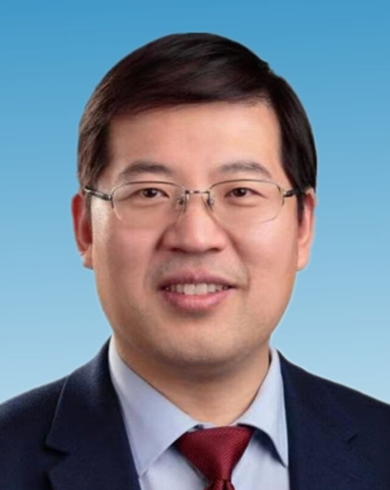 Xinbo Gao (高新波)合作论文数School of Electronic Engineering, Xidian University8
 Mingzhu Zhang合作论文数7
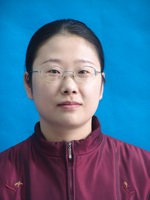 Jie Li (李洁)合作论文数School of Electronic Engineering, Xidian University7
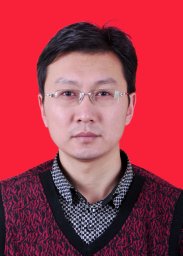 Lishan Qiao合作论文数Nanjing University of Aeronautics and Astronautics, Liaocheng University6Huichao Sun合作论文数5
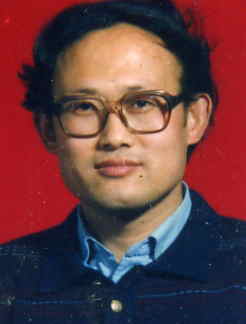 Songcan Chen (陈松灿)合作论文数College of Computer Science & Technology, Nanjing University of Aeronautics & Astronautics5HongYan Han合作论文数4
 Tingting Liu (刘婷婷)合作论文数School of Electronic Information Engineering, Beihang University4Jie Chen (陈杰)合作论文数3Meng Guang-wu合作论文数2Chen Jie (陈杰)合作论文数2Wenhong Wang合作论文数2Le Xing合作论文数2
 Shuqin Zhu合作论文数Liaocheng Univ, Sch Comp Sci, Liaocheng 252059, Shandong, Peoples R China2DeXin Chen (陈德新)合作论文数2Jin Zhang (张瑾)合作论文数College of Instrumentation & Electrical Engineering, Jilin University2Limei Zhang合作论文数2Dongmei Zhang合作论文数1Ying Wang合作论文数1Humera Batool合作论文数1
 Chuanyan Wu合作论文数Shandong Univ, Sch Control Sci & Engn, Jinan 250061, Shandong, Peoples R China1Ting-ting LIU (刘婷婷)合作论文数1JinFeng Zhou (周金峰)合作论文数1YiNing Zhang (张义宁)合作论文数1ShuFeng Zhou (周书锋)合作论文数1GuangWu Meng (孟广武)合作论文数1王瑛合作论文数Department of Business Administration, School of Economics & Management, Xidian University1Jianping Zhang合作论文数1
 Yuhua Fan (范玉华)合作论文数Ocean University of China1
 Yusen Zhang (张玉森)合作论文数School of Mathematics and Statistics, Shandong University, Weihai1Xueyan Liu合作论文数1
 Bo Han合作论文数Department of Computer Science, George Mason University1
 Guoying Zhao (赵国英)合作论文数Center for Machine Vision and Signal Analysis, Faculty of Information Technology and Electrical Engineering, University of Oulu1
 Xu Kong (孔旭)合作论文数University of Science and Technology of China1




