Refraining from confidently predicting when faced with categories of inputs different from those seen during training is an important requirement for the safe deployment of deep learning systems. While simple to state, this has been a particularly challenging problem in deep learning, where models often end up making overconfident predictions in such situations. In this work we present a simple, but highly effective approach to deal with out-of-distribution detection that uses the principle of abstention: when encountering a sample from an unseen class, the desired behavior is to abstain from predicting. Our approach uses a network with an extra abstention class and is trained on a dataset that is augmented with an uncurated set that consists of a large number of out-of-distribution (OoD) samples that are assigned the label of the abstention class; the model is then trained to learn an effective discriminator between in and out-of-distribution samples. We compare this relatively simple approach against a wide variety of more complex methods that have been proposed both for out-of-distribution detection as well as uncertainty modeling in deep learning, and empirically demonstrate its effectiveness on a wide variety of of benchmarks and deep architectures for image recognition and text classification, often outperforming existing approaches by significant margins. Given the simplicity and effectiveness of this method, we propose that this approach be used as a new additional baseline for future work in this domain.
Refraining from confidently predicting when faced with categories of inputs different from those seen during training is an important requirement for the safe deployment of deep learning systems. While simple to state, this has been a particularly challenging problem in deep learning, where models often end up making overconfident predictions in such situations. In this work we present a simple, but highly effective approach to deal with out-of-distribution detection that uses the principle of abstention: when encountering a sample from an unseen class, the desired behavior is to abstain from predicting. Our approach uses a network with an extra abstention class and is trained on a dataset that is augmented with an uncurated set that consists of a large number of out-of-distribution (OoD) samples that are assigned the label of the abstention class; the model is then trained to learn an effective discriminator between in and out-of-distribution samples. We compare this relatively simple approach against a wide variety of more complex methods that have been proposed both for out-of-distribution detection as well as uncertainty modeling in deep learning, and empirically demonstrate its effectiveness on a wide variety of of benchmarks and deep architectures for image recognition and text classification, often outperforming existing approaches by significant margins. Given the simplicity and effectiveness of this method, we propose that this approach be used as a new additional baseline for future work in this domain.
Safe deployment of deep learning systems in critical real world applications requires models to make few mistakes, and only under predictable circumstances. Development of such a model is not yet possible, in general. In this work, we address this problem with an abstaining classifier tuned to have $>$95% accuracy, and identify the determinants of abstention with LIME (the Local Interpretable Model-agnostic Explanations method). Essentially, we are training our model to learn the attributes of pathology reports that are likely to lead to incorrect classifications, albeit at the cost of reduced sensitivity. We demonstrate our method in a multitask setting to classify cancer pathology reports from the NCI SEER cancer registries on six tasks of greatest importance. For these tasks, we reduce the classification error rate by factors of 2-5 by abstaining on 25-45% of the reports. For the specific case of cancer site, we are able to identify metastasis and reports involving lymph nodes as responsible for many of the classification mistakes, and that the extent and types of mistakes vary systematically with cancer site (eg. breast, lung, and prostate). When combining across three of the tasks, our model classifies 50% of the reports with an accuracy greater than 95% for three of the six tasks and greater than 85% for all six tasks on the retained samples. By using this information, we expect to define work flows that incorporate machine learning only in the areas where it is sufficiently robust and accurate, saving human attention to areas where it is required.
We describe an approach to learning optimal control policies for a large, linear particle accelerator using deep reinforcement learning coupled with a high-fidelity physics engine. The framework consists of an AI controller that uses deep neural nets for state and action-space representation and learns optimal policies using reward signals that are provided by the physics simulator. For this work, we only focus on controlling a small section of the entire accelerator. Nevertheless, initial results indicate that we can achieve better-than-human level performance in terms of particle beam current and distribution. The ultimate goal of this line of work is to substantially reduce the tuning time for such facilities by orders of magnitude, and achieve near-autonomous control.
Safe deployment of deep learning systems in critical real world applications requires models to make few mistakes, and only under predictable circumstances. Development of such a model is not yet possible, in general. In this work, we address this problem with an abstaining classifier tuned to have $>$95% accuracy, and identify the determinants of abstention with LIME (the Local Interpretable Model-agnostic Explanations method). Essentially, we are training our model to learn the attributes of pathology reports that are likely to lead to incorrect classifications, albeit at the cost of reduced sensitivity. We demonstrate our method in a multitask setting to classify cancer pathology reports from the NCI SEER cancer registries on six tasks of greatest importance. For these tasks, we reduce the classification error rate by factors of 2-5 by abstaining on 25-45% of the reports. For the specific case of cancer site, we are able to identify metastasis and reports involving lymph nodes as responsible for many of the classification mistakes, and that the extent and types of mistakes vary systematically with cancer site (eg. breast, lung, and prostate). When combining across three of the tasks, our model classifies 50% of the reports with an accuracy greater than 95% for three of the six tasks and greater than 85% for all six tasks on the retained samples. By using this information, we expect to define work flows that incorporate machine learning only in the areas where it is sufficiently robust and accurate, saving human attention to areas where it is required.
We introduce the deep abstaining classifier -- a deep neural network trained with a novel loss function that provides an abstention option during training. This allows the DNN to abstain on confusing or difficult-to-learn examples while improving performance on the non-abstained samples. We show that such deep abstaining classifiers can: (i) learn representations for structured noise -- where noisy training labels or confusing examples are correlated with underlying features -- and then learn to abstain based on such features; (ii) enable robust learning in the presence of arbitrary or unstructured noise by identifying noisy samples; and (iii) be used as an effective out-of-category detector that learns to reliably abstain when presented with samples from unknown classes. We provide analytical results on loss function behavior that enable automatic tuning of accuracy and coverage, and demonstrate the utility of the deep abstaining classifier using multiple image benchmarks, Results indicate significant improvement in learning in the presence of label noise.
We introduce a novel method to combat label noise when training deep neural networks for classification. We propose a loss function that permits abstention during training thereby allowing the DNN to abstain on confusing samples while continuing to learn and improve classification performance on the non-abstained samples. We show how such a deep abstaining classifier (DAC) can be used for robust learning in the presence of different types of label noise. In the case of structured or systematic label noise -- where noisy training labels or confusing examples are correlated with underlying features of the data-- training with abstention enables representation learning for features that are associated with unreliable labels. In the case of unstructured (arbitrary) label noise, abstention during training enables the DAC to be used as an effective data cleaner by identifying samples that are likely to have label noise. We provide analytical results on the loss function behavior that enable dynamic adaption of abstention rates based on learning progress during training. We demonstrate the utility of the deep abstaining classifier for various image classification tasks under different types of label noise; in the case of arbitrary label noise, we show significant improvements over previously published results on multiple image benchmarks. Source code is available at this https URL
Mixup~\cite{zhang2017mixup} is a recently proposed method for training deep neural networks where additional samples are generated during training by convexly combining random pairs of images and their associated labels. While simple to implement, it has been shown to be a surprisingly effective method of data augmentation for image classification: DNNs trained with mixup show noticeable gains in classification performance on a number of image classification benchmarks. In this work, we discuss a hitherto untouched aspect of mixup training -- the calibration and predictive uncertainty of models trained with mixup. We find that DNNs trained with mixup are significantly better calibrated -- i.e., the predicted softmax scores are much better indicators of the actual likelihood of a correct prediction -- than DNNs trained in the regular fashion. We conduct experiments on a number of image classification architectures and datasets -- including large-scale datasets like ImageNet -- and find this to be the case. Additionally, we find that merely mixing features does not result in the same calibration benefit and that the label smoothing in mixup training plays a significant role in improving calibration. Finally, we also observe that mixup-trained DNNs are less prone to over-confident predictions on out-of-distribution and random-noise data. We conclude that the typical overconfidence seen in neural networks, even on in-distribution data is likely a consequence of training with hard labels, suggesting that mixup be employed for classification tasks where predictive uncertainty is a significant concern.
As the US Department of Energy (DOE) invests in exascale computing, performance modeling of physics codes on CPUs remain a challenge in computational co-design due to the complex design of processors including memory hierarchies, instruction pipelining, and speculative execution. We present Analytical Memory Model (AMM), a model of cache hierarchies, embedded in the Performance Prediction Toolkit (PPT) – a suite of discrete-event-simulation-based co-design hardware and software models. AMM enables PPT to significantly improve the quality of its runtime predictions of scientific codes. AMM uses a computationally efficient, stochastic method to predict the reuse distance profiles, where reuse distance is a hardware architecture-independent measure of the patterns of virtual memory accesses. AMM relies on a stochastic, static basic block-level analysis of reuse profiles measured from the memory traces of applications on small instances. The analytical reuse profile is useful to estimate the effective latency and throughput of memory access, which in turn are used to predict the overall runtime of an application. Our experimental results demonstrate the scalability of AMM, where we report the error-rates of three benchmarks on two different hardware models.
As the US Department of Energy (DOE) invests in exascale computing, scalable performance modeling of physics codes on CPUs remains a hard challenge in computational codesign due to advanced design features of processors such as the memory hierarchy, instruction pipelining, and speculative execution. Reuse distance is a powerful (but unscalable) characteristic that helps to predict cache hit-rates. We propose, Analytical Memory Model (AMM), a novel hardware model based on cache memory hierarchies. AMM efficiently computes close approximations of reuse distance distributions through a combination of static analysis of basic code blocks and sampling from very small code instances. The results show that AMM accurately predicts reuse profiles of scientific mini-applications (for example, matrix multiplication). Coupling AMM with the Performance Prediction Toolkit (PPT), we further show a scalable runtime prediction of scientific codes on Intel Xeon.
We describe a graph-based semi-supervised learning method for acoustic data that uses a Deep Neural Network (DNN) combined with a stochastic graph-based entropic regularizer to favor smooth solutions over a graph induced by the data. We consider graph embeddings constructed from the input features and also from dimensionality-reduced encodings obtained from the bottleneck layer of a separate deep auto-encoder. We use a computationally efficient, stochastic graph-regularization technique that uses mini-batches that are consistent with the graph structure but that also provide enough data diversity for the convergence of stochastic gradient descent methods to good solutions. For this work, we focus on results of frame-level phone classification accuracy on the TIMIT speech corpus but our method is general and scalable to much larger data sets. Results indicate that our method significantly improves classification accuracy compared to the fully-supervised case when the fraction of labeled data is low, and it is competitive with other methods in the fully labeled case.
As the US Department of Energy (DOE) invests in exascale computing, performance modeling of physics codes on CPUs remain a challenge in computational co-design due to the complex design of processors that include memory hierarchies, instruction pipelining, and speculative execution. We present Analytical Memory Model (AMM), a model of cache memory hierarchy, embedded in the Performance Prediction Toolkit (PPT) - a suite of discrete-event-simulation-based codesign hardware and software models. AMM enables PPT to significantly improve the quality of its runtime predictions of scientific codes. At its technical core, AMM uses a computationally efficient, stochastic method to predict the distributions of reuse distances of a scientific code, where reuse distance is a hardware architecture-independent measure of the patterns of virtual memory accesses. AMM relies on a stochastic, static basic block-level analysis of reuse distance distributions measured from the memory traces of the scientific applications on small instances. The analytical reuse distribution is useful to estimate the effective latency and throughput of a memory access, which in turn are used to predict the overall runtime of a scientific application. The experimental results show that the predicted and actual runtimes of two scientific mini-applications (matrix multiplication and Blackscholes) are similar, while AMM is a scalable approach.
of the numerical model. To address this concern, the authors propose decomposing the input design space of the experimental campaign into its principal components. Subsequently, the utility (to be explained) of each experimental test to the principal components of the input design space is used to formulate the sequence in which the experimental tests will be used for model calibration purposes. The results reported herein build on those presented and discussed in [1,2] wherein Verification & Validation and Uncertainty Quantification (VU) capabilities were applied to the nuclear fuel performance code LIFEIV. In addition to the raw results from the sequential calibration studies derived from the above, a description of the data within the context of the Predictive Maturity Index (PMI) will also be provided. The PMI [3,4] is a metric initiated and developed at Los Alamos National Laboratory to quantitatively describe the ability of a numerical model to make predictions in the absence of experimental data, where it is noted that 'predictions in the absence of experimental data' is not synonymous with extrapolation. This simply reflects the fact that resources do not exist such that each and every execution of the numerical model can be compared against experimental data. If such resources existed, the justification for numerical models would be reduced considerably. The authors note that the PMI is primarily intended to provide a high-level, quantitative description of year-to-year (or version-to-version) improvements in numerical models, where these descriptions can be used as a means of justifying funding requests to support further model development research. It is in this context that the present report should be considered: the availability of data from experimental tests should be viewed as a time-dependent variable, where experiments are added to the calibration suite as resources become available. For the present report, the experimental data is of course already available (permitting demonstration of the proposed methodology). Furthermore, the authors are not proposing this methodology as the answer to the question of how to allocate resources for experimental tests, and readers are directed to [5] and the references contained in Section 1 of [5] for additional information on the subject. However, the strength of this methodology is that it offers a means by which to select the sequence of experiments in a pre-arranged experimental campaign (a situation for which the methods discussed in [5] are less appropriate). The report is organized as follows. Section 2 describes the methodology employed to formulate the sequences of experiments for the calibrations performed for this study. Section 3 then presents the results associated with two sequences; supplementary results are provided in the Appendix. The report then concludes in Section 4 with a brief summary.
In recent years, there have been numerous geographically localized disruptions in Internet connectivity, as a result of malicious or natural causes. Though Internet-wide vulnerabilities have been studied extensively, the robustness of metropolitan area networks is still not well understood. In this paper, we study structural properties and vulnerabilities in metropolitan area networks, and develop techniques to monitor failures by small detection sets. By combining geolocation techniques with traceroute based measurements, we collect a large data set for 12 of the 25 most populated metropolitan regions in the US. Our analysis reveals that the structure of these paths gives superior insights into the robustness of metropolitan area networks as compared to the topological structure of the graph induced by these paths, which has been traditionally studied.
We describe a graph-based semi-supervised learning framework in the context of deep neural networks that uses a graph-based entropic regularizer to favor smooth solutions over a graph induced by the data. The main contribution of this work is a computationally efficient, stochastic graph-regularization technique that uses mini-batches that are consistent with the graph structure, but also provides enough stochasticity (in terms of mini-batch data diversity) for convergence of stochastic gradient descent methods to good solutions. For this work, we focus on results of frame-level phone classification accuracy on the TIMIT speech corpus but our method is general and scalable to much larger data sets. Results indicate that our method significantly improves classification accuracy compared to the fully-supervised case when the fraction of labeled data is low, and it is competitive with other methods in the fully labeled case.
We describe a computationally efficient, stochastic graph-regularization technique that can be utilized for the semi-supervised training of deep neural networks in a parallel or distributed setting. We utilize a technique, first described in [13] for the construction of mini-batches for stochastic gradient descent (SGD) based on synthesized partitions of an affinity graph that are consistent with the graph structure, but also preserve enough stochasticity for convergence of SGD to good local minima. We show how our technique allows a graph-based semi-supervised loss function to be decomposed into a sum over objectives, facilitating data parallelism for scalable training of machine learning models. Empirical results indicate that our method significantly improves classification accuracy compared to the fully-supervised case when the fraction of labeled data is low, and in the parallel case, achieves significant speed-up in terms of wall-clock time to convergence. We show the results for both sequential and distributed-memory semi-supervised DNN training on a speech corpus.
We describe the design of a hybrid system -- a combination of a Dynamic Graphical Model (DGM) with a Deep Neural Network (DNN) -- to identify activities performed during synthetic biology experiments. The purpose is to provide real-time feedback to experimenters, thus helping to reduce human errors and improve experimental reproducibility. The data consists of unlabeled videos of recorded experiments and "weakly supervised" information (i.e., "theoretical" and asynchronous knowledge of sets of high level activity sequences in the experiment) used to train the system. Multiple activity sequences are modeled using a trellis, and deep features are extracted from video images. Model performance is accessed using real-time online statistical inference. The trellis incorporates variations during experiment execution, making our model very general and capable of high performance.
We present a new approach for solving the All-Pairs Shortest-Path (APSP) problem for planar graphs that exploits the massive on-chip parallelism available in today's Graphics Processing Units (GPUs). We describe two new algorithms based on our approach. Both algorithms use Floyd-Warshall method, have near optimal complexity in terms of the total number of operations, while their matrix-based structure is regular enough to allow for efficient parallel implementation on the GPUs. By applying a divide-and-conquer approach, we are able to make use of multi-node GPU clusters, resulting in more than an order of magnitude speedup over fastest known Dijkstra-based GPU implementation and a two-fold speedup over a parallel Dijkstra-based CPU implementation. (C) 2015 Elsevier Inc. All rights reserved.
We describe a new algorithm for solving the all-pairs shortest-path (APSP) problem for planar graphs and graphs with small separators that exploits the massive on-chip parallelism available in today's Graphics Processing Units (GPUs). Our algorithm, based on the Floyd-War shall algorithm, has near optimal complexity in terms of the total number of operations, while its matrix-based structure is regular enough to allow for efficient parallel implementation on the GPUs. By applying a divide-and-conquer approach, we are able to make use of multi-node GPU clusters, resulting in more than an order of magnitude speedup over the fastest known Dijkstra-based GPU implementation and a two-fold speedup over a parallel Dijkstra-based CPU implementation.
 Stephan Eidenbenz合作论文数Los Alamos National Laboratory11
 Jeffrey A. Bilmes合作论文数Department of Electrical and Computer Engineering, University of Washington;Summary Analytics Inc.9
 Tanmoy Bhattacharya (坦莫伊·巴塔查里亚)合作论文数Theoretical Division, Los Alamos National Laboratory7
 Gopinath Chennupati合作论文数Amazon7
 Sayera Dhaubhadel合作论文数Los Alamos National Laboratory4
 Wu Feng合作论文数Department of Computer Science, College of Engineering, Virginia Tech;Department of Electrical & Computer Engineering, Virginia Tech4
 Nandakishore Santhi合作论文数CCS-3 Div., LANL;c;CCS-3 Div., LANL4
 Madhav Marathe合作论文数Biocomplexity Institute, University of Virginia;Department of Computer Science, School of Engineering and Applied Science, University of Virginia3
 Jamaludin Mohd-Yusof合作论文数Computational and Statistical Sciences Division, Los Alamos National Laboratory3Guillaume Chapuis合作论文数3
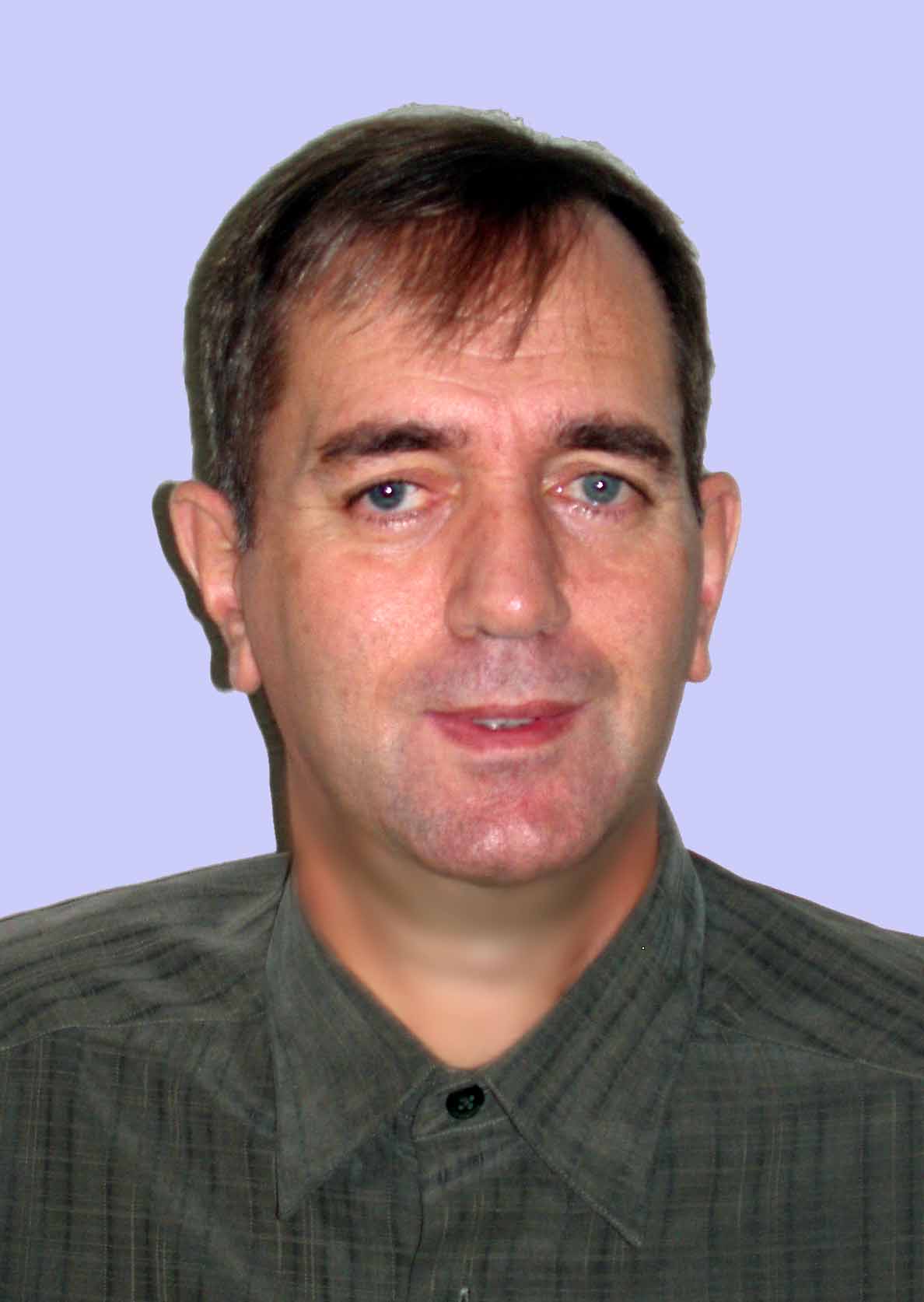 Hristo Djidjev合作论文数 Information Sciences;Los Alamos National Laboratory3Philip Romero合作论文数2Venkatesh Ramaswamy合作论文数2
 Sushil Thapa合作论文数New Mexico Tech2Brent Mumphrey合作论文数2Noah Schaefferkoetter合作论文数Computational Sciences and Engineering Division, Health Data Sciences Institute, Oak Ridge National Laboratory, Oak Ridge, TN, USA2Linda Coyle合作论文数Informat Management Serv Inc, Calverton, MD USA2
 Georgia Tourassi合作论文数National Center for Computational Sciences, Oak Ridge National Laboratory;Bredesen Center, University of Tennessee at Knoxville2
 Durbin Eric B合作论文数Departments of Medicine and Neurology, University of Kentucky;Department of Medicine, University of Kentucky;Department of Biostatistics, University of Kentucky;School of Public Health, University of Alberta;Alberta Health Services;University of Kentucky, University of Kentucky2
 Apu Kapadia合作论文数Department of Computer Science, Luddy School of Informatics, Computing, and Engineering, Indiana University Bloomington2
 Dominique Lavenier合作论文数IRISA / INRIA2
 Srinath Srinivasa合作论文数2Lukas Kroc合作论文数Claremont Graduate University.2Benjamin H Mcmahon合作论文数T-10, MS K710, Los Alamos National Laboratory2Rumen Andonov合作论文数University of Rennes 12
 Christopher L. Barrett合作论文数Biocomplexity Institute, University of Virginia;School of Engineering and Applied Science, University of Virginia;Department of Computer Science, Chalmers University2
 Anil Vullikanti合作论文数Department of Computer Science, School of Engineering and Applied Science, University of Virginia;Biocomplexity Institute, University of Virginia2
 Gabriel Istrate合作论文数West University of Timisoara2Lynne Penberthy合作论文数2
 Nicolas W Hengartner合作论文数Los Alamos National Laboratory2
 Mayur Thakur合作论文数H12
 Shripad Thite合作论文数Facebook2
 Kumkum Ganguly合作论文数Department of Pharmaceutical Technology, Jadavpur University2
 M.S. Srinivasan合作论文数Harte Research Institute for Gulf of Mexico Studies;Banaras Hindu University2
 Shiva Prasad Kasiviswanathan合作论文数Amazon2Mark K. Gardner合作论文数1Phillip Romero合作论文数1VSA Kumar合作论文数1Chris Barrett合作论文数1
 Guanhua Yan合作论文数Los Alamos Natl Lab, Informat Sci CCS 3, Los Alamos, NM 87545 USA1Jeffrey Scofield合作论文数1
 Anthony Lamarca合作论文数Paul G. Allen School of Computer Science & Engineering, University of Washington;Intel Labs1
 Robert Bird合作论文数1
 Ravi Sundaram合作论文数Khoury College of Computer Sciences, Northeastern University1
 Pallab Datta合作论文数IBM Almaden Research Center1
 Jennifer H. Doherty合作论文数Department of Biology, University of Washington1
 Garrett T Kenyon合作论文数Computational and Statistical Sciences Division, Information Sciences Group, Los Alamos National Laboratory;New Mexico Consortium1




