We report an extraordinary observation of ground motion in Japan after the moment magnitude (MW) 9.0 2011 Tohoku-Oki earthquake attributed to a multiplate-interface slip event triggered by shear wave that traveled to the Earth's core and back. The megathrust earthquake generated a strong ScS phase with a peak-to-peak amplitude exceeding 1 centimeter in Japan. Superposed on this waveform, an eastward steplike displacement of up to 5 to 6 millimeters was recorded in Global Navigation Satellite System (GNSS) data throughout Japan. This likely originated from slip on the megathrust interfaces triggered by the nearly simultaneous arrival of the ScS wave across Japan. Such an ScS triggering is a previously unrecognized source of seismic hazard, which can potentially (re)activate the mainshock area and the broader surrounding megathrust interfaces.
We report the counter-intuitive observation that a deep earthquake can generate larger co-seismic displacements than a shallow event across a broad region (e.g., >4 degrees from epicenter). This finding is based on a detailed comparative GNSS analysis of the co-seismic displacement observations from two M-W 8.3 events-the 2013 598.1 km-deep Okhotsk event and the 2015 22.4 km-deep Illapel event-revealing a maximum observed displacement difference of over 4 mm. Our modeling confirms the observation and demonstrates that this phenomenon primarily arises from the 3D displacement pattern generated by earthquakes, not from the effect of the Earth's curvature. These results are generalizable to other pairs of deep and shallow earthquakes, highlighting intermediate and deep earthquakes as substantial sources of surface deformation that should be systematically incorporated into our current framework of geodesy; moreover, geodetic data may offer new insights into the deep rupture process.
We investigate the effect of detailed basin interface structures on ground motions based on a lab-based seismic dataset derived from a cutting-edge 3D-printing-based methodology. This is enabled by the first in-depth, quantitative analyses of such data. We first examine a scenario where the lab-based earthquake source is located inside a basin and find that the reverberation of body waves can coincide with high-amplitude surface waves, leading to further amplification of ground motions. We also examine a case where the earthquake source is outside a basin and seismic waves are traveling toward the basin. We identify significant seismic energy reflecting from the intricate basin interface structures, particularly at steep parts of the interface where the basin depth changes abruptly. These reflections contribute to amplified ground motions near these steep basin interfaces. Furthermore, we find that relatively low-frequency waves can reflect off basin interface structures with length scales as small as approximately one-eighth of their wavelengths. Our study highlights the importance of incorporating detailed basin structures for accurate ground-motion assessments, demonstrating that this 3D-printing-based approach provides an effective means for achieving that.
ABSTRACT Earthquake stress drop—a key parameter for describing the energetics of earthquake rupture—can be estimated in several different, but theoretically equivalent, ways. However, independent estimates for the same earthquakes sometimes differ significantly. We find that earthquake source complexity plays a significant role in why theoretically (for simple rupture models) equivalent methods produce different estimates. We apply time- and frequency-domain methods to estimate stress drops for real earthquakes in the SCARDEC (Seismic source ChAracteristics Retrieved from DEConvolving teleseismic body waves, Vallée and Douet, 2016) source time function (STF) database and analyze how rupture complexity drives stress-drop estimate discrepancies. Specifically, we identify two complexity metrics—Brune relative energy (BRE) and spectral decay—that parameterize an earthquake’s complexity relative to the standard Brune model and strongly correlate with the estimate discrepancies. We find that the observed systematic magnitude–stress-drop trends may reflect underlying changes in STF complexity, not necessarily trends in actual stress drop. Both the decay and BRE parameters vary systematically with magnitude, but whether this magnitude–complexity relationship is real remains unresolved.
AbstractWe construct a linear model of microseism power as a function of sea‐ice concentration and ocean‐wave activity with a seismic station located on northern Ellesmere Island. The influence of wind‐ice‐ocean interactions on microseism has been taken into account. We find the increase in microseism power over the last 32 years reflects the long‐term loss of sea ice and increasing ocean‐wave activity in the Arctic Ocean likely associated with climate change. We further assess model performance to determine a representative region over which sea‐ice concentration and ocean‐wave activity most directly influence the microseism power. The seismological methods developed here suggest that there is the potential to augment or refine observations of sea‐ice conditions obtained from satellites and from in‐situ observations. Seismological methods may thus help determine properties such as sea‐ice thickness, which are less amenable to conventional observations, under a changing climate, particularly in remote areas like the High Arctic.
The Earth's viscoelastic postseismic deformation reflects its rheological structure. Even though low-viscosity structures, such as the asthenosphere, are often thought to dominate postseismic deformation induced by shallow earthquakes, high-viscosity subducting slabs have also been found to considerably affect postseismic deformation following subduction zone earthquakes including deep-focus events. However, for deep earthquakes, the exact mechanism by which slab structures influence stress relaxation and the resulting deformation processes is poorly understood. Here, we conduct the first systematic study investigating the effect of a slab on the Earth's viscoelastic relaxation following a 600-km deep earthquake. We perform numerical modeling with and without a subducting slab for representative source mechanisms and slab geometries and compare the results. In general, we find that the slab structure significantly impedes stress relaxation. The high-viscosity slab sustains most of the coseismic stress, which leads to stress concentration within it; in the surrounding mantle, the relaxation of stress also becomes much slower compared to the case without the slab. Such differences in the spatiotemporal evolution of stress, which are further influenced by the geometries of the earthquake source and slab structure, result in the distinct patterns of postseismic deformation at the Earth's surface. Interestingly, we also find that even an extremely confined region of high viscosity surrounding the earthquake source can generate a significant slab effect. Our study provides a general framework for interpreting deep earthquake induced postseismic deformation and an improved understanding of the relationship between the Earth's 3D rheological structures and viscoelastic relaxation processes.
We present an array method for constraining near-surface shear wave speed values from Pwave polarization data. As the direction of P-wave particle motion is determined both by the incident ray parameter and the local surficial shear wave speed, the latter can be inferred from three-component seismic records if the ray parameter is estimated first. Previous studies have analysed data recorded at a single station from various earthquakes in order to estimate near- surface shear wave speed. In contrast, this paper analyses data recorded at an array of stations. As such, this method can estimate both ray parameter data for the recorded earthquakes and near-surface shear wave speed values at the studied sites. And as an advantage, the method can analyse records of local and regional earthquakes where ray parameter information cannot be reliably estimated using 1D reference velocity models. Additionally, by processing polarization data spanning multiple events and stations, our method provides robust estimates for near- surface shear wave speed values. We apply this array-based method to a seismic array covering the Valley of Mexico. Analysed records correspond to regional earthquakes with epicentral distances of roughly 300 km. The corresponding ray parameter values for all earthquakes were estimated from the delay of the seismic waves arrival throughout the network as all stations have a reliable time reference. Near-surface shear wave speed values estimated from the array- based polarization analysis are correlated with major geological features of the area such as the Trans-Mexican Volcanic Belt and the local basin. We also apply the presented method to a minimal data scenario. The flexibility of this method allows it to employ a single ray parameter value as input, producing robust estimates for near-surface shear wave speed values within our case study. This feature becomes useful in a variety of scenarios, such as utilizing seismic data lacking timing information. The presented method constitutes an accessible and inexpensive alternative to study shallow seismic structure, opening opportunities to expand and complement current tools and techniques to assess seismic hazards.
SUMMARY This study examines the topographic effect on the body-wave polarization and, subsequently, on near-surface wave speed estimation. We first derive 3-D P- and S-wave polarization angles in the presence of ground tilt, where the angles are functions of the ground tilt orientation, the near-surface wave speeds and the incident wave direction. We find that S-wave polarization angle varies considerably (e.g. more than 100 per cent) when the incident angle is close to the critical angle. The counter-intuitive phenomenon for flat surface, that is, P-wave polarization being only sensitive to S but not P wave speeds, breaks down in the presence of ground tilt, and P-wave polarization becomes sensitive to both P and S wave speeds. Examining the differences in the inferred wave speeds with and without the flat-surface assumption reveals that bias in wave speed estimates is, in general, higher for smaller incident angles, for example, about 50 per cent or higher for a 15° ground tilt and near-vertical (<5°) incidence. The effect on P wave speed estimates is also significant when the S-wave incident angle approaches the critical angle. In order to investigate the topographic effect on wave speed estimates inferred using teleseismic polarization data, we revisit the near-surface wave speed estimates at Hi-net stations from a previous study that did not account for the topography. Based on the ground tilt and strike angles measured for each Hi-net site at 300-m scale—which is found to be the most relevant scale—we constrain P and S wave speeds utilizing the P-wave polarization data. We find that P-wave polarization data alone can effectively constrain not only S but also P wave speeds, especially when the ground tilt is sufficiently large (e.g. >5°). Furthermore, our additional test suggests that including S-wave polarization data with the tilt consideration will improve the near-surface wave speed estimates significantly compared to when the tilt effect is ignored.
Mantle viscosity plays a key role in the Earth’s internal dynamics and thermal history. Geophysical inferences of the viscosity structure, however, have shown large variability depending on the types of observables used or the assumptions imposed 1 – 3 . Here, we study the mantle viscosity structure by using the postseismic deformation following a deep (approximately 560 km) earthquake located near the bottom of the upper mantle. We apply independent component analysis 4 to geodetic time series to successfully detect and extract the postseismic deformation induced by the moment magnitude 8.2, 2018 Fiji earthquake. To search for the viscosity structure that can explain the detected signal, we perform forward viscoelastic relaxation modelling 5 , 6 with a range of viscosity structures. We find that our observation requires a relatively thin (approximately 100 km), low-viscosity (10 17 to 10 18 Pa s) layer at the bottom of the mantle transition zone. Such a weak zone could explain the slab flattening 7 and orphaning 8 observed in numerous subduction zones, which are otherwise challenging to explain in the whole mantle convection regime. The low-viscosity layer may result from superplasticity 9 induced by the postspinel transition, weak CaSiO 3 perovskite 10 , high water content 11 or dehydration melting 12 .
Studying seismic wave propagation through complex media is crucial to numerous aspects of geophysics and engineering including seismic hazard assessment. In particular, small-scale structure such as sedimentary basins and their edges can have significant effects on high-frequency earthquake ground motion, which is the main cause for the damage to buildings and infrastructure. However, such structural effects are poorly understood due to limitations in numerical and analytical methods. To overcome this challenge, for the first time, we utilize the 3D printing technique to build a scaled-down physical representation of geological structure and perform lab-scale seismic experiments on it. Specifically, a physical model based on the Los Angeles Basin is printed and used as synthetic medium to propagate ultrasonic waves, to mimic seismic wave propagation from local earthquakes. Our results show clear body and surface waves recorded at expected time and locations, as well as waves that are scattered from the basin edges. We find that high-frequency energies are significantly reduced at the basin, which is at odds with the conventional view of basins as ground motion amplifiers. This novel waveform modeling approach with 3D printed Earth models is largely automated and provides an effective means to tackle geophysical problems of significance.
Monitoring and assessing instrument performance and response are crucial to various seismological analyses that utilize the seismic signal recorded by the instrument. One of the important components of the instrument response is the gain or the amplification factor that determines the amplitude of the recorded wave arrival. We introduce a new method to detect problems in the gain of three-component seismographs by examining the body-wave polarization. Anomalous gain of a certain component causes P- and S-wave polarization to be distinct from expected values, allowing one to identify the issue in the instrument. The method is applied to the High-Sensitivity Seismograph Network (Hi-net) stations between 2004 and 2016, and 305 out of 790 stations are identified to have issues at various time periods. The detections are confirmed by comparison with the Hi-net daily calibration pulses. Utilization of teleseismic body-wave polarization information is an effective way to detect instrument gain problems without physically examining the instrument, which is particularly advantageous for instruments such as borehole or ocean-bottom sensors that cannot be accessed easily.
Near‐surface structure is crucial to assessing seismic hazards and understanding earthquakes and surface processes yet is a major challenge to robustly image. Recently, an approach based on body‐wave polarization was introduced for constraining shallow seismic structure, but the depth sensitivity of the polarization measurement has remained unclear. Using waveform simulations based on a layer over a half space, we find that the depth sensitivity of P wave polarization peaks at the surface and decreases abruptly over a depth range shorter than its wavelength. A strong frequency dependence provides constraints on local 1‐D structure, with frequencies between 0.1 and 10 Hz illuminating structure at depths of 10 m to several kilometers. Applying these results to teleseismic recordings in Japan provides constraints on structure at about 120 to 750 m, including a distinctive weak zone along the Median Tectonic Line in the Kii peninsula and Awaji Island.
A new technique to constrain near-surface seismic structure that relates body-wave polarization direction to the wave speed immediately beneath a seismic station is presented. The P-wave polarization direction is only sensitive to shear wave speed but not to compressional wave speed, while the S-wave polarization direction is sensitive to both wave speeds. The technique is applied to data from the High-Sensitivity Seismograph Network in Japan, and the results show that the wave speed estimates obtained from polarization analysis are compatible with those from borehole measurements. The lateral variations in wave speeds correlate with geological and physical features such as topography and volcanoes. The technique requires minimal computation resources, and can be used on any number of three-component teleseismic recordings, opening opportunities for non-invasive and inexpensive study of the shallowest (similar to 100 m) crustal structures.
Rupture properties, such as rupture direction, length, propagation speed and source duration, provide important insights into earthquake mechanisms. One approach to estimate these properties is to investigate the body-wave duration that depends upon the relative location of the station with respect to the rupture direction. Under the assumption that the propagation is unilateral, the duration can be expressed as a function of the dip and azimuth of the rupture. Examination of duration measurements with respect to both the take-off angle and the azimuth is crucial to obtain robust estimates of rupture parameters, especially for nearly vertical rupture propagation. Moreover, limited data coverage, such as using only teleseismic data, can bias the source duration estimate for dipping ruptures, and this bias can map into estimates of other source properties such as rupture extent and rupture speed. Based upon this framework, we introduce an inversion scheme that uses the duration measurements to obtain four parameters: the source duration, a measure of the rupture extent and speed, and dip and azimuth of the rupture propagation. The method is applied to two deep-focus events in the Sea of Okhotsk region, an M-w 7.7 event that occurred on 2012 August 14 and an M-w 8.3 event from 2013 May 24. The source durations are 26 +/- 1 and 37 +/- 1 s, and rupture speeds are 49 +/- 4 per cent and 26 +/- 3 per cent of shear wave speed for the M-w 7.7 and 8.3 events, respectively. The azimuths of the two ruptures are parallel to the trench, but are in opposite directions. The dips of the M-w 7.7 and 8.3 events are constrained to be 48 degrees +/- 8 degrees downdip and 19 degrees +/- 8 degrees updip, respectively. The fit to the data is significantly poorer for the M-w 8.3 event than the M-w 7.7 event, suggesting that the unilateral rupture may not be a good assumption. The analysis is expanded into a multi-episode model, and a secondary episode is determined for the M-w 8.3 event in the southeast direction. The two-episode model gives a better fit to the data than the unilateral model and is compatible with the back-projection analysis, demonstrating that the rupture propagation of the M-w 8.3 event is complex.
We show that human mental states are unresolvable by suggesting a mathematical function that describes human mental states in relation to parallel universe theory. The function is a solution to a multi-dimensional advection equation; representing a situation a person is faced with, and its time-derivative showing the mental state in that situation. This function has interesting characteristics that explain why each person has different thoughts in a particular situation. Because the multi-dimensional advection equation has an infinite number of solutions, we can use them to represent an infinite number of mental states. We focus on the basic concepts of the model and explain the function using extremely simple cases. We also use the functions to explain remembering and forgetting.
In this paper, we study the relationship between the acquisition of time-harmonic seismic data and the Dirichlet-to-Neumann map for the Helmholtz equation in dimension n ≥ 3. This relationship is established through the introduction of a single-layer potential operator. We analyze its properties with a view to so-called iterative full waveform inversion based on the Hilbert-Schmidt norm, that is, its (conditional) convergence on the one hand and a sparse, spectral source blending approach with controlled error on the other hand.
PreviousNext No AccessSEG Technical Program Expanded Abstracts 2011Full waveform inversion: A diffuse optical tomography point of viewAuthors: Sunyoung ParkMaarten V. de HoopHenri CalandraChangsoo ShinSunyoung ParkSeoul National UniversitySearch for more papers by this author, Maarten V. de HoopPurdue UniversitySearch for more papers by this author, Henri CalandraTOTALSearch for more papers by this author, and Changsoo ShinSeoul National UniversitySearch for more papers by this authorhttps://doi.org/10.1190/1.3627705 SectionsSupplemental MaterialAboutPDF/ePub ToolsAdd to favoritesDownload CitationsTrack CitationsPermissions ShareFacebookTwitterLinked InRedditEmail Abstract This is the first study that applies a diffuse optical tomography point of view to the full waveform inversion. Focusing on the fact that the diffusion equation has a similar structure to the Laplace‐domain wave equation, we relate the inverse problem in the Laplace‐domain to the inverse scattering problem which is frequently used in studies of diffuse optical tomography. In this study, instead of the Born series, we suggest the Rytov series in order to deal with the logarithmic objective function of the Laplace‐domain waveform inversion. It is also shown here that the inverse Rytov series is equivalent to the Newton‐Kantorovich algorithm for the Laplace‐domain inversion. Finally, we discuss about the convergence condition of the forward and inverse Rytov series, employing the contraction mapping concept.Permalink: https://doi.org/10.1190/1.3627705FiguresReferencesRelatedDetails SEG Technical Program Expanded Abstracts 2011ISSN (print):1052-3812 ISSN (online):1949-4645Copyright: 2011 Pages: 4424 Publisher:Society of Exploration Geophysicists HistoryPublished Online: 25 May 2012 CITATION INFORMATION Sunyoung Park, Maarten V. de Hoop, Henri Calandra, and Changsoo Shin, (2011), "Full waveform inversion: A diffuse optical tomography point of view," SEG Technical Program Expanded Abstracts : 2471-2475. https://doi.org/10.1190/1.3627705 Plain-Language Summary PDF DownloadLoading ...
PreviousNext No AccessSEG Technical Program Expanded Abstracts 2010A strategy for selecting the Laplace damping constants in the Laplace‐domain inversion: Based on relationship between the Laplace damping constant and the detectable depth of a high‐ velocity structureAuthors: Sunyoung ParkWansoo HaChangsoo ShinSukjoon PyunHenri CalandraSunyoung ParkSeoul National UniversitySearch for more papers by this author, Wansoo HaSeoul National UniversitySearch for more papers by this author, Changsoo ShinSeoul National UniversitySearch for more papers by this author, Sukjoon PyunInha UniversitySearch for more papers by this author, and Henri CalandraTOTALSearch for more papers by this authorhttps://doi.org/10.1190/1.3513943 SectionsSupplemental MaterialAboutPDF/ePub ToolsAdd to favoritesDownload CitationsTrack CitationsPermissions ShareFacebookTwitterLinked InRedditEmail Abstract We suggest a method for selecting damping constants in the Laplace‐domain waveform inversion by analyzing the relationship between the damping constant and the detectable depth of a high‐velocity structure. The result indicates that the Laplace damping constant and the detectable depth of a high‐velocity structure are almost in inverse proportion to each other, and the relationship between the two variables is dependent on the maximum offset and subsurface velocity. Given the maximum offset and approximate underground velocity, the maximum value of the Laplace damping constant can be determined. The minimum value can also be selected, given the maximum recording time of a field data set.Permalink: https://doi.org/10.1190/1.3513943FiguresReferencesRelatedDetailsCited byThe strategy for iterative direct waveform inversion (IDWI)Changsoo Shin*, Jungmin Kwon, and Yoonseo Park19 August 2015Iterative direct waveform inversion (IDWI) plus Fourier-domain full waveform inversion (FWI)Changsoo Shin* and Jungmin Kwon19 June 2015 SEG Technical Program Expanded Abstracts 2010ISSN (print):1052-3812 ISSN (online):1949-4645Copyright: 2010 Pages: 4453 publication data© 2010 Copyright © 2010 Society of Exploration GeophysicistsPublisher:Society of Exploration Geophysicists HistoryPublished Online: 21 Oct 2010 CITATION INFORMATION Sunyoung Park, Wansoo Ha, Changsoo Shin, Sukjoon Pyun, and Henri Calandra, (2010), "A strategy for selecting the Laplace damping constants in the Laplace‐domain inversion: Based on relationship between the Laplace damping constant and the detectable depth of a high‐ velocity structure," SEG Technical Program Expanded Abstracts : 993-997. https://doi.org/10.1190/1.3513943 Plain-Language Summary PDF DownloadLoading ...
 Changsoo Shin合作论文数5
 Miaki Ishii合作论文数Department of Earth and Planetary Sciences, Harvard University4
 Adriano Gualandi合作论文数Ist Nazl Geofis & Vulcanol2
 Jean-Philippe Avouac合作论文数Department of Mechanical and Civil Engineering, Division of Engineering and Applied Science, California Institute of Technology;Center for Geomechanics and Mitigation of Geohazards, California Institute of Technology;Center for Autonomous Systems and Technologies, California Institute of Technology2
 Zhongwen Zhan合作论文数Seismological Laboratory, California Institute of Technology;Division of Geological and Planetary Sciences, California Institute of Technology2
 H. Calandra合作论文数2
 Maarten V. De Hoop合作论文数Graduate University of Chinese Academy of Sciences;Department of Earth, Atmospheric and Planetary Sciences, Massachusetts Institute of Technology;Department of Computational and Applied Mathematics and Earth Science, Rice University2
 Wansoo Ha合作论文数2
 James S. Neely合作论文数Inst Policy Res, Northwestern Univ1
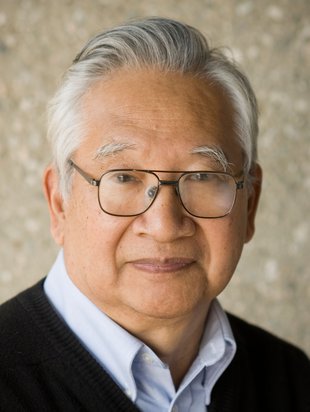 Hiroo Kanamori合作论文数Division of Geological and Planetary Sciences, California Institute of Technology1
 Douglas R. MacAyeal合作论文数Department of the Geophysical Sciences, The University of Chicago1
 Lingyun Qiu (邱凌云)合作论文数Yau Mathematical Sciences Center, Tsinghua University1
 Luis Rivera合作论文数1
 Francisco José Sánchez Sesma合作论文数Instituto De Ingenieria, Universidad Nacional Autonoma De Mexico1
 Sukjoon Pyun合作论文数Computational Science and Technology Program, Seoul National University1
 Wookeen Chung合作论文数1
 Victor C. Tsai合作论文数Department of Earth, Environmental and Planetary Sciences, Brown University1
 Robert W. Clayton合作论文数Geophysics, Division of Geological and Planetary Sciences, California Institute of Technology1




