The Aditya-L1 mission, India’s first dedicated solar observatory at the first Lagrange point of the Sun-Earth system, carries the Solar Wind Ion Spectrometer (SWIS) as part of the Aditya Solar Wind Particle Experiment (ASPEX) payload suite. Even before settling down at the Halo orbit, AL1-ASPEX-SWIS has been delivering nearly continuous in situ measurements of solar wind ion spectra. Moments of the velocity distribution function (VDFs) have been calculated to derive the solar wind bulk parameters like density, bulk speed, temperature etc. Through this work, we evaluate the performance of AL1-ASPEX-SWIS through comparisons with contemporaneous measurements from the Wind and DSCOVR spacecrafts. A detailed case study of the 07 August 2024 interplanetary coronal mass ejection (ICME) is presented where sharp transitions in bulk speed, thermal speed, and number density were well-aligned with independent observations, confirming the instrument’s capability in capturing dynamic solar wind features. Spectral analysis of kinetic fluctuations revealed a well-defined inertial range with a spectral slope consistent with magnetohydrodynamic (MHD) turbulence. Additionally, a 17-month statistical comparison (January 2024–May 2025) shows strong agreement in bulk velocity ( R^2 ≈ 0.94 with Wind), with expected variability in thermal speed and density due to inter-instrument differences. These results confirm the scientific utility of AL1-ASPEX-SWIS in monitoring both transient events and long-term solar wind conditions.
Owing to high environmental adaptability, chickpea is a key crop in the Bundelkhand region. While the effects of conjoint use of organics and inorganics on chickpea productivity are well studied, there have been a lack of general consensus how such combinations may affect the root characteristics. The objective of this study was to evaluate the conjoint effects of organics and inorganics on biomass yield and root character of chickpea. A field experiment was thus conducted in a completely randomized block design with ten treatments replicated thrice. The combination of 100
Heat stress is considered to be a major limitation to crop production, especially in the northern part of India. Chickpea is a cool-season crop and faces heat stress during the terminal phase of its life cycle. Heat stress leads to a decline in water use efficiency (WUE) and dry matter partitioning to economic sink. The present study aimed to investigate the hormonal-regulated dry matter partitioning and water use efficiency under heat stress conditions in relation to alternation in vascular bundle anatomy. A chickpea field trial was conducted under late-sown heat stress condition to assess the effect of foliar spray of bioregulators viz . Abscisic acid (ABA), Benzyl adenine (BA), Salicylic acid (SA) on dry matter partitioning, water use efficiency and vascular bundles anatomy. Bioregulators (ABA, BA and SA) application enhanced photosynthesis rate, carboxylation efficiency, dry matter partitioning towards the economic sink. Maximum water use efficiency (WUE) was recorded in ABA treated plants followed by BA treated plants. Under heat stress, the foliar spray of ABA improved the genesis of the xylem vessel as well as secondary phloem development while BA and SA treatments improved the development of the secondary phloem only. Bioregulators-induced alternation in vascular bundle anatomy was found to be associated with dry matter partitioning and water use efficiency under heat stress in chickpea. The present study reports first time in chickpea that bioregulators-induced dry matter partitioning and water use efficiency (WUE) is mediated by altered vascular bundles anatomy under heat stress condition.
To meet the ever-increasing demand for food, there is a huge concern about the selection of superior genotypes with enhanced resilience to abiotic stress. However, choice/selection of suitable genotype/line is complex due to significant interaction of genotypes with environmental factors. Aiming few traits for selection may simplify the statistical analysis, however selection of genotypes using multiple traits is quite difficult. Furthermore, use of any single index may bias the selection of genotypes. Here, we proposed one method for selection of superior genotypes using combined approach of four selection indexes such as, multi-trait genotype-ideotype distance index (MGIDI), factor analysis and genotype-ideotype distance (FAI-BLUP), Smith-Hazel index (SHI) and multi-trait stability index (MTSI) under multi-environment stress conditions by using R programming. From our study, twenty random recombinant inbred wheat lines among the 220 lines developed by crossing HD3086 and HI1500 has been taken for analysis. The selection intensity (SI) was 15% for all the indexes. The lines were tested for stay-green and stem reserve mobilisation traits under control, drought, heat and combined stress conditions. Result found that RIL-10 was common to these four indexes by using venn diagram and was considered to be superior among the lines, which can perform better under multi-environment stress conditions. Thus, we recommend that combined approach of several indexes can be used a robust method for selection of ideal genotypes in wheat and other crop as well.
Water-soluble carbohydrates (WSCs) serve as a potential buffer for grain filling in wheat, when current leaf photosynthesis is inhibited by abiotic stress. The potential of genotype to store WSCs for its remobilisation is determined by its stem-specific weight i.e. stem density. To examine the extent to which mobilisation of carbon reserve occurs under multi-environment conditions and the genomic regions associated with stem density in wheat, a field experiment was conducted at Indian Agricultural Research Institute (IARI), New Delhi, India with 220 wheat RILs developed by crossing HD3086 and HI1500 under control, drought, heat and combined stress (heat and drought) conditions. Genotyping of population (21 days seedling) was done with 35 K Wheat Breeder Array followed by QTL mapping with inclusive composite interval mapping (ICIM) software. Selection of superior lines were carried out by using combined approach of multi-trait genotype-ideotype distance index (MGIDI), factor analysis and genotype-ideotype distance (FAI-BLUP) and Smith-Hazel index (SH). In our study, total 9 quantitative traits loci (QTLs) were mapped, which were linked to stem density (peduncle, penultimate and lower internode) with LOD score > 3.5, of which 7 were mapped as major QTLs. In-silico gene expression analysis revealed various important genes like sugar transport protein MST4, PPR containing protein, trehalose phosphate synthase, NRT1/PTR FAMILY 8.3-like etc., which are probably involved in maintaining stem density in wheat. Moreover, four lines (HDHI-12, HDHI-87, HDHI-142 and HDHI-194) were identified as superior lines, which can be used as potential donors to elite wheat cultivars. Our study shed light on genetic basis of regulation of stem density in wheat, which accelerates the possible marker-assisted and genomic selection for higher stem density and stem reserve mobilisation.
Aditya–L1, the first dedicated Indian solar mission, was launched on 02 September 2023 and has been placed in a halo orbit around the first Lagrange point (L1) of the Sun-Earth system on 06 January 2024. Aditya Solar wind Particle EXperiment (ASPEX) is one of the three in situ science experiments on board the Aditya–L1 mission that provides measurements of primarily protons and alpha particles in the solar wind, suprathermal, and energetic particles in the energy range from 100 eV to 6 MeV/nucleon. ASPEX consists of two independent spectrometers: the Solar Wind Ion Spectrometer (SWIS: 100 eV – 20 keV) and Supra Thermal and the Energetic Particle Spectrometer (STEPS: 20 keV/nucleon – 6 MeV/nucleon). In this article, we provide the details of the STEPS configuration, ground calibration, and in–flight performance. After the launch of Aditya–L1, two STEPS units were switched–on during the Earth-bound phase on 10 September 2023. STEPS has carried out measurements in the Earth-bound orbit for altitudes ≳ 8 RE, and also in the cruise phase from the Earth to the halo orbit, and has been continuously operational after insertion to the L1 orbit. The performance of STEPS is as expected during all the phases of the mission so far and all its observations are found to be consistent with similar measurements from other contemporary instruments at the L1 point.
Numerous health hazards are associated with fungal infections, ranging from asymptomatic cases to potentially fatal invasive diseases that are especially dangerous for those with impaired immune systems. The main causes behind these diseases are opportunistic fungi, namely Aspergillus, Candida, and Cryptococcus. Invasive fungal infections (IFIs) require a global response that includes the development of vaccines, standardized protocols for diagnosis, potent antifungal medications, and strategies to stop drug-resistant strains. Improving high-risk group diagnosis and treatment is essential to lowering death rates. This review highlights the substantial health concerns associated with fungal infections, especially in immunocompromised individuals, and identifies Aspergillus, Candida, and Cryptococcus as the main pathogens. It highlights the necessity of international efforts, such as the development of novel diagnostic instruments, imaging methods, and antifungal drugs, to combat these invasive infections. The review also addresses the increasing need for novel treatment approaches in light of the developing resistance to widely used antifungal medications. Furthermore, the significance of secretory proteins in fungal pathogenicity and the potential of combination therapy are investigated. It is also suggested that a multimodal strategy be used to fight these illnesses, given the promise of multivalent vaccinations. Overall, this study emphasizes how critical it is to develop better diagnostic and treatment strategies in order to successfully control and lessen the impact of invasive fungal diseases on the health of the world.
The Solar Wind Ion Spectrometer (SWIS) instrument is a part of the Aditya Solar Wind Particle Experiment (ASPEX), one of the three in situ observation instruments on board India’s Aditya-L1 spacecraft. SWIS comprises two Top-Hat analysers (THA-1 and THA-2), which have a 360∘ angular coverage in the ecliptic plane and in the plane perpendicular to the ecliptic plane, respectively, with opening angles of ± 1.5^∘ . Both are electrostatic scanning instruments designed to measure the flux, the energy distribution and the angular distribution of the solar wind particles, covering the energy range of 0.1 – 20.0 keV with a 5 s cadence and 8
Bull spermatozoa possess glycocalyx made of carbohydrate moieties attached to proteins and lipids on their membranes that is involved in fertility associated functions including immune evasion in the female reproductive tract. The current study aimed to establish whether the differences in the glycocalyx of spermatozoa provide selective advantage in evading phagocytosis mediated by female macrophages. Based on removal of either N- or O-linked surface glycans from the spermatozoa, their susceptibility to phagocytosis by macrophages was assessed in vitro in bovines (Bos indicus) through flow cytometry. We found no significant difference (p > 0.05) in the phagocytosis of spermatozoa without N-glycans or O-glycans compared to those with intact glycocalyx. Out of nearly 2,000 events analysed, the mean number of macrophages phagocytosing the spermatozoa were found to be 416, 423 and 345, respectively for spermatozoa with an intact glycocalyx, with N-glycans removed and with O-glycans removed. The difference in the mean values of the individual sample geometric mean fluorescence intensities (n = 3) of the phagocytosed spermatozoa among all the treatment groups were also statistically insignificant (p > 0.05) indicating that the macrophages are not involved in the selection of spermatozoa based on their surface glycan profiles. Therefore, it is plausible to conclude that macrophages may be exploiting other signature molecules if at all they are involved in the cryptic female choice, or they might be phagocytosing spermatozoa with less stringency that may not be dependent on O- or-N-glycans on sperm surface. However, further studies are required to gain deeper insights into this phenomenon.
This work reports the development of a multichannel Silicon Drift Detector (SDD) based X-ray spectrometer with application- specific integrated circuit (ASIC) readout aimed at flying in future space missions. The multiple channels facilitate the spectrometer to have a large detection area, allowing the detection of faint X-ray sources. The spectrometer is designed to readout the signal from eight SDDs through a VErsatile Readout for Detector Integration (VERDI) ASIC with high energy resolution in the 1-25 keV energy range. The spectrometer provides an X-ray spectrum for each detector simultaneously. Initially, the system is tested with five SDDs and shown that the spectrometer provides the energy resolution of similar to 148 eV at 5.9 keV when SDDs are cooled to -35oC. We have also assessed the system's performance for different detector operating temperatures and pulse shaping times. The detailed design and the performance assessment of the spectrometer are reported in this paper. (c) 2025 COSPAR. Published by Elsevier B.V. All rights are reserved, including those for text and data mining, AI training, and similar technologies.
Introduction:Abiotic stress significantly reduces the wheat yield by hindering several physiological processes in plant. Stay-green (SG) and stem reserve mobilization (SRM) are the two key physiological traits, which can contribute significantly to grain filling during stress period. Validation of genomic regions linked to SG and SRM is needed for its subsequent use in marker-assisted selection in breeding program. Methods:Using a physiological and gene expression approach, quantitative trait loci (QTLs) for stay-green (SG) and stem reserve mobilization (SRM) were validated in a pot experiment study using contrasting recombinant inbred lines including its parental lines (HD3086/HI1500) in wheat. The experiment was laid down in a completely randomized design under normal (control, drought) and late sown (heat and combined stress) conditions during the 2022-2023 rabi season. Drought stress was imposed by withholding irrigation at the anthesis stage, whereas heat stress was imposed by 1-month late sowing compared to the normal sowing condition. Combined stress was imposed by 1-month late sowing along with restricted irrigation at the flowering stage. Superior lines (HDHI113 and HDHI87) had both SG and SRM traits, whereas inferior lines (HDHI185 and HDHI80) had contrasting traits, i.e., lower SG and SRM traits. HD3086 and HI1500 had SG and SRM traits respectively. Potential candidate genes were identified based on the flanking markers of the mapped QTLs using the BioMart tool in the Ensembl Plants database to validate the identified QTLs. Real-time gene expression was conducted with SG-linked genes in the flag leaf and SRM-linked genes in the peduncle. Results and Discussion:In this study, HDHI113 and HDHI87 showed higher expression of SG-related genes in the flag leaf under stress conditions. Furthermore, HDHI113 and HDHI87 maintained higher chlorophyll a content of 7.08 and 6.62 mg/gDW, respectively, and higher net photosynthetic rates (PN) of 17.18 and 16.48 µmol CO2/m2/s, respectively, under the combined stress condition. However, these lines showed higher expression of SRM-linked genes in the peduncle under drought stress, indicating that drought stress aggravates SRM in wheat. HDHI113 and HDHI87 recorded higher 1,000-grain weights and spike weight differences under combined stress, further validating the identified QTLs being linked to SG and SRM traits. Henceforth, the identified QTLs can be transferred to developed wheat varieties through efficient breeding strategies for yield improvement in harsh climate conditions.
This research presents a decentralized system that utilizes blockchain technology to improve the detection of counterfeit products, in response to the increasing risk they provide. Presently, centralized systems suffer from risks such as data tampering and the presence of single points of failure. This research adds to the ongoing issues around the prevention of counterfeit items. The current supply chain contains a large number of counterfeit goods. The Authentication Solution Providers' Association reports that each year it costs the Indian economy INR 1 trillion. For the consumer to determine whether or not the product they are purchasing is authentic, a system that allows them to know its status. Block technology is used to identify genuine products and identify counterfeit goods. DLT is a decentralized database that is supervised by numerous users on various nodes. A hash is an irreversible cryptographic signature used to record transactions on a blockchain, a type of DLT. Blockchain is a technology with features like distributed computation, decentralization, and digital ledger which is connected to numerous database/node computers through chains and it stores transactional data in the form of blocks. Because data stored in a blockchain is immutable, any block in the chain cannot be altered or compromised, making blockchain technology secure. Customers or users don't need to rely on other users to confirm the safety and authenticity of products due to Blockchain technology. This paper describes a system for detecting counterfeit goods that uses blockchain technology,
The Chandrayaan-3 Pragyan rover carried Alpha Particle X-ray Spectrometer (APXS) for the in-situ elemental composition measurements on the Moon near the south pole. This is the first time such measurement is being attempted on the Moon. APXS employs the techniques of Particle Induced X-ray Emission (PIXE) and X-ray Fluorescence (XRF) for identifying and quantifying major and minor rock forming elements present on the Lunar surface. X-ray and alpha particle radiation from the radioactive source (244Cm) included in the APXS excites the elements on the lunar surface to generate the X-ray fluorescence and the Silicon Drift Detector (SDD) along with the readout electronics records this X-ray spectrum. APXS covers the energy range of 0.8 to 26 keV with energy resolution of ~145eV at 5.9 keV. The APXS instrument details and the performance will be reported in this paper.
In changing climate scenarios, practically sound and suitable agronomic management options are of utmost need for sustainable crop production. An experiment involving three irrigation scheduling, two mulching, and four integrated nutrient management (INM) treatments was undertaken for consecutive two years at the Research Farm of the Institute of Agricultural Sciences, Banaras Hindu University, Varanasi, India in a split-split plot design with three replicates. This study evaluated the effect of irrigation scheduling, mulching, and INM on the performance of summer groundnut under sub-tropical conditions. Irrigation scheduling, mulching, and INM had a significant influence on growth and developmental parameters, yield attributes, yields, shelling (%), harvest index, quality parameters, and economics. Scheduling irrigation at lower cumulative pan evaporation (CPE) hugely benefited crops through increased pod yield (8.3%) haulm yield (5%), kernel yield (8.4%), oil yield (8.6%), and net returns (12.7%) over higher CPE (100 mm). The use of paddy straw mulch enhanced pod yield, haulm yield, kernel yield, oil yield, and net returns by 8.2, 3.6, 8.3, 9.0, and 13.2%, respectively as compared to dust mulch. Among INM, 75% RDN (recommended dose of nitrogen) + 25% N (FYM) + 60 kg S (gypsum) adjudged significantly better and recorded higher biological yield (16%), net returns (39%), and B:C ratio (16.2%) than 100% RDN. It is concluded that scheduling irrigation at 60 mm CPE along with paddy straw mulch and 75% RDN + 25% N (FYM) + 60 kg S (gypsum) can be adopted for better yield and economics of summer groundnut under sub-tropical conditions.
 Badre Alam合作论文数ICAR-Central Agroforestry Research Institute14
 Sukumar Taria合作论文数ICAR Cent Agroforestry Res Inst13
 Santosh Vadawale合作论文数Astronomy & Astrophysics Division, Physical Research Laboratory12
 Tinkal Ladiya合作论文数11
 Arpit R. Patel合作论文数Physical Research Laboratory11
 Sachinandan De合作论文数11M. C. Jain合作论文数10
 Neeraj Tiwari合作论文数Department of Statistics, Ch. Charan Singh University10
 Shanmugam Munuswamy合作论文数Department of Electrical Engineering and Computer Science, South Dakota State University10
 A. Arunachalam合作论文数Department of Forestry;Institute of Science and Technology;Department of Forestry, Institute of Science and Technology10
 Shiv Kumar Goyal合作论文数9
 Anil Bhardwaj合作论文数Physical Research Laboratory9
 Nishant Singh合作论文数RRI and IISc, India9N. P. S. Mithun合作论文数Physical Research Laboratory;biswajitm;Physical Research Laboratory8
 Bipin Tripathi合作论文数8
 Ashutosh Vats合作论文数8Medha Tatke合作论文数8Aveek Sarkar合作论文数7
 Umang Rastogi合作论文数KIET GROUP OF INSTITUTIONS, MURADABAD, U.P, India7
 Datta Tirtha Kumar合作论文数Animal Biotechnology Center, National Dairy Research Institute7Satyendra Kumar Verma合作论文数7Biswajit Brahma合作论文数6Deepak Kumar Painkra合作论文数6
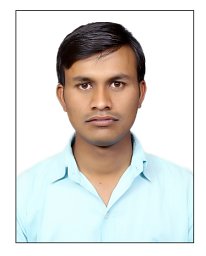 Tej Ram Banjara合作论文数Dept Agron, Banaras Hindu Univ6
 Asha Ram合作论文数ICAR Cent Agroforestry Res Inst6
 Mahesh C. Patra合作论文数Peptide Synthesis Laboratory, Institute of Genomics and Integrative Biology, New Delhi, India.6
 Ashok Yadav合作论文数6
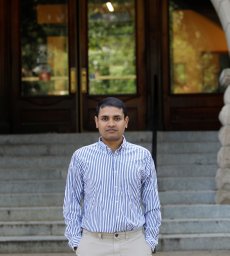 Bidhan chandra De合作论文数Animal Biotechnology Centre, National Dairy Research Institute;Department of Pharmaceutical Research and Education Center, Kazan (Volga Region) Federal University;National Dairy Research Institute, Kazan (Volga Region) Federal University6
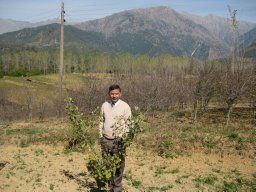 Rajendra Singh Bhakuni合作论文数Central Institute of Medicinal and Aromatic Plants6Dc Jain合作论文数5Hiteshkumar L. Adalja合作论文数5
 Subodh Kumar合作论文数Dept Comp Sci, Univ Delhi5
 Shashi Meena合作论文数University of Rajasthan5
 Purusottam Mishra合作论文数Department of Bioscience and Bioengineering, Indian Institute of Technology Roorkee5
 Daljit Singh合作论文数5
 Maharana Jitendra合作论文数Fish Health Management Division, Central Institute of Freshwater Aquaculture5
 Sharma Chhaya合作论文数5
 Gaje Singh合作论文数Division of Forest Ecology, Arid Forest Research Institute5
 Pooran Chand合作论文数Faculty of Dental Sciences, CSM Medical University5
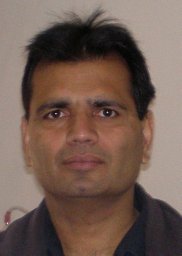 Virendra Dua合作论文数Chemical Laboratories, University of Roorkee Roorkee5
 P. Janardhan合作论文数Physical Research Laboratory5
 Himanshu Pathak合作论文数ICAR-National Institute of Abiotic Stress Management5
 Bhuwan Joshi合作论文数ARIES5Ajay Arora合作论文数Division of Plant Physiology, Indian Agricultural Research Institute5
 Deepanjan Majumdar合作论文数Institute of Science and Technology for Advanced Studies and Research Department of Environmental Science Vallabh Vidyanagar Gujarat 388120 India5
 Avinash Chandra Maurya合作论文数4Sudhanshu Saxena合作论文数4a k hait合作论文数4Jatinder Singh Chera合作论文数4




