This research presents a decentralized system that utilizes blockchain technology to improve the detection of counterfeit products, in response to the increasing risk they provide. Presently, centralized systems suffer from risks such as data tampering and the presence of single points of failure. This research adds to the ongoing issues around the prevention of counterfeit items. The current supply chain contains a large number of counterfeit goods. The Authentication Solution Providers' Association reports that each year it costs the Indian economy INR 1 trillion. For the consumer to determine whether or not the product they are purchasing is authentic, a system that allows them to know its status. Block technology is used to identify genuine products and identify counterfeit goods. DLT is a decentralized database that is supervised by numerous users on various nodes. A hash is an irreversible cryptographic signature used to record transactions on a blockchain, a type of DLT. Blockchain is a technology with features like distributed computation, decentralization, and digital ledger which is connected to numerous database/node computers through chains and it stores transactional data in the form of blocks. Because data stored in a blockchain is immutable, any block in the chain cannot be altered or compromised, making blockchain technology secure. Customers or users don't need to rely on other users to confirm the safety and authenticity of products due to Blockchain technology. This paper describes a system for detecting counterfeit goods that uses blockchain technology,
In the modern era, mental health issues are increasing rapidly. That is why we need a strong and precise stress detection and management system to resolve the issue from the root. This research paper proposes an extensive approach combining machine computational power, software, technology, and sympathetic care to meet this requirement. The paper’s approach is based on speech analyses and looks for similarities in frequency patterns to determine the stress level. This paper leverages tools like machine learning (ML), deep learning (DL), and chatbots. By merging these technologies, it can bridge the research gaps and create an extensive framework for stress detection and treatment. This paper discusses the methodology, technologies, and algorithms that are used in this paper and achieves an accuracy rate of $95 \%$, which is a testament to its practical applicability. It also discussed the ethical connotation of such technology and realized its potential application across multiple regions. We hope this research paper will mark a significant contribution to health technology and stress-bursting mission.
Download This Paper Open PDF in Browser Add Paper to My Library Share: Permalink Using these links will ensure access to this page indefinitely Copy URL Copy DOI
The purpose of this study is to investigate the issue of increased electrical energy consumption in communal settings, with a specific focus on areas such as restrooms and multiplexes as the primary areas of investigation. Not only does the observed behavior increase the financial requirements of end-users and facility operators, but it also places a major strain on energy grids, which in turn leads to a rise in carbon emissions and an intensification of environmental concerns. A unique approach that makes use of the TensorFlow Object Counting API is proposed by the current inquiry as a means of addressing the concern that was highlighted earlier. The purpose of this strategy is to develop a system that can precisely count human subjects in real-time when they are present. To effectively decerase the amount of electricity that is not required, the primary objective of this cutting-edge system is to precisely identify and count the number of people that are present in shared spaces. When it comes to the development of advanced object counting systems, the open-source framework that has been developed on the TensorFlow is a platform that offers a method that is both user-friendly and efficient. Within the realms of item identification, tracking, and counting, the system exhibits capabilities that are both spectacular and resilient. By addressing the dual problems of rising electricity bills and negative effects on the environment, this technology offers a potential solution to the problem. Through this study, an attempt is made to investigate the factors that lead to excessive energy use and to propose a practical solution to this sianificant problem.
Congestion in the network layer occurs when the volume of message traffic becomes too heavy, resulting in slower network response times and impacting packet transmission performance. To address congestion, TCP and UDP are used to direct data flow along different paths. The rapid growth of network applications in data centers has led to workload balancing issues. Load balancing aims to distribute traffic across multiple paths, and software-defined networks are highly effective in resolving congestion. In this paper, you will find an IP network algorithm that considers the differences between TCP and UDP, load balancing protocols, and shortest path selection algorithms like Dijkstra's. Our proposed method assesses node congestion by estimating congested links, calculating rerouting links, and balancing the load using the algorithm to select new data flow routes.
In this study, we present a method for decoding Indian Sign Language alphabets using hand gesture recognition. Our proposed approach consists of four modules: gesture recognition, feature extraction, real-time tracking, and segmentation of hand. Utilizing the Hue, Intensity, Saturation (HSV) color model and the Camshift approach, hands are tracked and segmented. Gestures can be identified using the Genetic Algorithm. For correctly classifying single-handed and double-handed motions, we propose a straightforward, affordable technique. The employment of this method has allowed many of impaired people to interact with normal people.
People who have hearing loss utilise sign language to communicate. It enables gestures and spoken language to communicate with one another by connecting letters, words, and phrases. The hearing-impaired community could benefit from a machine that can translate spoken language into sign language English, allowing them to interact with the general public. They will be helped to improve their skills and become more conscious of what they can do to advance humanity. In this study, we attempted to create an automated system that could identify sign language in challenging environments. It is possible to extract the part of the signer’s hand that matches their skin tone from a video of them signing. From the hand image, Extractive and categorical features that can identify the sign are used. Support vector machine is used for the categorization. India is diverse in terms of religion, culture, and language. There is no recognised sign language in India. There are numerous ISL dialects with verbal variations spoken in India. There are numerous varieties of Sign language, even in Kerala, a small state. In order to recognise the signs unique to our region, we are working to construct a SLR system.
The neurocomputing communities have focused much interest on quaternionic-valued neural networks (QVNNs) due to the natural extension in quaternionic signals, learning of inter and spatial relationships between the features, and remarkable improvement against real-valued neural networks (RVNNs) and complex-valued neural networks (CVNNs). The excellent learning capability of QVNN inspired the researchers working on various applications in image processing, signal processing, computer vision, and robotic control system. Apart from its applications, many researchers have proposed new structures of quaternionic neurons and extended the architecture of QVNN for specific applications containing high-dimensional information. These networks have revealed their performance with a lesser number of parameters over conventional RVNNs. This paper focuses on past and recent studies of simple and deep QVNNs architectures and their applications. This paper provides the future directions to prospective researchers to establish new architectures and to extend the existing architecture of high-dimensional neural networks with the help of quaternion, octonion, or sedenion for appropriate applications.
A number of advantages are provided by efficient routing algorithms in MANET networks. Some of these include better network performance overall in terms of higher throughput, lower jitter, and end-to-end delay. An evaluation of the MANET routing protocols' performance is presented in this research paper. This study compares three different MANET routing protocols such as fisheye state routing (FSR), zone routing protocol (ZRP), and dynamic MANET on demand (DYMO), and that are proactive, reactive, and hybrid respectively. Utilizing QUALNET Developer, comparisons have been done with constant bit rate (CBR).
Recognition of hand and wrist gestures is the vital and challenging problems in human computer interaction (HCI) community. In this paper, an essential phase in the process of identifying hand gestures is presented using innovative hand detection and wrist localization method. There has not been much focused to localizing the wrist, and available work are very few which cover a wide range of circumstances. On a publicly available dataset, the suggested approach was implemented, tested and the findings obtained support its effectiveness. By contrasting this method with earlier research, the effectiveness of this method and the significance of the localization with wrist phase has been presented. In this work, we suggest to use proposed method which is applicable for general sign language recognition (SLR) and Arabic digit SLR. The proposed technique (having error = 125 when maximum detection (E) = 1 and error 175 when E = 0.5) exhibits the better results as compeered to the existing method (having error = 131.8 when E = 1 and error 323.3 when E = 0.5). Using this paper, the researchers will explore to investigate novel creation of a real-time Arabic SL application using hand characteristics in order to propose other classifiers to boost the effectiveness of the detection of hands and wrists method.
Automated Teller Machine (ATM) cash robbery is very common in many countries including India. The cash robbery by damaging the ATM and breaking the cash vault is the prime technique to loot cash from ATM. Remote locations of the ATM, less or no security guards. Negligence and inadequate safety measures are the main reasons for ATM cash robbery in India. Many gangs perform ATM robbery only because it is easy and comparatively safer compared to the bank robbery. The amount lost in the ATM robbery is the hard-earned money of the public and its loot indirectly hits the public as lesser money in the hand of banking leads to lesser money in the hands of the public. ATM robbers have become smarter and darer after several successful loots. Much faster and stronger tools are being used today like gas cutters, welding, and pneumatic breakers. Even JCBs are used to lift the whole ATM itself to be break opened later. It is evident that the safety of all the ATMs cannot be guaranteed with manual means. With the appropriate use of technology, it is practically possible to save the ATMs. One thing is observant that in all types of ATM robbery the ATM box is damaged for sure in one or another way. Our proposed ideology is based on this concept to detect the damage exerted on the ATM boxes. To report the damage, this research work utilizes the Internet of Things (IoT) technology, which has worldwide coverage. It is currently the most efficient communication technology. To report the incidence to the authorities, IoT is the best possible solution as it uses internet technology which is already present in the ATMs. The embedded system is combined with IoT to perform the task. The ESP8266 based IoT system connected with a vibration sensor and ATMEGA 328 P PU microcontroller is utilized for ATM robbery detection and alert to authorities. Our paper performs a detailed analysis of the issue and concludes the most appropriate solution. Also, this research work replicates the overall system and verify its possibility to be implemented for real-time operations.
The current Internet of things (IoT) technologies will also have a profound economic, industrial and social influence on society. Teh ability of nodes to participate in IoT networks is generally resource-constrained, that also allows them to attract objectives for cyber threats. An extensive research has been conducted to address the issues of security and privacy in IoT networks, primarily through the conventional authentication approaches. The main goal is to review the current research learning related to the safety issues of the IoT and provides an information understanding on the topic. The manual scientific visualization study was carried out over a number of articles, and out of which, 58 research articles are selected for careful observation. From the articles, impacts and solutions with future research on security within IoT gateway have been identified. These visualization researchers have indicated key concerns as well as number of solutions. The findings also indicated the challenges in achieving secured data protection management and data center integration, which still require efficient solutions. The outcome of the physical ınstitutional mapping study is complete with the use of automatic image analysis software on two datasets (–2016 and –2020) derived from the ML and IoT. This qualitative approach generates trends and over decades in particular to the IoT security. Researchers also discuss a number of future research directions for ML- and DL-based IoT security research.
As we know already MANET means Mobile ad-hoc network that works made by two words Mobile and Ad-hoc Network collection of moving nodes shows mobile and kind of temporarily network which do not have any fixed point or centralised administration. Here assortment of nodes forms a network.it can be adjust mobility to bandwidth in high or low level. In this paper, we evaluate performance of DSR protocol. In this unique design shows the results in terms of how protocol changes quickly according to nodes movement along with compare by correlation method. The result of this paper is coming after analysing of different behaviour of DSR can be applied in other new protocols that are using DSR framework. In this paper I showed results in term of break time, PDF, delay, throughput etc by simulation. These simulation results are applied on correlation method and finding out in which point DSR protocol parameters are performing good performance. In this result shows when pause time is increases along with no of nodes then correlation will be high.
For induction, machine-based configuration, the model predictive control scheme, power converter based renewable system is presented in this paper. The PV system is proposed to provide an input source for the model predictive control (MPC) based system. The control method predictive is used based on vector control. According to this, the drive system behaviour of the fault-tolerant capacity is enhanced. The ZETA converter is proposed to improve the system input source, which fed on the PV system. The proposed ZETA converter is used to increase the DC link voltage of the system. The motor’s speed and torque can be controlled by the model predictive control method based on vector control. The results of the proposed system are obtained and verified using the MATLAB/Simulink.
In this century fast growing and progressive change of technology, Mobile Ad hoc Network (MANET) which is a no centralized structure plays great role. The routing protocol in this network is objective to deliver efficient route since sender to receiver. One of the hybrid routing protocols example is Zone Based Hierarchical Link State Routing Protocol (ZHLS) that is can’t allowable huge amount of inside attacks which arise from malevolent nodes. The third party in the routing system may drop the data, as well as disturbs the progression of the routing. To resolve this difficult, ZHLS Security is enhanced by integrating SHA256, AES, DH in MANETS. Security to routing protocols in MANETS is incorporated with different traditional Security mechanisms. My idea behind this thesis is to use integrated security ZHLS protocol by integrating Advanced Encryption Standard (AES) as well as secure hash algorithms to provide the data security. Also, it is, Deffi-Hellman to preserve privacy among the data transmission nodes. In the proposed method, AES is applied to symbol, also authentication to provide the confidentiality of the message in the routing system. This work will be simulated on NS2 environment and it may highly improve the security of data transmission among wireless mobile nodes.
A personal voice assistant is the software that can perform task and provide different services to the individual as per the individual’s dictated commands. This is done through a synchronous process involving recognition of speech patterns and then, responding via synthetic speech. Through these assistants a user can automate tasks ranging from but not limited to mailing, tasks management and media playback. As the technology is developing day by day people are becoming more dependent on it, one of the mostly used platform is computer. We all want to make the use of these computers more comfortable, traditional way to give a command to the computer is through keyboard but a more convenient way is to input the command through voice. Giving input through voice is not only beneficial for the normal people but also for those who are visually impaired who are not able to give the input by using a keyboard. For this purpose, there is a need of a voice assistant which can not only take command through voice but also execute the desired instructions and give output either in the form of voice or any other means. Keywords: A personal voice assistant is the software that can perform task and provide different services to the individual as per the individual’s dictated commands. This is done through a synchronous process involving recognition of speech patterns and then, responding via synthetic speech. Through these assistants a user can automate tasks ranging from but not limited to mailing, tasks management and media playback. As the technology is developing day by day people are becoming more dependent on it, one of the mostly used platform is computer. We all want to make the use of these computers more comfortable, traditional way to give a command to the computer is through keyboard but a more convenient way is to input the command through voice. Giving input through voice is not only beneficial for the normal people but also for those who are visually impaired who are not able to give the input by using a keyboard. For this purpose, there is a need of a voice assistant which can not only take command through voice but also execute the desired instructions and give output either in the form of voice or any other means.
Wireless correspondence is confronting the quickest progressive changes in innovation. The control plane 4G speeds are intended to surpass that of 3G. Current 3G speeds have an upper top at 14 Mbps downlink and 5.8Mbps uplink. On the off chance that we accomplish the speed of up to 100 Mbps for a moving client and 1 Gbps for stationary client is achieved, it is named 4G advancements. Seamless roaming and versatility the executives are the premier difficulties before heterogeneous 4G remote systems. The goal of this work is to discover the simple and helpful strategy for vertical handoff which spread all the vital parameters required for handoff with a rearranged way utilizing layered methodology so both programmed and client explicit handovers are conceivable. Here we propose the GPA strategy to be created on the three layered stage to give a straightforward design which performs both kind of handovers considering more extensive scope of elements for basic leadership.
Prior to blockchain technology coming into much usage, the earlier cryptographic digital cash schemes relied merely on trusted authorities. Bitcoin revolutionized this conventional view of a cryptocurrency, trading decentralized, distributed ledger, completely secured by the majority rule without predetermined authority or owner. Only standard cryptographic primitives such as signatures and hash functions were used to achieve security. Though other cryptocurrencies such as Bit-gold and B-money which are among the authority free cryptocurrencies, Bitcoin is the first one to experience public acceptance on a large scale. There are various factors which contribute to Bitcoins success, though there is still a little question of doubt that the decentralized design of blockchain technology and perceived resilience to government or third-party intervention played an extremely crucial role in its uptake. Distributed crypto cash, more specifically in Blockchain technology has hailed as one key and most eminent and widely accepted innovation of Bitcoin. In this paper we have worked on the use of blockchain technology to implement cryptocurrency for IOT.
This paper describes about the computing environment and types of network used and various others existed possible networks available for certain purpose and can be used in the computer network environment. As everyone knows about the computer network, basically it is a collection of computer machine, servers, network devices, mainframes or any devices which has the capacity or features of connecting to each other and can form a network. Minimum two machines or device can be connected and can be said as a computer network. Now this network is capable to share information or data within the connected devices or networks only. Its best suited example can be internet where many more than the million peoples are confined within the networks and exchange data or information worldwide in fractions of seconds on a single click of computer keyboard. Often we see and use widely in the applications of cloud computing and cyber crimes and security concern
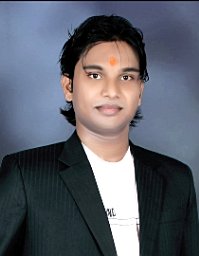 Sushil Kumar合作论文数7
 B.Barani Sundaram合作论文数5Dhanabal Thirumoorthy合作论文数4
 Balachandra Pattanaik合作论文数College, Lincoln University4
 Manish K. Mishra合作论文数4
 Karthika P S合作论文数2Pushparaj Pal合作论文数1Vijaykumar Janga合作论文数1
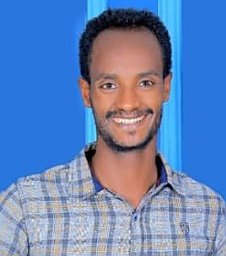 Aschalew Tirulo Abiko合作论文数School of Computing and Informatics, Wachemo University1
 Taranpreet Kaur合作论文数Dept. of CSE, Mata Gujri College1
 Anil Lamba合作论文数EXL services Inc.1Gagandeep Kaur合作论文数Computer Science Engineering, JIIT1Samyak Jain合作论文数1
 Gaurav Singh Rawat合作论文数Department of Electrical Engineering, Indian Institute of Technology (BHU),1
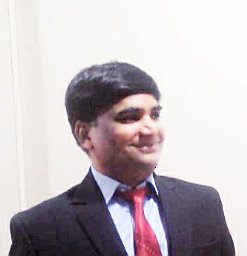 Sethi, Dinesh合作论文数1
 Bala Maheswaran合作论文数Physics Department, Northeastern University Boston1
 Sanjay Kumar合作论文数Life Sciences1
 Amit Pandey合作论文数Inselspital, University Children's Hospital1




