Oncogenic Ras has been shown to change the way cancer cells divide by increasing the forces generated during mitotic rounding. In this way, RasV12 enables cancer cells to divide across a wider range of mechanical environments than normal cells. Here, we identify a further role for oncogenic Ras-ERK signaling in division by showing that RasV12 expression alters the shape, division orientation, and respreading dynamics of cells as they exit mitosis. Many of these effects appear to result from the impact of RasV12 signaling on actomyosin contractility, because RasV12 induces the severing of retraction fibers that normally guide spindle positioning and provide a memory of the interphase cell shape. In support of this idea, the RasV12 phenotype is reversed by inhibition of actomyosin contractility and can be mimicked by the loss of cell-substrate adhesion during mitosis. Finally, we show that RasV12 activation also perturbs division orientation in cells cultured in 2D epithelial monolayers and 3D spheroids. Thus, the induction of oncogenic Ras-ERK signaling leads to rapid changes in division orientation that, along with the effects of RasV12 on cell growth and cell-cycle progression, are likely to disrupt epithelial tissue organization and contribute to cancer dissemination.
Mutations in RAS are key oncogenic drivers and therapeutic targets. Oncogenic Ras proteins activate a network of downstream signalling pathways, including extracellular signal-regulated kinase (ERK) and phosphatidylinositol 3-kinase (PI3K), promoting cell proliferation and survival. However, there is increasing evidence that RAS oncogenes also alter the mechanical properties of both individual malignant cells and transformed tissues. Here we discuss the role of oncogenic RAS in controlling mechanical cell phenotypes and how these mechanical changes promote oncogenic transformation in single cells and tissues. RAS activation alters actin organisation and actomyosin contractility. These changes alter cell rheology and impact mechanosensing through changes in substrate adhesion and YAP/TAZ-dependent mechanotransduction. We then discuss how these changes play out in cell collectives and epithelial tissues by driving large-scale tissue deformations and the expansion of malignant cells. Uncovering how RAS oncogenes alter cell mechanics will lead to a better understanding of the morphogenetic processes that underlie tumour formation in RAS-mutant cancers.
Focal adhesions are multifunctional organelles that couple cell-matrix adhesion to cytoskeletal force transmission and signaling and to steer cell migration and collective cell behavior. Whereas proteomic changes at focal adhesions are well understood, little is known about signaling lipids in focal adhesion dynamics. Through the characterization of cells from mice with a kinase-inactivating point mutation in the class II PI3K-C2β, we find that generation of the phosphatidylinositol-3,4-bisphosphate (PtdIns(3,4)P2) membrane lipid promotes focal adhesion disassembly in response to changing environmental conditions. We show that reduced growth factor signaling sensed by protein kinase N, an mTORC2 target and effector of RhoA, synergizes with the adhesion disassembly factor DEPDC1B to induce local synthesis of PtdIns(3,4)P2 by PI3K-C2β. PtdIns(3,4)P2 then promotes turnover of RhoA-dependent stress fibers by recruiting the PtdIns(3,4)P2-dependent RhoA-GTPase-activating protein ARAP3. Our findings uncover a pathway by which cessation of growth factor signaling facilitates cell-matrix adhesion disassembly via a phosphoinositide lipid switch.
The role of altered tissue mechanics in early cancer development is not well understood. A new study reveals how oncogene activation generates force within a tissue to impact cell division in surrounding normal cells, which then contribute to tumour formation.
When cells enter mitosis, they become spherical and mechanically stiffen. We used MCF10A cell lines as a model system in which to investigate the effect of induced oncogene expression on mitotic entry. We find that activation of oncogenic Ras V12 , for as little as five hours, changes the way cells divide. Ras V12 -dependent activation of the MEK-ERK signalling cascade alters acto-myosin contractility to enhance mitotic rounding. Ras V12 also affects cell mechanics, so that Ras V12 expressing cells are softer in interphase but stiffen more upon entry into mitosis. As a consequence, Ras V12 expression augments the ability of cells to round up and divide faithfully when confined underneath a stiff hydrogel. Conversely, inhibition of the Ras-ERK pathway reduces mitotic rounding under confinement, resulting in chromosome segregation defects. These data suggest a novel mechanism by which oncogenic Ras-ERK signalling can aid division in stiff environments like those found in tumours.
 Buzz Baum合作论文数Medical Research Council Laboratory for Molecular Cell Biology, Faculty of Life Sciences, University College London4
 Helen Matthews合作论文数School of Biosciences, Faculty of Science, The University of Sheffield4
 Agata Nyga合作论文数Centre for Nanotechnology, Biomaterials and Tissue Engineering, University College London2
 Daniele Morelli合作论文数1Alexander Wallroth合作论文数1Max Williamson合作论文数1Benoit Bilanges合作论文数1Tim Meyer合作论文数1Elitza Deltcheva合作论文数1
 Tom Wyatt合作论文数Laboratoirè Matiere et Systèmes Complexes, Université de Paris1
 Bart Vanhaesebroeck合作论文数Research Department of Oncology, University College London;Cancer Institute, University College London1
 Anna Taubenberger合作论文数Biotechnol Ctr, Tech Univ Dresden1
 York Posor合作论文数1
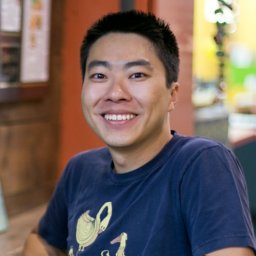 Win Zaw合作论文数Department of Biomedical Engineering, University of Minnesota - Twin Cities1
 Jochen Guck合作论文数Max Planck Institute for the Science of Light;Biotechnologischen Zentrum, Technischen Universität Dresden1
 Volker Haucke合作论文数Department of Molecular Physiology & Cell Biology, Leibniz-Forschungsinstitut für Molekulare Pharmakologie;Freie Universität Berlin1
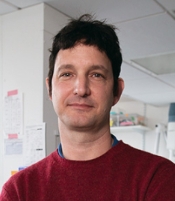 Matthieu Piel合作论文数Institut Pierre Gilles de Gennes, Centre National de la Recherche Scientifique;Institut Curie, Centre National de la Recherche Scientifique1K. Plak合作论文数1
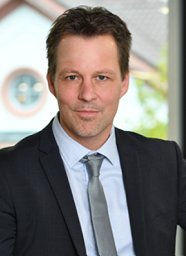 Philipp Koch合作论文数University of Bonn and Hertie Foundation Institute of Reconstructive Neurobiology1Samira Alliouachene合作论文数1




