PurposeThis paper aims to evaluate how entrepreneurial well-being contributes to business-related outcomes in social enterprises. Yet, social entrepreneurship literature has limited discussion on well-being beyond the creation of social value in targeted communities. Addressing this research gap, this study explores ways in which social entrepreneurs' and their managers' lived experiences shape well-being.Design/methodology/approachThe study focused on social enterprises in New Zealand. The authors collected data using semi-structured in-depth interviews from 21 individuals who are either social enterprise founders or managers. Interview data were then triangulated with secondary data and analysed using thematic coding techniques.FindingsSocial enterprise founders' and managers' lived experiences shaped their own well-being, and how they identified community issues and implemented well-being management strategies. The broader context also influenced the well-being issues, the founders' and managers' well-being and how they perceived and addressed the community's well-being.Originality/valueThis study contributes to social entrepreneurship literature by showing that perceptions of community well-being needs are linked with the lived experiences of founders and managers. Drawing on the study's findings, a conceptual framework was developed to better explain the well-being interlinks among social entrepreneurs, their management and their perceptions of community well-being needs and delivery. The originality of this study comes from illustrating the well-being of different groups in the social enterprise context and their interconnections. The conceptual framework illustrates that a balance is needed in managing well-being.
The objective of this study was to explore the potential enhancement of response within GP medical centres in New Zealand when facing heightened healthcare demand during a pandemic. This investigation sheds light on effective crisis management and leadership. By elucidating the contributions of this research, we gain a deeper appreciation of its importance in advancing our understanding of pandemic management. This study has yielded fresh insights and knowledge, beneficial to both academic and real-world applications, particularly concerning the adoption and effects of leadership and management within the healthcare domain amidst crisis situations. Using a multiple case study design, we conducted 86 in-depth interviews with staff from 16 General Practice centres in New Zealand. The critical activities delivered during the first six months of the COVID pandemic to keep New Zealand communities safe during the initial COVID-19 outbreak were (a) leadership in health service planning, including workforce planning, new operational processes, and expansion in the use of Information Communication Technology systems by the GP medical centres; (b) environment disinfection using national guidelines, education and establishment of respiratory clinics and expanding testing sites in GP medical centres; and (c) education and outreach to the patients including the protection of Māori, Pasifika, and remote communities. The decision to adopt a localised response to the pandemic, centralise testing, and better understand local-level needs prompted GP medical centres to communicate and engage early and effectively with patients. This enabled centres to lead and manage the COVID-19 pandemic with greater efficiency in the first six months of the outbreak. The New Zealand government’s “team of 5 million” COVID-compliance campaign program provided clear and persistent communication by the Ministry of Health. This campaign assisted in a better national understanding and compliance with the regulation of the COVID-19 pandemic. The dedication of medical centre managers to forward planning using contingency and accrued funding and setting up Community-Based Assessment Centres and respiratory clinics, including walk-in and outreach services, proved to be highly effective. GP centres led the way in COVID-19 pandemic planning, response, and management.
This article investigates entrepreneurial marketing (EM) and use of business recovery frameworks within experiential learning cycles (ELC)s to investigate post-Covid learning techniques during the learning process. Three distinct post-graduate learner cohorts took part in the study consisting of part-time MBA entrepreneurs from the United Kingdom, part-time upGrad MBA students from India (managers and marketers in large firms) and full-time MCom (Masters in Commerce) marketing students in New Zealand. This inductive study uses coursework artifacts, student feedback with thematic coding, and analysis from live business projects. Use of the post-disaster business recovery framework led to deeper learning, increased understanding, and generation of insights and new knowledge. Both student learner and entrepreneurial marketer skills and competencies are evidenced as essential for business resilience and growth in post-pandemic environments, while the framework aided co-creation of learning between the student and the focal business. Implications for marketing educators are offered together with future opportunities for education research in the EM education, entrepreneurship education and marketing fields. The study will allow educators to understand the three student typologies, leading to effective and impactful pedagogy in EM education.
AIM:This study investigates the digital transition initiated by the onset of the COVID-19 pandemic and the factors that enabled the digitalisation of general practices (GPs) in New Zealand. METHOD:Using a multiple case study design, we conducted 86 in-depth interviews with staff from 16 GP centres in New Zealand. RESULTS:The critical enablers of digital transition in response to the pandemic were support from the community, agility and adaptability of GP medical centres and the ability to pragmatically create external operational processes to ensure business continuity and to meet patient expectations. Major barriers to digitalisation at the early stage of the COVID-19 pandemic (28 February to 30 August 2020) included lack of organisational leadership, financial support availability, systems management collaboration, and patient and staff knowledge and preferences. Digitalisation was characterised by the GP centre's ability to provide telehealth services using existing systems and technology, embracing e-prescription, e-referrals, e-lab and video-only consults. CONCLUSION:The decision to adopt digitalisation had a significant impact on GP centres, disrupting the norm but also allowing continued access to health services to patients who were the most vulnerable during the pandemic. The pandemic forced GP medical centres to change to digitalisation and led to significant changes in GP medical centres' business models. However, it remains to be seen how the rapid change effected at this time correlates with patient satisfaction and how the digitalisation capabilities that have been built impact on future primary care services. This study suggests that changes brought about by COVID-19 may pave the way to an expansion of GP telehealth services, which has the potential to permanently change the primary care landscape.
The aim of this paper is to present a conceptualization of entrepreneurial marketing approaches that wineries can adopt in internationalization. Bringing together literature on marketing, entrepreneurship, internationalization, networks and serendipity, we argue that adopting an entrepreneurial marketing orientation (EMO) is appropriate for the wine industry and offer a set of propositions based on networks and serendipity literature to support an EMO and internationalization framework. EMO allows the wine industry to navigate the competitive and turbulent nature of the industry and overcome the challenges during the early stage of the internationalization journey. The paper offers a foundation to better understand the internationalization process of the wine sector and the benefits of EMO to wineries entering international markets.
This paper draws on the experiences of portfolio entrepreneurs and develops new insights into this important mode of business development. Portfolio entrepreneurs own and manage multiple businesses simultaneously, providing an alternative growth process and the prospect of enduring entrepreneurship. Previous research has focused on either the genealogy of businesses in a portfolio or the human capital attributes that determine who becomes a portfolio entrepreneur and how they perform relative to other types of entrepreneurs. Key issues involving the structure, strategy and management of portfolios need further exploration and development. This multiple-case study conducted in New Zealand features eleven entrepreneurs with portfolios of different ages and sizes, each reflecting a series of opportunistic responses to different situations. Our results show that some entrepreneurs use structure as an internal seedbed to spawn new ventures, others seek opportunities to acquire more businesses, while some use both means to build and maintain their business groups. Structure is the dominant construct, providing a flexible canvas upon which entrepreneurs enact growth ambitions by creating and re-creating their portfolios over time. We found no evidence of portfolio-level decision making or performance measurement with the lead entrepreneur’s attention largely focused at the business unit level.
Understanding post-disaster entrepreneurial decision-making is crucial to the disaster recovery process. Such knowledge helps in the motivation of entrepreneurial actions that could restore disrupted entrepreneurial activities resulting from economic shock due to disasters. Notwithstanding that post-disaster environment is characterised by risk and uncertainty, entrepreneurs have demonstrated resilience. Effectuation and causation logics have presented the entrepreneurial process with pragmatic principles that make entrepreneurial decision-making feasible in an environment laden with all manner of constraints. Recent development in the field of entrepreneurship has seen the growth of effectual entrepreneurial research; however, a systematic understanding of how effectuation and causation logics contribute to post-disaster entrepreneurial decision-making is still largely needed.
Growth is a broad area and many aspect of growth is under research especially in smaller and entrepreneurial firms. Many research show that growth and fast growth happens randomly and is not a continuous phenomenon. In this study, we investigate how successful entrepreneurs grow their firms. The investigation involved ten fast-growth firm cases in Iran -as an emerging economy- in different industries. The research is qualitative and data gathered through semi structured in-depth interviews. After coding, all interviews are mapped. By using Decision Explorer® all causal maps are analyzed. Analysis show that fast growth is a direct outcome of entrepreneurial marketing (EM) practices and indirectly influenced by serendipity. Serendipity is an element observed in many firms that generally occurs at the initial phase of firm formation and could bring great opportunities but indirectly associated with fast-growth. However, serendipity itself is not important but the ability to recognize and exploit opportunity is a crucial activity that entrepreneurs are really great at it. The ability of entrepreneurs to exploit serendipitous opportunities and use entrepreneurial marketing practices in terms of innovative products and activities/process lead to fast growth. Other elements, such as network, innovation, and perseverance, could either directly or indirectly influence growth.
While international entrepreneurship (IE) recognizes opportunity recognition (OR) as a central activity and the prominent role of network capabilities in OR, it is not informative as to how different network capabilities influence OR in international markets. We utilize dual network capability through the lens of explorationexploitation to better understand how these two different capabilities influence the identification of international opportunities. Given that micmfoundations perspective and prior experience in IE are under-developed and under-theorized, we explore founder's prior experience as an essential micmfoundation for the dual network capability. By employing structural equation modeling on a sample of 647 early internationalizing firms from a developing country, the study demonstrates that founders' prior experience is a significant microfoundation of dual network capability in international OR. However, both exploration and exploitation capabilities fail to bring new opportunities in a changing market environment. A post-hoc analysis reveals that at a higher level of market change, younger firms benefit more from network exploration, whereas older firms achieve greater success when leveraging benefits from network exploitation. The study concludes with implications and future research avenues.
This study unpacks the relationship between engaging in entrepreneurial marketing practices and firm performance under the moderating role of competitive intensity, in an immediate post-crisis (COVID-19) period. Following 20 field interviews, the model testing stage featured survey responses from owner-managers of 306 small, rural wine producers across multiple regions in the United States. Underpinned by a relational, stakeholder perspective of resource-based theory, alongside an outside-in lens, unique insights revealed that in aggregate terms, entrepreneurial marketing activities were positively and significantly associated with firm performance, while competitive intensity yielded a non-significant moderating effect. Importantly, a post-hoc test revealed that only certain dimensions of the multi-faceted entrepreneurial marketing construct were significantly associated with firm performance, whereby, competitive intensity played different moderating roles (exhibiting varying interaction effects). Implications arise for practitioners building resilience after an environmental shock, whereby, they are likely to need to pivot strategies while facing new degrees of competitive intensity.
Purpose The purpose of this study is to investigate the influence of network relationships and institutional environment on premium winegrowers’ internationalization process. Design/methodology/approach This study uses a case study approach to examine two premium wine producers engaged in internationalization. The data sources consist of semi-structured interviews, observations at three major events and secondary data sourced from industry reports and materials that are available online. Findings Findings illustrate that both personal and inter-firm networks help wineries to internationalize. Inter-firm networks play a significant role in gaining international legitimacy. Personal networks were found to be more important in establishing brand authenticity that facilitates wineries in their internationalization process. Gaining international legitimacy and establishing brand authenticity are crucial in the successful internationalization of premium wineries. Research limitations/implications This study provides an explanation of how networks can be put into institutional context. Future studies could map out the formal and informal institutions within the wine industry and investigate the closer dynamics among the different actors in the whole network. A whole network is formally structured and governed, yet still built on the relationships among members, making it a very complex phenomenon. This would allow the evaluation of multilateral ties that link firms and actors within the network and how this affects the internationalization process. Practical implications This paper provides managers with insights on how they can capitalize on their inter-firm and personal networks to help them deal with domestic and international institutional environments when embarking on internationalization activities. Originality/value This paper adds to the existing literature on networks relationships and provides an important link between networks, institutions and internationalization.
Introduction to the Special Issue on Entrepreneurship and Macromarketing.
One of the parameters supporting an innovation-based economy in an age of technological development is the formation of business incubators. This study focuses on disruptive innovation and the support of a business incubator through network and institutional mediation. Relevant literature shows limited research in this area.This paper brings a deeper understanding of the influences of business incubation on disruptive innovation with an in-depth investigation into four participant companies. Using comparative case analysis, mediation similarities and differences were examined throughout the cases' innovation identification, planning and development and implementation process. Four themes emerged: mediation influences the disruptive mind-set, interdisciplinary input, financial support and technology and business uncertainty. The findings extend the literature; provide practical guidance for incubator management and allocation of resources in disruptive innovation.
Mission statements arose in response to what Levitt (1960) described as marketing myopia, whereby many of the problems plaguing US organizations were the result of businesses seeing themselves only in terms of what they did. Rather, they should have been doing so in terms of the customer’s needs that they satisfied. By failing to define themselves effectively, they became vulnerable to other alternatives that satisfied the customers’ needs more effectively, and were not able to alert themselves rapidly enough to the fact that customer needs changed. Mission statements have since become accepted as an important part of the strategic planning and implementation processes of organizations (Keller 1983; Pearce and Robinson 1991). Externally, they signal the organization’s professional identity, frame its choice of activities, and facilitate positioning vis-à-vis its competitors (Hartley 2002; Short and Palmer 2008). Internally, they help clarify the philosophy and intent of the organization to its employees and customers (Davies and Glaister 1997). The purpose of the study was to determine whether there are mission statements that help companies stand out or whether most organizations end up saying very similar things to others. Using the content analysis software, DICTION, we analyzed the mission statements of 110 Fortune 500 companies on Hart’s five dimensions of certainty, optimism, activity, realism, and commonality (Hart 1984a, b, 2000, 2001). We also used DICTION to calculate the following variables for each mission statement: insistence, variety, embellishment, and complexity. The preliminary results show that in many cases mission statements don’t serve as effective tools with which to differentiate firms and that many firms end up saying the same thing as most others. From a managerial perspective, the results of the study highlight the fact that managers should not view the mission statement as set in stone but rather as a malleable tool that should guide strategy and especially marketing strategy. As conditions in the business environment change, so too might the definition of business. References Available Upon Request
The frequency and ferocity of recent natural disasters have necessitated the urgency and relevance of disaster-related research to mitigate risk and hasten recovery. While there is a proliferation of studies on the impact of disasters on property, life, communities and the environment, much remains unknown about entrepreneurial challenges and behaviours post-disaster. This paper investigates how Entrepreneurial Marketing (EM) is enacted in post-disaster settings to facilitate speedy business recovery. We examined the post-quake experiences of small business entrepreneurs by using inductive research and adopting a ‘theories-in-use’ approach. Research propositions are developed that capture the dynamics of the business environment which influence entrepreneurial decisions, actions and EM behaviour. A new definition is offered in the light of this study and an EM Post-Disaster Business Recovery (EMPDBR) Framework is provided. This framework highlights opportunity-seeking, resource-organising, creating customer value and accepting risk (ORCAr) as concepts that are markedly different in the post-disaster context.
 Morgan P. Miles合作论文数College of Business Administration, Georgia Southern University13
 Rosalind Jones合作论文数7
 Jonathan H. Deacon合作论文数6
 Anisur Faroque合作论文数LUT School of Business and Management, LUT University5
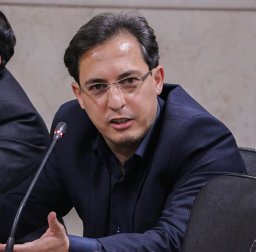 Saeed Mirvahedi合作论文数Tabataba'i University3
 Hannah Wolf合作论文数3
 Michael Jay Polonsky合作论文数Department of Marketing, Deakin Business School, Deakin University3
 Laura Meriluoto合作论文数University of Canterbury, University of Canterbury3
 Deborah Susan Levy合作论文数Department of Property, Business School, The University of Auckland3
 Fabian Eggers合作论文数Department of Marketing, Menlo College3
 Chickery J. Kasouf合作论文数3
 Abayomi Akinboye合作论文数2
 James M. Crick合作论文数Loughborough Univ2
 Mesut Cicek合作论文数Dept. of Manage., Yalova Univ.;c;Dept. of Manage., Yalova Univ.2
 Zhi Dong合作论文数Department of Property, Business School, The University of Auckland2
 Girish Prayag合作论文数Department of Management, Marketing and Tourism, Business School, University of Canterbury2
 Jamie D. Collins合作论文数Hankamer School of Business, Baylor University2
 Annick Masselot合作论文数Department of Law, University of Leeds Centre for the Study of Law and Policy in Europe2
 Paul W. Ballantine合作论文数University of Auckland2
 Christina Lee合作论文数Faculty of Health and Behavioural Sciences, University of Queensland2
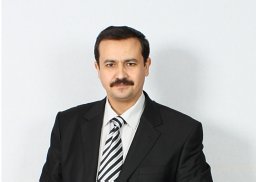 Abdul Ali合作论文数Marketing Division;Babson College;Babson College2Victoria J. Little合作论文数1Jia Guo合作论文数1Yinghong Susan Wei合作论文数1Makoto Sarata合作论文数1Daniel Komla Gameti合作论文数1Richard Derham合作论文数1
 Rajendran Sriram Murthy合作论文数Saunders Coll Business, Rochester Inst Technol1
 David Fleming合作论文数Dept Mkt & Management, Indiana State Univ1
 Sebastian Robledo合作论文数Universidad Católica Luis Amigó, Medellín, Colombia;Universidad Católica Luis Amigó1
 Joseph Vella合作论文数Department of Marketing Communication, University of Malta1Gemma Lewis合作论文数1
 Nadeera Ranabahu合作论文数University of Canterbury1Andrey Kretinin合作论文数William Paterson University1
 Anna Earl合作论文数Management Mkt & Entrepreneurship, Univ Canterbury1Emily Treen合作论文数Corresponding author.1
 Sarah Lord Ferguson合作论文数Beedie School of Business, Simon Fraser University1
 Lasse Torkkeli合作论文数School of Economics, Turku1
 Dmirti Pletnev合作论文数1
 Denise Linda Parris合作论文数Tom Love Div Entrepreneurship & Econ Dev, Univ Oklahoma1
 Deborah Levy合作论文数Division of Rheumatology, Department of Paediatrics, University of Toronto;The Hospital for Sick Children, University of Toronto1Hiroyuki Nishimoto合作论文数1
 Colleen Mills合作论文数1
 C. David Shepherd合作论文数Coll Business Adm, Georgia Southern Univ1
 R. T. Hamilton合作论文数Villanova University1
 Robert Hamilton合作论文数1
 Stefanie L. Boyer合作论文数College of Business, Bryant University1Shiv Chaudhry合作论文数1




