Class-agnostic image segmentation is a crucial component in automating image editing workflows, especially in contexts where object selection traditionally involves interactive tools. Existing methods in the literature often adhere to top-down formulations, following the paradigm of class-based approaches, where object detection precedes per-object segmentation. In this work, we present a novel bottom-up formulation for addressing the class-agnostic segmentation problem. We supervise our network directly on the projective sphere of its feature space, employing losses inspired by metric learning literature as well as losses defined in a novel segmentation-space representation. The segmentation results are obtained through a straightforward mean-shift clustering of the estimated features. Our bottom-up formulation exhibits exceptional generalization capability, even when trained on datasets designed for class-based segmentation. We further showcase the effectiveness of our generic approach by addressing the challenging task of cell and nucleus segmentation. We believe that our bottom-up formulation will offer valuable insights into diverse segmentation challenges in the literature.
We propose a method to distill a complex multistep diffusion model into a single-step student model, dramatically accelerating inference while preserving image quality. Our approach interprets the diffusion distillation as a paired image-to-image translation task, using noise-to-image pairs of the diffusion model’s ODE trajectory. For efficient regression loss computation, we propose E-LatentLPIPS, a Perceptual loss in the latent space of the diffusion model with an ensemble of augmentations. Despite dataset construction costs, E-LatentLPIPS converges more efficiently than many existing distillation methods. Furthermore, we adapt a diffusion model to construct a multi-scale discriminator with a text alignment loss to build an effective conditional GAN-based formulation. We demonstrate that our one-step generator outperforms all published diffusion distillation models on the zero-shot COCO2014 benchmark.
The recent success of text-to-image synthesis has taken the world by storm and captured the general public's imagination. From a technical standpoint, it also marked a drastic change in the favored architecture to design generative image models. GANs used to be the de facto choice, with techniques like StyleGAN. With DALL.E 2, autoregressive and diffusion models became the new standard for large-scale generative models overnight. This rapid shift raises a fundamental question: can we scale up GANs to benefit from large datasets like LAION? We find that naïvely increasing the capacity of the StyleGan architecture quickly becomes unstable. We introduce GigaGAN, a new GAN architecture that far exceeds this limit, demonstrating GANs as a viable option for text-to-image synthesis. GigaGAN offers three major advantages. First, it is orders of magnitude faster at inference time, taking only 0.13 seconds to synthesize a 512px image. Second, it can synthesize high-resolution images, for example, 16-megapixel images in 3.66 seconds. Finally, GigaGAN supports various latent space editing applications such as latent interpolation, style mixing, and vector arithmetic operations.
We propose Neural Neighbor Style Transfer (NNST), a pipeline that offers state-of-the-art quality, generalization, and competitive efficiency for artistic style transfer. Our approach is based on explicitly replacing neural features extracted from the content input (to be stylized) with those from a style exemplar, then synthesizing the final output based on these rearranged features. While the spirit of our approach is similar to prior work, we show that our design decisions dramatically improve the final visual quality.
Neural networks have shown great abilities in estimating depth from a single image. However, the inferred depth maps are well below one-megapixel resolution and often lack fine-grained details, which limits their practicality. Our method builds on our analysis on how the input resolution and the scene structure affects depth estimation performance. We demonstrate that there is a trade-off between a consistent scene structure and the high-frequency details, and merge low- and high-resolution estimations to take advantage of this duality using a simple depth merging network. We present a double estimation method that improves the whole-image depth estimation and a patch selection method that adds local details to the final result. We demonstrate that by merging estimations at different resolutions with changing context, we can generate multi-megapixel depth maps with a high level of detail using a pre-trained model.
In this supplemental document we present technical details of various aspects of our method. We first present details on our seam-less video looping approach, a detailed description of the video matting approach, details on the linear system used to propagate depth and finally some additional details on comparisons and ablations
Many digital design tasks require a user to set a large number of parameters. Gallery-based interfaces provide a way to quickly evaluate examples and explore the space of potential designs, but require systems to predict which designs from a high-dimensional space are the right ones to present to the user. In this paper we present the design adjectives framework for building parameterized design tools in high dimensional design spaces. The framework allows users to create and edit design adjectives, machine-learned models of user intent, to guide exploration through high-dimensional design spaces. We provide a domain-agnostic implementation of the design adjectives framework based on Gaussian process regression, which is able to rapidly learn user intent from only a few examples. Learning and sampling of the design adjective occurs at interactive rates, making the system suitable for iterative design workflows. We demonstrate use of the design adjectives framework to create design tools for three domains: materials, fonts, and particle systems. We evaluate these tools in a user study showing that participants were able to easily explore the design space and find designs that they liked, and in professional case studies that demonstrate the framework's ability to support professional design concepting workflows.
The dominant style transfer framework is based on separately defining ‘style loss’ and ‘content loss’, then finding an image that trades off between minimizing both. The challenge of operating in this regime is that formulations proposed so far for the ‘content loss’ and ‘style loss’ are fundamentally at odds, and generally impossible to simultaneously drive to zero. In this work we show that an explicit content loss is unnecessary. We propose Neural Neighbor Style Transfer (NNST)—a straightforward approach based on nearest-neighbors that achieves higher quality stylization than prior work, without sacrificing content preservation.
This paper describes a simple technique to analyze Generative Adversarial Networks (GANs) and create interpretable controls for image synthesis, such as change of viewpoint, aging, lighting, and time of day. We identify important latent directions based on Principal Components Analysis (PCA) applied either in latent space or feature space. Then, we show that a large number of interpretable controls can be defined by layer-wise perturbation along the principal directions. Moreover, we show that BigGAN can be controlled with layer-wise inputs in a StyleGAN-like manner. We show results on different GANs trained on various datasets, and demonstrate good qualitative matches to edit directions found through earlier supervised approaches.
The sliders in our GUI operate in units of standard deviations, and we find that later components work for wider ranges of values than earlier ones. The first ten or so principal components, such as head rotation (E(v1, 0-2)) and lightness/background (E(v8, 5)), operate well in the range [−2...2], beyond which the image becomes unrealistic. In contrast, face roundness (E(v37, 0-4)) can work well in the range [−20...20], when using 0.7 as the truncation parameter.
We present a method for projecting an input image into the space of a class-conditional generative neural network. We propose a method that optimizes for transformation to counteract the model biases in generative neural networks. Specifically, we demonstrate that one can solve for image translation, scale, and global color transformation, during the projection optimization to address the object-center bias and color bias of a Generative Adversarial Network. This projection process poses a difficult optimization problem, and purely gradient-based optimizations fail to find good solutions. We describe a hybrid optimization strategy that finds good projections by estimating transformations and class parameters. We show the effectiveness of our method on real images and further demonstrate how the corresponding projections lead to better editability of these images. The project page and the code is available at https://minyoungg.github.io/GAN-Transform-and-Project/ .
In 2D digital art software, it is common to organize documents in to layers that are composited to create the final image, mimicking the traditional technique of creating an image by drawing on stacked transparent celluloid sheets. While intuitive, the layer stack suffers from problems of scale and organization. Documents with many layers are unwieldy to edit, finding a specific layer is akin to finding a needle in a haystack. This paper presents a click and hover interaction which visualizes the impact of a layer in the context of the full resolution composited image, providing an easier and faster way to identify layers in complex compositions. Through a user study, we find that users prefer to use hover visualizations in all cases, and that in compositions with many overlapping, semi-transparent layers, users are able to locate layers twice as fast with the click and hover interface.
Lighting is a critical element of theater. A lighting designer is responsible for drawing the audience's attention to a specific part of the stage, setting time of day, creating a mood, and conveying emotions. Designers often begin the lighting design process by collecting reference visual imagery that captures different aspects of their artistic intent. Then, they experiment with various lighting options to determine which ideas work best on stage. However, modern stages contain tens to hundreds of lights, and setting each light source's parameters individually to realize an idea is both tedious and requires expert skill. In this paper, we describe an exploratory lighting design tool based on feedback from professional designers. The system extracts abstract visual objectives from reference imagery and applies them to target regions of the stage. Our system can rapidly generate plausible design candidates that embody the visual objectives through a Gibbs sampling method, and present them as a design gallery for rapid exploration and iterative refinement. We demonstrate that the resulting system allows lighting designers of all skill levels to quickly create and communicate complex designs, even for scenes containing many color-changing lights.
Illumination is a critical element of photography and is essential for many computer vision tasks. Flash light is unique in the sense that it is a widely available tool for easily manipulating the scene illumination. We present a dataset of thousands of ambient and flash illumination pairs to enable studying flash photography and other applications that can benefit from having separate illuminations. Different than the typical use of crowdsourcing in generating computer vision datasets, we make use of the crowd to directly take the photographs that make up our dataset. As a result, our dataset covers a wide variety of scenes captured by many casual photographers. We detail the advantages and challenges of our approach to crowdsourcing as well as the computational effort to generate completely separate flash illuminations from the ambient light in an uncontrolled setup. We present a brief examination of illumination decomposition, a challenging and underconstrained problem in flash photography, to demonstrate the use of our dataset in a data-driven approach.
Copying an element from a photo and pasting it into a painting is a challenging task. Applying photo compositing techniques in this context yields subpar results that look like a collage — and existing painterly stylization algorithms, which are global, perform poorly when applied locally. We address these issues with a dedicated algorithm that carefully determines the local statistics to be transferred. We ensure both spatial and inter-scale statistical consistency and demonstrate that both aspects are key to generating quality results. To cope with the diversity of abstraction levels and types of paintings, we introduce a technique to adjust the parameters of the transfer depending on the painting. We show that our algorithm produces significantly better results than photo compositing or global stylization techniques and that it enables creative painterly edits that would be otherwise difficult to achieve.
This document consists of additional material for the submitted paper “Watercolor woodblock printing with image analysis”. It presents details of the “shading woodblocks” algorithm, our decisions on the fabrication pipeline. Also, it contains the output of the image analysis pipeline and lasercutter input for our final prints. To make easier comparable photographs we match their colors using Adobe Illustrator. CCS Concepts •Human-centered computing → Interface design prototyping; •Computing methodologies → Image processing; Image representations; •Applied computing → Fine arts;
Watercolor paintings have a unique look that mixes subtle color gradients and sophisticated diffusion patterns. This makes them immediately recognizable and gives them a unique appeal. Creating such paintings requires advanced skills that are beyond the reach of most people. Even for trained artists, producing several copies of a painting is a tedious task. One can resort to scanning an existing painting and printing replicas, but these are all identical and have lost an essential characteristic of a painting, its uniqueness. We address these two issues with a technique to fabricate woodblocks that we later use to create watercolor prints. The woodblocks can be reused to produce multiple copies but each print is unique due to the physical process that we introduce. We also design an image processing pipeline that helps users to create the woodblocks and describe a protocol that produces prints by carefully controlling the interplay between the paper, ink pigments, and water so that the final piece depicts the desired scene while exhibiting the distinctive features of watercolor. Our technique enables anyone with the resources to produce watercolor prints.
Lighting is a critical element of portrait photography. However, good lighting design typically requires complex equipment and significant time and expertise. Our work simplifies this task using a relighting technique that transfers the desired illumination of one portrait onto another. The novelty in our approach to this challenging problem is our formulation of relighting as a mass transport problem. We start from standard color histogram matching that only captures the overall tone of the illumination, and we show how to use the mass-transport formulation to make it dependent on facial geometry. We fit a three-dimensional (3D) morphable face model to the portrait, and for each pixel, we combine the color value with the corresponding 3D position and normal. We then solve a mass-transport problem in this augmented space to generate a color remapping that achieves localized, geometry-aware relighting. Our technique is robust to variations in facial appearance and small errors in face reconstruction. As we demonstrate, this allows our technique to handle a variety of portraits and illumination conditions, including scenarios that are challenging for previous methods.
Writing high-performance code on modern machines requires not just locally optimizing inner loops, but globally reorganizing computations to exploit parallelism and locality---doing things such as tiling and blocking whole pipelines to fit in cache. This is especially true for image processing pipelines, where individual stages do much too little work to amortize the cost of loading and storing results to and from off-chip memory. As a result, the performance difference between a naive implementation of a pipeline and one globally optimized for parallelism and locality is often an order of magnitude. However, using existing programming tools, writing high-performance image processing code requires sacrificing simplicity, portability, and modularity. We argue that this is because traditional programming models conflate the computations defining the algorithm with decisions about intermediate storage and the order of computation, which we call the schedule. We propose a new programming language for image processing pipelines, called Halide, that separates the algorithm from its schedule. Programmers can change the schedule to express many possible organizations of a single algorithm. The Halide compiler then synthesizes a globally combined loop nest for an entire algorithm, given a schedule. Halide models a space of schedules which is expressive enough to describe organizations that match or outperform state-of-the-art hand-written implementations of many computational photography and computer vision algorithms. Its model is simple enough to do so often in only a few lines of code, and small changes generate efficient implementations for x86, ARM, Graphics Processors (GPUs), and specialized image processors, all from a single algorithm. Halide has been public and open source for over four years, during which it has been used by hundreds of programmers to deploy code to tens of thousands of servers and hundreds of millions of phones, processing billions of images every day.
Accurate representation of soft transitions between image regions is essential for high-quality image editing and compositing. Current techniques for generating such representations depend heavily on interaction by a skilled visual artist, as creating such accurate object selections is a tedious task. In this work, we introduce semantic soft segments, a set of layers that correspond to semantically meaningful regions in an image with accurate soft transitions between different objects. We approach this problem from a spectral segmentation angle and propose a graph structure that embeds texture and color features from the image as well as higher-level semantic information generated by a neural network. The soft segments are generated via eigendecomposition of the carefully constructed Laplacian matrix fully automatically. We demonstrate that otherwise complex image editing tasks can be done with little effort using semantic soft segments.
 Frédo Durand合作论文数Computer Science & Artificial Intelligence Laboratory, Electrical Engineering & Computer Science Department, Schwarzman College of Computing, Massachusetts Institute of Technology32
 François X. Sillion合作论文数Uber15
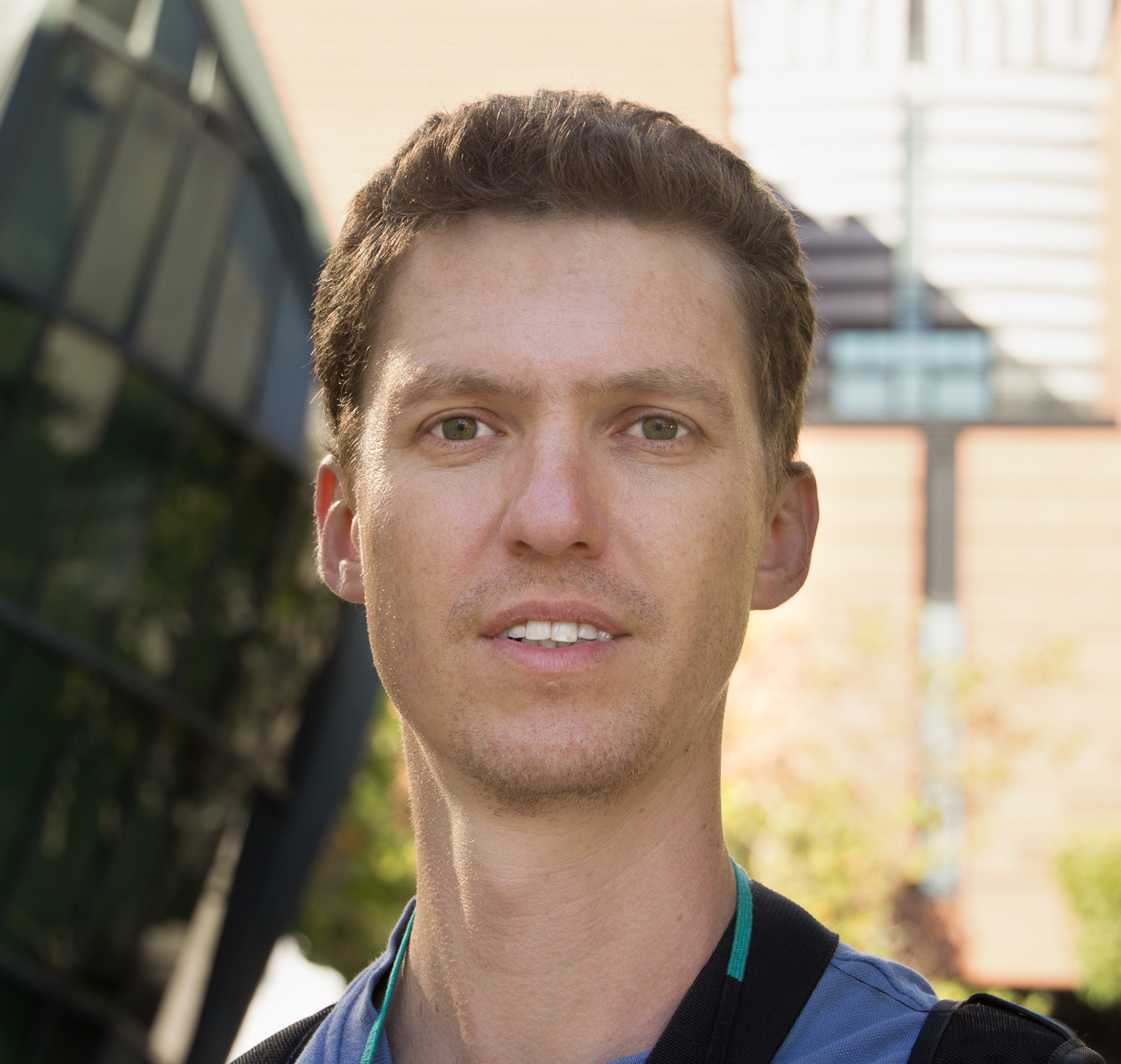 Eli Shechtman合作论文数Imaging Lab, Adobe Research11
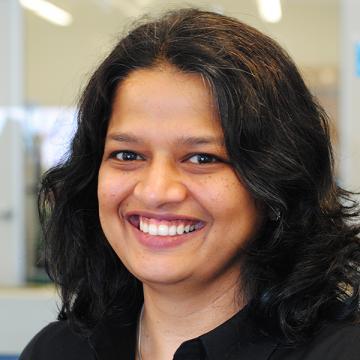 Kavita Bala合作论文数Ann S. Bowers College of Computing and Information Science, Cornell University11
 Nicolas Bonneel合作论文数Ecole Polytechnique;LIRIS, CNRS10
 Wojciech Matusik合作论文数Department of Electrical Engineering and Computer Science, Massachusetts Institute of Technology;Computer Science and Artificial Intelligence Laboratory, Massachusetts Institute of Technology9
 Long Quan (權龍)合作论文数Department of Computer Science and Engineering, The Hong Kong University of Science and Technology9
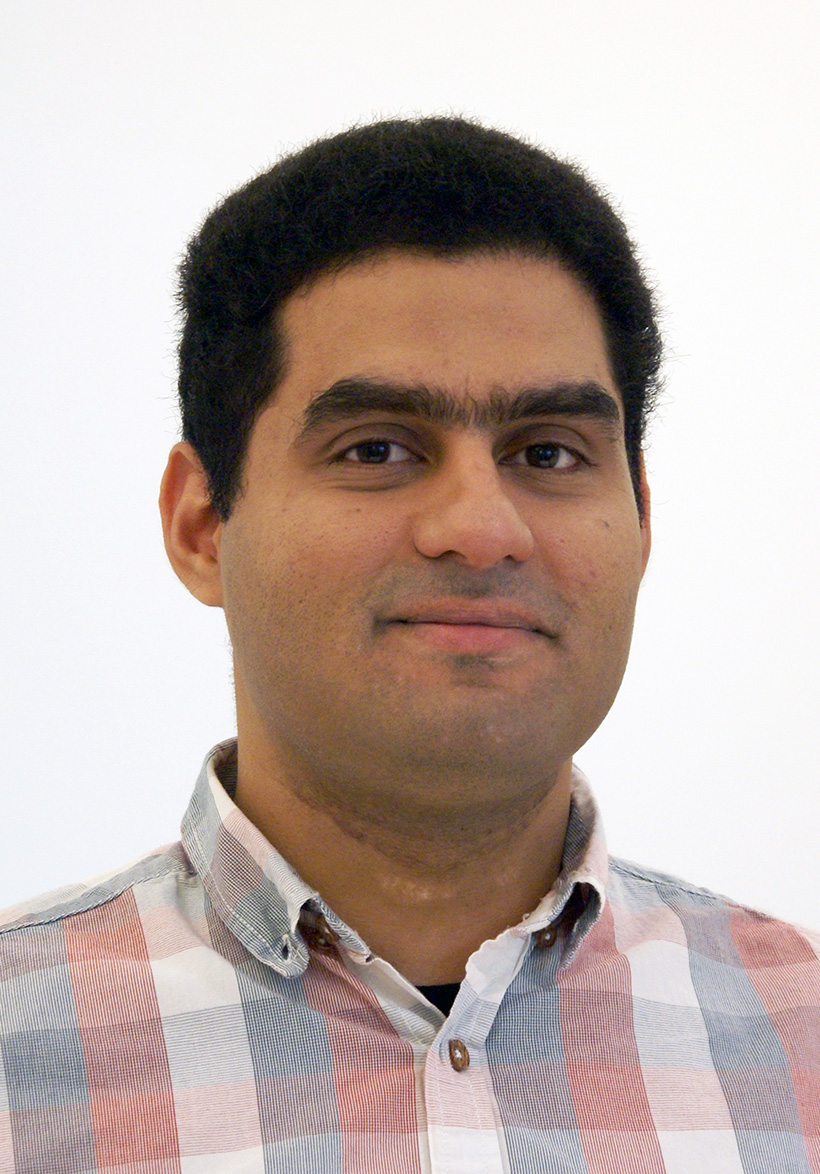 Kalyan Sunkavalli合作论文数Adobe Research8
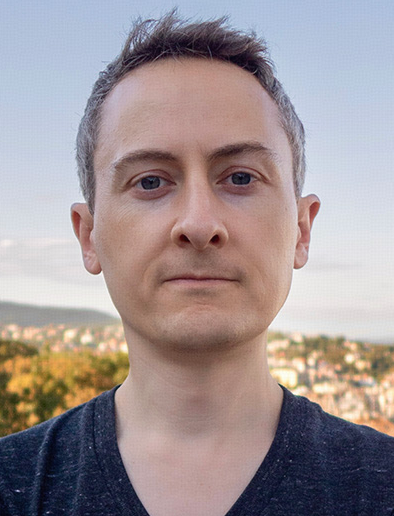 Jonathan Ragan-Kelley合作论文数Computer Science & Artificial Intelligence Lab, Schwarzman College of Computing, Massachusetts Institute of Technology;Department of Electrical Engineering & Computer Science, Massachusetts Institute of Technology7
 Gang Zeng (曾钢)合作论文数School of Intelligence Science and Technology, Peking University7
 Ivaylo Boyadzhiev合作论文数Cornell University7
 Connelly Barnes合作论文数Adobe Research7
 Hanspeter Pfister合作论文数Harvard John A. Paulson School of Engineering and Applied Sciences, Harvard University6
 Cyril Soler合作论文数Inria6
 Jack Tumblin合作论文数Northwestern University6jenchan chien合作论文数5
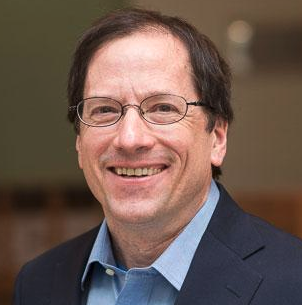 William T. Freeman合作论文数Department of Electrical Engineering and Computer Science, Massachusetts Institute of Technology;Computer Science & Artificial Intelligence Laboratory, Massachusetts Institute of Technology;Google Research5
 Aaron Hertzmann合作论文数Computer Science and Engineering Department, Paul G. Allen School of Computer Science & Engineering, University of Washington;Adobe Systems5
 Pierre Kornprobst合作论文数Odyssee Lab, INRIA Sophia-Antipolis5
 Yagiz Aksoy合作论文数School of Computing Science, Simon Fraser University;Computational Photography Lab, Simon Fraser University5
 Joëlle Thollot合作论文数Inria;Micmap;Grenoble INP, Institut Polytechnique de Grenoble5
 Jiawen Chen合作论文数Waabi4
 Jue Wang (王珏)合作论文数4
 Gilles Debunne合作论文数ARTIS
INRIA Rhone-Alpes4
Gilles Debunne合作论文数ARTIS
INRIA Rhone-Alpes4 Deqing Sun合作论文数Google4
 Jean-Marc Hasenfratz合作论文数4
 Nicolas Holzschuch合作论文数INRIA4
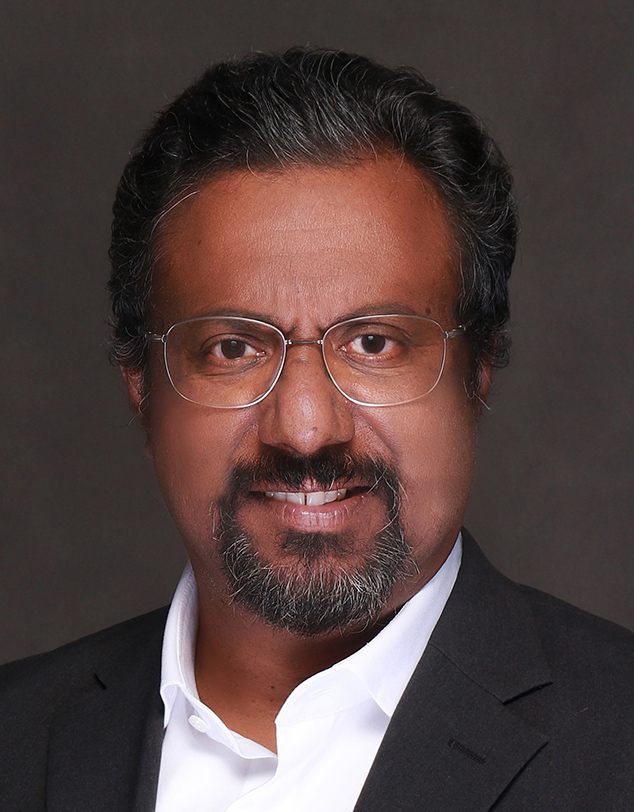 Saman Amarasinghe合作论文数Department of Electrical Engineering and Computer Science, Massachusetts Institute of Technology;Computer Science & Artificial Intelligence Laboratory, Massachusetts Institute of Technology;Venti Technologies;Exaloop;DataCebo;4Axis4
 Andrew Adams合作论文数Adobe Research4Vladimir Bychkovsky合作论文数4Xavier Décoret合作论文数3srinivasa madhava phaneendra angara合作论文数3franck perbet合作论文数3durga ganesh grandhi合作论文数3
 Evan Shimizu合作论文数Carnegie Mellon University3
 Fujun Luan合作论文数Apple3
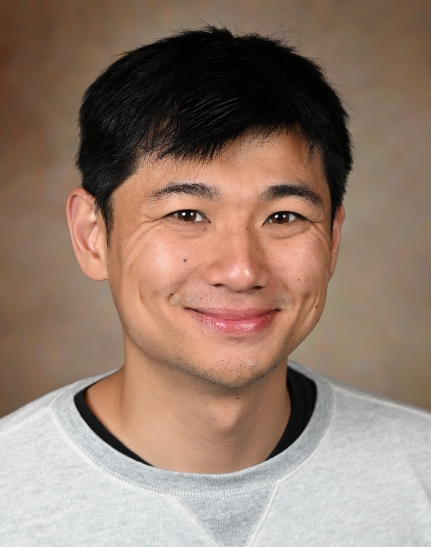 Richard Zhang (章睿嘉)合作论文数Adobe Research3
 Matt Fisher合作论文数Adobe Research3
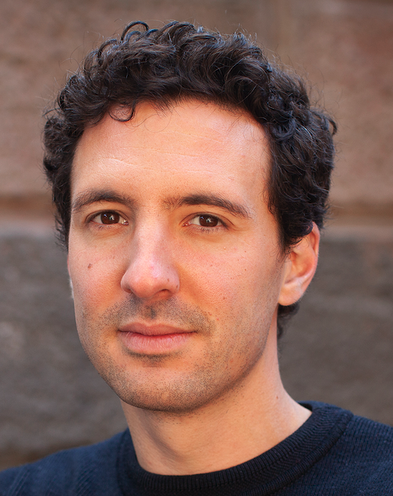 Michaël Gharbi合作论文数Reve3
 Hao Li (黎颢)合作论文数Undergraduate Division, Mohamed bin Zayed University of Artificial Intelligence;Metaverse Center, Mohamed bin Zayed University of Artificial Intelligence;Pinscreen3
 Edward H. Adelson合作论文数Computer Science & Artificial Intelligence Laboratory, Massachusetts Institute of Technology;Department of Brain and Cognitive Sciences, Massachusetts Institute of Technology3
 George Drettakis合作论文数INRIA3
 Jan Kautz合作论文数NVIDIA3
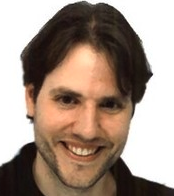 Elmar Eisemann合作论文数Faculty of Electrical Engineering, Mathematics and Computer Science, Delft University of Technology3
 Sylvain Lefebvre合作论文数INRIA3
 Fabrice Neyret合作论文数CNRS - LJK lab (CNRS & Grenoble University) and INRIA3
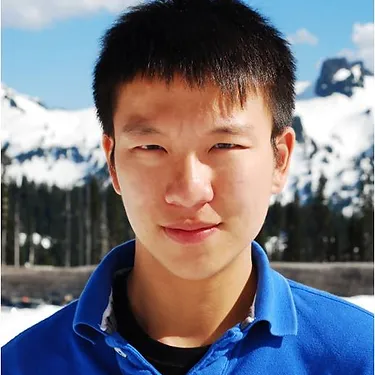 Yichang Shih (施易昌)合作论文数Google3
 Linjie Luo合作论文数3
 Claude Puech合作论文数Fondation Inria;Inria Chile3