We introduce Voxtral TTS, an expressive multilingual text-to-speech model that generates natural speech from as little as 3 seconds of reference audio. Voxtral TTS adopts a hybrid architecture that combines auto-regressive generation of semantic speech tokens with flow-matching for acoustic tokens. These tokens are encoded and decoded with Voxtral Codec, a speech tokenizer trained from scratch with a hybrid VQ-FSQ quantization scheme. In human evaluations conducted by native speakers, Voxtral TTS is preferred for multilingual voice cloning due to its naturalness and expressivity, achieving a 68.4% win rate over ElevenLabs Flash v2.5. We release the model weights under a CC BY-NC license.
We introduce the Ministral 3 series, a family of parameter-efficient dense language models designed for compute and memory constrained applications, available in three model sizes: 3B, 8B, and 14B parameters. For each model size, we release three variants: a pretrained base model for general-purpose use, an instruction finetuned, and a reasoning model for complex problem-solving. In addition, we present our recipe to derive the Ministral 3 models through Cascade Distillation, an iterative pruning and continued training with distillation technique. Each model comes with image understanding capabilities, all under the Apache 2.0 license.
We introduce Voxtral Realtime, a natively streaming automatic speech recognition model that matches offline transcription quality at sub-second latency. Unlike approaches that adapt offline models through chunking or sliding windows, Voxtral Realtime is trained end-to-end for streaming, with explicit alignment between audio and text streams. Our architecture builds on the Delayed Streams Modeling framework, introducing a new causal audio encoder and Ada RMS-Norm for improved delay conditioning. We scale pretraining to a large-scale dataset spanning 13 languages. At a delay of 480ms, Voxtral Realtime achieves performance on par with Whisper, the most widely deployed offline transcription system. We release the model weights under the Apache 2.0 license.
Deploying navigation systems at scale requires a recipe that minimizes sensor assumptions, generalizes across robot embodiments, and trains efficiently. Yet, today's best systems depend on depth sensors, multi-camera rigs, or pre-built maps, limiting the hardware they support and increasing deployment cost. We introduce Robostral Navigate, an 8B vision-language model built around this scalability objective. The model consumes only a stream of monocular RGB images - the most ubiquitous sensor across robotic platforms and predicts waypoints by pointing to the next target location in the current camera view. Operating purely in image space, rather than robot-specific coordinates, makes the policy naturally robust to changes in camera intrinsics and scene scale, enabling deployment across wheeled, legged, and aerial robots without recalibration. We generate 2.4 million trajectories across 350k simulated scenes to reduce the reliance on real-world data collection and scale easily. We further introduce a prefix-caching training recipe that packs entire episodes into single training sequences, reducing training tokens by 22x and cutting training time from months to days. A tree-based attention mask prevents conditioning on previous ground-truth actions, encouraging visually grounded action prediction, and reinforcement learning is used to further improve exploration and recovery capabilities. On the Room-to-Room and Room-Across-Room in Continuous Environments (R2R-CE and RxR-CE) benchmarks, Robostral Navigate sets a new state of the art. On R2R-CE, it achieves a 77.4
We present Voxtral Mini and Voxtral Small, two multimodal audio chat models. Voxtral is trained to comprehend both spoken audio and text documents, achieving state-of-the-art performance across a diverse range of audio benchmarks, while preserving strong text capabilities. Voxtral Small outperforms a number of closed-source models, while being small enough to run locally. A 32K context window enables the model to handle audio files up to 40 minutes in duration and long multi-turn conversations. We also contribute three benchmarks for evaluating speech understanding models on knowledge and trivia. Both Voxtral models are released under Apache 2.0 license.
We introduce Magistral, Mistral's first reasoning model and our own scalable reinforcement learning (RL) pipeline. Instead of relying on existing implementations and RL traces distilled from prior models, we follow a ground up approach, relying solely on our own models and infrastructure. Notably, we demonstrate a stack that enabled us to explore the limits of pure RL training of LLMs, present a simple method to force the reasoning language of the model, and show that RL on text data alone maintains most of the initial checkpoint's capabilities. We find that RL on text maintains or improves multimodal understanding, instruction following and function calling. We present Magistral Medium, trained for reasoning on top of Mistral Medium 3 with RL alone, and we open-source Magistral Small (Apache 2.0) which further includes cold-start data from Magistral Medium.
We introduce Devstral-Small, a lightweight open source model for code agents with the best performance among models below 100B size. In this technical report, we give an overview of how we design and develop a model and craft specializations in agentic software development. The resulting model, Devstral-Small is a small 24B model, fast and easy to serve. Despite its size, Devstral-Small still attains competitive performance compared to models more than an order of magnitude larger.
State Space Models (SSMs) have become serious contenders in the field of sequential modeling, challenging the dominance of Transformers. At the same time, Mixture of Experts (MoE) has significantly improved Transformer-based Large Language Models, including recent state-of-the-art open models. We propose that to unlock the potential of SSMs for scaling, they should be combined with MoE. We showcase this on Mamba, a recent SSM-based model that achieves remarkable performance. Our model, MoE-Mamba, outperforms both Mamba and baseline Transformer-MoE. In particular, MoE-Mamba reaches the same performance as Mamba in $2.35\times$ fewer training steps while preserving the inference performance gains of Mamba against Transformer.
Mixture of Experts (MoE) models have emerged as a primary solution for reducing the computational cost of Large Language Models. In this work, we analyze their scaling properties, incorporating an expanded range of variables. Specifically, we introduce a new hyperparameter, granularity, whose adjustment enables precise control over the size of the experts. Building on this, we establish scaling laws for fine-grained MoE, taking into account the number of training tokens, model size, and granularity. Leveraging these laws, we derive the optimal training configuration for a given computational budget. Our findings not only show that MoE models consistently outperform dense Transformers but also highlight that the efficiency gap between dense and MoE models widens as we scale up the model size and training budget. Furthermore, we demonstrate that the common practice of setting the size of experts in MoE to mirror the feed-forward layer is not optimal at almost any computational budget.
We introduce Mixtral 8x7B, a Sparse Mixture of Experts (SMoE) language model. Mixtral has the same architecture as Mistral 7B, with the difference that each layer is composed of 8 feedforward blocks (i.e. experts). For every token, at each layer, a router network selects two experts to process the current state and combine their outputs. Even though each token only sees two experts, the selected experts can be different at each timestep. As a result, each token has access to 47B parameters, but only uses 13B active parameters during inference. Mixtral was trained with a context size of 32k tokens and it outperforms or matches Llama 2 70B and GPT-3.5 across all evaluated benchmarks. In particular, Mixtral vastly outperforms Llama 2 70B on mathematics, code generation, and multilingual benchmarks. We also provide a model fine-tuned to follow instructions, Mixtral 8x7B - Instruct, that surpasses GPT-3.5 Turbo, Claude-2.1, Gemini Pro, and Llama 2 70B - chat model on human benchmarks. Both the base and instruct models are released under the Apache 2.0 license.
Mixture of Experts (MoE) models based on Transformer architecture are pushing the boundaries of language and vision tasks. The allure of these models lies in their ability to substantially increase the parameter count without a corresponding increase in FLOPs. Most widely adopted MoE models are discontinuous with respect to their parameters - often referred to as sparse. At the same time, existing continuous MoE designs either lag behind their sparse counterparts or are incompatible with autoregressive decoding. Motivated by the observation that the adaptation of fully continuous methods has been an overarching trend in deep learning, we develop Mixture of Tokens (MoT), a simple, continuous architecture that is capable of scaling the number of parameters similarly to sparse MoE models. Unlike conventional methods, MoT assigns mixtures of tokens from different examples to each expert. This architecture is fully compatible with autoregressive training and generation. Our best models not only achieve a 3x increase in training speed over dense Transformer models in language pretraining but also match the performance of state-of-the-art MoE architectures. Additionally, a close connection between MoT and MoE is demonstrated through a novel technique we call transition tuning.
This paper presents a novel approach to premise selection, a crucial reasoning task in automated theorem proving. Traditionally, symbolic methods that rely on extensive domain knowledge and engineering effort are applied to this task. In contrast, this work demonstrates that contrastive training with the transformer architecture can achieve higher-quality retrieval of relevant premises, without the knowledge or feature engineering overhead. Our method, Magnushammer, outperforms the most advanced and widely used automation tool in interactive theorem proving called Sledgehammer. On the PISA and miniF2f benchmarks Magnushammer achieves $59.5\%$ (against $38.3\%$) and $34.0\%$ (against $20.9\%$) success rates, respectively. By combining Magnushammer with a language-model-based automated theorem prover, we further improve the state-of-the-art proof success rate from $57.0\%$ to $71.0\%$ on the PISA benchmark using $4$x fewer parameters. Moreover, we develop and open source a novel dataset for premise selection, containing textual representations of (proof state, relevant premise) pairs. To the best of our knowledge, this is the largest available premise selection dataset, and the first dataset of this kind for the Isabelle proof assistant.
We introduce Pixtral-12B, a 12–billion-parameter multimodal language model. Pixtral-12B is trained to understand both natural images and documents, achieving leading performance on various multimodal benchmarks, surpassing a number of larger models. Unlike many open-source models, Pixtral is also a cutting-edge text model for its size, and does not compromise on natural language performance to excel in multimodal tasks. Pixtral uses a new vision encoder trained from scratch, which allows it to ingest images at their natural resolution and aspect ratio. This gives users flexibility on the number of tokens used to process an image. Pixtral is also able to process any number of images in its long context window of 128K tokens. Pixtral 12B substanially outperforms other open models of similar sizes (Llama-3.2 11B & Qwen-2-VL 7B). It also outperforms much larger open models like Llama-3.2 90B while being 7x smaller. We further contribute an open-source benchmark, MM-MT-Bench, for evaluating vision-language models in practical scenarios, and provide detailed analysis and code for standardized evaluation protocols for multimodal LLMs. Pixtral-12B is released under Apache 2.0 license.
Despite the promise of Mixture of Experts (MoE) models in increasing parameter counts of Transformer models while maintaining training and inference costs, their application carries notable drawbacks. The key strategy of these models is to, for each processed token, activate at most a few experts - subsets of an extensive feed-forward layer. But this approach is not without its challenges. The operation of matching experts and tokens is discrete, which makes MoE models prone to issues like training instability and uneven expert utilization. Existing techniques designed to address these concerns, such as auxiliary losses or balance-aware matching, result either in lower model performance or are more difficult to train. In response to these issues, we propose Mixture of Tokens, a fully-differentiable model that retains the benefits of MoE architectures while avoiding the aforementioned difficulties. Rather than routing tokens to experts, this approach mixes tokens from different examples prior to feeding them to experts, enabling the model to learn from all token-expert combinations. Importantly, this mixing can be disabled to avoid mixing of different sequences during inference. Crucially, this method is fully compatible with both masked and causal Large Language Model training and inference.
Premise selection, the problem of selecting a useful premise to prove a new theorem, is an essential part of theorem proving. Existing language models cannot access knowl-edge beyond a small context window, and therefore are unsatisfactory at retrieving useful premises (i.e., premise selection) from large databases for theorem proving. In this work, we provide a solution to this problem, by combining a premise selection model with a language model. We first select a handful (e.g., 8) of premises from a large theorem database consisting of 100 K premises, and present them in the context along with proof states. The language model then utilizes these premises to construct a proof step. We show that this retrieval-augmented prover achieves significant improvements in proof rates compared to the language model alone.
 Guillaume Lample合作论文数Mistral AI10
 Lucile Saulnier合作论文数Mistral AI9
 Teven Le Scao合作论文数Mistral AI9
 Romain Sauvestre合作论文数Meta AI8
 Patrick Von Platen合作论文数Mistral AI8
 Amélie Héliou合作论文数Mistral AI8
 Marie Pellat合作论文数Mistral AI;Google7
 Thibaut Lavril合作论文数Mistral AI7
 Timothée Lacroix合作论文数Mistral AI7
 Baptiste Rozière合作论文数Meta7
 Diego de Las Casas合作论文数Mistral AI6
 Alexandre Sablayrolles合作论文数Mistral AI6
 Pierre Stock合作论文数Mistral AI6
 Arthur Mensch合作论文数Mistral AI6
 Jan Ludziejewski合作论文数4
 Michał Krutul合作论文数4
 Maciej Pióro合作论文数4Jakub Krajewski合作论文数4
 Sebastian Jaszczur合作论文数4Tomasz Odrzygóźdź合作论文数4
 Marek Cygan合作论文数Wydział Matematyki, Informatyki i Mechaniki, Uniwersytetu Warszawskiego;Institute of Informatics, University of Warsaw;Nomagic4Krystian Król合作论文数3Kamil Ciebiera合作论文数3
 Sandeep Subramanian合作论文数Mistral AI3
 Devendra Singh Chaplot合作论文数Thinking Machines Lab3
 Piotr Miłoś合作论文数3Albert Q. Jiang合作论文数2Sophia Yang合作论文数2
 Maciej Mikuła合作论文数DeepMind2
 Yuhuai (Tony) Wu (吴宇怀)合作论文数xAI2
 Szymon Tworkowski合作论文数Institute of Mathematics, Polish Academy of Sciences;University of Warsaw2
 Łukasz Kuciński合作论文数2
 Théophile Gervet合作论文数Carnegie Mellon University2
 Christian Szegedy合作论文数Math Inc2Andy Lo合作论文数1
 Wen-Ding Li合作论文数Computer Science Department, Cornell University1
 William Marshall合作论文数Mistral AI1Guillaume Bour合作论文数SINTEF Digital1
 Christopher Bamford合作论文数Mistral AI1
 Albert Qiaochu Jiang (乔楚)合作论文数Mistral AI;Cambridge Computer Laboratory, University of Cambridge1Konrad Czechowski合作论文数University of Warsaw1Bartosz Piotrowski合作论文数Czech Tech Univ1
 Jin Peng Zhou合作论文数Layer 6 AI Canada1
 Abhinav Rastogi合作论文数Google Research1
 Marie-Anne Lachaux合作论文数Mistral AI1
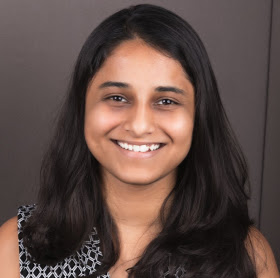 Shrimai Prabhumoye合作论文数NVIDIA;Department of Computer Science, College of Arts & Sciences, Boston University1
 Kamil Adamczewski合作论文数Max Planck Society1
 Xingyao Wang (王星尧)合作论文数Department of Computer Science, University of Illinois Urbana-Champaign;All Hands AI1
 Luyu Gao合作论文数Language Technologies Institute, Carnegie Mellon University1




