Artificial intelligence can solve complex scientific problems beyond human capabilities, but the resulting solutions offer little insight into the underlying physical principles. One prominent example is quantum physics, where computers can discover experiments for the generation of specific quantum states, but it is unclear how finding general design concepts can be automated. Here we address this challenge by training a transformer-based language model to create human-readable Python code that generates entire families of experiments. The model is trained on millions of synthetic examples of quantum states and their corresponding experimental blueprints, enabling it to infer general construction rules rather than isolated solutions. This strategy, which we call meta-design, enables scientists to gain a deeper understanding and to extrapolate to larger experiments without additional optimization. We demonstrate that the approach can rediscover known design principles and uncover previously unknown generalizations of important quantum states, such as those from condensed-matter physics. Beyond quantum optics, the methodology provides a blueprint for applying language models to interpretable, generalizable scientific discovery across disciplines such as materials science and engineering.
Proving mathematical theorems at the olympiad level represents a notable milestone in human-level automated reasoning 1 – 4 , owing to their reputed difficulty among the world’s best talents in pre-university mathematics. Current machine-learning approaches, however, are not applicable to most mathematical domains owing to the high cost of translating human proofs into machine-verifiable format. The problem is even worse for geometry because of its unique translation challenges 1 , 5 , resulting in severe scarcity of training data. We propose AlphaGeometry, a theorem prover for Euclidean plane geometry that sidesteps the need for human demonstrations by synthesizing millions of theorems and proofs across different levels of complexity. AlphaGeometry is a neuro-symbolic system that uses a neural language model, trained from scratch on our large-scale synthetic data, to guide a symbolic deduction engine through infinite branching points in challenging problems. On a test set of 30 latest olympiad-level problems, AlphaGeometry solves 25, outperforming the previous best method that only solves ten problems and approaching the performance of an average International Mathematical Olympiad (IMO) gold medallist. Notably, AlphaGeometry produces human-readable proofs, solves all geometry problems in the IMO 2000 and 2015 under human expert evaluation and discovers a generalized version of a translated IMO theorem in 2004.
Large language models (LLM), such as Google's Minerva and OpenAI's GPT families, are becoming increasingly capable of solving mathematical quantitative reasoning problems. However, they still make unjustified logical and computational errors in their reasoning steps and answers. In this paper, we leverage the fact that if the training corpus of LLMs contained sufficiently many examples of formal mathematics (e.g. in Isabelle, a formal theorem proving environment), they can be prompted to translate i.e. autoformalize informal mathematical statements into formal Isabelle code -- which can be verified automatically for internal consistency. This provides a mechanism to automatically reject solutions whose formalized versions are inconsistent within themselves or with the formalized problem statement. We evaluate our method on GSM8K, MATH and MultiArith datasets and demonstrate that our approach provides a consistently better heuristic than vanilla majority voting -- the previously best method to identify correct answers, by more than 12% on GSM8K. In our experiments it improves results consistently across all datasets and LLM model sizes. The code can be found at https://github.com/jinpz/dtv.
There is much excitement about the opportunity to harness the power of large language models (LLMs) when building problem-solving assistants. However, the standard methodology of evaluating LLMs relies on static pairs of inputs and outputs; this is insufficient for making an informed decision about which LLMs are best to use in an interactive setting, and how that varies by setting. Static assessment therefore limits how we understand language model capabilities. We introduce CheckMate, an adaptable prototype platform for humans to interact with and evaluate LLMs. We conduct a study with CheckMate to evaluate three language models (InstructGPT, ChatGPT, and GPT-4) as assistants in proving undergraduate-level mathematics, with a mixed cohort of participants from undergraduate students to professors of mathematics. We release the resulting interaction and rating dataset, MathConverse. By analyzing MathConverse, we derive a taxonomy of human query behaviors and uncover that despite a generally positive correlation, there are notable instances of divergence between correctness and perceived helpfulness in LLM generations, among other findings. Further, we garner a more granular understanding of GPT-4 mathematical problem-solving through a series of case studies, contributed by experienced mathematicians. We conclude with actionable takeaways for ML practitioners and mathematicians: models that communicate uncertainty, respond well to user corrections, and can provide a concise rationale for their recommendations, may constitute better assistants. Humans should inspect LLM output carefully given their current shortcomings and potential for surprising fallibility.
This paper presents a novel approach to premise selection, a crucial reasoning task in automated theorem proving. Traditionally, symbolic methods that rely on extensive domain knowledge and engineering effort are applied to this task. In contrast, this work demonstrates that contrastive training with the transformer architecture can achieve higher-quality retrieval of relevant premises, without the knowledge or feature engineering overhead. Our method, Magnushammer, outperforms the most advanced and widely used automation tool in interactive theorem proving called Sledgehammer. On the PISA and miniF2f benchmarks Magnushammer achieves $59.5\%$ (against $38.3\%$) and $34.0\%$ (against $20.9\%$) success rates, respectively. By combining Magnushammer with a language-model-based automated theorem prover, we further improve the state-of-the-art proof success rate from $57.0\%$ to $71.0\%$ on the PISA benchmark using $4$x fewer parameters. Moreover, we develop and open source a novel dataset for premise selection, containing textual representations of (proof state, relevant premise) pairs. To the best of our knowledge, this is the largest available premise selection dataset, and the first dataset of this kind for the Isabelle proof assistant.
Language models (LMs) are becoming the foundation for almost all major language technologies, but their capabilities, limitations, and risks are not well understood. We present Holistic Evaluation of Language Models (HELM) to improve the transparency of language models. First, we taxonomize the vast space of potential scenarios (i.e. use cases) and metrics (i.e. desiderata) that are of interest for LMs. Then we select a broad subset based on coverage and feasibility, noting what's missing or underrepresented (e.g. question answering for neglected English dialects, metrics for trustworthiness). Second, we adopt a multi-metric approach: We measure 7 metrics (accuracy, calibration, robustness, fairness, bias, toxicity, and efficiency) for each of 16 core scenarios when possible (87.5% of the time). This ensures metrics beyond accuracy don't fall to the wayside, and that trade-offs are clearly exposed. We also perform 7 targeted evaluations, based on 26 targeted scenarios, to analyze specific aspects (e.g. reasoning, disinformation). Third, we conduct a large-scale evaluation of 30 prominent language models (spanning open, limited-access, and closed models) on all 42 scenarios, 21 of which were not previously used in mainstream LM evaluation. Prior to HELM, models on average were evaluated on just 17.9% of the core HELM scenarios, with some prominent models not sharing a single scenario in common. We improve this to 96.0%: now all 30 models have been densely benchmarked on the same core scenarios and metrics under standardized conditions. Our evaluation surfaces 25 top-level findings. For full transparency, we release all raw model prompts and completions publicly for further analysis, as well as a general modular toolkit. We intend for HELM to be a living benchmark for the community, continuously updated with new scenarios, metrics, and models.
We introduce PaLM 2, a new state-of-the-art language model that has better multilingual and reasoning capabilities and is more compute-efficient than its predecessor PaLM. PaLM 2 is a Transformer-based model trained using a mixture of objectives. Through extensive evaluations on English and multilingual language, and reasoning tasks, we demonstrate that PaLM 2 has significantly improved quality on downstream tasks across different model sizes, while simultaneously exhibiting faster and more efficient inference compared to PaLM. This improved efficiency enables broader deployment while also allowing the model to respond faster, for a more natural pace of interaction. PaLM 2 demonstrates robust reasoning capabilities exemplified by large improvements over PaLM on BIG-Bench and other reasoning tasks. PaLM 2 exhibits stable performance on a suite of responsible AI evaluations, and enables inference-time control over toxicity without additional overhead or impact on other capabilities. Overall, PaLM 2 achieves state-of-the-art performance across a diverse set of tasks and capabilities. When discussing the PaLM 2 family, it is important to distinguish between pre-trained models (of various sizes), fine-tuned variants of these models, and the user-facing products that use these models. In particular, user-facing products typically include additional pre- and post-processing steps. Additionally, the underlying models may evolve over time. Therefore, one should not expect the performance of user-facing products to exactly match the results reported in this report.
Large language models have an exceptional capability to incorporate new information in a contextual manner. However, the full potential of such an approach is often restrained due to a limitation in the effective context length. One solution to this issue is to endow an attention layer with access to an external memory, which comprises of (key, value) pairs. Yet, as the number of documents increases, the proportion of relevant keys to irrelevant ones decreases, leading the model to focus more on the irrelevant keys. We identify a significant challenge, dubbed the distraction issue, where keys linked to different semantic values might overlap, making them hard to distinguish. To tackle this problem, we introduce the Focused Transformer (FoT), a technique that employs a training process inspired by contrastive learning. This novel approach enhances the structure of the (key, value) space, enabling an extension of the context length. Our method allows for fine-tuning pre-existing, large-scale models to lengthen their effective context. This is demonstrated by our fine-tuning of 3B and 7B OpenLLaMA checkpoints. The resulting models, which we name LongLLaMA, exhibit advancements in tasks requiring a long context. We further illustrate that our LongLLaMA models adeptly manage a 256 k context length for passkey retrieval.
Complex reasoning problems contain states that vary in the computational cost required to determine a good action plan. Taking advantage of this property, we propose Adaptive Subgoal Search (AdaSubS), a search method that adaptively adjusts the planning horizon. To this end, AdaSubS generates diverse sets of subgoals at different distances. A verification mechanism is employed to filter out unreachable subgoals swiftly, allowing to focus on feasible further subgoals. In this way, AdaSubS benefits from the efficiency of planning with longer subgoals and the fine control with the shorter ones, and thus scales well to difficult planning problems. We show that AdaSubS significantly surpasses hierarchical planning algorithms on three complex reasoning tasks: Sokoban, the Rubik's Cube, and inequality proving benchmark INT.
The formalization of existing mathematical proofs is a notoriously difficult process. Despite decades of research on automation and proof assistants, writing formal proofs remains arduous and only accessible to a few experts. While previous studies to automate formalization focused on powerful search algorithms, no attempts were made to take advantage of available informal proofs. In this work, we introduce Draft, Sketch, and Prove (DSP), a method that maps informal proofs to formal proof sketches, and uses the sketches to guide an automated prover by directing its search to easier sub-problems. We investigate two relevant setups where informal proofs are either written by humans or generated by a language model. Our experiments and ablation studies show that large language models are able to produce well-structured formal sketches that follow the same reasoning steps as the informal proofs. Guiding an automated prover with these sketches enhances its performance from 20.9% to 39.3% on a collection of mathematical competition problems.
The formalization of existing mathematical proofs is a notoriously difficult process. Despite decades of research on automation and proof assistants, writing formal proofs remains arduous and only accessible to a few experts. While previous studies to automate formalization focused on powerful search algorithms, no attempts were made to take advantage of available informal proofs. In this work, we introduce Draft, Sketch, and Prove (DSP), a method that maps informal proofs to formal proof sketches, and uses the sketches to guide an automated prover by directing its search to easier sub-problems. We investigate two relevant setups where informal proofs are either written by humans or generated by a language model. Our experiments and ablation studies show that large language models are able to produce wellstructured formal sketches that follow the same reasoning steps as the informal proofs. Guiding an automated prover with these sketches enhances its performance from 20.9% to 39.3% on a collection of mathematical competition problems. Figure 1: Draft, Sketch, and Prove. Starting with an informal statement, our framework yields a formal proof through a three-stage process: drafting informal proofs, mapping them into formal sketches, and proving the remaining conjectures. Concretely, an informal statement is a mathematical problem described in a mixture of natural and mathematical languages (e.g., formulae in LTEX). Then, we use a large language model to autoformalize each informal proof into a formal sketch, which is a skeleton of the formal proof with open conjectures left unproven (indicated by the blocks). The formal sketch mirrors the structure of the informal proof. Finally, the open conjectures/gaps inside each formal sketch are proved by an off-the-shelf prover. †Equal contributions as leading authors. Correspondence to: qj213@cam.ac.uk. ‡Equal contributions as senior authors.
Token embeddings, a mapping from discrete lexical symbols to continuous vectors, are at the heart of any language model (LM). However, lexical symbol meanings can also be determined and even redefined by their structural role in a long context. In this paper, we ask: is it possible for a language model to be performant without \emph{any} fixed token embeddings? Such a language model would have to rely entirely on the co-occurence and repetition of tokens in the context rather than the \textit{a priori} identity of any token. To answer this, we study \textit{lexinvariant}language models that are invariant to lexical symbols and therefore do not need fixed token embeddings in practice. First, we prove that we can construct a lexinvariant LM to converge to the true language model at a uniform rate that is polynomial in terms of the context length, with a constant factor that is sublinear in the vocabulary size. Second, to build a lexinvariant LM, we simply encode tokens using random Gaussian vectors, such that each token maps to the same representation within each sequence but different representations across sequences. Empirically, we demonstrate that it can indeed attain perplexity comparable to that of a standard language model, given a sufficiently long context. We further explore two properties of the lexinvariant language models: First, given text generated from a substitution cipher of English, it implicitly implements Bayesian in-context deciphering and infers the mapping to the underlying real tokens with high accuracy. Second, it has on average 4X better accuracy over synthetic in-context reasoning tasks. Finally, we discuss regularizing standard language models towards lexinvariance and potential practical applications.
We examine how transformers cope with two challenges: learning basic integer arithmetic, and generalizing to longer sequences than seen during training. We find that relative position embeddings enable length generalization for simple tasks, such as addition: models trained on $5$-digit numbers can perform $15$-digit sums. However, this method fails for multiplication, and we propose train set priming: adding a few ($10$ to $50$) long sequences to the training set. We show that priming allows models trained on $5$-digit $\times$ $3$-digit multiplications to generalize to $35\times 3$ examples. We also show that models can be primed for different generalization lengths, and that the priming sample size scales as the logarithm of the training set size. Finally, we discuss potential applications of priming beyond arithmetic.
Due to spurious correlations, machine learning systems often fail to generalize to environments whose distributions differ from the ones used at training time. Prior work addressing this, either explicitly or implicitly, attempted to find a data representation that has an invariant relationship with the target. This is done by leveraging a diverse set of training environments to reduce the effect of spurious features and build an invariant predictor. However, these methods have generalization guarantees only when both data representation and classifiers come from a linear model class. We propose invariant Causal Representation Learning (iCaRL), an approach that enables out-of-distribution (OOD) generalization in the nonlinear setting (i.e., nonlinear representations and nonlinear classifiers). It builds upon a practical and general assumption: the prior over the data representation (i.e., a set of latent variables encoding the data) given the target and the environment belongs to general exponential family distributions, i.e., a more flexible conditionally non-factorized prior that can actually capture complicated dependences between the latent variables. Based on this, we show that it is possible to identify the data representation up to simple transformations. We also show that all direct causes of the target can be fully discovered, which further enables us to obtain generalization guarantees in the nonlinear setting. Experiments on both synthetic and real-world datasets demonstrate that our approach outperforms a variety of baseline methods.
Generating step-by-step "chain-of-thought" rationales improves language model performance on complex reasoning tasks like mathematics or commonsense question-answering. However, inducing language model rationale generation currently requires either constructing massive rationale datasets or sacrificing accuracy by using only few-shot inference. We propose a technique to iteratively leverage a small number of rationale examples and a large dataset without rationales, to bootstrap the ability to perform successively more complex reasoning. This technique, the "Self-Taught Reasoner" (STaR), relies on a simple loop: generate rationales to answer many questions, prompted with a few rationale examples; if the generated answers are wrong, try again to generate a rationale given the correct answer; fine-tune on all the rationales that ultimately yielded correct answers; repeat. We show that STaR significantly improves performance on multiple datasets compared to a model fine-tuned to directly predict final answers, and performs comparably to fine-tuning a 30$\times$ larger state-of-the-art language model on CommensenseQA. Thus, STaR lets a model improve itself by learning from its own generated reasoning.
Autoformalization is the process of automatically translating from natural language mathematics to formal specifications and proofs. A successful autoformalization system could advance the fields of formal verification, program synthesis, and artificial intelligence. While the long-term goal of autoformalization seemed elusive for a long time, we show large language models provide new prospects towards this goal. We make the surprising observation that LLMs can correctly translate a significant portion ($25.3\%$) of mathematical competition problems perfectly to formal specifications in Isabelle/HOL. We demonstrate the usefulness of this process by improving a previously introduced neural theorem prover via training on these autoformalized theorems. Our methodology results in a new state-of-the-art result on the MiniF2F theorem proving benchmark, improving the proof rate from $29.6\%$ to $35.2\%$.
Language models have achieved remarkable performance on a wide range of tasks that require natural language understanding. Nevertheless, state-of-the-art models have generally struggled with tasks that require quantitative reasoning, such as solving mathematics, science, and engineering problems at the college level. To help close this gap, we introduce Minerva, a large language model pretrained on general natural language data and further trained on technical content. The model achieves state-of-the-art performance on technical benchmarks without the use of external tools. We also evaluate our model on over two hundred undergraduate-level problems in physics, biology, chemistry, economics, and other sciences that require quantitative reasoning, and find that the model can correctly answer nearly a third of them.
Generating step-by-step "chain-of-thought" rationales improves language model performance on complex reasoning tasks like mathematics or commonsense question-answering. However, inducing language model rationale generation currently requires either constructing massive rationale datasets or sacrificing accuracy by using only few-shot inference. We propose a technique to iteratively leverage a small number of rationale examples and a large dataset without rationales, to bootstrap the ability to perform successively more complex reasoning. This technique, the "Self-Taught Reasoner" (STaR), relies on a simple loop: generate rationales to answer many questions, prompted with a few rationale examples; if the generated answers are wrong, try again to generate a rationale given the correct answer; fine-tune on all the rationales that ultimately yielded correct answers; repeat. We show that STaR significantly improves performance on multiple datasets compared to a model fine-tuned to directly predict final answers, and performs comparably to fine-tuning a 30x larger state-of-the-art language model on CommensenseQA. Thus, STaR lets a model improve itself by learning from its own generated reasoning.(1)
The ability to extrapolate from short problem instances to longer ones is an important form of out-of-distribution generalization in reasoning tasks, and is crucial when learning from datasets where longer problem instances are rare. These include theorem proving, solving quantitative mathematics problems, and reading/summarizing novels. In this paper, we run careful empirical studies exploring the length generalization capabilities of transformer-based language models. We first establish that naively finetuning transformers on length generalization tasks shows significant generalization deficiencies independent of model scale. We then show that combining pretrained large language models' in-context learning abilities with scratchpad prompting (asking the model to output solution steps before producing an answer) results in a dramatic improvement in length generalization. We run careful failure analyses on each of the learning modalities and identify common sources of mistakes that highlight opportunities in equipping language models with the ability to generalize to longer problems.
Prompted models have demonstrated impressive few-shot learning abilities. Repeated interactions at test-time with a single model, or the composition of multiple models together, further expands capabilities. These compositions are probabilistic models, and may be expressed in the language of graphical models with random variables whose values are complex data types such as strings. Cases with control flow and dynamic structure require techniques from probabilistic programming, which allow implementing disparate model structures and inference strategies in a unified language. We formalize several existing techniques from this perspective, including scratchpads / chain of thought, verifiers, STaR, selection-inference, and tool use. We refer to the resulting programs as language model cascades.
 Roger Grosse合作论文数Department of Computer Science, University of Toronto;Schwartz Reisman Institute for Technology and Society;Anthropic13
 Jimmy Ba合作论文数Department of Computer Science, University of Toronto10
 Christian Szegedy合作论文数Math Inc8
 Wenda Li合作论文数University of Edinburgh;Department of Computer Science and Technology, University of Cambridge8
 Piotr Miłoś合作论文数6
 Szymon Tworkowski合作论文数Institute of Mathematics, Polish Academy of Sciences;University of Warsaw5
 Saizheng Zhang合作论文数Citadel5
 Ruslan Salakhutdinov合作论文数Machine Learning Department, School of Computer Science, Carnegie Mellon University5
 Yoshua Bengio (约书亚·本希奥)合作论文数Departement d'informatique et de Recherche Operationnelle, Faculte des Arts et des Sciences, Universite de Montreal;Mila - Quebec Artificial Intelligence Institute;LawZero5
 Cem Anil合作论文数University of Toronto;Vector Institute;Sunnybrook Research Institute;Anthropic5
 Chaochao Lu (陆超超)合作论文数Shanghai Artificial Intelligence Laboratory5
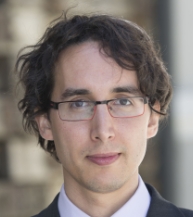 José Miguel Hernández-Lobato合作论文数Division of Information Engineering, Department of Engineering, University of Cambridge;Boltzbit Limited;Angstrom AI5
 Albert Q. Jiang合作论文数4Konrad Czechowski合作论文数University of Warsaw4Tomasz Odrzygóźdź合作论文数4
 Łukasz Kuciński合作论文数4
 Jin Peng Zhou合作论文数Layer 6 AI Canada4
 Ethan S Dyer合作论文数Google Research4
 Bernhard Schölkopf合作论文数Department of Computer Science, Eidgenössische Technische Hochschule Zürich;Max Planck Institute for Intelligent Systems;ELLIS Institute Tubingen4
 Behnam Neyshabur合作论文数Anthropic4
 Markus N. Rabe合作论文数Anthropic4
 Eric Zelikman合作论文数Stanford University4
 Mateja Jamnik合作论文数Department of Computer Science and Technology, University of Cambridge4
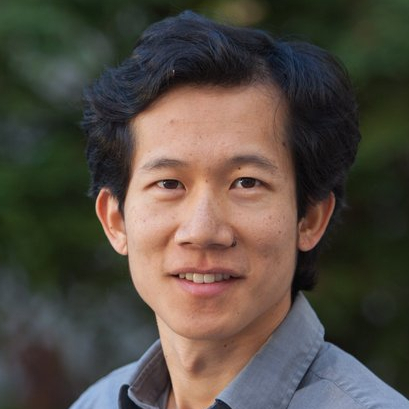 Percy Liang合作论文数Department of Computer Science, School of Engineering, Stanford University4
 Henryk Michalewski合作论文数Google;University of Warsaw4
 Guy Gur-Ari合作论文数Augment3Sang Michael Xie合作论文数3
 Thomas Mesnard合作论文数DeepMind3
 Aitor Lewkowycz合作论文数Google3
 Vedant Misra合作论文数Google DeepMind;Alchemist Accelerator;Startup3
 Rémi Leblond合作论文数DeepMind3
 Alexander Sasha Vezhnevets合作论文数DeepMind3
 Harris Chan合作论文数DeepMind3
 David Kristjanson Duvenaud合作论文数Department of Statistical Sciences, Faculty of Arts and Science, University of Toronto;Fable Therapeutics3
 Noah D. Goodman合作论文数Department of Psychology,School of Humanities and Sciences, Stanford University;Department of Computer Science, School of Engineering, Stanford University3
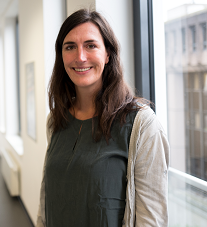 Asja Fischer合作论文数Faculty of Mathematics, Ruhr-Universitat Bochum3
 Roeder Geoffrey合作论文数Laboratory for Intelligent Probabilistic Systems, Princeton University3
 Sanja Fidler合作论文数University of Toronto3
 Dan Horgan合作论文数Google DeepMind2Charles Staats合作论文数2Chris Apps合作论文数2
 Maciej Mikuła合作论文数DeepMind2
 Petko Georgiev合作论文数Google DeepMind2
 Junhyuk Oh合作论文数DeepMind2
 Kaiqu Liang合作论文数Department of Electrical and Computer Engineering, Princeton University2
 Neel Guha合作论文数Department of Computer Science, Stanford University;Hazy Research Lab, Center for Research on Foundation Models, Stanford University;RegLab, Stanford University2Szymon Antoniak合作论文数2
 Tianyi Zhang合作论文数Thinking Machines Lab2Faisal Ladhak合作论文数Natural Language Processing Group, Computer Science Department, Columbia University2




