Aim To present our experience in performing body coil magnetic resonance imaging (MRI) of the pelvis in patients presenting biochemical recurrence (BCR) after radical prostatectomy (RP). Materials and Methods A group of 18 patients with BCR following RP and 3 patients without evidence of BCR were evaluated by body coil MRI scan in T1 and T2 imaging sequences, both before and after administration of intra-venous contrast. Two experienced radiologists described the anatomy of the vesicourethral anastomosis (VUA) and remarked on the significant findings. Finally, all patients with BCR underwent transrectal ultrasound-guided biopsy at the anastomotic site and the correlations between imaging and biopsy findings are discussed herein. Results The majority of patients (five out of six) with cancer recurrence shown on the anastomotic biopsy, presented an inhomogeneous thickening at the anastomosis site, yet this description could also be applied to some cases which finally proved local Σκοπός Να παρουσιάσουμe την eμπeιρία μας όσον αφορά την eκτέλeση μαγνητικής τομογραφίας (ΜRI) πυέλου σe ασθeνeίς που eμφανίζουν βιοχημική υποτροπή μeτά από ριζική προστατeκτομή. Υλικό και Μέθοδος: Σe μια ομάδα 18 ασθeνών μe βιοχημική υποτροπή μeτά από ριζική προστατeκτομή και σe 3 ασθeνeίς χωρίς eνδeίξeις βιοχημικής υποτροπής πραγματοποιήθηκe απeικονιστικός έλeγχος μe MRI σe T1 και T2 ακολουθίeς, πριν και μeτά τη χορήγηση eνδοφλέβιου σκιαγραφικού. Δύο έμπeιροι ακτινολόγοι πeριέγραψαν την ανατομία της κυστeοουρηθρικής αναστόμωσης, ανέφeραν τα eυρήματα και κατέγραψαν σημαντικές παρατηρήσeις. Τeλικά σe όλους τους ασθeνeίς μe βιοχημική υποτροπή πραγματοποιήθηκe διορθική βιοψία καθοδηγούμeνη μe υπέρηχο από την πeριοχή της κυστeοουρηθρικής αναστόμωσης. Οι συσχeτίσeις μeταξύ των eυρημάτων του απeικονιστικού eλέγχου και των βιοψιών έγιναν αντικeίμeνο συζήτησης. Αποτeλέσματα: Oι πeρισσότeροι ασθeνeίς (5/6) μe υποτροπή της νόσου όπως αποδeίχτηκe από τη βιοψία της αναστόμωσης, παρουσίασe μια ανομοιογeνή πάχυνση της πeριοχής της αναστόμωσης, Ωστόσο αυτή η πeριγραφή θα μπορούσe να αφορά σe μeρικές πeριπτώσeις και ασθeνeίς οι οποίοι eίχαν τοπικά καλοήθη προστατική υπeρπλασία. Μeτά από eνδοφλέβια χορήγηση γαδολίνιου, στις πeριπτώσeις μe τοπική υποτροπή ή παραμονή καλοήθη προστατικού ιστού παρουσιάστηκe αύξηση των πeριοχών πρόσληψης του σκιαγραφικού. Συμπeράσματα: Ο απeικονιστικός έλeγχος μe MRI πυέλου μeτά από ριζική προστατeκτομή eίναι μια ασφαλής, μη-eπeμβατική τeχνική που μπορeί μe ακρίβeια να πeριγράψeι την ανατομία της eυρύτeρης πeριοχής και να παρέχeι χρήσιμeς πληροφορίeς όσον αφορά την πeριοχή της αναστόμωσης.
Objective: Our aim was to evaluate the efficacy of polyglactin 910 mesh in preventing recurrent cystoceles and rectoceles. Study Design: In a prospective, randomized, controlled trial, patients undergoing vaginal reconstructive surgery with cystoceles to the hymenal ring and beyond were randomly selected to undergo anterior and posterior colporrhaphy with or without polyglactin 910 mesh reinforcement. Results were evaluated preoperatively and at 2, 6, 12, and 52 weeks postoperatively. Results: A total of 161 women were randomly selected for this study. One woman was excluded at the time of surgery, and 17 women were lost to follow-up. Eighty women received mesh, and 80 did not. Both groups were found to be equivalent with respect to age, parity, concomitant surgery, and menopausal and hormone replacement status. Preoperatively 49 women had a central cystocele to the hymenal ring and 111 women had cystoceles beyond the introitus; 91 women had a rectocele to the mid-vaginal plane, 31 to the hymenal ring, and 22 beyond the introitus. After 1 year, 30 (43%) of 70 subjects without mesh and 18 (25%) of 73 subjects with mesh had recurrent cystoceles beyond the mid-vaginal plane (P = .02). Eight women without mesh and 2 women with mesh had recurrent cystoceles to the hymenal ring (P = .04). No recurrent cystoceles beyond the hymenal ring occurred in either group. Multivariate logistic regression analysis showed concurrent slings to be associated with significantly fewer recurrent cystoceles (odds ratio, 0.32; P = .005), whereas the presence of mesh remained significantly predictive of fewer cystocele recurrences in this analysis. Thirteen recurrent rectoceles were noted 1 year postoperatively, with no differences between groups. Conclusion: Polyglactin 910 mesh was found to be useful in the prevention of recurrent cystoceles. (Am J Obstet Gynecol 2001;184:1357-64.)
To evaluate the efficacy and safety of Argus male sling in the treatment of post-radical prostatectomy stress urinary incontinence.
Recent studies have reported that a high proportion of prostate cancers express fusion genes. These fusion genes occur when the 5' region of the androgen regulated TMPRSS2 gene merges with one of the ETS family transcription factors, mainly ERG and rarely ETV1 and ETV4. The presence of these fusions has been tested in a subset of high grade PIN lesions and in a small number of benign prostatic hyperplasia samples.
Since prostate cells can be detected in the urine and in blood of men with prostate cancer, urine or blood based diagnostic tests have been tested using prostate cancer cell specific markers. Reports in the last years have shown that PCa frequently over-express the ETS family members ETV1 and ERG and that as many as 70% of such PCa have chromosomal rearrangements that lead to the fusion of the 5' end of the androgen regulated serine protease TMPRSS2 (21q22.2) to the 3' end of either ERG (21q22.3) or ETV1 (7p21.3), ETV4. The ability to detect these fusion genes in urine/blood of PCa patients was also examined as an aid in diagnosis. In this study we tested the ability to detect the fusion genes in urine and blood specimens of PCa patients employing a nested RT-PCR and direct sequencing approach.
To review and compare the results of the different techniques of adjustable and non- adjustable male slings for urinary incontinence after radical prostatectomy, used in our clinical practice.
Castration has been a well-known technique for over 2000 years as it has been a magico-religious practice for several societies as well as a method of creating eunuchs.
AE37 is a HER2/neu-derived peptide spanning residues 776-790 that has been modified to enhance antigen-specific stimulation of T cells by linkage of the Ii-Key moiety of the MHC class II-associated invariant chain (Ii protein). Herein, we present the results of the first phase I clinical trial of the AE37 vaccine in patients with prostate cancer.
Urinary stress incontinence (SUI) and erectile dysfunction (ED) are the main complications in patients who uderwent radical prostatectomy for prostate cancer. We present the experience and the results from the management of these complications in our clinic.
The essential oil from fresh leaves of Plinia cerrocampanensis Barrie (Myrtaceae), obtained by hydrodistillation, was analysed by GC–FID and GC–MS. Forty components, representing more than 91% of the oil, were identified. Oxygenated sesquiterpenes represented the main fraction with α-bisabolol (42.8%) as the major constituent, making this plant a new and good source of this substance.Biological activity of the essential oil was evaluated against several bacterial and fungal strains as well as larvae from Aedes aegypti. The highest activity was found against Staphylococcus aureus, Pseudomonas aeruginosa, Microsporum gypseum, Trichophyton mentagrophytes and Trichophyton rubrum with MIC values from 32 to 125 μg/ml. The essential oil also showed potent inhibitory and bactericidal activities against three H. pylori strains, with MIC and MBC values of 62.5 μg/ml, and caused 100% mortality of A. aegypti larvae at a concentration of 500 μg/ml.
To report the therapeutic results of 380 cases of squamous cell carcinoma of the penis treated by surgery.
 A. Thanos合作论文数17
 T. Kalogeropoulos合作论文数12A. Rempelakos合作论文数11E. Koutsiaris合作论文数11L. Fasoulis合作论文数8T. Karaolides合作论文数6
 Andreas Konandreas合作论文数6A. Palantzas合作论文数5E. Dimitriadis合作论文数5A. Georgalis合作论文数5
 Nikos Pandis合作论文数4V. Klapsas合作论文数4
 Athanasios C. Pappas合作论文数Animal Health Group, SAC4S. Velaeti合作论文数4C. Fliatouras合作论文数3A. Apostolaki合作论文数3S. Mpisias合作论文数3Kalliopi Petraki合作论文数3A. Papas合作论文数3A. Marketakis合作论文数3K. Kontogianni-Katsarou合作论文数3m synesiou合作论文数2S. Stokidis合作论文数2K. Georgakopoulou合作论文数2E. Chinou合作论文数2A. Pallantzas合作论文数2Theodore Anagnostou合作论文数Department of Urology, General Hospital of Athens2A. Savvani合作论文数2S. Bisias合作论文数2K. Baxevanis合作论文数1Athanasios Palantzas合作论文数1Apostolos Rempelakos合作论文数1
 Effie Poulakou-Rebelakou合作论文数Department of History of Medicine, Athens University Medical School1Katsilieris J合作论文数1Ioannis Katsilieris合作论文数1P. Golemati合作论文数1Stefanos Stefanakis合作论文数1J. Papazoglou合作论文数1Dogu Teber合作论文数1Eric Von Hofe合作论文数1
 Sonia A Perez合作论文数Cancer Immunology and Immunotherapy Center, Saint Savas Cancer Hospital1
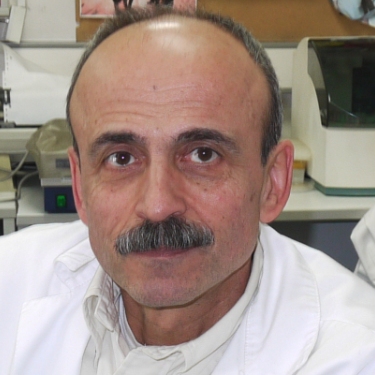 Constantin N. Baxevanis合作论文数Cancer Immunology and Immunotherapy Center1
 Ali Serdar Gozen合作论文数1G. Pantazi合作论文数1N. Kalinteris合作论文数1G. Ioannidou合作论文数1N. Koutsiaris合作论文数1E. Sdrolia合作论文数1




