We describe the acoustic gaits-the natural human gait quantitative characteristics derived from the sound of footsteps as the person walks normally. We introduce the acoustic gait profile, which is obtained from temporal signal analysis of sound of footsteps collected by microphones and illustrate some of the spatio-temporal gait parameters that can be extracted from the acoustic gait profile by using three temporal signal analysis methods-the squared energy estimate, Hilbert transform and Teager-Kaiser energy operator. Based on the statistical analysis of the parameter estimates, we show that the spatio-temporal parameters and gait characteristics obtained using the acoustic gait profile can consistently and reliably estimate a subset of clinical and biometric gait parameters currently in use for standardized gait assessments. We conclude that the Teager-Kaiser energy operator provides the most consistent gait parameter estimates showing the least variation across different sessions and zones. Acoustic gaits use an inexpensive set of microphones with a computing device as an accurate and unintrusive gait analysis system. This is in contrast to the expensive and intrusive systems currently used in laboratory gait analysis such as the force plates, pressure mats and wearable sensors, some of which may change the gait parameters that are being measured.
When several acoustic sources are simultaneously active in a meeting room scenario, and both the position of the sources and the identity of the time-overlapped sound classes have been estimated, the problem of assigning each source position to one of the sound classes still remains. This problem is found in the real-time system implemented in our smart-room, where it is assumed that up to two acoustic events may overlap in time and the source positions are relatively well separated in space. The position assignment system proposed in this work is based on fusion of model-based log-likelihood ratios obtained after carrying out several different partial source separations in parallel. To perform the separation, frequency-invariant null-steering beamformers, which can work with a small number of microphones, are used. The experimental results using all the six microphone arrays deployed in the room show a high assignment rate in our particular scenario.
Real world sounds are ubiquitous and form an important part of the edifice of our cognitive abilities. Their perception combines signatures from spectral and temporal domains, among others, yet traditionally their analysis is focused on the frame based spectral properties. We consider the problem of sound analysis from perceptual perspective and investigate the temporal properties of a "footsteps" sound, which is a particularly challenging from the time-frequency analysis viewpoint. We identify the irregular repetition of the self similarity and the sense of duration as significant to its perceptual quality and extract features using the Teager-Kaiser energy operator. We build an acoustic event detection system for "footsteps" which shows promising results for detection in cross-environmental conditions when compared with conventional approach.
Human identification using unobtrusive methods is a challenging problem that has many applications in surveillance tasks. In this work we propose a set of biometric features extracted from a footstep audio signal that can be used to identify a person. Instead of using short-time spectral domain, Teager-Kaiser energy operator is employed to transform a time-domain signal into a representational domain where the intrinsic properties of the walking style of each individual become apparent. We show that these features are biometrically significant as they are physical correlates of human gait. The experimental results obtained using a recently recorded publicly available database show prominent results in a human identification task.
The description of the acoustic activity in a room environment has to face the problem of overlapped sounds, i.e. those which occur simultaneously. That problem can be tackled by carrying out some kind of source signal separation followed by the detection and recognition of the identity of each of the overlapped sounds. An alternative approach relies on modeling all possible overlapping combinations of acoustic events. For a spatial scene description, there is still the need of assigning each of the detected acoustic events to one of the estimated source positions. Both detection approaches are tested in our work for the case of two simultaneous sources, one of which is speech, and an array of three microphones. Blind source separation based on the deflation method and null steering beamforming are used for signal separation. Also a position assignment system is developed and tested in the same experimental scenario. It is based on the above mentioned beamformer and takes the decision based on a likelihood ratio. Both signal-level fusion and likelihood fusion are tried to combine the information from the two pairs of microphones. The reported experimental results illustrate the possibilities of the various implemented techniques.
Acoustic event detection (AED) aims at determining the identity of sounds and their temporal position in audio signals. When applied to spontaneously generated acoustic events, AED based only on audio information shows a large amount of errors, which are mostly due to temporal overlaps. Actually, temporal overlaps accounted for more than 70% of errors in the real-world interactive seminar recordings used in CLEAR 2007 evaluations. In this paper, we improve the recognition rate of acoustic events using information from both audio and video modalities. First, the acoustic data are processed to obtain both a set of spectrotemporal features and the 3D localization coordinates of the sound source. Second, a number of features are extracted from video recordings by means of object detection, motion analysis, and multicamera person tracking to represent the visual counterpart of several acoustic events. A feature-level fusion strategy is used, and a parallel structure of binary HMM-based detectors is employed in our work. The experimental results show that information from both the microphone array and video cameras is useful to improve the detection rate of isolated as well as spontaneously generated acoustic events.
The detection of the Acoustic Events (AEs) naturally produced in a meeting room may help to describe the human and social activity. The automatic description of interactions between humans and environment can be useful for providing: implicit assistance to the people inside the room, context-aware and content-aware information requiring a minimum of human attention or interruptions, support for high-level analysis of the underlying acoustic scene, etc. On the other hand, the recent fast growth of available audio or audiovisual content strongly demands tools for analyzing, indexing, searching and retrieving the available documents. Given an audio document, the first processing step usually is audio segmentation (AS), i.e. the partitioning of the input audio stream into acoustically homogeneous regions which are labelled according to a predefined broad set of classes like speech, music, noise, etc. Acoustic event detection (AED) is the objective of this thesis work. A variety of features coming not only from audio but also from the video modality is proposed to deal with that detection problem in meeting-room and broadcast news domains. Two basic detection approaches are investigated in this work: a joint segmentation and classification using Hidden Markov Models (HMMs) with Gaussian Mixture Densities (GMMs), and a detection-by-classification approach using discriminative Support Vector Machines (SVMs). For the first case, a fast one-pass-training feature selection algorithm is developed in this thesis to select, for each AE class, the subset of multimodal features that shows the best detection rate. AED in meeting-room environments aims at processing the signals collected by distant microphones and video cameras in order to obtain the temporal sequence of (possibly overlapped) AEs that have been produced in the room. When applied to interactive seminars with a certain degree of spontaneity, the detection of acoustic events from only the audio modality alone shows a large amount of errors, which is mostly due to the temporal overlaps of sounds. This thesis includes several novelties regarding the task of multimodal AED. Firstly, the use of video features. Since in the video modality the acoustic sources do not overlap (except for occlusions), the proposed features improve AED in such rather spontaneous scenario recordings. Secondly, the inclusion of acoustic localization features, which, in combination with the usual spectro-temporal audio features, yield a further improvement in recognition rate. Thirdly, the comparison of feature-level and decision-level fusion strategies for the combination of audio and video modalities. In the later case, the system output scores are combined using two statistical approaches: weighted arithmetical mean and fuzzy integral. On the other hand, due to the scarcity of annotated multimodal data, and, in particular, of data with temporal sound overlaps, a new multimodal database with a rich variety of meeting-room AEs has been recorded and manually annotated, and it has been made publicly available for research purposes. La detecció d'esdeveniments acústics (Acoustic Events -AEs-) que es produeixen naturalment en una sala de reunions pot ajudar a descriure l'activitat humana i social. La descripció automàtica de les interaccions entre els éssers humans i l'entorn pot ser útil per a proporcionar: ajuda implícita a la gent dins de la sala, informació sensible al context i al contingut sense requerir gaire atenció humana ni interrupcions, suport per a l'anàlisi d'alt nivell de l'escena acústica, etc. La detecció i la descripció d'activitat és una funcionalitat clau de les interfícies perceptives que treballen en entorns de comunicació humana com sales de reunions. D'altra banda, el recent creixement ràpid del contingut audiovisual disponible requereix l'existència d'eines per a l'anàlisi, indexació, cerca i recuperació dels documents existents. Donat un document d'àudio, el primer pas de processament acostuma a ser la seva segmentació (Audio Segmentation (AS)), és a dir, la partició de la seqüència d'entrada d'àudio en regions acústiques homogènies que s'etiqueten d'acord amb un conjunt predefinit de classes com parla, música, soroll, etc. De fet, l'AS pot ser vist com un cas particular de la detecció d’esdeveniments acústics, i així es fa en aquesta tesi. La detecció d’esdeveniments acústics (Acoustic Event Detection (AED)) és un dels objectius d'aquesta tesi. Es proposa tot una varietat de característiques que provenen no només de l'àudio, sinó també de la modalitat de vídeo, per fer front al problema de la detecció en dominis de sala de reunions i de difusió de notícies. En aquest treball s'investiguen dos enfocaments bàsics de detecció: 1) la realització conjunta de segmentació i classificació utilitzant models de Markov ocults (Hidden Markov Models (HMMs)) amb models de barreges de gaussianes (Gaussian Mixture Models (GMMs)), i 2) la detecció per classificació utilitzant màquines de vectors suport (Support Vector Machines (SVM)) discriminatives. Per al primer cas, en aquesta tesi es desenvolupa un algorisme de selecció de característiques ràpid d'un sol pas per tal de seleccionar, per a cada AE, el subconjunt de característiques multimodals que aconsegueix la millor taxa de detecció. L'AED en entorns de sales de reunió té com a objectiu processar els senyals recollits per micròfons distants i càmeres de vídeo per tal d'obtenir la seqüència temporal dels (possiblement superposats) esdeveniments acústics que s'han produït a la sala. Quan s'aplica als seminaris interactius amb un cert grau d'espontaneïtat, la detecció d'esdeveniments acústics a partir de només la modalitat d'àudio mostra una gran quantitat d'errors, que és sobretot a causa de la superposició temporal dels sons. Aquesta tesi inclou diverses contribucions pel que fa a la tasca d'AED multimodal. En primer lloc, l'ús de característiques de vídeo. Ja que en la modalitat de vídeo les fonts acústiques no se superposen (exceptuant les oclusions), les característiques proposades Resum iv milloren la detecció en els enregistraments en escenaris de caire espontani. En segon lloc, la inclusió de característiques de localització acústica, que, en combinació amb les característiques habituals d'àudio espectrotemporals, signifiquen nova millora en la taxa de reconeixement. En tercer lloc, la comparació d'estratègies de fusió a nivell de característiques i a nivell de decisions, per a la utilització combinada de les modalitats d'àudio i vídeo. En el darrer cas, les puntuacions de sortida del sistema es combinen fent ús de dos mètodes estadístics: la mitjana aritmètica ponderada i la integral difusa. D'altra banda, a causa de l'escassetat de dades multimodals anotades, i, en particular, de dades amb superposició temporal de sons, s'ha gravat i anotat manualment una nova base de dades multimodal amb una rica varietat d'AEs de sala de reunions, i s'ha posat a disposició pública per a finalitats d'investigació. Per a la segmentació d'àudio en el domini de difusió de notícies, es proposa una arquitectura jeràrquica de sistema, que agrupa apropiadament un conjunt de detectors, cada un dels quals correspon a una de les classes acústiques d'interès. S'han desenvolupat dos sistemes diferents de SA per a dues bases de dades de difusió de notícies: la primera correspon a gravacions d'àudio del programa de debat Àgora del canal de televisió català TV3, i el segon inclou diversos segments d'àudio del canal de televisió català 3/24 de difusió de notícies. La sortida del primer sistema es va utilitzar com a primera etapa dels sistemes de traducció automàtica i de subtitulat del projecte Tecnoparla, un projecte finançat pel govern de la Generalitat en el que es desenvoluparen diverses tecnologies de la parla per extreure tota la informació possible del senyal d'àudio. El segon sistema d'AS, que és un sistema de detecció jeràrquica basat en HMM-GMM amb selecció de característiques, ha obtingut resultats competitius en l'avaluació de segmentació d'àudio Albayzín2010. Per acabar, val la pena esmentar alguns resultats col·laterals d’aquesta tesi. L’autor ha sigut responsable de l'organització de l'avaluació de sistemes de segmentació d'àudio dins de la campanya Albayzín-2010 abans esmentada. S'han especificat les classes d’esdeveniments, les bases de dades, la mètrica i els protocols d'avaluació utilitzats, i s'ha realitzat una anàlisi posterior dels sistemes i els resultats presentats pels vuit grups de recerca participants, provinents d'universitats espanyoles i portugueses. A més a més, s'ha implementat en la sala multimodal de la UPC un sistema de detecció d'esdeveniments acústics per a dues fonts simultànies, basat en HMM-GMM, i funcionant en temps real, per finalitats de test i demostració.
Recently, audio segmentation has attracted research interest because of its usefulness in several applications like audio indexing and retrieval, subtitling, monitoring of acoustic scenes, etc. Moreover, a previous audio segmentation stage may be useful to improve the robustness of speech technologies like automatic speech recognition and speaker diarization. In this article, we present the evaluation of broadcast news audio segmentation systems carried out in the context of the Albayzín-2010 evaluation campaign. That evaluation consisted of segmenting audio from the 3/24 Catalan TV channel into five acoustic classes: music, speech, speech over music, speech over noise, and the other. The evaluation results displayed the difficulty of this segmentation task. In this article, after presenting the database and metric, as well as the feature extraction methods and segmentation techniques used by the submitted systems, the experimental results are analyzed and compared, with the aim of gaining an insight into the proposed solutions, and looking for directions which are promising.
Audio segmentation is useful in diverse applications like audio indexing and retrieval, subtitling, monitoring of acoustic scenes, etc. Also, an initial audio segmentation stage may help to improve the robustness of speech technologies like automatic speech recognition and speaker diarization. In this paper, firstly, the Albayzin-2010 audio segmentation evaluation is reported, including some conclusions drawn from the analysis of the set of eight submitted systems and their results. Then an audio segmentation system build in agreement with those conclusions is described and tested. Finally, by using the gained experience, the initial design of both the acoustic classes and the detection scoring rules is refined aiming to obtain a more meaningful error rate measurement.
In this paper, we present a multilingual database specifically designed to develop technologies for rich audio-visual scene description in meeting-room environments. Part of that database includes the already existing CHIL audio-visual recordings, whose annotations have been extended. A relevant objective in the new recorded sessions was to include situations in which the semantic content can not be extracted from a single modality. The presented database, that includes five hours of rather spontaneously generated scientific presentations, was manually annotated using standard or previously reported annotation schemes, and will be publicly available for the research purposes.
In this paper, we present an audio segmentation system for broadcast news, and its results in the Albayzin-2010 evaluation. First of all, the Albayzin-2010 evaluation setup, developed by the authors, is presented; in particular, the database and the metric are described. The reported hierarchical HMM-GMM-based system is composed of one binary detector for each of the five considered classes (music, speech, speech over music, speech over noise and other). A fast one-pass-training feature selection technique is adapted to the audio segmentation task to improve the results and to reduce the dimensionality of the input feature vector.
Real-time processing is a requirement for many practical signal processing applications. In this work we implemented online 2-source acoustic event detection and localization algorithms in a Smart-room, a closed space equipped with multiple microphones. Acoustic event detection is based on HMMs that enable to process the input audio signal with very low latency; acoustic source localization is based on the SRP-PHAT localization method which is known to perform robustly in most scenarios. The experimental results from online tests show high recognition accuracy for most of acoustic events both isolated and overlapped with speech.
This work presents a hierarchical HMM-based audio se gmentation system with feature selection designed for the Albayzin 2010 Evaluations. We propose an architecture that combines the outputs of individual binary detectors which were trained with a specific class-dependent feature set adapted to the characteristics of each class. A fast one-pass-training wrapper-based technique was used to perform a feature selection and an improvement in average accuracy with respect to using the whole set of features is reported. Index Terms: audio segmentation, broadcast news, international evaluations
The detection of the acoustic events (AEs) that are naturally produced in a meeting room may help to describe the human and social activity that takes place in it. Even if the number of considered events is not large, that detection becomes a difficult task in scenarios where the AEs are produced rather spontaneously and they often overlap in time. In this work, we aim to improve the detection of AEs by two different ways: first, we select the most discriminative spectro-temporal audio features by using a hill-climbing wrapper method; second, we add new features coming from video signals as well as from an acoustic source localization system. A new metric is also proposed to conduct feature selection. Besides confirming the interest of using video and source localization information, the results obtained from audiovisual data collected in our multimodal room show that an improved accuracy can be obtained using an acoustic detection system based on a selected subset of features instead of the whole set of features.
Acoustic event detection becomes a difficult task, even for a small number of events, in scenarios where events are produced rather spontaneously and often overlap in time. In this work, we aim to improve the detection rate by means of feature selection. Using a one-against-all detection approach, a new fast one-pass-training algorithm, and an associated highly-precise metric are developed. Choosing a different subset of multimodal features for each acoustic event class, the results obtained from audiovisual data collected in the UPC multimodal room show an improvement in average detection rate with respect to using the whole set of features.
The detection of the acoustic events (AEs) that are naturally produced in a meeting room may help to describe the human and social activity that takes place in it. When applied to spontaneous recordings, the detection of AEs from only audio information shows a large amount of errors, which are mostly due to temporal overlapping of sounds. In this paper, a system to detect and recognize AEs using both audio and video information is presented. A feature-level fusion strategy is used, and the structure of the HMM-GMM based system considers each class separately and uses a one-against-all strategy for training. Experime ntal AED results with a new and rather spontaneous dataset are presented which show the advantage of the proposed approach.
Acoustic events produced in meeting environments may contain useful information for perceptually aware interfaces and multimodal behavior analysis. In this paper, a system to detect and recognize these events from a multimodal perspective is presented combining information from multiple cameras and microphones. First, spectral and temporal features are extracted from a single audio channel and spatial localization is achieved by exploiting cross-correlation among microphone arrays. Second, several video cues obtained from multiperson tracking, motion analysis, face recognition, and object detection provide the visual counterpart of the acoustic events to be detected. A multimodal data fusion at score level is carried out using two approaches: weighted mean average and fuzzy integral. Finally, a multimodal database containing a rich variety of acoustic events has been recorded including manual annotations of the data. A set of metrics allow assessing the performance of the presented algorithms. This dataset is made publicly available for research purposes.
 Climent Nadeu合作论文数TALP Res Ctr, Univ Politecn Cataluna21
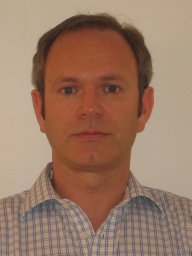 Javier Hernando合作论文数Universitat Politècnica de Catalunya4
 Carlos Segura合作论文数Universidad de La Laguna4
 Cristian Canton合作论文数Meta3
 Josep R Casas合作论文数Department of Signal Theory and Communications, Universitat Politècnica de Catalunya3
 Andriy Temko合作论文数Department of Electrical and Electronic Engineering and the Neonatal Brain Research Group, University College Cork3
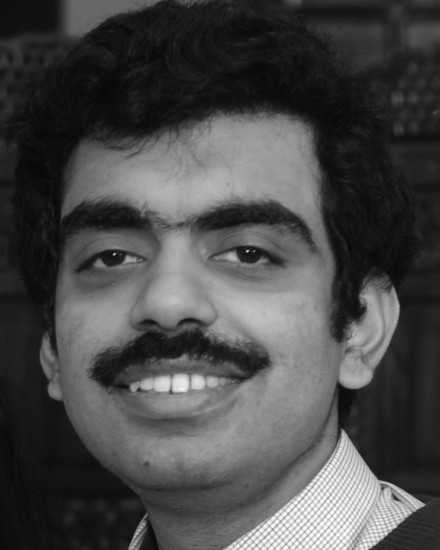 M. Umair Bin Altaf合作论文数3
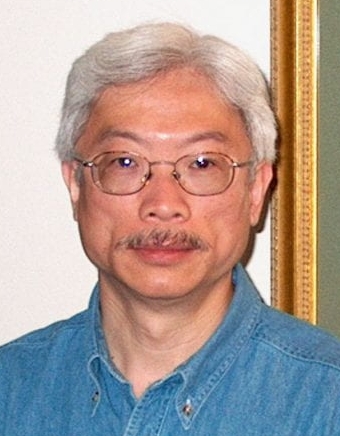 Biing Hwang Juang合作论文数School of Electrical and Computer Engineering, College of Engineering, Georgia Institute of Technology3
 X. Giró合作论文数2C. Canton-Ferrer合作论文数Image and Video Processing Group
Departament de Teoria del Senyal i Comunicaci´o
Universitat Polit`ecnica de Catalunya2Rupayan Chakraborty合作论文数Polytechnic University of Catalonia2Gonzalez Pla, F.合作论文数1Asuncion Moreno合作论文数Technical University of Catalonia1Mateu Aguilo合作论文数1
X. Giró合作论文数2C. Canton-Ferrer合作论文数Image and Video Processing Group
Departament de Teoria del Senyal i Comunicaci´o
Universitat Polit`ecnica de Catalunya2Rupayan Chakraborty合作论文数Polytechnic University of Catalonia2Gonzalez Pla, F.合作论文数1Asuncion Moreno合作论文数Technical University of Catalonia1Mateu Aguilo合作论文数1 Xavier Giró-i-Nieto合作论文数Amazon1




