Traditionally, Recommender Systems (RS) have primarily measured performance based on the accuracy and relevance of their recommendations. However, this algorithmic-centric approach overlooks how different types of recommendations impact user engagement and shape the overall quality of experience. In this paper, we shift the focus to the user and address for the first time the challenge of decoding the neural and behavioural variability across distinct recommendation categories, considering more than just relevance. Specifically, we conducted a controlled study using a comprehensive e-commerce dataset containing various recommendation types, and collected Electroencephalography and behavioural data. We analysed both neural and behavioural responses to recommendations that were categorised as Exact, Substitute, Complement, or Irrelevant products within search query results. Our findings offer novel insights into user preferences and decision-making processes, revealing meaningful relationships between behavioural and neural patterns for each category, but also indicate inter-subject variability.
Many real-time applications (e.g., Augmented/Virtual Reality, cognitive assistance) rely on Deep Neural Networks (DNNs) to process inference tasks. Edge computing is considered a key infrastructure to deploy such applications, as moving computation close to the data sources enables us to meet stringent latency and throughput requirements. However, the constrained nature of edge networks poses several additional challenges to the management of inference workloads: edge clusters can not provide unlimited processing power to DNN models, and often a trade-off between network and processing time should be considered when it comes to end-to-end delay requirements. In this paper, we focus on the problem of scheduling inference queries on DNN models in edge networks at short timescales (i.e., few milliseconds). By means of simulations, we analyze several policies in the realistic network settings and workloads of a large ISP, highlighting the need for a dynamic scheduling policy that can adapt to network conditions and workloads. We therefore design ASET, a Reinforcement Learning based scheduling algorithm able to adapt its decisions according to the system conditions. Our results show that ASET effectively provides the best performance compared to static policies when scheduling over a distributed pool of edge resources.
Voice-based interfaces rely on a wake-up word mechanism to initiate communication with devices. However, achieving a robust, energy-efficient, and fast detection remains a challenge. This paper addresses these real production needs by enhancing data with temporal alignments and using detection based on two phases with multi-resolution. It employs two models: a lightweight on-device model for real-time processing of the audio stream and a verification model on the server-side, which is an ensemble of heterogeneous architectures that refine detection. This scheme allows the optimization of two operating points. To protect privacy, audio features are sent to the cloud instead of raw audio. The study investigated different parametric configurations for feature extraction to select one for on-device detection and another for the verification model. Furthermore, thirteen different audio classifiers were compared in terms of performance and inference time. The proposed ensemble outperforms our stronger classifier in every noise condition.
Keyword spotting and in particular Wake-Up-Word (WUW) detection is a very important task for voice assistants. A very common issue of voice assistants is that they get easily activated by background noise like music, TV or background speech that accidentally triggers the device. In this paper, we propose a Speech Enhancement (SE) model adapted to the task of WUW detection that aims at increasing the recognition rate and reducing the false alarms in the presence of these types of noises. The SE model is a fully-convolutional denoising auto-encoder at waveform level and is trained using a log-Mel Spectrogram and waveform reconstruction losses together with the BCE loss of a simple WUW classification network. A new database has been purposely prepared for the task of recognizing the WUW in challenging conditions containing negative samples that are very phonetically similar to the keyword. The database is extended with public databases and an exhaustive data augmentation to simulate different noises and environments. The results obtained by concatenating the SE with a simple and state-of-the-art WUW detectors show that the SE does not have a negative impact on the recognition rate in quiet environments while increasing the performance in the presence of noise, especially when the SE and WUW detector are trained jointly end-to-end.
Among the different deepfake generation techniques, flow-based methods appear as natural candidates. Due to the property of invertibility, flow-based methods eliminate the necessity of person-specific training and are able to reconstruct any input image almost perfectly to human perception. We present a method for deepfake generation based on facial expression transfer using flow-based generative models. Our approach relies on simple latent vector operations akin to the ones used for attribute manipulation, but for transferring expressions between identity source-target pairs. We show the feasibility of this approach using a pre-trained Glow model and small sets of source and target images, not necessarily considered during prior training. We also provide an evaluation pipeline of the generated images in terms of similarities between identities and Action Units encoding the expression to be transferred. Our results show that an efficient expression transfer is feasible by using the proposed approach setting up a first precedent in deepfake content creation, and its evaluation, independently of the training identities.
Current end-to-end approaches to Spoken Language Translation (SLT) rely on limited training resources, especially for multilingual settings. On the other hand, Multilingual Neural Machine Translation (MultiNMT) approaches rely on higher-quality and more massive data sets. Our proposed method extends a MultiNMT architecture based on language-specific encoders-decoders to the task of Multilingual SLT (Multi-SLT). Our method entirely eliminates the dependency from MultiSLT data and it is able to translate while training only on ASR and MultiNMT data. Our experiments on four different languages show that coupling the speech encoder to the MultiNMT architecture produces similar quality translations compared to a bilingual baseline (±0.2 BLEU) while effectively allowing for zero-shot MultiSLT. Additionally, we propose using an Adapter module for coupling the speech inputs. This Adapter module produces consistent improvements up to +6 BLEU points on the proposed architecture and +1 BLEU point on the end-to-end baseline.
Models based on attention mechanisms have shown unprecedented speech recognition performance. However, they are computationally expensive and unnecessarily complex for keyword spotting, a task targeted to small-footprint devices. This work explores the application of Lambda networks, an alternative framework for capturing long-range interactions without attention, for the keyword spotting task. We propose a novel ResNet-based model by swapping the residual blocks by temporal Lambda layers. Furthermore, the proposed architecture is built upon uni-dimensional temporal convolutions that further reduce its complexity. The presented model does not only reach state-of-the-art accuracies on the Google Speech Commands dataset, but it is 85% and 65% lighter than its Transformer-based (KWT) and convolutional (ResNet15) counterparts while being up to 100× faster. To the best of our knowledge, this is the first attempt to explore the Lambda framework within the speech domain and therefore, we unravel further research of new interfaces based on this architecture.
End-to-end models for raw audio generation are a challenge, specially if they have to work with non-parallel data, which is a desirable setup in many situations. Voice conversion, in which a model has to impersonate a speaker in a recording, is one of those situations. In this paper, we propose Blow, a single-scale normalizing flow using hypernetwork conditioning to perform many-to-many voice conversion between raw audio. Blow is trained end-to-end, with non-parallel data, on a frame-by-frame basis using a single speaker identifier. We show that Blow compares favorably to existing flow-based architectures and other competitive baselines, obtaining equal or better performance in both objective and subjective evaluations. We further assess the impact of its main components with an ablation study, and quantify a number of properties such as the necessary amount of training data or the preference for source or target speakers.
Edge computing is considered a key enabler to deploy Artificial Intelligence platforms to provide real-time applications such as AR/VR or cognitive assistance. Previous works show computing capabilities deployed very close to the user can actually reduce the end-to-end latency of such interactive applications. Nonetheless, the main performance bottleneck remains in the machine learning inference operation. In this paper, we question some assumptions of these works, as the network location where edge computing is deployed, and considered software architectures within the framework of a couple of popular machine learning tasks. Our experimental evaluation shows that after performance tuning that leverages recent advances in deep learning algorithms and hardware, network latency is now the main bottleneck on end-to-end application performance. We also report that deploying computing capabilities at the first network node still provides latency reduction but, overall, it is not required by all applications. Based on our findings, we overview the requirements and sketch the design of an adaptive architecture for general machine learning inference across edge locations.
Our interaction with the world is an inherently multimodal experience. However, the understanding of human-to-object interactions has historically been addressed focusing on a single modality. In particular, a limited number of works have considered to integrate the visual and audio modalities for this purpose. In this work, we propose a multimodal approach for egocentric action recognition in a kitchen environment that relies on audio and visual information. Our model combines a sparse temporal sampling strategy with a late fusion of audio, spatial, and temporal streams. Experimental results on the EPIC-Kitchens dataset show that multimodal integration leads to better performance than unimodal approaches. In particular, we achieved a 5.18% improvement over the state of the art on verb classification.
Sounds are an important source of information on our daily interactions with objects. For instance, a significant amount of people can discern the temperature of water that it is being poured just by using the sense of hearing. However, only a few works have explored the use of audio for the classification of object interactions in conjunction with vision or as single modality. In this preliminary work, we propose an audio model for egocentric action recognition and explore its usefulness on the parts of the problem (noun, verb, and action classification). Our model achieves a competitive result in terms of verb classification (34.26% accuracy) on a standard benchmark with respect to vision-based state of the art systems, using a comparatively lighter architecture.
Chatbots aim at automatically offering a conversation between a human and a computer. While there is a long track of research in rule-based and retrieval-based approaches, the generation-based approaches are promisingly emerging solving issues like responding to queries in inference that were not previously seen in development or training time. In this paper, we offer an experimental view of how recent advances in close areas as machine translation can bead opted for chatbots. In particular, we compare how alternative encoder-decoder deep learning architectures perform in the context of chatbots. Our research concludes that a fully attention-based architecture is able to outperform the recurrent neural network baseline system.
In this work, we focus on exploiting 'inexpensive' data in order to to improve the DNN acoustic model for ASR. We explore two strategies: The first one uses untranscribed data from the target domain. The second one is related to the proper selection of excerpts from imperfectly transcribed out-of-domain public data, as parliamentary speeches. We found out that both approaches lead to similar results, making them equally beneficial for practical use. The Luxembourgish ASR seed system had a 38.8% WER and it improved by roughly 4% absolute, leading to 34.6% for untranscribed and 34.9% for lightly supervised data. Adding both databases simultaneously led to 34.4% WER, which is only a small improvement. As a secondary research topic, we experiment with semi-supervised state-level minimum Bayes risk (sMBR) training. Nonetheless, for sMBR we saw no improvement from adding the automatically transcribed target data, despite that similar techniques yield good results in the case of cross-entropy (CE) training.
This work describes the development of a social chatbot for the football domain. The chatbot, named chatbol, aims at answering a wide variety of questions related to the Spanish football league “La Liga”. Chatbol is deployed as a Slack client for text-based input interaction with users. One of the main Chatbol’s components, a NLU block, is trained to extract the intents and associated entities related to user’s questions about football players, teams, trainers and fixtures. The information for the entities is obtained by making sparql queries to Wikidata site in real time. Then, the retrieved data is used to update the specific chatbot responses. As a fallback strategy, a retrieval-based conversational engine is incorporated to the chatbot system. It allows for a wider variety and freedom of responses, still football oriented, for the case when the NLU module was unable to reply with high confidence to the user. The retrieval-based response database is composed of real conversations collected both from a IRC football channel and from football-related excerpts picked up across movie captions, extracted from the OpenSubtitles database.
Whilst research efforts have traditionally focused on Electrocardiographic (ECG) signals and handcrafted features as potential biometric traits, few works have explored systems based on the raw photoplethysmogram (PPG) signal. This work proposes an end-to-end architecture to offer biometric authentication using PPG biosensors through Convolutional Networks. We provide an evaluation of the performance of our approach in two different databases: Troika and PulseID, the latter a publicly available database specifically collected by the authors for such a purpose. Our verification approach through convolutional network based models and using raw PPG signals appears to be viable in current monitoring procedures within e-health and fitness environments showing a remarkable potential as a biometry. The approach tested on a verification fashion, on trials lasting one second, achieved an AUC of 78:2% and 83:2%, averaged among target subjects, on PulseID and Troika datasets respectively. Our experimental results on previous small datasets support the usefulness of PPG extracted biomarkers as viable traits for multi-biometric or standalone biometrics. Furthermore, the approach results in a low input throughput and complexity that allows for a continuous authentication in real-world scenarios. Nevertheless, the reported experiments also suggest that further research is necessary to account for and understand sources of variability found in some subjects.
Call Centre data is typically collected by organizations and corporations in order to ensure the quality of service, supporting for example mining capabilities for monitoring customer satisfaction. In this work, we analyze the significance of various acoustic features extracted from customer-agents' spoken interaction in predicting self-reported satisfaction by the customer. We also investigate whether speech prosodic features can deliver complementary information to speech transcriptions provided by an ASR. We explore the possibility of using a deep neural architecture to perform early feature fusion on both prosodic and linguistic information. Convolutional Neural Networks are trained on a combination of word embedding and acoustic features for the binary classification task of "low" and "high" satisfaction prediction. We conducted our experiments analysing real call centre interactions of a large corporation in a Spanish spoken country. Our experiments show that linguistic features can predict self-reported satisfaction more accurately than those based on prosodic and conversational descriptors. We also find that dialog turn-level conversational features generally outperforms frame-level signal descriptors. Finally, the fusion of linguistic and prosodic features reports the best performance in our experiments. suggesting the complementarity of the information conveyed by each set of behavioral representation.
Speech related processing tasks have been commonly tackled using engineered features, also known as hand-crafted descriptors. These features have usually been optimized along years by the research community that constantly seeks for the most meaningful, robust, and compact audio representations for the specific domain or task. In the last years, a great interest has arisen to develop architectures that are able to learn by themselves such features, thus by-passing the required engineering effort. In this work we explore the possibility to use Convolutional Neural Networks (CNN) directly on raw audio signals to automatically learn meaningful features. Additionally, we study how well do the learned features generalize for a different task. First, a CNN-based continuous conflict detector is trained on audios extracted from televised political debates in French. Then, while keeping previous learned features, we adapt the last layers of the network for targeting another concept by using completely unrelated data. Concretely, we predict self-reported customer satisfaction from call center conversations in Spanish. Reported results show that our proposed approach, using raw audio, obtains similar results than those of a CNN using classical Mel-scale filter banks. In addition, the learning transfer from the conflict detection task into satisfaction prediction shows a successful generalization of the learned features by the deep architecture.
The AXIOM project (Agile, eXtensible, fast I/O Module) aims at researching new software/hardware architectures for the future Cyber-Physical Systems (CPSs). These systems are expected to react in real-time, provide enough computational power for the assigned tasks, consume the least possible energy for such task (energy efficiency), scale up through modularity, allow for an easy programmability across performance scaling, and exploit at best existing standards at minimal costs.
 Javier Hernando合作论文数Universitat Politècnica de Catalunya26
 Jordi Luque合作论文数Telefonica I D Research Spain17
 Climent Nadeu合作论文数TALP Res Ctr, Univ Politecn Cataluna10
 Alberto Abad合作论文数8
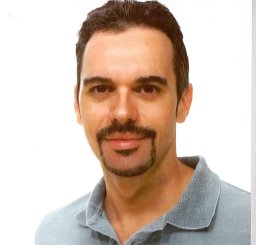 Carles Fernández合作论文数Computer Vision Center & Dept. de Cièèències de la Computació, Edifici O, Campus UAB, 08193 Bellaterra, Spain8
 Josep R Casas合作论文数Department of Signal Theory and Communications, Universitat Politècnica de Catalunya7
 Dušan Macho合作论文数4
 Taras Butko合作论文数Department of Signal Theory and CommunicationsTALP Research Center, Universitat Politècnica de Catalunya4
 C. Canton-Ferrer合作论文数Image and Video Processing Group
Departament de Teoria del Senyal i Comunicaci´o
Universitat Polit`ecnica de Catalunya4David Oro合作论文数4
C. Canton-Ferrer合作论文数Image and Video Processing Group
Departament de Teoria del Senyal i Comunicaci´o
Universitat Polit`ecnica de Catalunya4David Oro合作论文数4 Xavier Martorell Bofill合作论文数Computer Architecture Department, Universitat Politecnica de Catalunya;Barcelona Supercomputing Center4Carlos Alvarez合作论文数3
 Cristian Canton合作论文数Meta3
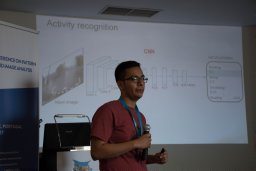 Alejandro Cartas合作论文数University of Barcelona3
 Marta R. Costa-jussà合作论文数Universitat Politecnica de Catalunya3Antonio Rizzo合作论文数University of Siena3
 Roberto Giorgi合作论文数University of Siena3Javier Bueno合作论文数Universitat Politècnica de Catalunya3
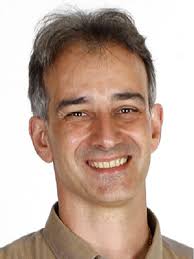 Eduard Ayguadé合作论文数Department of Computer Architecture, Technical University of Catalunya;Department of Computer Sciences, Barcelona Supercomputing Center3
 Dimitris Theodoropoulos合作论文数Delft University of Technology3
 Ferran Diego合作论文数Telefonica Research3Montse Pardàs合作论文数Technical University of Catalonia, Barcelona, Spain3
 Paolo Gai合作论文数Embedded Software Lab, Evidence Srl3
 Dionisios N. Pnevmatikatos合作论文数Division of Computer Science, School of Electrical and Computer Engineering, National Technical University of Athens;Computing Systems Laboratory, School of Electric and Computer Engineering, National Technical University of Athens3
 Ben Schouten合作论文数Eindhoven University of Technology;Hogeschool Van Amsterdam;HVA University of Applied Sciences3Onkar Ambekar合作论文数3
 Antonio Filgueras合作论文数Barcelona Supercomputing Center - BSC-CNS3Josep Ramon Morros合作论文数3
 Daniel Jiménez-González合作论文数Computer Architecture Dept., Universitat Politècnica de Catalunya3
 Albert Ali Salah合作论文数Department of Information and Computing Sciences, Utrecht University3X. Giró合作论文数2
 Claudio Scordino合作论文数2Davide Catani合作论文数2
 Pierluigi Passera合作论文数2
 Pablo Gomez合作论文数California State University2
 Marti Umbert合作论文数Telefon Res, Edificio Telefon Diagonal 00, Barcelona, Spain2Alberto Pomella合作论文数2
 Fernando López合作论文数2
 Juan Eduardo Napoles Valdes合作论文数Dept Matemat, Univ Nacl Nordeste2
 Eric J. Pauwels合作论文数Centrum Wiskunde & Informatica2
 M. Zelenak合作论文数2
 Aravindh Raman合作论文数IIT Delhi2
 Mariella Dimiccoli合作论文数Technical University of Catalonia2
 Diego Perino合作论文数Telefonica Research2
 Nacho Navarro合作论文数Departament Arquitectura Computadors2
 Javier Rodriguez Saeta合作论文数2
 Petia Radeva合作论文数Department of Mathematics and Computer Science, Faculty of Mathematics and Computer Science, University of Barcelona;Consolidated Research Group, University of Barcelona;Computer Vision Center, University of Barcelona;Department of MAIA, Faculty of Mathematics, University of Barcelona2J. Luque合作论文数1Joan Fabregat合作论文数1




