Squeezing the quadrature noise of a harmonic oscillator used as a sensor can enhance its sensitivity in certain measurment schemes. The canonical approach, based on parametric modulation of the oscillation frequency, is usually limited to a squeezing of at most 3 dB. However, this can be overcome by additional stabilization of the anti-squeezed quadrature. Here, we apply this approach to highly-stressed silicon nitride membrane resonators, with effective masses of the order few nanograms and quality factors routinely exceeding 108, which hold promise for sensing applications in both the classical and quantum regimes. We benchmark their performance using either piezo or capacitive parametric modulation. We observe maximum thermomechanical squeezing by record-high 17 dB and 21 dB, respectively, and we argue that even larger values can be attained with minimal changes to the device design. Finally, we provide a full quantum theory of a combination of this approach with quantum-limited motion measurement and conclude that quantum squeezing is attainable at moderate cryogenic temperatures.
Soft-clamped silicon nitride membrane resonators are capable of coherence times τ exceeding 100 ms at millikelvin bath temperatures. However, harnessing strong optomechanical coupling in dry dilution refrigerators remains a challenge due to vibration issues and heating by optical absorption. Here, we address these issues with an actuator-free optical cavity and mechanical resonator design, with the cavity mounted on a simple vibration-isolation platform. We observe dynamical backaction when the cavity is driven with a free-space optical beam stabilized close to the red sideband using a two-beam locking scheme. Finally, we characterize the effect of absorption heating on coherence time, finding it scales with the intracavity power P as τ ∝ P-(0.34±0.04).
Cavity electromechanics relies on parametric coupling between microwave and mechanical modes to manipulate the mechanical quantum state, and provide a coherent interface between different parts of hybrid quantum systems. High coherence of the mechanical mode is of key importance in such applications, in order to protect the quantum states it hosts from thermal decoherence. Here, we introduce an electromechanical system based around a soft-clamped mechanical resonator with an extremely high Q-factor (>10 9 ) held at very low (30 mK) temperatures. This ultracoherent mechanical resonator is capacitively coupled to a microwave mode, strong enough to enable ground-state-cooling of the mechanics ( n̅_min=0.76± 0.16 ). This paves the way towards exploiting the extremely long coherence times ( t coh > 100 ms) offered by such systems for quantum information processing and state conversion.
We present an implementation of a hybrid electro-optical quantum transducer made with an ultracoherent nanomembrane, whose motion is coupled to both an optical cavity and a microwave cavity. Interestingly, this membrane can be used as an embedded quantum memory, with an inferred coherence time of more than 100 ms.
Single photon detection is a key resource for sensing at the quantum limit and the enabling technology for measurement-based quantum computing. Photon detection at optical frequencies relies on irreversible photoassisted ionization of various natural materials. However, microwave photons have energies 5 orders of magnitude lower than optical photons, and are therefore ineffective at triggering measurable phenomena at macroscopic scales. Here, we report the observation of a new type of interaction between a single two-level system (qubit) and a microwave resonator. These two quantum systems do not interact coherently; instead, they share a common dissipative mechanism to a cold bath: the qubit irreversibly switches to its excited state if and only if a photon enters the resonator. We have used this highly correlated dissipation mechanism to detect itinerant photons impinging on the resonator. This scheme does not require any prior knowledge of the photon waveform nor its arrival time, and dominant decoherence mechanisms do not trigger spurious detection events (dark counts). We demonstrate a detection efficiency of 58% and a record low dark count rate of 1.4 per millisecond. This work establishes engineered nonlinear dissipation as a key enabling resource for a new class of low-noise nonlinear microwave detectors.
Although the main loss channel of planar microwave superconducting resonators has been identified to be related to an external coupling to a two-level system (TLS) bath, the behavior of such a cavity in the presence of an off-resonant pump has yet to be fully understood. Here a semi-classical model that predicts a power-dependent frequency shift besides the well-known TLS-induced damping is derived. The model is validated experimentally by performing a two-tone spectroscopy of several resonators fabricated on various substrates. Together with the provided analytic formulas, the technique proposed here is a simple, yet powerful, tool to characterize various properties of the TLS bath, such as their average dephasing rate.
Single photon detection is a key resource for sensing at the quantum limit and the enabling technology for measurement based quantum computing. Photon detection at optical frequencies relies on irreversible photo-assisted ionization of various natural materials. However, microwave photons have energies 5 orders of magnitude lower than optical photons, and are therefore ineffective at triggering measurable phenomena at macroscopic scales. Here, we report the observation of a new type of interaction between a single two level system (qubit) and a microwave resonator. These two quantum systems do not interact coherently, instead, they share a common dissipative mechanism to a cold bath: the qubit irreversibly switches to its excited state if and only if a photon enters the resonator. We have used this highly correlated dissipation mechanism to detect itinerant photons impinging on the resonator. This scheme does not require any prior knowledge of the photon waveform nor its arrival time, and dominant decoherence mechanisms do not trigger spurious detection events (dark counts). We demonstrate a detection efficiency of 58 low dark count rate of 1.4 per ms. This work establishes engineered non-linear dissipation as a key-enabling resource for a new class of low-noise non-linear microwave detectors.
We provide model reduction formulas for open quantum systems consisting of a target component which weakly interacts with a strongly dissipative environment. The time-scale separation between the uncoupled dynamics and the interaction allows to employ tools from center manifold theory and geometric singular perturbation theory to eliminate the variables associated to the environment (adiabatic elimination) with high-order accuracy. An important specificity is to preserve the quantum structure: reduced dynamics in (positive) Lindblad form and coordinate mappings in Kraus form. We provide formulas of the reduced dynamics. The main contributions of this paper are (i) to show how the decomposition of the environment into $K$ components enables its efficient treatment, avoiding the quantum curse of dimension; and (ii) to extend the results to the case where the target component is subject to Hamiltonian evolution at the fast time-scale. We apply our theory to a microwave superconducting quantum resonator subject to material losses, and we show that our reduced-order model can explain the transmission spectrum observed in a recent pump probe experiment.
While the main loss channel of planar microwave superconducting resonators has been identified to be related to an external coupling to a two-level system bath, the behavior of such a cavity in an environment strongly pumped by a detuned tone has yet to be fully understood. Here, a semi-classical theoretical model describing the interaction of such resonators with the Two-Level Systems is derived, to which experimental datas obtained with different substrate materials are fitted. Performing the experiments with different substrates allows the tailoring of fundamental properties of the interacting two-level system bath.
Summary form only given. The motion of a micromechanical resonator coupled simultaneously to a high-finesse optical cavity and a microwave resonator can be used to transduce the fragile quantum states generated in the realm of microwave superconducting circuits into optical photons that can transport quantum information over large distances in telecom optical fibers at room temperature. We have engineered the optical and mechanical properties of thin membranes patterned in a suspended high-stress Si3N4 film to realize such a hybrid opto-electro-mechanical system. An optical Fabry-Perot cavity with a finesse exceeding 12 000 was realized between a highly reflective photonic crystal patch realized on the suspended membrane and a conventional high-reflectivity mirror. The electromechanical coupling with a nearby planar superconducting circuit is achieved by approaching the membrane at a sub-micron distance from an on-chip interdigitated capacitor. By operating the hybrid opto-electro-mechanical system in a cryogenic environment, the photon-phonon swap rates between microwave, mechanical, and optical degrees of freedom is expected to overcome the mechanical decoherence rate. An artist view of the device envisioned is depicted on Figure 1.
We realise a circular gray-field polariscope to image stress-induced birefringence in thin (sub-micron thick) silicon nitride membranes and strings. This enables quantitative mapping of the orientation of principal stresses and stress anisotropy, complementary to, and in agreement with, finite element modeling. Furthermore, using a sample with a well-known stress anisotropy, we extract a value for the photoelastic (Brewster) coefficient of silicon nitride, C ≈ (3.4 ± 0.1) × 10−6 MPa−1. We explore possible applications of the method to analyse and quality-control stressed membranes with phononic crystal patterns.
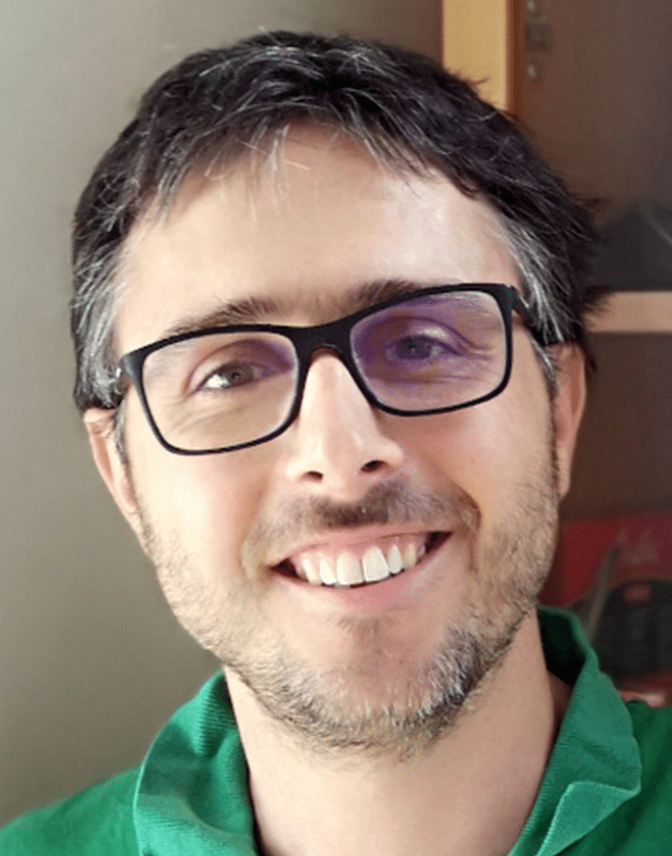 Samuel Deleglise合作论文数Laboratoire Kastler Brossel5
 Emmanuel Flurin合作论文数Université Pierre et Marie Curie-Sorbonne Universités, Université Paris Diderot-Sorbonne Paris Cité5
 Albert Schliesser合作论文数Niels Bohr Institute, University of Copenhagen5
 Thibaut Jacqmin合作论文数LCFIO5
 Edouard Ivanov合作论文数4Eric C. Langman合作论文数4E. Planz合作论文数3
 Antoine Heidmann合作论文数Laboratoire Kastler-Brossel, Sorbonne University;Centre National de la Recherche Scientifique3
 Pierre-François Cohadon合作论文数Laboratoire Kastler Brossel;Département de Physique, Ecole Normale Supérieure;Sorbonne Université3Yannick Seis合作论文数2
 Xiang Xi合作论文数2
 Ulysse Reglade合作论文数Mines ParisTech, PSL Res Univ2
 Raphael Lescanne合作论文数QUANTIC Team, INRIA Paris2Emanuele Albertinale合作论文数Quantronics Group, SPEC, CEA, CNRS, Université Paris-Saclay, CEA Saclay 91191, Gif-sur-Yvette Cedex, France2J. Palomo合作论文数Univ Paris Diderot, Sorbonne Univ2M. Rosticher合作论文数Univ PSL, Sorbonne Univ, Univ Paris Diderot, Lab Phys,Ecole Normale Super,ENS,CNRS,Sorbonne Pa, Paris, France2
 Zaki Leghtas合作论文数Ecole des Mines ParisTech2Sampo Saarinen合作论文数1S. Chua合作论文数1S. Deléglise合作论文数1
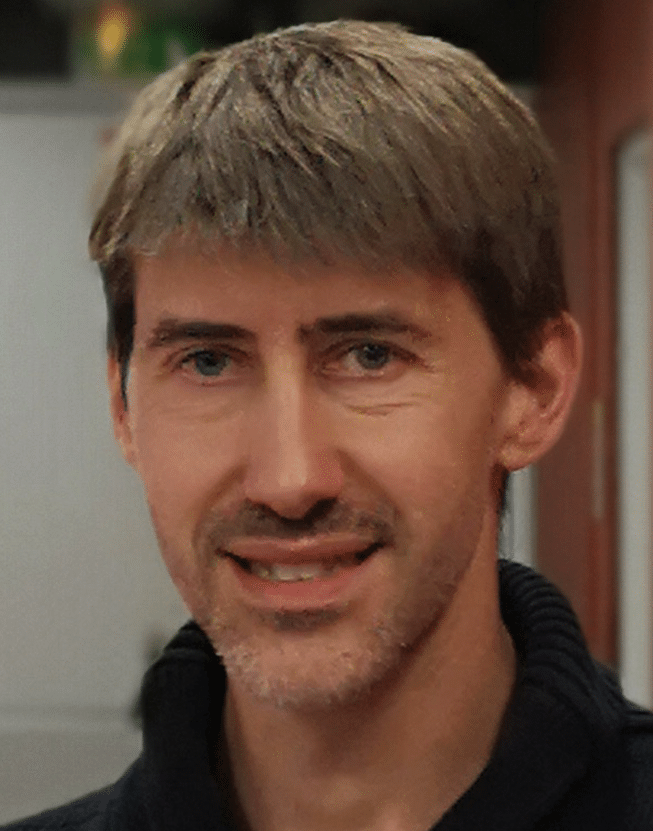 Tristan Briant合作论文数Kastler-Brossel Laboratory1Catalini Letizia合作论文数Niels Bohr Inst, Univ Copenhagen1
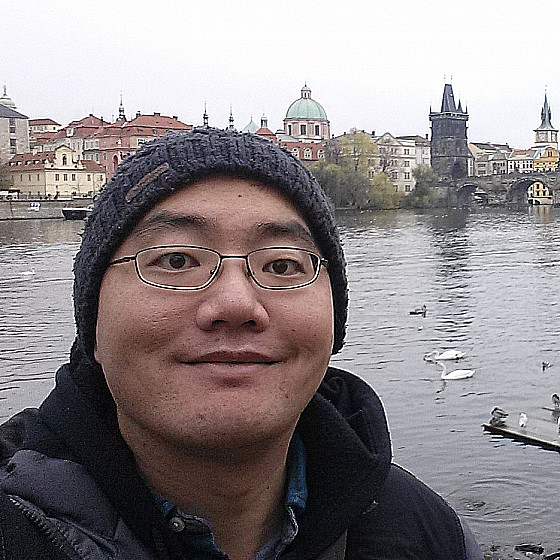 Sheon Chua合作论文数Department of Quantum Science, Research School of Physics, College of Science, The Australian National University1
 Paolo Forni合作论文数1Pierre Rouchon合作论文数Centre Automatique et Systèmes, Mines ParisTech/PSL Research University1
 Andreas Barg合作论文数1
 Tsaturyan Yeghishe合作论文数1
 Alain Sarlette合作论文数SYSTeMS Res Grp, Univ Ghent1




