The design of a high gain circular patch antenna with the superstrate technique is presented. The antenna was used as an illuminating source for near field imaging. The antenna was designed, constructed and its radiation pattern measured in an open range measurement setup. Measured results showed a maximum antenna gain of 12.0 dBi at 3.0 GHz, and an operating bandwidth of 7.7% (2.86-3.09 GHz). Measured 3-dB beamwidths in the E- and H-planes are 30° and 40° respectively. Maximum side-lobe level is −12 dB at +/− 100° angle in the H-plane, and the front-to-back ratio is 15 dB.
This paper shows that when using position biased antenna measurements of a phantom object, allowing for refraction can improve the reconstructed image. We use a modified version of the "back propagation" (or zero order Born approximation) algorithm to allow for refraction, geometric ray convergence and material effects.
We present a method of measuring the complex permittivity of alpine snow in the microwave S-band (2.1-4 GHz) using the waveguide method. This method was field trialed in the Southern Alps in New Zealand, where six snow samples of varying melt conditions were measured and their complex permittivity calculated. Combined with snow density data, we estimated the volumetric liquid water content (i.e. snow wetness) of the snow samples. This data allows us to assess the viability of aerial snow depth surveys with the ultra-wideband radar.
Tunnel construction with tunnel boring machi- nes (TBMs) is frequently hampered by hidden complexities in the tunnel face. This article investigates the feasibility of utilizing impulse ultra-wideband (UWB) radar technology to sense and probe the tunnel face in real-time and alert the operator of potential dangers. This study aims to identify buried objects, such as water mains and gas pipes, concrete structures, and naturally occurring objects like boulders present in the tunnel path. In this study, we considered different test objects extracted from tunnel construction projects in Edmonton and extracted their complex permittivity. A genetic algorithm (GA) is employed to retrieve the buried object’s electrical and physical parameters for near-real-time operations. It is shown that the dielectric constant and the thickness of the buried object are obtained within a maximum error of 14% and 2.5 mm absolute error, respectively. A more complex scenario involving hidden buried oil and sewer pipes in the tunnel face is evaluated. To assess various scenarios, buried pipes containing different fluids are considered, and measured their electrical properties within few seconds. Using the UWB radar, the fluids’ relative permittivity and loss tangents are estimated, along with the pipe’s physical dimensions and dielectric constant. These measurements distinguish the sewer pipe from the oil pipe. This study confirms the capability of UWB impulse radar technology for acquiring real-time geological conditions in tunnel construction.
we present an orthonormal parameterization of the complex dielectric susceptibility for a collection of tissues relevant to diagnostic microwave imaging. We have considered frequencies in the range 1.0 GHz to 4.0 GHz, which is common for medical applications of microwave imaging. We provide an analysis of the commonly used monopole Debye model, showing poor conditioning between two of its basis functions. Analysis on multi-frequency sensitivity matrices show that our parameterization generally yields lower condition numbers than equivalent scenarios using the Debye basis. Finally, we present examples of image reconstruction comparing the use of these different bases.
An imaging system comprising a planar negative-refractive-index lens and a pair of small loop antennas is described. The two loops antennas are fixed on one side of the lens, and the object is transversely scanned across the other side. One loop illuminates the object through the lens. Reflection from the object is focused by the lens onto a plane containing the other loop. This loop senses both reflected and incident fields. An image is constructed by relating transmission (S21) between the loops to the object translation. The system was demonstrated experimentally at 3 GHz and supported by theory.
An experimental 5-pixel microwave imaging system, operating at 3 GHz, is demonstrated. It employs a planar negative-refractive index lens. A single pixel comprises a pair of small-loop antennas (receive and transmit), that are each loaded by dielectric resonators to enhance sensitivity. The receive loop is on the image plane. The object is scanned across the object plane. Plotting the transmission between the two loops versus object scan position, an image can be constructed from each pixel. A single image can be constructed by combining all pixel data with a reduced object scan range.
A new method for additive manufacturing of human torso phantom is being developed to support the study of pneumothorax using a microwave imaging system. Conductive PLA has been chosen as the material due to its high dielectric constant and lossy property. Based on the mixing rule, the major parts of human torso, including heart, lungs, rib cage, muscle layer and fat layer can be simulated by conductive PLA or mixing the saline water with conductive PLA having different infill percentage. The dielectric measurements of the material, the calculated representation of human torso parts and the simplified torso phantom model will be presented in the paper.
Snow on sea ice is a controlling factor for ocean-atmosphere heat flux and thus ice thickness growth, and surface albedo. Active and passive microwave remote sensing is the most promising way to estimate snow depths over large sea ice areas although improved validation is understood as a missing information to support further progress. However, severe limitations in the representative measurement of snow depth over sea ice persist, which exacerbates sea ice mass balance assessments as well as the indirect estimation of consolidated ice thickness from remotely sensed freeboard. We have designed and flown a snow radar in combination with an electromagnetic induction device for sea ice thickness. The goal was the simultaneous measurement of both the consolidated sea ice thickness and the snow depth on top as a tool to derive snow and ice statistics for satellite validation. The snow radar was integrated into an EM-bird and flown about 15 m above the surface by suspending the instrument from a helicopter. The combination of the applied technologies hasn’t been deployed in this configuration before. The helicopter flight speed was around 70 knots, resulting in a snow measurement about every four meters. The EM instrument can detect ice thickness at 0.1m accuracy, whereas the snow radar is designed to measure snow depth at 0.05m accuracy. Our field area was the land-fast sea ice and adjacent ice shelf in McMurdo Sound (Antarctica) in November 2021. During this time we found a relatively shallow but variable snow cover (up to about 0.3m) above sea ice of about 2m thickness. Deeper snow was only measured at the transition from the sea ice to the ice shelf, and on the ice shelf itself, where the maximum radar penetration in snow in ideal conditions is estimated to be around 2-3 meters. We present first results of snow cover statistics in comparison to ground validation and observed snow characteristics, and we compare these results to airphotos and optical satellite imagery. We show that the measurement set-up meets the requirements for level ice and rough fast ice with patchy but dry snow cover. The system still needs to be tested over pack ice with potentially more complex snow morphology.
It is shown by simulation that a sharp image of a lossy object with an abrupt change in permittivity can be obtained using a negative-refractive-index (NRI) lens at 3 GHz. The object is illuminated by a TEM wave and the reflections are focused onto the image plane. The fields on the image plane are sampled and analyzed. This opens up the possibility of applying the NRI lens in medical imaging.
A dual probe system has been developed for conducting experiments at frequencies near 3 GHz. The system contains a pair of square loops and each of them is loaded by a cubic resonator with high dielectric constant to enhance its field intensity, resulting in a sensitivity about 30 dB greater than other near-field probes. The high sensitivity allows the probe detecting field disturbances further away compared to other probes, thereby possibly enabling strong penetration through a lossy medium. Therefore, this probe system potentially finds application in medical imaging.
Two modelling methods of an experimental 3 GHz negative-refractive-index lens comprising an array of dielectric resonators and metal strips are compared. One model approach represents all constituent elements, whilst the other uses a continuous media approach. Both models display focusing properties and frequency dependent behavior similar to that observed in the experimental data.
Measurement of moisture content in a range of materials commonly uses time domain reflectometry and a transmission line surrounded by the material under test. The approach uses propagation time on the transmission line as a surrogate for permittivity and hence moisture content. However frequency dispersion that is caused by radiation from the transmission line can induce errors when using conventional methods for calculating the propagation delay. We show a relative permittivity discrepancy of 0.6 when measuring a material with a permittivity of 9. We observe that empirical calibration may remove this error, describe a adaptation of the conventional tangent method for calculating propagation time, and propose a theoretical approach.
In this paper, we present the evaluation of snow depth measurements that were conducted by an octo-copter mounted radar. The newly integrated radar and aerial platform was field trialed on sea ice near McMurdo Sound in Antarctica. In this trial, a 0.5 km length of snow-covered sea ice was selected for snow depth survey. Radar measurements were conducted as the octo-copter was flying at a height of 15 m and at a constant speed of 2 m/s over uniform sea ice. A separate validation measurement of snow depth along the same length of snow-covered sea ice provided ground truth data that were then used to compare with snow depth estimates from measured radar signals. Comparison between radar and ground truth measurements shows high correlation, at 0.90, between the two sets of snow depth data. Measurement error (difference between snow depth values measured by the radar and ground truth) has a mean of 0.1 cm and standard deviation of 3.1 cm.
A matrix-based method is developed to a material sample that displays both tangential and normal directed surface effects. The method was applied to a simulated continuous medium sample with imposed surface effects.
We propose a lightweight radar that autonomously measures snow depth over sea ice from an unmanned aerial vehicle (UAV). Development of this snow radar and its integration with an octocopter UAV is presented. Field trials of the UAV-mounted snow radar, conducted in Antarctica during the summer season of 2017/2018, are also described. The radar allows measurements of snow depths on sea ice between 10 and 100 cm. Additional reflections due to internal layers within the snow are evident at a few measurement points. The snow radar is evaluated for various flight parameters: stationary; flying at speeds between 1 and 3 m/s, and at heights from 5 to 15 m. Evaluation of snow-depth results indicates that a depth accuracy of ±3.2 cm is achieved with stationary measurements, and of ±9.1 cm with measurements at the various flight speeds.
The design of a planar negative refractive index lens operating at 3 GHz and constructed from an array of dielectric resonators and continuous metal strips is presented. The dielectric resonators provide negative permeability and largely determine the lens operating frequency. The metal strips on printed-circuit boards, provide negative permittivity. By strategic choice of the printed circuit board substrate material, the lens permittivity can be adjusted without impacting the permeability. Preliminary experimental and simulation results are used to demonstrate partial focusing of loop probe near-fields.
We investigate the performance of a fast reconstruction algorithm based a Backpropagation algorithm for 3D Microwave Imaging of Body Part Anomalies.
The characterization of metamaterials requires simulating or measuring samples with finite thickness. However, finite sized samples result in surface artefacts which cause an inconsistent wave-impedance to be retrieved when applying the Nicolson-Ross-Weir (NRW) method to low loss metamaterials. A method is demonstrated that uses thru-line (TL) deembedding to isolate the surface artefact allowing the NRW method to obtain consistent values of wave-impedance.
The design of a cavity backed dipole antenna is presented in this paper. The antenna is designed for a microwave sensor that is developed to perform automatic estimation of grape bunches in Vineyards. Antenna specifications are derived from the system design and development of the microwave sensor. After a process of antenna type selection, the cavity backed dipole antenna was chosen due to its ability to meet the desired system specifications. To improve the performance of an existing antenna design, we designed a balun that better matches the performance of the antenna. The antenna has been fabricated and measured, achieving an impedance bandwidth of 1.5 to 6.6 GHz.
 Platt, I.G.合作论文数41
 Ian M Woodhead合作论文数37
 Kimberley W. Eccleston合作论文数22
 Rambabu, K.合作论文数15
 M. Y. W. Chia合作论文数Institute for InfoComm Research14Sean Richards合作论文数9
 Kevin K.M. Chan合作论文数8
 Yiwen Zhou合作论文数8
 Wolfgang Rack合作论文数Institute for Polar and Marine Research7Eva Anton合作论文数5Josh McCulloch合作论文数Univ Canterbury, Dept Comp Sci, Christchurch, New Zealand5
 Kantipudi Rambabu合作论文数Department of Electrical and Computer Engineering;University of Victoria;Department of Electrical and Computer Engineering, University of Victoria5Kim Eccleston合作论文数4
 Nelson Joseph R合作论文数Theory of Condensed Matter Group, Cavendish Laboratory, J. J. Thomson Avenue, Cambridge CB3 0HE, UK. jn336@cam.ac.uk.4Christopher James Bateman合作论文数4Paul Riding合作论文数3Jhamb, K.合作论文数3Christian Pichot合作论文数Telecommunications Laboratory, University Nice Sophia Antipolis3
 C. Migliaccio合作论文数3Michael Yan-Wah Chia合作论文数2
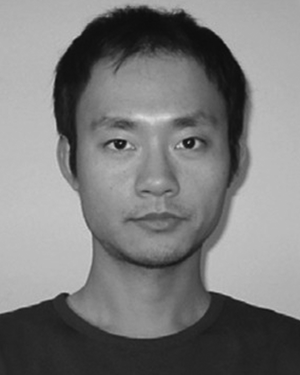 Lin Li合作论文数2
 Michael Hagedorn合作论文数2Kevin Kheemeng Chan合作论文数2J. Lanteri合作论文数1
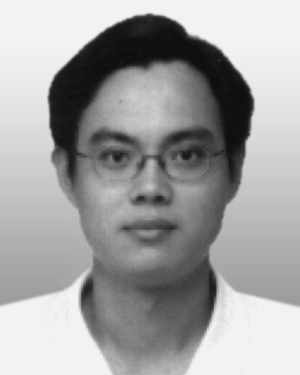 Chiew-Kok Ang合作论文数1Usama Farooq合作论文数1
 Louise Sarrabezolles合作论文数1
 Fatemeh Modares Sabzevari合作论文数University of Alberta1
 Xiaoyou Lin合作论文数School of Engineering, University of Waikato1
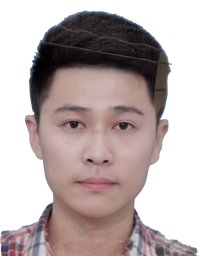 Zheng Gong合作论文数School of Engineering, University of Waikato1Jijun Yao合作论文数1Khalilzadeh, A.合作论文数1
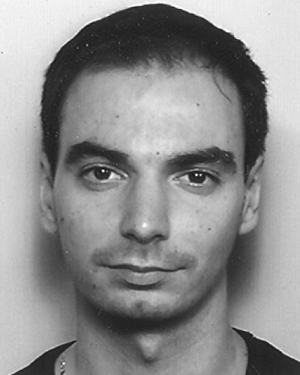 Jerome Lanteri合作论文数1Li, L.合作论文数1
 Yifan Chen (陈意钒)合作论文数School of Life Science and Technology, University of Electronic Science and Technology of China1
 Christian Haas合作论文数Alfred Wegener Institute, Helmholtz Centre for Polar and Marine Research;Universität Bremen1Poul M. F. Nielsen合作论文数1
 Jens Bornemann合作论文数Department of Electrical and Computer Engineering, Faculty of Engineering, University of Victoria1
 Michael Berridge合作论文数Babraham Institute1
 Olaf Diegel合作论文数Department of Mechanical Engineering, Faculty of Engineering, The University of Auckland1
 Armin Werner合作论文数Centre for Agricultural Landscape and Land Use Research;Institute of Land Use Systems and Landscape Ecology;Institute of Rhizosphere Research and Plant Nutrition;Institute of Land Use Systems and Landscape Ecology, Institute of Rhizosphere Research and Plant Nutrition1




