Sensor-based human activity recognition (HAR) is crucial for ubiquitous computing, but effective methods rely on deep supervised learning, which requires large labeled datasets that are scarce in real-world scenarios. Privacy concerns and regulatory constraints further hinder the aggregation of labeled data from multiple users. Federated learning (FL) enables collaborative model training without sharing raw data. However, most FL approaches assume fully labeled datasets for all participants, while individual users often have abundant unlabeled but limited labeled data in reality. Semi-supervised federated learning (SSFL) addresses this issue by leveraging both labeled and unlabeled data. Nevertheless, existing SSFL methods for HAR often demand extensive communication of raw model parameters, straining the limited resources of edge devices. In this paper, we introduce a novel communication-efficient SSFL framework for sensor-based HAR that employs prototype-guided pseudo-labeling. Unlike methods relying on heavy parameter exchange, our framework is explicitly designed to minimize communication overhead by exchanging prototypes. In each training cycle, users train local models and extract class prototypes, which are aggregated by a central server and redistributed. Users then generate pseudo-labels by comparing feature similarities with prototypes and update their local models. To adapt to user-specific heterogeneity, we introduce an incremental update strategy for local prototypes. A consistency regularization loss further aligns local model predictions with prototype-based predictions, enhancing convergence and performance. Extensive experiments on four benchmark HAR datasets: OPPORTUNITY, PAMAP2, USC-HAD and WISDM, which covering from diverse data collection protocols and real-word scenarios. The results demonstrate that compared with the state-of-the-art SSFL algorithms, our method consistently achieves superior performance with significantly lower communication overhead across all datasets.
In this paper, we propose WiCon, a lightweight continual learning approach for WiFi-based human activity recognition, featuring adaptive masks and classifier expansion. This approach addresses the limitation of fixed classifier capacity in continual learning, which cannot adapt to dynamically changing class numbers in real applications. It introduces two key innovations, i.e., progressive classifier expansion (PCE) and task-adaptive learnable masks (TALM). PCE dynamically expands classifier dimensionality as new classes emerge, without predefining the total number of classes. Meanwhile, TALM implements selective parameter activation through task-specific binary masks that enable different tasks to activate distinct network subsets. Compared to existing approaches on three public WiFi datasets, WiCon demonstrates improved performance. More importantly, it significantly reduces the number of model parameters, making it particularly suitable for lightweight deployment.
With the rapid progress of autonomous driving, accurate detection of traffic participants is critical to ensuring safety and traffic order. However, small objects, occlusions, and truncations remain challenging in complex environments. We propose a perception framework based on scenarios construction that employs a dynamic scenarios construction strategy to build four parallel branches for high-level semantic modeling and diverse feature representations. A dynamic scenarios coupler is further designed to select and fuse branch outputs, enabling optimal cross-scenarios feature screening and contextual modeling. This framework enhances the richness of features and improves adaptability under various conditions. Experiments on the KITTI and Cityscapes datasets show that our method outperforms mainstream models in detection accuracy and cross-scene robustness, demonstrating strong potential for complex urban driving environments.
Images captured in traffic scenes under adverse weather such as rain, fog, snow, and nighttime often suffer from low visibility, posing challenges for autonomous driving and urban surveillance. To address this, we propose AERNet, an unsupervised all-weather image enhancement network that restores adverse-weather images to clear conditions. AERNet employs Weather Type Transfer with dual-level discriminators for high-fidelity translation, incorporates a Stability Regularizer to ensure consistent enhancement and reconstruction, and leverages Clear-Domain Alignment to disentangle structural and weather perturbations while adaptively modulating features via weather-label embeddings. Experiments demonstrate that AERNet produces high-quality, structurally consistent, and perceptually realistic images in real-world traffic scenarios, significantly outperforming existing methods. The code is publicly available at https://github.com/tyyyyyyyyyy2002/AERNet.
Prediction of driver fixation can improve driving safety by simulating how experienced drivers allocate their attention. However, most of the research on the traditional driver’s fixation prediction model focus on the scene in clear days, the research on adverse weather(such as rainy and night) are relatively few, while adverse weather are more susceptible to traffic accidents. Training a model for each specific scenario is unrealistic, as collecting and annotating a large amount of data for every weather condition is too expensive. Data often dictates the effectiveness of model training, and insufficient data can hinder the model’s ability to adapt effectively to the task. Unsupervised domain adaptation methods can learn generalized features of different domains and improve the cross-scene ability of the model, so that it can also show good performance in new domains. This paper proposes a novel dual-branch network designed to leverage high-level semantic information extracted by CLIP, thereby enhancing the feature representation capability of the model and improving its understanding and adaptability across diverse scenarios. Additionally, an adversarial learning module is introduced to guide the model in learning domain-invariant features during training, thereby facilitating its adaptation to the cross-weather prediction task. We conducted experiments from TrafficGaze to DrFixD(rainy) and DrFixD(night). The results demonstrate that our model outperformed existing methods across five evaluation metrics and achieved the overall best performance.
In recent years, deep learning has achieved remarkable success in medical diagnosis. However, its performance is often limited by small medical datasets, leading to overfitting and poor generalization. Accurate diagnosis also depends on non-image semantic attributes (e.g., age, sex, lifestyle factors), which provide critical complementary context. To address these challenges, we present PnP-SAF, a plug-andplay Semantic-Attribute Fusion framework that enhances data-efficient medical image diagnosis. PnP-SAF can be seamlessly integrated into both CNN- and Transformer-based architectures, enabling effective fusion of semantic attributes with image features in a flexible manner. Extensive experiments on the ODIR and PAD-UFES-20 datasets demonstrate that PnP-SAF mitigates overfitting, improves generalization, and significantly boosts diagnostic accuracy, highlighting its robustness and practical applicability in clinical scenarios.
Federated learning (FL) is a key paradigm for distributed model learning across decentralized data sources. Communication in each FL round typically consists of two phases: (i) distributing the global model from a server to clients, and (ii) collecting updated local models from clients to the server for aggregation. This paper focuses on a type of FL where communication between a client and the server is relay-based over dynamic networks, making routing optimization essential. A typical scenario is in-orbit FL, where satellites act as clients and communicate with a server (which can be a satellite, ground station, or aerial platform) via multi-hop inter-satellite links. This paper presents a comprehensive tractability analysis of routing optimization for in-orbit FL under different settings. For global model distribution, these include the number of models, the objective function, and routing schemes (unicast versus multicast, and splittable versus unsplittable flow). For local model collection, the settings consider the number of models, client selection, and flow splittability. For each case, we rigorously prove whether the global optimum is obtainable in polynomial time or the problem is NP-hard. Together, our analysis draws clear boundaries between tractable and intractable regimes for a broad spectrum of routing problems for in-orbit FL. For tractable cases, the derived efficient algorithms are directly applicable in practice. For intractable cases, we provide fundamental insights into their inherent complexity. These contributions fill a critical yet unexplored research gap, laying a foundation for principled routing design, evaluation, and deployment in satellite-based FL or similar distributed learning systems.
With the rapid advancement of autonomous driving technology, panoramic driving perception systems, as a core component of autonomous driving systems (ADS), have gained significant attention. The constraints of onboard computational resources have intensified the demand for lightweight, efficient, and precise perception systems. This paper proposes a multi-task network model based on a coordinative multi-scale feature augmentation network (CMFANet), capable of simultaneously addressing traffic object detection, drivable area segmentation, and lane line detection, thereby enabling comprehensive perception of traffic scenarios. The proposed CMFANet consists of a shared backbone, three independent neck layers, and task heads. To achieve the lightweight and high-precision perception of the driving environment, we design a powerful backbone network for feature extraction and develop an efficient feature fusion strategy tailored to the specific requirements of each task. We construct two versions of the proposed model: nano and small. The nano version features a parameter count of only 3.8 M, significantly lower than existing models such as YOLOP. The model was evaluated on the challenging BDD100K dataset, achieving outstanding results: a mAP50 of 82.5% for traffic object detection, a mIoU of 91.5% for drivable area segmentation, and an IoU of 29.8% for lane line detection. Experiments confirm our model’s balance of efficiency, lightweight design, and accuracy for real-world driving scenarios.
Federated edge learning on microcontrollers (MCUs) enables privacy-preserving adaptation, but on-device training faces a hardware tradeoff: fitting backpropagation into a limited static random-access memory (SRAM) often relies on on-chip flash as auxiliary storage, while repeated parameter persistence rapidly consumes finite program/erase (P/E) endurance. This paper proposes TinySLFL, a flash-endurance-aware federated learning framework for resource-constrained MCUs. On the client, layer-wise training bounds the peak SRAM usage to one layer, and delayed aggregation keeps intermediate updates in SRAM so that each communication round incurs only one flash persistence. On the server, dynamic aggregation combines loss-aware freezing with proxy-accuracy-guided filtering to improve the robustness under non-independently and identically distributed (Non-IID) data while suppressing unnecessary rounds. Experiments on CIFAR-10 and SVHN under a severe Dirichlet label skew and on a naturally heterogeneous FEMNIST showed, in a server-side simulation, that TinySLFL reduces the cumulative protocol-level erase-block operations (EOs) required to reach a common target accuracy by 97.8-98.6% relative to sequential layer training (SLT) and improves the mean Top-1 accuracy by up to 5.24 percentage points over the same ResNet-8 backbone in a five-seed evaluation. The power, latency, SRAM, and deployment feasibility were reported from actual ESP32-S3 measurements. These results demonstrate durable federated learning for extreme-edge MCUs.
In this paper, we propose WiRAG, a retrieval-augmented generation (RAG) with large language model (LLM) framework for WiFi-based human activity recognition (HAR). WiRAG addresses two issues of learning methods, namely traditional machine learning approaches that rely on large labeled datasets and high training costs, and LLM-based methods that lack contextual information of WiFi channel state information (CSI). It also uses subcarrier clustering and context refinement to shorten prompts, thus boosting accuracy and response efficiency. In the experimental evaluation, we compare the performance of WiRAG with that of other approaches, and analyze the impact of LLMs, subcarrier clustering, and different retrieval strategies on the performance of WiRAG over three WiFi datasets.
We present TinyMQT, a memory-efficient on-device training framework for microcontrollers, where backpropagation imposes a peak SRAM footprint that conventional quantization-aware training (QAT) cannot reduce because it retains full-precision tensors in the backward pass. TinyMQT introduces a mixed quantization scheme that extends asymmetric–symmetric separation from inference to the full training loop—asymmetric activations, symmetric parameters and error gradients, and a transient FP32 update confined to the optimization step—complemented by a Fisher-guided sparse update that further reduces write-back traffic. Under full dense updates (p=1), the quantization design alone allows TinyMQT to outperform both quantized baselines FQT and QAS on all eight datasets, yielding up to 4.5% higher accuracy on CIFAR-100. Enabling sparse updates (p=1/2) further caps peak RAM within 190 kB on both ESP32S3 and STM32F746, at a cost of only 0.40 percentage points on CIFAR-10.
Traffic scene perception poses unique challenges due to occlusion, scale variation, and dense interactions among pedestrians and vehicles. To tackle these issues, we propose Hi-Former, a traffic-oriented transformer detector equipped with the Hierarchical Feature Interaction (HiFI) module, which leverages Channel-grouped Multi-head Attention (CHMA) with local positional encoding to reduce redundancy and enhance hierarchical feature interaction. This design enables more effective modeling of fine-grained details, leading to superior recognition of small and occluded objects. Comprehensive experiments on VP-dataset and KITTI, including both quantitative benchmarking and qualitative visualization, demonstrate that Hi-Former achieves state-of-the-art performance and exhibits strong robustness in complex traffic scenarios.
As a cornerstone of decision-making in intelligent transportation systems, vehicle-pedestrian detection requires both accuracy and efficiency, yet static models struggle to balance them. Therefore, we present DVPNet, a dynamic dual-backbone detection framework that adapts computation to scene complexity. The model integrates an Efficient Spatial Perception Attention Module (ESPAM) to enhance feature perception, and employs a differentiable neural architecture search–based selector for difficulty-aware path routing. Experiments on challenging benchmarks demonstrate that DVPNet achieves superior robustness and accuracy while reducing redundant overhead, offering a practical solution for real-time vehicle-pedestrian detection.
Mixed-precision quantization, which dynamically allocates bitwidths across layers, poses an NP-hard combinatorial optimization problem, since the exponentially growing search space makes traditional heuristic or sampling-based methods difficult to scale and prone to suboptimal solutions. Recent advances in quantum computing open up a promising new avenue, as its intrinsic parallelism enables efficient exploration of large combinatorial spaces and offers the potential to overcome the limitations of classical search. We propose Q4Q (Quantum-computing for Quantization), a quantum-based method for efficient bitwidth allocation in model quantization. Q4Q formulates accuracy loss and compression overhead as Hamiltonians, allowing Pareto-optimal solutions to be obtained from a single sampling. Guided by layer sensitivity, the method adapts bitwidth allocation to balance accuracy and compression. Experiments on several 7B models show that Q4Q achieves a 3–8 orders of magnitude speedup over traditional machine learning, improves Pareto solution quality by 3–15%, and significantly enhances energy efficiency. This work offers a new paradigm for lightweight deployment of large models in edge scenarios and underscores the promise of quantum computing in combinatorial optimization.
Federated learning (FL) is a promising paradigm that can enable collaborative model training between vehicles while protecting data privacy, thereby significantly improving the performance of intelligent transportation systems (ITSs). In vehicular networks, due to mobility, resource constraints, and the concurrent execution of multiple training tasks, how to allocate limited resources effectively to achieve optimal model training of multiple tasks is an extremely challenging issue. In this paper, we propose a mobility-aware multi-task decentralized federated learning (MMFL) framework for vehicular networks. By this framework, we address task scheduling, subcarrier allocation, and leader selection, as a joint optimization problem, termed TSLP. For the case with a single FL task, we derive the convergence bound of model training. For general cases, we first model TSLP as a resource allocation game, and prove the existence of a Nash equilibrium (NE). Then, based on this proof, we reformulate the game as a decentralized partially observable Markov decision process (DEC-POMDP), and develop an algorithm based on heterogeneous-agent proximal policy optimization (HAPPO) to solve DEC-POMDP. Finally, numerical results are used to demonstrate the effectiveness of the proposed algorithm.
Nowadays, split federated learning (SFL) has emerged as an effective paradigm for enabling privacy-preserving collaborative intelligence across heterogeneous devices with limited computation. However, SFL incurs significant communication overhead in wireless networks due to the uplink transmission of high-dimensional smashed data, which degrades network efficiency. To mitigate the communication bottleneck, we propose a prototype-based SFL framework ProtoSFL. Specifically, each selected client computes local prototypes for observed classes and uploads them to the server. Based on the received prototypes, the server derives global prototypes and optimizes a weighted objective that combines classification loss with prototype alignment loss. The server then updates the model accordingly and returns personalized prototype gradients to the clients. Simulation results verify the effectiveness of ProtoSFL in reducing communication overhead, achieving a substantial reduction in uplink communication, while maintaining competitive testing accuracy under various heterogeneous data settings compared with SFL baselines.
Intelligent vehicles need to provide rational driving strategies for assisted driving systems based on driving scenarios. Since pedestrians and vehicles are the main players in these scenarios, accurate detection and localization of pedestrians and vehicles are crucial for intelligent driving systems to make reliable decisions in dynamic environments. However, existing pedestrian and vehicle detection models often lack robustness under dynamic and complex traffic conditions, resulting in missed detections and false alarms, which pose significant safety risks. To address this problem, we categorize complex traffic scenarios into three typical challenges: long-distance, truncation, and occlusion, and focus on designing a novel enhancement stage to make the model more robust to these challenges. In this enhancement stage, inspired by human visual perception, we design a Visual Attention Module (VAM). This module can gather high-quality horizontal and vertical spatial features and efficiently interact between horizontal and vertical spatial features, enhancing the model's perceptual ability by mimicking optic chiasm. Additionally, we use a Feature Reconstruction Module (FRM) to reduce redundant information in the feature maps and enhance the model's inference ability. We conduct comprehensive experiments on the KITTI benchmark and Cityscapes dataset, and the experimental results demonstrate that our algorithm achieves state-of-the-art performance in various challenging scenarios. Index Terms-Various traffic scenarios, vehicle-pedestrian detection, small objects, human visual perception.
Online Class-Incremental Continual Learning (CICL) methods often rely on data replay, where a fixed-size memory buffer stores a small subset of previous data to mitigate catastrophic forgetting. However, as incremental tasks progress, the fixed buffer size reduces the number of exemplars stored per class, weakening their representativeness. We argue that preserving classification centers is more effective than maintaining decision boundaries with limited exemplars. This highlights the dual challenges of selecting high-quality exemplars for storage and addressing the imbalance between old and new classes. To tackle these issues, we propose the Representative Exploration Replay (RER) framework. Our approach evaluates exemplar representativeness using a novel metric based on the model’s classification performance, ensuring that more representative exemplars are prioritized for storage. Additionally, it mitigates class imbalance through mutual information gradient masking and knowledge distillation. Comprehensive experiments on three datasets demonstrate that RER achieves an average performance improvement of 9% over 13 state-of-the-art methods.
The rapid progress in autonomous driving has led to increasing requirements for perception systems that are not only lightweight and efficient but also highly accurate, considering the restricted computational resources available on embedded platforms. In this paper, a multi-task network model leveraging an encoder-decoder architecture is presented in this work. The architecture uses a common backbone network, three distinct neck components, and specialized task heads to handle one detection task (traffic object detection) and two segmentation tasks (drivable area segmentation and lane detection). To enhance the model’s adaptability to complex traffic environments, we design a geometric deformation adaptation strategy. Furthermore, we delve into the specific requirements of each task and develop tailored feature fusion strategies to improve the model’s performance. We present two versions of the model, named n (nano) and s(small), among which the nano version contains only 3.46M parameters, significantly smaller than existing models such as YOLOP. The proposed model is evaluated on the challenging BDD100k dataset. The results indicate that our model achieves a mAP50 score of 82.3
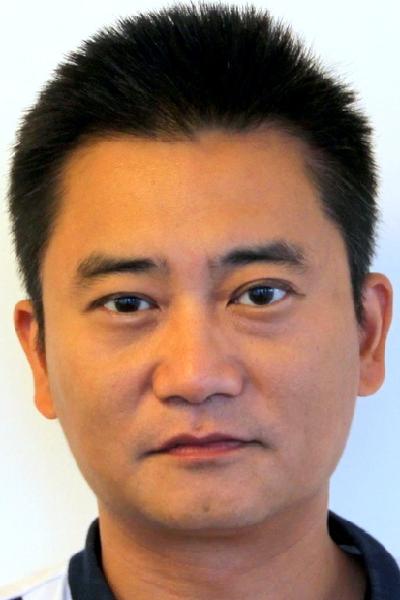 Di Yuan合作论文数Division of Computing Science, Department of Information Technology, Uppsala University19
 Wenbo Liu (刘文波)合作论文数Department of Measuring and Testing Engineering, College of Automation Engineering, Nanjing University of Aeronautics and Astronautics12
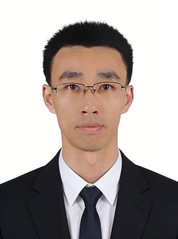 Juncheng Jia (贾俊铖)合作论文数School of Computer Science & Technology, Soochow University12
 Hongmei Yan (颜红梅)合作论文数School of Life Science and Technology, University of Electronic Science and Technology of China10
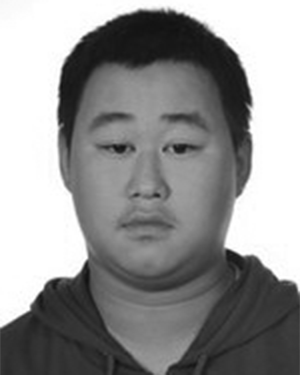 Zhanwei Yu合作论文数9
 Siwei Feng (冯思为)合作论文数School of Computer Science&Technology, Soochow University7
 Mianxiong Dong (董冕雄)合作论文数Emerging Networks and Systems Laboratory, Department of Sciences and Informatics, Muroran Institute of Technology7
 Pingzhi Fan (范平志)合作论文数School of Information Science and Technology, Southwest Jiaotong University6
 Jiyong Zhang (张继勇)合作论文数Intelligent Information Processing Laboratory, Hangzhou Dianzi University6
 Yi Zhao合作论文数5
 Xian Wang合作论文数Key Laboratory of Carbon Materials of Zhejiang Province College of Chemistry and Materials Engineering, Wenzhou University4Yi Huang合作论文数3
 Keqin Li (李克勤)合作论文数Department of Computer Science, State University of New York;College of Computer Science and Electronic Engineering, Hunan University3
 Dongyu Chen (陈冬宇)合作论文数Business School, Soochow University3
 Han Yu (于涵)合作论文数College of Computing and Data Science, Nanyang Technological University3
 Yongjie Li (李永杰)合作论文数School of Life Science and Technology, University of Electronic Science and Technology of China3
 Lei You (由磊)合作论文数Department of Engineering Technology, Technical University of Denmark;CSPaper3Libang Zhao合作论文数2Shihui Ji合作论文数2Chenran Jiang合作论文数2FengXiang Wen合作论文数2Yunkai Zhao合作论文数2
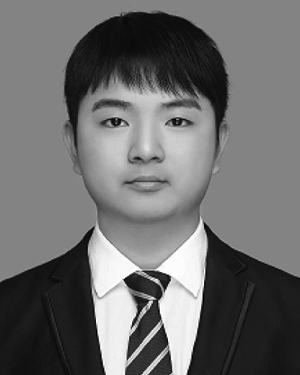 Long Qin合作论文数2
 Alysa Tan合作论文数2Lai-sheng TONG (佟来生)合作论文数2
 Bin Xu (许斌)合作论文数School of Internet of Things, Nanjing University of Posts and Telecommunications2
 Jun Li (李俊)合作论文数School of Advanced Manufacturing, Fuzhou University;Haixi Institute, Chinese Academy of Sciences2
 Jin Qi (亓晋)合作论文数School of Internet of Things, Nanjing University of Posts and Telecommunications2
 Yi Shi (石毅)合作论文数Sichuan Provincial People's Hospital;Medical School, University of Electronic Science and Technology of China2
 Xianshi Zhang (张显石)合作论文数School of Life Science and Technology, University of Electronic Science and Technology of China2
 Fei Yan (严飞)合作论文数Shenzhen Institute of Advanced Technology, Chinese Academy of Science;University of Chinese Academy of Sciences2
 Guangning Wu (吴广宁)合作论文数School of Electrical Engineering, Southwest Jiaotong University;Institute of Future Technology, Southwest Jiaotong University2Yuanlu Chen合作论文数1Feng Wu合作论文数1Mingjie Sun合作论文数1Xian Zhou合作论文数1Wentao Mu合作论文数1Chunyu Zhao合作论文数School of Information Science and Technology, Southwest Jiaotong University1Chao Huo合作论文数1Francesco Rundo合作论文数1Huiyu Duan合作论文数Department of Electronic Engineering, School of Electronic Information and Electrical Engineering, Shanghai Jiao Tong University1Zhiwei Teng (滕志伟)合作论文数1Yichuan Liu合作论文数1Concetto Spampinato合作论文数1




