During the course of the last ten years the political economy of the world-system has emerged as a major field of inquiry within social science in general and within sociology in particular. At the heart of the development of this new field has been the documentation of the patterns of the capitalist worldeconomy, a historical system marked by a world-scale division of labor and phases of expansion and contraction. Although there are an increasing number of scholars of social change who have come to accept the premises of an organizing capitalist world-economy for their accounts of trends and events occurring in the nineteenth and twentieth centuries, there remains considerable dispute about the very existence of a world-economy in the sixteenth, seventeenth,
Cadenas productivas en la economía-mundo antes de 1800.
1 制度のヴェクトル—1945‐90年(国家間システム;世界生産;世界労働力;世界人間福祉;国家の社会的凝集力;知の構造) 2 概観(1945‐90年の世界を概観する;1990‐2025年の世界を展望する)
* Preface * 1. The World System: Is there a Crisis? - Terence K Hopkins and Immanuel Wallerstein * PART I: THE PRINCIPAL INSTITUTIONAL VECTORS, 1945-1990 * 2. The Nation-State System - Thomas Reifer and Jamie Sadler * 3. The World-Economy and its Production System - Satoshi Ikeda * 4. The World Labour Force - Faruk Tabak * 5. Human Welfare: Health, Education and Nourishment - Sheila Pelizzon and John Casparis * 6. The Social Cohesion of Societies - Georgi M. Derluguian * 7. Structures of Knowledge: Changing Intellectual Paradigms - Richard Lee * PART II: OVERVIEW OF THE MAIN TRAJECTORIES * 8. The Global Picture: 1945-1990 - Immanuel Wallerstein * 9. The Global Possibilities: 1990-2025 - Immanuel Wallerstein * Bibliography * Index
Papers deal with three central issues in the study of the capitalist world economy: the long waves, cycles in the process of the international economy; the role class plays in peripheralization of countries; and an holistic view of the world economy.
In his well known but often neglected conclusion to Book I of The Wealth of Nations, Adam Smith defined interests of the three great, original and constituent orders of every civilized society, that is, those who live by rent, those who live by wages, and those who live by profit (1961: I, 276). His argument was that interests of first two orders coincide with general interest of society because, according to his analysis, real value of both rents and wages rises with prosperity and falls with economic decline of society. The ♦This paper Was originally presented at Fourth International Colloquium on World-Economy, Groups in World Perspective: The Imperatives of Endogenous Development, sponsored by Fernand Braudel Center for Study of Economies, Historical Systems, and Civilizations; Maison des Sciences de
CORES AND PERIPHERIES, metropoles and hinterlands, development and underdevelopment, and dependency are related themes which have become increasingly prominent in the socio-economic literature of the last decade or so. These concepts arise out of a variety of disciplines, ideologies, and schools and amount at present to an inchoate collection of disparate ideas which cries out for overview, some way of welding a potentially valuable series of approaches into a cohesive and forceful whole. Certainly the social sciences urgently require a way of directing thought so that the world as it exists today becomes more comprehensible. A framework is needed within which multidisciplinary studies of the current social and economic order can work with, rather than against, one another. An enormous body of literature has been devoted to core-periphery, to the
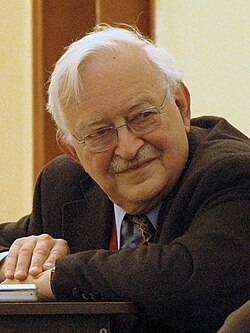 Immanuel Wallerstein合作论文数Yale University7
 m l ferrer合作论文数1r bourgeois合作论文数1j gutierrez castillo合作论文数1n t cova marin合作论文数1j m garro合作论文数1cayetano collado sanchez合作论文数1p ten brink合作论文数1c schroterschlaack合作论文数1j a lacerra espino合作论文数1w a mastersb合作论文数1o mora alfaro合作论文数1a r acevedo合作论文数1r alfaro araya合作论文数1o johansson stenman合作论文数1p caro cayado合作论文数1m ndoumbe合作论文数1j a castillo umana合作论文数1d zeaser合作论文数1x sala i martin合作论文数1d m urriola escudero合作论文数1a mestre m合作论文数1j gobbi合作论文数1u lorena合作论文数1l r rosales合作论文数1c nesshover合作论文数1w evison合作论文数1n van de walle合作论文数1g palavicini合作论文数1a rojas bourrillon合作论文数1g meini sponza合作论文数1f vorhies合作论文数1a vakrou合作论文数1l mesalles合作论文数1m kallesoe合作论文数1e galarza contreras合作论文数1c van der lugt合作论文数1k i c miyajil合作论文数1m l jimenez合作论文数1p d t alvim合作论文数1a a however合作论文数1f cartin brenes合作论文数1recops y eds合作论文数1j a marini合作论文数1paul a samuelson合作论文数1
 Enrique Murgueitio合作论文数1j a martini合作论文数1l arano合作论文数1j gockowski合作论文数1




