This chapter contains sections titled: Introduction Mathematical Framework The Simplest Description Solar Wind Stream Interactions Energetics of the Coronal Expansion: Transport Processes Energetics of the Coronal Expansion: Energy Addition The Magnetic Field Chemical Composition and Ionization State Non-Steady Processes Kinetic Description Concluding Remarks Acknowledgements
The three‐dimensional (3‐D) density structure of the solar corona is a fundamental boundary condition on the solar wind. Most easily applied models of the global coronal density have been restricted to date to axisymmetric 2‐D cases. We present here a 3‐D model made up of a superposition of multiple streamers, having distinct gaussian widths in longitude and latitude and both longitudinal and latitudinal dependence of the neutral lines implicit beneath the streamer cores. Nonradiality of streamers and solar B‐angle tilt are also explicitly treated. We show how this simple model can capture many of the general properties of coronal white light observations and demonstrate how such a model can assist in the interpretation of the multiple views on coronal structures such as will be provided by the upcoming STEREO mission.
We are developing a time stationary self-consistent 2D MHD model of the solar corona and solar wind that explicitly solves the energy equation, using a semi-empirical 2D MHD model of the corona to provide an empirically determined effective heat flux q(eff) (i.e., the term effective means the possible presence of wave contributions). But, as our preliminary results indicate, in order to achieve high speed winds over the poles we also need to include the empirically determined effective pressure P-eff as a constraint in the momentum equation, which means that momentum addition by waves above 2 R-S are required to produce high speed winds. At present our calculations do not include the P-eff constraint. The estimates of P-eff and q(eff) come from the semi-empirical 2D MHD model of the solar corona by Sittler and Guhathakurta (1999a,2002) which is based on Mk-III, Skylab and Ulysses observations. For future model development we plan to use SOHO LASCO, CDs, EIT, UVCS and Ulysses data as constraints for our model calculations. The model by Sittler and Guhathakurta (1999a, 2002) is not a self-consistent calculation. The calculations presented here is the first attempt at providing a self-consistent calculation based on empirical constraints.
 Holly R. Gilbert合作论文数12Joan Burkepile合作论文数11Giuliana De Toma合作论文数6
 Egil Leer合作论文数Institute of Theoretical Astrophysics, The Faculty of Mathematics and Natural Sciences, University of Oslo6
 Madhulika Guhathakurta合作论文数NASA Headquarters Washington D.C.6susan e gibson合作论文数5
 Leon Ofman合作论文数Goddard Space Flight Center, National Aeronautics and Space Administration;Department of Physics, School of Arts and Sciences, The Catholic University of America5
 E. C. Sittler合作论文数5e leer合作论文数4
 Joseph M. Davila合作论文数4O. C. St. Cyr合作论文数goddard space flight center3
 Sarah Gibson合作论文数High Altitude Observatory, National Center for Atmospheric Research3
 Ruth M Skoug合作论文数3
 Boon Chye Low合作论文数NCAR3
 Robert Rosner合作论文数Department of Physics, University of Chicago;Clare Hall, Cambridge University3Andrzej Fludra合作论文数Rutherford Appleton Laboratory3D. Tod Woods合作论文数3
 J.R. (Randy) Jokipii合作论文数Lunar and Planetary Laboratory, College of Science, The University of Arizona3
 Barbara June Thompson合作论文数Laboratory for Solar & Space Physics, NASA Goddard Space Flight Center3
 Peter M. Banks合作论文数Utah State University3Yk Ko合作论文数2c k goertz合作论文数2
 Darren De Zeeuw合作论文数NASA Goddard Space Flight Center2
 Aaron Ridley合作论文数Department of Climate and Space Sciences and Engineering, College of Engineering, University of Michigan-Ann Arbor2A. J. Hundhausen合作论文数2
 Tamas I. Gombosi合作论文数Climate and Space Sciences and Engineering Department, College of Engineering, University of Michigan;Aerospace Engineering Department, College of Engineering, University of Michigan2David Alexander合作论文数2
 Kenneth Powell合作论文数Michigan Institute for Computational Discovery & Engineering, University of Michigan2Keith B. Macgregor合作论文数2
 Donald M. Hassler合作论文数2
 Andrew L. Stanger合作论文数2
 D. F. Elmore合作论文数2C. R. Clauer合作论文数2
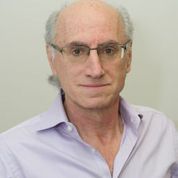 Spiro Kosta Antiochos合作论文数Goddard Space Flight Center, National Aeronautics and Space Administration2
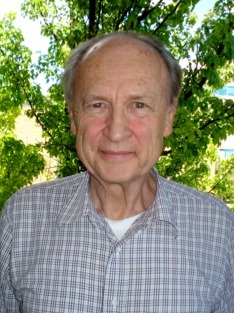 Bela G. Fejer (Bela Fejer)合作论文数Center for Atmospheric & Space Sciences, College of Science, Utah State University;Physics Department, College of Science, Utah State University2
 Viggo Haraldson Hansteen合作论文数Rosseland Centre for Solar Physics, Institute of Theoretical Astrophysics, The Faculty of Mathematics and Natural Sciences, University of Oslo2
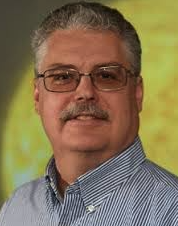 Charles Nickolos Arge合作论文数Solar Physics Laboratory, NASA Goddard Space Flight Center2
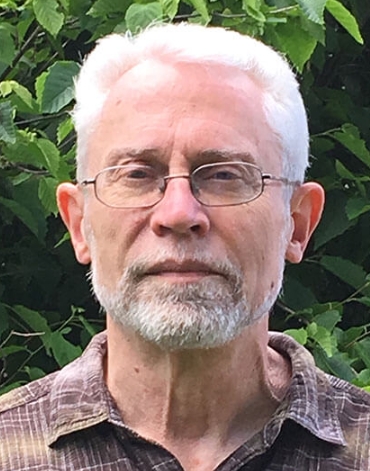 John Raymond合作论文数Smithsonian Astrophysical Observatory;Center for Astrophysics, Harvard & Smithsonian2
 Lee, Lou-Chuang (李羅權)合作论文数Institute of Earth Sciences, Academia Sinica2
 Leonard Strachan合作论文数2J. A. Darnell合作论文数1K. Viherkanto合作论文数1E. Dimarellis合作论文数1g detoma合作论文数1H. Huomo合作论文数1SE Gibson合作论文数1zhongwei zhu合作论文数1J. P. Goutail合作论文数1T. Summanen合作论文数1




