Parasitoid biological control agents rely heavily on olfaction to locate their hosts. Chemical cues associated with hosts and non-hosts are known to influence the expression of host preferences and host-specificity. A better understanding of how and why parasitoids attack some species and not others, based on volatile organic compounds associated with potential hosts, can provide key information on the parasitoid’s host preferences, which could be applied to pre-release risk assessments for classical biological control agents. Electrophysiological techniques such as electroantennography (EAG) and GC-EAD (gas chromatography coupled with electroantennographic detection) are widely used to identify bioactive semiochemicals. But the application of these techniques to understanding how chemical ecological cues mediate parasitoid host specificity has not been as thoroughly explored. We conducted GC-EAD and EAG studies to identify olfactory-active compounds associated with adult females of nine stink bug species from Aotearoa/New Zealand on the antennae of three closely related parasitoid species: Trissolcus japonicus Ashmead, a pre-emptively (= proactively) approved biocontrol agent against brown marmorated stink bug; T. basalis (Wollaston), a biocontrol agent introduced against Nezara viridula L. in 1949; and T. oenone Johnson, a native Australasian pentatomid parasitoid. Eight compounds associated with stink bugs elicited antennal responses from all three parasitoids, and we were able to identify seven of these. (E)-2-hexenal, (E)-4-oxo-2-hexenal, (E)-2-octenal and (E)-2-decenal generally elicited stronger responses in the three parasitoids, while n-tridecane, n-dodecane, and (E)-2-decenyl acetate elicited weaker responses. We discuss how and why the results from electrophysiological experiments can be applied to non-target risk assessments within biological control programmes.
Many animals lay their eggs in clusters. Eggs on the periphery of clusters can be at higher risk of mortality. We asked whether the most commonly occurring clutch sizes in pentatomid bugs could result from geometrical arrangements that maximize the proportion of eggs in the cluster’s interior. Although the most common clutch sizes do not correspond with geometric optimality, stink bugs do tend to lay clusters of eggs in shapes that protect increasing proportions of their offspring as clutch sizes increase. We also considered whether ovariole number, an aspect of reproductive anatomy that may be a fixed trait across many pentatomids, could explain observed distributions of clutch sizes. The most common clutch sizes across many species correspond with multiples of ovariole number. However, there are species with the same number of ovarioles that lay clutches of widely varying size, among which multiples of ovariole number are not over-represented. In pentatomid bugs, reproductive anatomy appears to be more important than egg mass geometry in determining clutch size uniformity. In addition, within this group of animals that has lost most of its variation in ovariole number, clutches with a broad range of shapes and sizes may still be laid.
Retrospective host range testing is essential for understanding the physiological host range of introduced biological control agents (BCAs) and updating forecasts of non-target risks. It is especially important to conduct this work if there was no host range testing prior to release of the agent. Trissolcus basalis Wollaston was released in New Zealand in 1949 against green vegetable bug (Nezara viridula [L.]), but host range testing was never undertaken, and subsequent work in the 1960s was only of a qualitative nature and remains incomplete. The hostparasitoid complex between New Zealand pentatomids, T. basalis, and the native pentatomid parasitoid Trissolcus oenone Dodd, is therefore poorly understood. We conducted no-choice oviposition tests between the two resident Trissolcus species and all available New Zealand pentatomid species to characterise the physiological (=fundamental) host ranges of these parasitoids. We present the results of the first retrospective host-specificity study on T. basalis in New Zealand. Our results show T. basalis attacks and develops in all nine pentatomid taxa we exposed it to (including the endemic alpine species Hypsithocus hudsonae Bergroth), while T. oenone attacks and develops in seven out of eight pentatomid species we tested it against (and its capacity to attack H. hudsonae remains unknown). Parasitism efficiencies for all treatments exceeded 60%, while development times were similar for both parasitoids regardless of host. We discuss the importance of physiological host range testing for understanding potential non-target effects. Trissolcus japonicus Ashmead (Hymenoptera: Scelionidae) was recently approved for release in New Zealand against brown marmorated stink bug Halyomorpha halys Stal (Hemiptera: Pentatomidae), subject to its potential establishment, and we examine our results in the context of potential competition between introduced parasitoids for non-target species.
Brown marmorated stink bug (BMSB), Halyomorpha halys (Hemiptera: Pentatomidae), is a serious horticultural pest causing considerable damage to local production and international supply chains as it spreads around the world. The samurai wasp, Trissolcus japonicus (Hymenoptera: Scelionidae), is well recognised as the most promising classical biological control against BMSB. The wasp has been conditionally approved for release in New Zealand in the event the stink bug establishes here. Previous host range testing showed that all available non‐target New Zealand pentatomids except a single exotic species were accepted for oviposition and that the parasitoid was capable of parasitising the eggs of two native pentatomids at proportions similar to BMSB. Only one New Zealand species of pentatomid, the endemic alpine shield bug Hypsithocus hudsonae , was not previously tested owing to the difficulty of collecting it from the field. Here we report the results of no‐choice oviposition tests between H. hudsonae and T. japonicus , conducted in containment, to complement previous physiological host range testing of this parasitoid in New Zealand. Parasitoids emerged from 14 out of 15 egg masses, and in total, from 78 out of 83 eggs (94%). The mean sex ratio was 89% female, and no males emerged from six egg masses. H. hudsonae is confirmed as a physiological host for T. japonicus , and this finding is discussed in relation to the strengths and limitations of physiological host range studies.
The study of animal diets has benefited from the rise of high-throughput DNA sequencing applied to stomach content or faecal samples. The latter can be fresh samples used to describe recent meals or older samples, which can provide information about past feeding activities. For most invertebrates, however, it is difficult to access ‘historical’ samples, due to the small size of the animals and the absence of permanent defecation sites. Therefore, sampling must be repeated to account for seasonal variation and to capture the overall diet of a species. This study develops a method to describe the overall diet of nest-building Hymenoptera, based on a single sampling event, by analysing prey DNA from faeces accumulated in brood cells. We collected 48 nests from two species of introduced paper wasps (Polistes chinensis Fabricius and P. humilis Fabricius) in the urban and peri-urban areas of Auckland, New Zealand and selected two samples per nest. One from brood cells in the outer layer of the nest to represent the most recent diet and one from brood cells in an inner layer to represent older diet. Diet differed between species, although both fed mainly on Thysanoptera, Lepidoptera and Acariformes. Prey taxa identified to species level included both agricultural pests and native species. Prey communities consumed were significantly different between inner and outer nest samples, suggesting seasonal variation in prey availability and/or a diversification of the wasps’ diet as the colony grows. We also show for the first time potential predation of marine organisms by Polistes wasps. Our study provides field evidence that Polistes wasps feed on agricultural pests, supporting the hypothesis that some social wasp species could have a suppressing effect on agricultural pests. The proposed methodology is readily applicable to other nest-building Hymenoptera and has the potential to provide comprehensive knowledge about their diet with minimum sampling effort. Such knowledge is essential to measure the ecological impact of invasive Vespidae and support the conservation of native invertebrate biodiversity.
I believe the top three questions facing taxonomy today all relate to the health and future of the discipline itself. 1. How do we ensure taxonomy is valued? 2. How do we build and maintain taxonomic capability? 3. How do we ensure taxonomy benefits from emerging opportunities?
Natural history specimen data collected and/or identified by Thomas Edward Saunders, https://orcid.org/0000-0003-1780-0314. Claims were made on Bionomia, https://bionomia.net using specimen data from the Global Biodiversity Information Facility, https://gbif.org.
Parasitoid wasps are a mega-diverse, ecologically dominant, but poorly studied component of global biodiversity. In order to maximise the efficiency and reduce the cost of their collection, the application of optimal sampling techniques is necessary. Two sites in Auckland, New Zealand were sampled intensively to determine the relationship between sampling effort and observed species richness of parasitoid wasps from the family Ichneumonidae. Twenty traps were deployed at each site at three different times over the austral summer period, resulting in a total sampling effort of 840 Malaise-trap-days. Rarefaction techniques and non-parametric estimators were used to predict species richness and to evaluate the variation and completeness of sampling. Despite an intensive Malaise-trapping regime over the summer period, no asymptote of species richness was reached. At best, sampling captured two-thirds of parasitoid wasp species present. The estimated total number of species present depended on the month of sampling and the statistical estimator used. Consequently, the use of fewer traps would have caught only a small proportion of all species (one trap 7–21%; two traps 13–32%), and many traps contributed little to the overall number of individuals caught. However, variation in the catch of individual Malaise traps was not explained by seasonal turnover of species, vegetation or environmental conditions surrounding the trap, or distance of traps to one another. Overall the results demonstrate that even with an intense sampling effort the community is incompletely sampled. The use of only a few traps and/or for very short periods severely limits the estimates of richness because (i) fewer individuals are caught leading to a greater number of singletons; and (ii) the considerable variation of individual traps means some traps will contribute few or no individuals. Understanding how sampling effort affects the richness and diversity of parasitoid wasps is a useful foundation for future studies.
Parasitoid wasps are mega-diverse, ecologically dominant, but poorly studied components of global biodiversity. Despite their intensive application within pest management as biocontrol agents, little is known about native species. To understand their basic biology they must be collected in sampling programs. However, invertebrate surveys are increasingly subject to funding and time constraints that often preclude complete faunal inventories. In order to maximise the efficiency and reduce the cost of their collection, the application of optimal sampling techniques within a Rapid Biodiversity Assessment framework is proposed. Two sites in the Waitakere Ranges were sampled three times over the summer. An intensive sampling effort of 840 Malaise-trap-days over a three month period was used to determine the relationship between sampling effort and observed species richness. Rarefaction techniques and non-parametric estimators were used to predict true species richness and to evaluate the completeness of sampling. Results show that an intensive Malaise-trapping regime over the summer can capture two-thirds of parasitoid wasp species present. Sampling recommendations are provided to guide optimal usage of Malaise traps for both ecological studies and faunal inventories. Modern taxonomic methods are reviewed and a new species of parasitoid wasp is described, representing the first New Zealand species from the genus Lusius (Ichneumonidae: Ichneumoninae). Morphological measurements confirm the new species represents a significant range expansion for the genus. Greater collaboration between ecologists and taxonomists is encouraged, in order to make more efficient use of resources, data, and expertise unique to each discipline. This is the first study to investigate the relationship between sampling effort and parasitoid wasp diversity in New Zealand. It shows that very high sampling effort fails to catch all species present. Parasitoid wasps are known to be keystone species that show promise as indicators of environmental quality and as surrogates for the diversity of other taxa. The development of optimal sampling strategies will therefore provide an important foundation for their future study.
Lusius malfoyi n. sp. (Hymenoptera: Ichneumonidae) is described. It is an endemic New Zealand species and the first species of the genus to be described from the Australasian region.Zoobank.org:pub:21DCEA3E-C32B-4915-A02B-0212A35E496D
 Gonzalo A. Avila合作论文数Better Border Biosecurity Collaboration3
 Greg Holwell合作论文数School of Biological Sciences, Faculty of Science, The University of Auckland3
 Stephane Boyer合作论文数Bio-Protection Research Centre, Lincoln University2
 Darren Ward合作论文数School of Biological Sciences;Tamaki Campus;University of Auckland;School of Biological Sciences, University of Auckland2
 Jacqueline Beggs合作论文数School of Biological Sciences, Faculty of Science, The University of Auckland2
 Travis Glare合作论文数AgResearch2
 Eduardo Punscke合作论文数1Marcela Lietti合作论文数1Celina A. Fernandez合作论文数1Clarissa Capko合作论文数1Michely Ferreira Santos Aquino合作论文数1
 Paul Abram合作论文数Agriculture and Agri-Food Canada, Agassiz Research and Development Centre1Kim A. Hoelmer合作论文数1
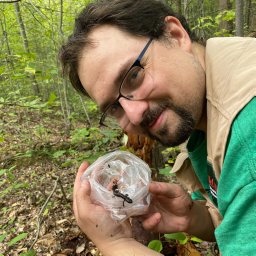 Eric Guerra-Grenier合作论文数Redpath Museum, McGill University1
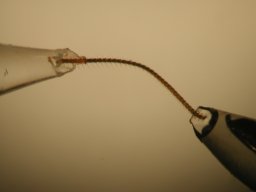 Manning Lee-Anne M合作论文数1
 Mariecaroline Lefort合作论文数Bio-Protection Research Centre, Lincoln University1
 Antonino Cusumano合作论文数1
 Jacques Brodeur合作论文数Institut de Recherche en Biologie Vegetale, Departement de Sciences Biologiques, Faculte Des Arts Et Des Sciences, Universite de Montreal1
 Ian C W Hardy合作论文数Department of Agricultural Sciences, University of Helsinki1
 Fernanda Cingolani合作论文数Pest Ecology and Biological Control Department, CEPAVE (CCT La Plata CONICET-UNLP),1
 Patrick De Clercq合作论文数Department of Plants and Crops, Faculty of Bioscience Engineering, Universiteit Gent1Jinping Zhang合作论文数1Maria Carolina Blassioli Moraes合作论文数Embrapa Recursos Genéticos e Biotecnologia;Universidade de Brasília1Tara D. Gariepy合作论文数agriculture and agri food canada1
 Raul Alberto Laumann合作论文数Embrapa Genetic Resources & Biotechnology1J. E. Mcpherson合作论文数1
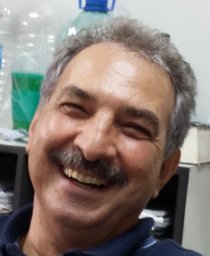 Miguel Borges合作论文数Embrapa Recursos Genéticos e Biotecnologia1
 Kye Chung Park合作论文数1
 Tim Haye合作论文数CABI1
 Elizabeth Beers合作论文数1




