There is much current interest in electric power distribution system reliability and power quality. Reliability is increasingly assessed using the indices SAIFI, SAIDI, and CAIDI. More recently, a similar index, MAIFI, has been proposed to assess the level of momentary interruptions on a distribution system. Power distribution companies are being asked to improve their performance by lowering these indices. The indices, however, can give conflicting results to system changes, and designers find it difficult to compare competing design options. This paper proposes a single index which combines the performance information captured by SAIFI, SAIDI, CAIDI, and MAIFI. This index incorporates customer preferences on interruption frequency and duration, and is readily adaptable to local conditions and preferences. The paper includes a detailed case study that demonstrates the performance of the proposed index relative to these existing reliability and power quality indices.
This chapter contains sections titled: Introduction Harmonic definition Harmonic effects Proposed limit methodologies Capacitor aging Partial discharge Thermal heating Conclusions References
To facilitate more extensive adoption of renewable distributed electric generation, the U.S. Department of Energy launched the Renewable Systems Interconnection (RSI) study during the spring of 2007. The study addressed the technical and analytical challenges that must be addressed to enable high penetration levels of distributed renewable energy technologies. This RSI report focuses on the need for advanced distribution engineering analytical tools. High-penetration PV will change the way that distribution systems perform and provide both new capabilities and challenges for reliable, quality performance. The most fundamental change is the presence of generation on a system designed strictly to serve loads.
Some of the most remarkable issues related to interharmonic theory and modeling are presented. Starting from the basic definitions and concepts, attention is first devoted to interharmonic sources. Then, the interharmonic assessment is considered with particular attention to the problem of the frequency resolution and of the computational burden associated with the analysis of periodic steady-state waveforms. Finally, modeling of different kinds of interharmonic sources and the extension of the classical models developed for power system harmonic analysis to include interharmonics are discussed. Numerical results for the issues presented are given with references to case studies constituted by popular schemes of adjustable speed drives.
This paper explores concepts for advanced series hybrid vehicle propulsion systems. These concepts are variations on the variable voltage variable frequency (VVVF) concept, where the electrical bus frequency and voltage vary proportionally with the system operating point. The concepts involve doubly fed machines. Each of these concepts has the potential to provide a full series hybrid drive with substantially reduced needs for electronic power conversion. The paper discusses the basic structures and performance of these machines, and provides a tabulation of the machine and power converter requirements over a typical operating range. Finally, conclusions are offered regarding the relative merits of these schemes.
High impedance grounding of direct connected generators is considered in this paper, along with the detection of ground faults within the generator zone of protection. This paper discusses several possible grounding schemes, and compares the damage measure for these devices. Finally, the paper considers a method of detecting the location of ground faults that do occur on the system.
The proposed integrated power systems (IPS) of navy ships is based on an ungrounded system. However the natural capacitance of the cable and the EMI filters provide ground paths to the ship's hull. There is thus a "virtual ground" between the modules of the IPS. The fault current is very low for a single line to ground fault in this ungrounded system allowing continuous operation but also making fault detection difficult. In this paper a method of ground fault detection using wavelets is introduced. The ground fault conditions are simulated using PSPlCE and fault detection implemented with Daubechies wavelets. It is shown that ground faults can be detected by wavelet analysis of the line to line voltages.
Variable voltage, variable frequency (VVVF) systems have been proposed for use in marine propulsion systems. This paper investigates the use of these systems in cases where there is a significant ship service load, including pulse power loads. The paper provides a steady state analysis of the VVVF system showing overall fuel savings as compared to the conventional electric drive systems. The paper also presents simulations suggesting that the VVVF system has the capability to serve significant levels of pulse loads.
PWM inverters are increasingly being applied to general power system loads, both as uninterruptible power supplies (UPS) and in serving dedicated load from alternative energy sources. The size of motors that can be served from these inverters is limited by the inrush requirements of the motors and the limited overload capability of the inverters. This paper presents two methods to limit motor starting inrush currents within an appropriate range, in order to allow increased motor starting capability without exceeding the inverter overload limits. Both methods work by introducing voltage sags during the motor starting. Comparisons are made between the two methods, and are also compared with the existing method which has no current limitation. Both methods are also compared with acceptable sag and harmonic distortion limits. Conclusions are offered regarding the viability of these methods.
This paper provides a detailed modeling of the variable voltage variable frequency drive system (VVVF) proposed by previous research. The AC/DC converter performance at low speed is tested and propulsion drive startup has been evaluated. The ability of the drive to provide power regeneration has been investigated, and the simulations suggest that the VVVF drive would have the ability to support substantial levels of pulse loads.
This paper documents the modeling of harmonic sources with nonlinear voltage-current characteristics such as transformers, iron-core reactors, rotating machines, arc furnaces, energy efficient lightings, and some household electronic appliances. The harmonic generating characteristics of these apparatus are reviewed. Different modeling techniques are summarized and suggestions for the use of different models are also provided whenever possible.
This paper reviews the common practice and analytical models for the representation of aggregate linear load in harmonic propagation and distortion studies. Simulation results in this paper demonstrate the high sensitivity of harmonic propagation and distortion to the model type used to represent the load. Comparison of the several load models in the literature shows a significant difference on the system impedance around the dominant resonance. The paper recommends a comprehensive modeling approach that accounts for all major components of the modern load including electronic load and background distortion.
This paper provides a perspective on limiting factors on short term harmonic levels. The difficulties of applying a short term THD limit on capacitors is apparent. Clearly, rapid variations in distortion levels fall into the category of transients rather than harmonics. As the speed of the variations decrease, at some point the distortion is more clearly described as being a set of harmonics of varying magnitude rather than a transient phenomena.
This paper describes a stabilization effect after installating an adjustable speed generator (ASG) in a multi-machine power system. A personal computer based ASG module has been developed for the simulations in parallel with the analog power system simulator in the Research Laboratory of the Kyushu Electric Power Co. The three-phase instantaneous value based ASG model has been developed in the Matlab/Simulink environment for its detailed and real time simulations, which have been performed on a digital signal processor (DSP) board with AD and DA conversion interfaces installed in a personal computer (PC). Simulational results indicate the highly improved overall stability of the multi-machine power system after installating the ASG.
Integrated electric power systems (IPS) are increasing in number and size. In these systems, a small number of generators supply local load through one or more electronic conversions. In many cases, the load includes one or more devices whose rating is a significant fraction of the generator rating. These systems can either be stand alone or grid connected systems.Equipment grounding and ground path currents have been and continue to be an issue in IPS development. This study presents an in depth analysis of ground path current flows for a generator/rectifier/drive system, which employs a high impedance ground on the generator neutral. The study identifies the generator neutral capacitor and the motor stray capacitance as the primary elements influencing ground path current flow, and provides a parametric study of these parameters and their influence on ground current and lineground voltage. These results provide information for IPS designers on ground path system design.
As the technology of the power electronics has developed, a new concept of small AC system was presented and studied. In this kind of stand-alone power system, the system is divided into several modules. The load is no longer connected to the tie line directly. The power flows through a set of AC-DC-AC equipments in order to increase flexibility In the architectural system design and optimize the fuel efficiency. The load becomes a constant power type and it may increase the system instability as well. In this paper, the authors tried to study the system with the theories of voltage collapse by using a mathematical model. Finally, the authors apply the FACTS devices as the solution of the stability problem in such a kind of system based on the research result from the mathematical model.
This paper describes the results of a measurement program that documents the short-term load effects found in typical residential loads. The study shows that residential load, when considered over 20 cycle data windows, the residential load exhibits a large number of rapid load changes. These rapid changes are hidden when the more typical one minute or 15 minute load data are considered. Knowledge of these rapid load changes are important for the development of distributed generation technologies which are currently under development.
 Takashi Hiyama (檜山隆)合作论文数Kumamoto University8
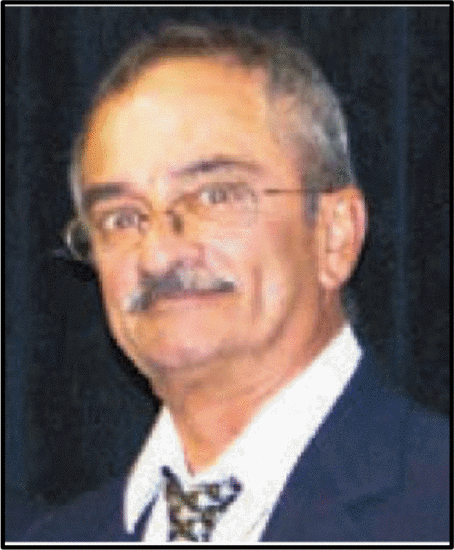 Satish J Ranade合作论文数Electrical and Computer Engineering Department, Klipsch School of Electrical and Computer Engineering, New Mexico State University7
 Wilsun Xu (徐文远)合作论文数School of Electrical Engineering, Shandong University;Department of Electrical and Computer Engineering, Faculty of Engineering, University of Alberta7
 P. Ribeiro合作论文数6C. Hatziadoniu合作论文数6
 Gary W. Chang (張文恭)合作论文数Department of Electrical Engineering, College of Engineering, National Chung Cheng University6Ron Burch合作论文数6M. Halpin合作论文数5
 E. Gunther合作论文数Laboratoire de Gdndtique Cellulaire, du Colldge de France et de l'Institut Pasteur;Laboratoire d'Immunohematologie et Laboratoire de Cytogdndtique;Centre Hayen;Centre Hayen, Laboratoire de Gdndtique Cellulaire du Colldge de France et de l'Institut Pasteur5
 J. Wikston合作论文数4
 Neville R. Watson合作论文数Department of Electrical and Computer Engineering, College of Engineering, University of Canterbury4
 Aurelio Medina合作论文数Facultad de Ingeniería;Eléctrica División de Estudios de Posgrado;FIE, Universidad Michoacana de San Nicolás de Hidalgo;Edificio de la División de Estudios de Posgrado de la FIE, Universidad Michoacana de San Nicolás de Hidalgo4R. Mukundan合作论文数3M. Marz合作论文数3T. Hiyama合作论文数3Y. Liu合作论文数3M. Grady合作论文数3Y Liu合作论文数3Dunding Zuo合作论文数3
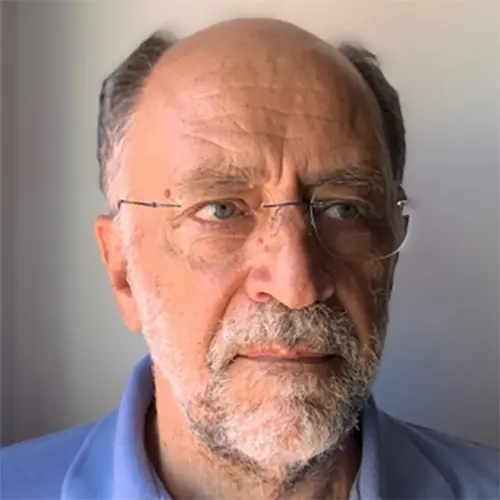 Alfredo Testa合作论文数Dipartimento di Ingegneria, Universita degli Studi della Campania Luigi Vanvitelli3
 Peter W. Lehn合作论文数The Edward S. Rogers Sr. Department of Electrical & Computer Engineering, Faculty of Applied Science & Engineering, University of Toronto3AA MAHMOUD合作论文数3
 Venkata Dinavahi合作论文数Department of Electrical & Computer Engineering, Faculty of Engineering, University of Alberta3a bonner合作论文数2l hopkins合作论文数2T Grebe合作论文数2M. S. A. A. Hammam合作论文数2Thomas S Key合作论文数2Phil Barker合作论文数2Tr Sims合作论文数2david crudele合作论文数2Xia Yan合作论文数2
 Grady, W.M.合作论文数2Weimer, J.A.合作论文数2
 Nicholas W Miller合作论文数HickoryLedge LLC.2
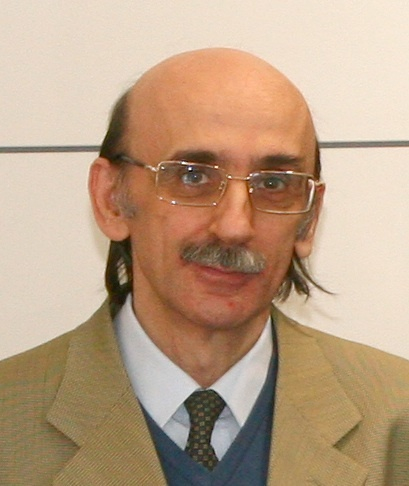 Guido Carpinelli合作论文数Universita degli Studi di Napoli Federico II2Dominic Maratukulam合作论文数2James a Svoboda合作论文数2M. F. Akram合作论文数2Manal F. Abou Taleb合作论文数National Center for Radiation Research and Technology P.O. Box 29 Nasr City2M. Shawky A. A. Hammam合作论文数2
 Jean Mahseredjian合作论文数Department of Electrical Engineering, Polytechnique Montréal;Institute for Data Valorization, Polytechnique Montréal2M. Lowenstein合作论文数2
 Roberto Langella合作论文数seconda universita degli studi di napoli2M. Fayyaz Akram合作论文数2Kazibwe, W.E.合作论文数1S. Kouzuma合作论文数1Edward Woods合作论文数1Vilas Nene合作论文数1




