Biochemist Thomas Sollner discusses cellular transport mechanisms.
Intracellular vesicular transport involves targeting of vesicles to their correct destination and subsequent fusion with the target membrane. These processes employ unique compartment-specific proteins in combination with general components which act at several transport steps. This review will summarize recent progress made in identifying such a machinery whose assembly and activity is modulated by a variety of regulatory proteins.
Rab proteins are generally required for transport vesicle docking. We have exploited yeast secretion mutants to demonstrate that a rab protein is required for v-SNAREs and t-SNAREs to assemble. The absence of the rab protein in the docking complex suggests that, in a broad sense, rab proteins participate in a reaction catalyzing SNARE complex assembly. In so doing, rab proteins could help impart an additional layer of specificity to vesicle docking. This mechanism likely involves the Sec1 homolog Sly1, which we identified in isolated docking complexes. We also report the identification of a novel v-SNARE (Ykt6p) component of the yeast ER-Golgi docking complex that has a CAAX box and is predicted to be lipid anchored. The surprising finding that docking complexes can contain many distinct species of SNAREs (Sed5p, Bos1p, Sec22p, Ykt6p, and likely Bet1p, p28, and p14) suggests that multimeric interactions are features of the fusion machinery, and may also improve the fidelity of vesicle targeting.
Neurotransmission requires the docking of synaptic vesicles to the presynaptic plasma membrane, and their signal-dependent fusion. These processes use a general 'machinery' operating at several intracellular vesicular transport steps and, in addition, use a set of unique components that characterizes this specific form of regulated secretion. This review summarizes recent progress that has significantly increased our understanding of how intracellular transport vesicles dock and fuse with their target membrane, both in the synapse and elsewhere.
Targeting of preproteins to mitochondria is mediated by the receptor complex in the outer membrane that contains two import receptors and the general insertion pore with MOM38 (38-kDa mitochondrial outer membrane protein) as major constituent. As all components of the receptor complex have to be imported from the cytosol themselves, the specificity of their targeting is fundamental for the correct assembly of mitochondria. None of the receptors is involved in its own import; the precursor of the main receptor MOM19 is even targeted without any surface receptor but directly assembles with MOM38. We report that import of the precursor of MOM38 strictly depended on surface receptors. The import followed a new highly selective mechanism in that both receptors together were needed for the specific binding of the preprotein to the outer membrane surface, which was followed by its assembly into the receptor complex. These findings suggest that targeting of the mitochondrial targeting components involves a complex system of mutual specificity control, ensuring a selective assembly of the components into preexisting import sites.
Mitochondria contain a complex machinery for the import of nuclear-encoded proteins. Receptor proteins exposed on the outer membrane surface are required for the specific binding of precursor proteins to mitochondria, either by binding of cytosolic signal recognition factors or by direct recognition of the precursor polypeptides. Subsequently, the precursors are inserted into the outer membrane at the general insertion site GIP (general insertion protein). Here we report the analysis of receptors and GIP by crosslinking of translocation intermediates and by coimmunoprecipitation. Surface-accumulated precursors were crosslinked to the receptors MOM19 and MOM72, suggesting a direct interaction of preproteins with surface receptors. We identified three novel mitochondrial outer membrane proteins, MOM7, MOM8, and MOM30 that, together with the previously identified MOM38, seem to form the GIP site and are present in the mitochondrial receptor complex.
This chapter presents the general pathways for protein import into sub-mitochondrial compartments. The consensus pathways for protein sorting into the different mitochondrial compartments are presented. Nuclear encoded mitochondrial proteins are synthesized on cytoplasmic ribosomes as precursors, which usually contain N-terminal targeting (signal) sequences. These signal peptides are positively charged and have the potential to form amphipathic a-helices. Some precursor proteins, however, lack such cleavable pre-sequences, such as those destined for the mitochondrial outer membrane (OM). Specific interaction of most precursor proteins with the OM is mediated by protease-sensitive surface receptors. Neurospora crassa MOM 19 acts as the receptor for the majority of proteins analyzed so far, whereas the participation of N.crassa MOM72 has been demonstrated only in connection with the import of the ADP/ATP carrier. Translocation through or insertion into the OM is catalyzed by a number of proteins which are associated in a complex in the OM. This complex has been identified by co-immunoprecipitation with the surface receptors MOM19 or MOM72, which are part of the complex. One of its components, N.crassa MOM38, is part of a translocation site in which the precursor proteins are already deeply inserted in the OM and thus are resistant to externally added protease. The yeast counterpart of MOM38, ISP42, is essential for cell growth.
Mitochondrial protein import involves the recognition of preproteins by receptors and their subsequent translocation across the outer membrane. In Neurospora crassa, the two import receptors, MOM19 and MOM72, were found in a complex with the general insertion protein, GIP (formed by MOM7, MOM8, MOM30 and MOM38) and MOM22. We isolated a complex out of S. cerevisiae mitochondria consisting of MOM38/ISP42, the receptor MOM72, and five new yeast proteins, the putative equivalents of N. crassa MOM7, MOM8, MOM19, MOM22 and MOM30. A receptor complex isolated out of yeast cells transformed with N. crassa MOM 19 contained the N. crassa master receptor in addition to the yeast proteins. This demonstrates that the yeast complex is functional, and provides strong evidence that we also have identified the yeast MOM19.
To analyze the role of cytosolic cofactors in mitochondrial protein targeting, we prepared a chemically pure mitochondrial preprotein. When diluted out of 7 M urea, this precursor protein was efficiently imported into mitochondria without the addition of cytosolic cofactors. Extensive prewashing of mitochondria (up to 2 M KCl) did not reduce its import. Import of the purified precursor showed the characteristics of authentic mitochondrial import including use of the receptor MOM19, requirement for a membrane potential, and proteolytic processing. When the precursor was preincubated at a low concentration of urea, cytosolic cofactors were needed to preserve its import competence. We conclude that targeting of this preprotein via the mitochondrial master receptor MOM19 does not require a cytosolic signal recognition factor; cytosolic cofactors apparently have chaperone-like functions in mitochondrial protein uptake. Moreover, we found that a cleavable presequence was sufficient to direct protein import via MOM19. Together with the cofactor-independent function of MOM19, it is thus conceivable that MOM19 functions as mitochondrial presequence receptor.
The targeting of proteins to mitochondria involves the recognition of the precursor proteins by receptors on the mitochondrial surface followed by insertion of the precursors into the outer membrane at the general insertion site GIP. Most mitochondrial proteins analyzed so far use a mitochondrial outer membrane protein of 19 kilodaltons (MOM19) as an import receptor. The gene encoding MOM19 has now been isolated. The deduced amino acid sequence predicts that MOM19 is anchored in the outer membrane by an NH2-terminal hydrophobic sequence, while the rest of the protein forms a hydrophilic domain exposed to the cytosol. MOM19 was targeted to the mitochondria via a pathway that is independent of protease-accessible surface receptors and controlled by direct assembly of the MOM19 precursor with GIP.
This chapter describes the standard procedures for in vitro synthesis and import of precursor proteins. Various translocation intermediates can be generated by modifications of the standard protocol. Most translocation intermediates of mitochondrial precursor proteins are obtained by variations of a basic import scheme. Thereby, receptor sites, the GIP site, and contact sites can be titrated and their properties can be analyzed. Translocation intermediates are important tools to analyze the function of putative components of the import apparatus that were or will be identified by biochemical means (for example, inhibitory antibodies) or by genetic means (such as mutants defective in import). In fact, the use of translocation intermediates is one of the most important controls to define a certain inhibitory (or stimulatory) condition and characterize its specificity by showing that only a distinct import step is affected. The analysis of subreactions of mitochondrial protein import, such as binding of precursor proteins to receptors, membrane insertion, or membrane translocation of precursors, provides the basis for a reconstitution of these reactions with purified components.
The specific targeting of precursor proteins synthesized in the cytosol to various cell organelles is a central aspect of intracellular protein traffic. Several hundred different proteins are imported from the cytosol into the mitochondria. Recent studies have identified the mitochondrial outer membrane proteins MOM19, MOM72, MOM38 (≈ISP42) and p32 which have a role in initial steps of protein import. The first three components are present in a multi-subunit complex that catalyses recognition and membrane insertion of precursor proteins.
The mitochondrial import receptors MOM19 and MOM72 form a complex with two other proteins of the mitochondrial outer membrane, MOM38 and MOM22. This receptor complex is involved in recognition, membrane insertion and translocation of precursor proteins with MOM38 constituting (at least part of) the general insertion site GIP.
We have identified a mitochondrial outer membrane protein of 72 kd (MOM72) that exhibits the properties of an import receptor for the ADP/ATP carrier (AAC), the most abundant mitochondrial protein. Monospecific antibodies and Fab fragments against MOM72 selectively inhibit import of AAC at the level of specific binding to the mitochondria. AAC bound to the mitochondrial surface is coprecipitated with antibodies against MOM72 after lysis of mitochondria with detergent. MOM72 thus has a complementary function to that of MOM19, which acts as an import receptor for the majority of mitochondrial proteins studied so far but not for the AAC. The import pathway of the precursor of MOM72 appears to involve MOM19 as receptor.
ATP is involved in conferring transport competence to numerous mitochondrial precursor proteins in the cytosol. Unfolded precursor proteins were found not to require ATP for import into mitochondria, suggesting a role of ATP in the unfolding of precursors. Here we report the unexpected finding that a hybrid protein containing the tightly folded passenger protein dihydrofolate reductase becomes unfolded and specifically translocated across the mitochondrial membranes independently of added ATP. Moreover, interaction of the precursor with the mitochondrial receptor components does not require ATP. The results suggest that ATP is not involved in the actual process of unfolding during membrane translocation of precursors. ATP rather appears to be necessary for preventing the formation of improper structures of precursors in the cytosol and for folding of imported polypeptides on (and release from) chaperone-like molecules in the mitochondrial matrix.
We have identified the yeast homologue of Neurospora crassa MOM72, the mitochondrial import receptor for the ADP/ATP carrier (AAC), by functional studies and by cDNA sequencing. Mitochondria of a yeast mutant in which the gene for MOM72 was disrupted were impaired in specific binding and import of AAC. Unexpectedly, we found a residual, yet significant import of AAC into mitochondria lacking MOM72 that occurred via the receptor MOM19. We conclude that both MOM72 and MOM19 can direct AAC into mitochondria, albeit with different efficiency. Moreover, the precursor of MOM72 apparently does not require a positively charged sequence at the extreme amino terminus for targeting to mitochondria.
 Nikolaus Pfanner合作论文数Institute of Biochemistry and Molecular Biology, University of Freiburg;Faculty of Medicine, University of Freiburg14
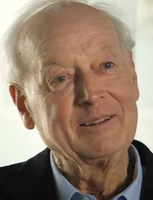 Walter Neupert合作论文数Max Planck Institute of Biochemistry14
 Joachim Rassow合作论文数5
 James E Rothman合作论文数Department of Cell Biology, School of Medicine, Yale University5Rupert Pfaller合作论文数4
 Gareth Wyn Griffiths合作论文数Department of Biosciences, Faculty of Mathematics and Natural Sciences, University of Oslo3
 Rosemary Stuart合作论文数Department of Biological Sciences, Klingler College of Arts & Sciences, Marquette University3
 Roland Lill合作论文数Institut fur Zytobiologie, Zentrum fur Synthetische Mikrobiologie, Philipps-Universitat Marburg;German National Academy of Sciences Leopoldina3
 Michael A Kiebler合作论文数3Christoph Hergersberg合作论文数3Klaus Dietmeier合作论文数3P Keil合作论文数2Helmut Schneider合作论文数2Bernard Guiard合作论文数2C Hergersberg合作论文数1Cornelia Schmidt合作论文数1Karin Becker合作论文数1Martin Wiedmann合作论文数1F Lottspeich合作论文数1K Becker合作论文数1A. Volchuk合作论文数1
 Tobias Hohl合作论文数Department of Medicine, Weill Cornell Graduate School of Medical Sciences, Cornell University1
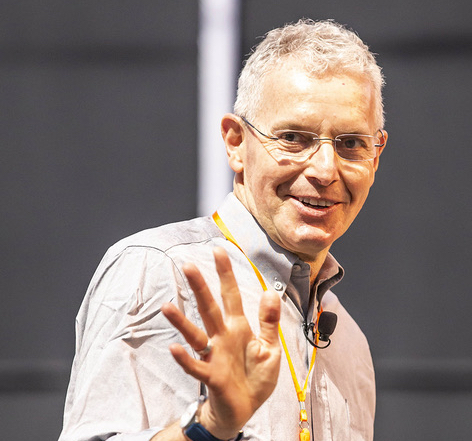 Tomas Kirchhausen合作论文数Department of Cell Biology, Harvard Medical School;Boston Children’s Hospital1Rahimian Vahid合作论文数1Christoph Eckerskorn合作论文数1
 Paul Tempst合作论文数Sloan Kettering Institute, Memorial Sloan Kettering Cancer Center1
 Oleg Varlamov合作论文数Department of Molecular Pharmacology;Einstein College of Medicine, Albert;Department of Molecular Pharmacology, Albert Einstein College of Medicine1Maximilian Tropschug合作论文数1Andreas O Weinzierl合作论文数1Scott Geromanos合作论文数1Martin Moczko合作论文数1Harald Engelhardt合作论文数1H. Horstmann合作论文数1Carlo Schmelzer合作论文数1
 Jens Schlossmann合作论文数1Katsuko Tani合作论文数1Morten Søgaard合作论文数1
 Franz-Ulrich Hartl合作论文数Max Planck Institute of Biochemistry1Ulla Wienhues合作论文数1R.Ruby Ye合作论文数1




