During the COVID-19 emergency, people around the world are debating concepts like physical distancing, lockdown, and sheltering in place. The ethical significance of proximity-that is, closeness or farness as ethical qualities of relations (Strathern 2020)-is thus being newly troubled across a range of habits, practices, and personal relationships. Through five case studies from Australia, Ireland, New Zealand, South Africa, and the United States, contributors to this Colloquy shed light on what the hype of the pandemic often conceals: the forms of ethical reflection, reasoning, and conduct fashioned during the pandemic.
Though comparisons between HIV and SARS-CoV-2 are of limited use, many people experience the epidemics simultaneously. For those of us living with HIV, every comment on COVID-19 becomes a fretful allegory of HIV, and the ethical lessons that COVID-19 teaches will inevitably be brought to bear on how we understand the meaning of the HIV epidemic, especially as it pertains to sexuality. This essay describes some of the ways gay men in Dublin, Ireland, reasoned about the ethics of sex during lockdown.
In 2018, the Irish public voted to repeal the Eighth Amendment to the Irish Constitution, which since 1983 banned abortion in the country. While this was a watershed moment in Irish history, it was not unconnected to wider discussions now taking place around the world concerning gender, reproductive rights, the future of religion, Church–State relationships, democracy and social movements. With this Forum, we want to prompt some anthropological interpretations of Ireland's repeal of the Eighth Amendment as a matter concerning not only reproductive rights, but also questions of life and death, faith and shame, women and men, state power and individual liberty, and more. We also ask what this event might mean (if anything) for other societies dealing with similar issues?
Traditionally, anthropology has been configured as a craft, passed down from teacher to students. Yet at NUI Maynooth, anthropology is delivered to very large and diverse classes. What are the implications of this for the learning the principles of anthropology? This project sought answers to this question by bringing together staff in the Department of Anthropology as a team that also included a graduate student researcher. We set out with the ambition of using the tools of anthropology itself to investigate the teaching and learning of anthropological principles. But we were also concerned to understand the ways in which students understood ‘evaluations’, the extant systems of module evaluation of the Department, and possible ways to introduce improved methods of two-way evaluation.
: [public affairs, ethical currents, Ireland, social research ethics] Liam Frink is contributing editor of Ethical Currents, the AN column of the AAA Committee on Ethics.
Blood supplies have become indexes of national security and the public good. While blood shortages can provoke anxiety, controversies continue to erupt in many countries over proper donor screening, especially with reference to HIV. This article sketches these dynamics in several global settings, focusing especially on activist efforts by gay men to reform exclusionary blood donor guidelines. The contours of the debate recall familiar conflicts between the putative demands of public health and the rights of individuals in the era of AIDS. However, if gay activists marshal a discourse of individual rights vis-a-vis forms of institutional exclusion, they also seek a broader shift in social and cultural understandings of gay identity. To capture this complex interplay of citizenship and sociality, risk and responsibility, the article introduces the notion of 'vital publics' to refer to the peculiar associational form represented by blood supplies. Vital publics are kinds of embodied association elicited through the generalized exchange of body - in this case, blood. Hailed to 'give life' by the jargon of the pervasive social marketing of varied blood service systems, activists seek to contribute to the life of the 'vital public' that transfusion medicine calls into being.
Anthropology and HumanismVolume 33, Issue 1-2 p. 118-120 Comparison's Chimeras (Biology Unmoored: Melanesian Reflections on Life and Biotechnology– By Sandra Bamford) Thomas Strong, Thomas Strong University of HelsinkiPL 59 (Unioninkatu 38D)Helsinki 00014 FinlandSearch for more papers by this author Thomas Strong, Thomas Strong University of HelsinkiPL 59 (Unioninkatu 38D)Helsinki 00014 FinlandSearch for more papers by this author First published: 30 October 2008 https://doi.org/10.1111/j.1548-1409.2008.00010_1.xRead the full textAboutPDF ToolsExport citationAdd to favoritesTrack citation ShareShare Give accessShare full text accessShare full-text accessPlease review our Terms and Conditions of Use and check box below to share full-text version of article.I have read and accept the Wiley Online Library Terms and Conditions of UseShareable LinkUse the link below to share a full-text version of this article with your friends and colleagues. Learn more.Copy URL Share a linkShare onFacebookTwitterLinkedInRedditWechat Volume33, Issue1-2December 2008Pages 118-120 RelatedInformation
This article examines the culture of romantic relationships among gay/bisexual male youth in the Castro District of San Francisco. The article seeks to specify the cultural ideology that informs these relationships, drawing upon ethnographic observation, autobiographical accounts, and informant cultural exegesis. The article also seeks to link thinking and experience inside romantic relationships (e.g., bonding, jealousy) to patterns of social behavior associated with romantic relationships (e.g., relationship sequestering, cheating), showing how both are informed by shared assumptions which make these emotions and gestures intelligible to the group. Beliefs about love, compatibility, and monogamy are explored. Reciprocity, including its degradation into negative forms, is examined with focus on the units of value that are exchanged in romantic relationships, in particular sentimental gifts. Gestures of commitment that mark commencement of a romantic relationship as well as extension of the dynamics of a relationship after "breakup" (as in "revenge sex" and "rebound relationships") are examined. Cultural systems that challenge adherence to a romantic ideology, such as a prestige economy associated with sex linked to an ethos of sexual exploration/recreation, are weighed against the pull of romance. "Drama," a hallmark of gay youth, is viewed in the context of romantic culture.
This essay critically evaluates Judith Butler's recent writings on kinship. In this work, Butler challenges the universalist assumptions of psychoanalysis, hoping to lay the analytical groundwork for imagining new forms of familial relationship. Butler examines the way that anthropology and psychoanalysis have constructed the incest taboo as necessitating heteronormative forms of kinship. Butler's critique of kinship, which draws on her theories of subjection, belies her own attachment to a vision of social life occupied primarily by normative institutions, in particular the state. I suggest that new forms of kinship must be understood on their own terms, whether or not they are accorded legitimacy in law or accepted by psychoanalysis. Anthropology's ethnographic practice can emendate an account of subjection and recognition that obsessively looks to institutions and norms even as it criticizes them. Keywords: KinshipHomosexualityThe StateSubjection
This essay critically evaluates Judith Butler’s recent writings on kinship. In this work, Butler challenges the universalist assumptions of psychoanalysis, hoping to lay the analytical groundwork for imagining new forms of familial relationship. Butler examines the way that anthropology and psychoanalysis have constructed the incest taboo as necessitating heteronormative forms of kinship. Butler’s critique of kinship, which draws on her theories of subjection, belies her own attachment to a vision of social life occupied primarily by normative institutions, in particular the state. I suggest that new forms of kinship must be understood on their own terms, whether or not they are accorded legitimacy in law or accepted by psychoanalysis. Anthropology’s ethnographic practice can emendate an account of subjection and recognition that obsessively looks to institutions and norms even as it criticizes them.
On the night of December 1, 1982, a surgical team in Salt Lake City implanted a plastic pump in the chest of 61 year old Barney Clark. The operation lasted nine hours; it was not without complications. It was the first time in history that a human being had been implanted with an intended as a permanent replacement for his real heart. Clark died 112 days later on the night of March 23, 1983: his circulatory system had collapsed. Now, over a decade later, research on the artificial heart has also collapsed.
 Patty A. Gray合作论文数3
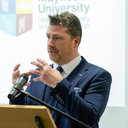 Mark Maguire合作论文数Department of Medicine and the Cardiovascular Research Institute, University of California San Francisco2
 Stephen L. Eyre合作论文数2Louise Maguire合作论文数1Ela Drążkiewicz合作论文数1Máire Ní Mhórdha合作论文数1
 Hugh Turpin合作论文数1Murphy Fiona合作论文数1
 Nancy Scheper Hughes合作论文数Department of Anthropology, University of California, Berkeley1
 Susanna Helen Trnka合作论文数School of Social Sciences, Faculty of Arts, The University of Auckland1Richard M. Eckman合作论文数1Eric Peterson合作论文数1
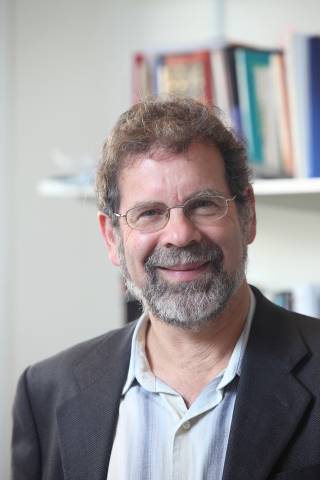 Daniel Miller合作论文数University College London1Brigittine M. French合作论文数Department of Anthropology, Grinnell College1
 Joanna Mishtal合作论文数Department of Anthropology, University of Central Florida1
 Emily Arnold合作论文数Center for AIDS Prevention Studies, University of California San Francisco1
 Helena Wulff合作论文数1
 Pauline Garvey合作论文数Department of Microbiology and National Food Biotechnology Centre, University College Cork1




