Experiments on ASDEX Upgrade (AUG) in 2021 and 2022 have addressed a number of critical issues for ITER and EU DEMO. A major objective of the AUG programme is to shed light on the underlying physics of confinement, stability, and plasma exhaust in order to allow reliable extrapolation of results obtained on present day machines to these reactor-grade devices. Concerning pedestal physics, the mitigation of edge localised modes (ELMs) using resonant magnetic perturbations (RMPs) was found to be consistent with a reduction of the linear peeling-ballooning stability threshold due to the helical deformation of the plasma. Conversely, ELM suppression by RMPs is ascribed to an increased pedestal transport that keeps the plasma away from this boundary. Candidates for this increased transport are locally enhanced turbulence and a locked magnetic island in the pedestal. The enhanced D-alpha (EDA) and quasi-continuous exhaust (QCE) regimes have been established as promising ELM-free scenarios. Here, the pressure gradient at the foot of the H-mode pedestal is reduced by a quasi-coherent mode, consistent with violation of the high-n ballooning mode stability limit there. This is suggestive that the EDA and QCE regimes have a common underlying physics origin. In the area of transport physics, full radius models for both L- and H-modes have been developed. These models predict energy confinement in AUG better than the commonly used global scaling laws, representing a large step towards the goal of predictive capability. A new momentum transport analysis framework has been developed that provides access to the intrinsic torque in the plasma core. In the field of exhaust, the X-Point Radiator (XPR), a cold and dense plasma region on closed flux surfaces close to the X-point, was described by an analytical model that provides an understanding of its formation as well as its stability, i.e., the conditions under which it transitions into a deleterious MARFE with the potential to result in a disruptive termination. With the XPR close to the divertor target, a new detached divertor concept, the compact radiative divertor, was developed. Here, the exhaust power is radiated before reaching the target, allowing close proximity of the X-point to the target. No limitations by the shallow field line angle due to the large flux expansion were observed, and sufficient compression of neutral density was demonstrated. With respect to the pumping of non-recycling impurities, the divertor enrichment was found to mainly depend on the ionisation energy of the impurity under consideration. In the area of MHD physics, analysis of the hot plasma core motion in sawtooth crashes showed good agreement with nonlinear 2-fluid simulations. This indicates that the fast reconnection observed in these events is adequately described including the pressure gradient and the electron inertia in the parallel Ohm’s law. Concerning disruption physics, a shattered pellet injection system was installed in collaboration with the ITER International Organisation. Thanks to the ability to vary the shard size distribution independently of the injection velocity, as well as its impurity admixture, it was possible to tailor the current quench rate, which is an important requirement for future large devices such as ITER. Progress was also made modelling the force reduction of VDEs induced by massive gas injection on AUG. The H-mode density limit was characterised in terms of safe operational space with a newly developed active feedback control method that allowed the stability boundary to be probed several times within a single discharge without inducing a disruptive termination. Regarding integrated operation scenarios, the role of density peaking in the confinement of the ITER baseline scenario (high plasma current) was clarified. The usual energy confinement scaling ITER98( p,y ) does not capture this effect, but the more recent H20 scaling does, highlighting again the importance of developing adequate physics based models. Advanced tokamak scenarios, aiming at large non-inductive current fraction due to non-standard profiles of the safety factor in combination with high normalised plasma pressure were studied with a focus on their access conditions. A method to guide the approach of the targeted safety factor profiles was developed, and the conditions for achieving good confinement were clarified. Based on this, two types of advanced scenarios (‘hybrid’ and ‘elevated’ q -profile) were established on AUG and characterised concerning their plasma performance.
The successful operation of fusion reactors requires plasma scenarios with good core confinement and acceptable first wall heat loads that are stable and robust to external perturbations. This poses both physical and technological challenges. One of the technologies that addresses these challenges is a complex feedback control system that supports advances in physical understanding and helps to ensure stable operating conditions. The operation of marginally stable plasmas often leads to off-normal events (such as disruptions) and feedback control can prevent these to some extent. This contribution gives an overview of the main results of the development and operation of the feedback control algorithms on ASDEX Upgrade (AUG). Fueling actuators, using a combination of gas valves and pellet injection, can simultaneously control neutral density of the divertor and the density of the plasma core above the Greenwald limit. Impurity injection is employed to control the position of the X-point radiator, allowing the creation of an ELM-suppressed H-mode with high radiation fraction. Heating actuators are used to control the plasma energy content, which supports advanced tokamak experiments and enables stable I-mode operation, and the electron temperature control, which supports turbulence studies. In control technology, AUG has pioneered the use of virtual actuators, which allow effective use of the limited number of heating actuators, adaptive control policies, and exception handling. Such technologies will also be used in ITER. Advanced nonlinear state observers (RAPTOR, RAPDENS) and codes to evaluate the power deposition properties (RABBIT, TORBEAM) are available for routine use in the AUG feedback controllers. Extensive use of the AUG discharge control system further enhances the research capabilities of this machine.
For the first time, a real-time capable NBI code, which has a comparable fidelity to the much more computationally expensive Monte Carlo codes such as NUBEAM, has been coupled to the discharge control system of a tokamak. This implementation has been done at ASDEX Upgrade and is presented in this paper. Modifications to the numerical scheme of RABBIT for the time-dependent solution of the Fokker–Planck equation have been carried out to make it compatible with the non-equidistant time-steps, as they occur in real-time simulations. We demonstrate that this allows RABBIT to run in real-time both in a steady-state and time-dependent fashion and show and discuss an actual real-time simulation. Its accuracy is identified by comparing to offline RABBIT and TRANSP-NUBEAM runs (where more diagnostics are available for preciser inputs).
An overview of recent results obtained at the tokamak ASDEX Upgrade (AUG) is given. A work flow for predictive profile modelling of AUG discharges was established which is able to reproduce experimental H-mode plasma profiles based on engineering parameters only. In the plasma center, theoretical predictions on plasma current redistribution by a dynamo effect were confirmed experimentally. For core transport, the stabilizing effect of fast ion distributions on turbulent transport is shown to be important to explain the core isotope effect and improves the description of hollow low-Z impurity profiles. The L–H power threshold of hydrogen plasmas is not affected by small helium admixtures and it increases continuously from the deuterium to the hydrogen level when the hydrogen concentration is raised from 0 to 100%. One focus of recent campaigns was the search for a fusion relevant integrated plasma scenario without large edge localised modes (ELMs). Results from six different ELM-free confinement regimes are compared with respect to reactor relevance: ELM suppression by magnetic perturbation coils could be attributed to toroidally asymmetric turbulent fluctuations in the vicinity of the separatrix. Stable improved confinement mode plasma phases with a detached inner divertor were obtained using a feedback control of the plasma β. The enhanced D α H-mode regime was extended to higher heating power by feedback controlled radiative cooling with argon. The quasi-coherent exhaust regime was developed into an integrated scenario at high heating power and energy confinement, with a detached divertor and without large ELMs. Small ELMs close to the separatrix lead to peeling-ballooning stability and quasi continuous power exhaust. Helium beam density fluctuation measurements confirm that transport close to the separatrix is important to achieve the different ELM-free regimes. Based on separatrix plasma parameters and interchange-drift-Alfvén turbulence, an analytic model was derived that reproduces the experimentally found important operational boundaries of the density limit and between L- and H-mode confinement. Feedback control for the X-point radiator (XPR) position was established as an important element for divertor detachment control. Stable and detached ELM-free phases with H-mode confinement quality were obtained when the XPR was moved 10 cm above the X-point. Investigations of the plasma in the future flexible snow-flake divertor of AUG by means of first SOLPS-ITER simulations with drifts activated predict beneficial detachment properties and the activation of an additional strike point by the drifts.
In present day tokamaks, the role of the control research is to support the physics experiments and to prepare technologies for future devices such as ITER and DEMO. This paper presents the developments done under the MST1 program collaboration on ASDEX Upgrade in the area of the actuator management, plasma density reconstruction, and feedback control of the electron temperature. In the area of actuator management, the actuator interface was unified for the neutral beams and for the gyrotrons, which enables to freely group these actuators to bigger objects, so called virtual actuators. In the area of plasma state reconstruction, a significant progress was made in the real time estimation of the plasma density in discharges with ion cyclotron heating. This enabled execution of experiments requiring electron temperature control in discharges with ion cyclotron heating, which are reported as well. Other control applications such as fusion power emulation using heating actuators are not described in detail, but a list of relevant references is given.
The ASDEX Upgrade Discharge Control System (DCS) is designed to be distributed and highly modular. By nature it is a complex system that requires expert knowledge to develop, deploy and operate. This paper discusses the application of DevOps concepts to DCS and its impact on the operation of ASDEX Upgrade. The aim is to provide stable and undisturbed operation of ASDEX Upgrade, whilst having a low hurdle to include new capabilities into DCS to extend the operational scope. To ensure both goals are met DevOps concepts have been introduced to DCS. For the code development a review process was added using the code review tool Gerrit. Each change is only accepted into the code repository once the review and automated testing have been completed. The automated testing and packaging of DCS are conducted using the automation server Jenkins. DCS is not directly installed on the host computers, but is operated using the containerization framework Docker. The containers allow easy deployment of DCS onto new systems as well as the quick change of DCS versions on the systems. A new or updated component can easily be tested by deploying the appropriate container. In case of failure the previous state is restored by redeploying the container in the previous version. DCS components can be classified into two types, the real time and the non real time parts. Non real time parts are the services that are required to manage the configuration of the system and the setup of the real-time interaction between participants. The new deployment method with Docker is used for both non real time as well as real time services and is operational on ASDEX Upgrade since the 2019/2020 campaign. No impact of the determinism of the real time components have been observed when operated within a Docker container.
Reactor plasma core fueling requires the injection of cryogenic pellets, most probably composed of a mixture of D-2 and T-2. Likely, pellet injection will be the most important actuator for plasma core density control. Therefore, pellet injection systems must be developed further that are capable of acting as actuator for density control. A novel control scheme is developed based on a centrifuge acceleration system. This scheme considers every available pellet launching slot and compares the current particle flux with the requested one. The response time is within the granularity of the available launching slots, in this case between 7 and 12 ms. First plasma experiments in feedforward mode showed excellent results, providing a good basis for upcoming plasma core density feedback control development activities.
Actuator management is an essential part of a modern tokamak plasma control system. It has to deal with a large number of control task simultaneously, needs to be able to operate close to stability limits and to avoid disruptions. In the ASDEX Upgrade tokamak experiment, the process of actuator management development is ongoing. As a first step, we have removed direct assignement of physical actuators to controllers responsible for the control task execution. Instead, the controller is communicating to the so-called virtual actuator, which groups an arbitrary number of actuators of the same type (so far ECRH only) and distributes the controller command between them. The virtual actuator has been implemented and used on ASDEX Upgrade in the 2019 experimental campaign. It gave valuable contributions to several physics experiments. First, the implementation of the virtual actuator enabled beta(p) control by ECRH power, which is of interest especially for I-mode and ELM-free H-mode discharges. Second, it was used in the electron temperature control experiments, which is a useful control tool for transport studies. Third, the concept was used for the density limit disruption avoidance experiments where central ECRH power is applied to recover the plasma from a disruptive zone. The current paper describes the use of the virtual actuator in these cases and based on the gained experience, it suggests future developments and improvements of the virtual actuator on ASDEX Upgrade discharge control system.
Discharge scenarios and control schemes in ASDEX Upgrade (AUG) are evolving more and more complex. Especially in physics investigations for ITER and DEMO sophisticated scenarios exploit the operational space. This increases the probability of design flaws or human errors in the pulse configuration, but also aggravates the potential damage in the failure case. The ASDEX Upgrade Flight Simulator Fenix, which is currently under construction, will provide a fast and efficient simulation tool for testing and validating discharge scenarios, as well as control and monitoring functions, during their development and immediately prior to experimental pulse execution. This ensures, that the scenarios and settings are adequate to reach the experimental goals and that the margins to operational limits are sufficiently large also during the dynamic evolution of the discharge. Simplified physics and plant system “control” models combined with a representation of the ASDEX Upgrade Discharge Control System (DCS) allow for fast simulation runs with reasonable prediction quality. In the simulation an event generator can trigger plasma instabilities, technical failures and external events to test the resilience of the designed pulse against unplanned incidents. The granularity of modelling shall be customizable, such that the simulator can also be used for detail investigations with elaborate physics at the cost of longer simulation time. As a basis for implementation the ITER Plasma Control System Simulation Platform (PCSSP) has been chosen. The flight simulator, extends PCSSP with an ASTRA co-simulator for the ASDEX Upgrade tokamak model and with custom modules for its actuators, diagnostics and control system. Plugins will enable reading original AUG discharge programs and configuration files, as well as storing the results in the AUG shot file database.
The aim of this paper is to present a signal processing algorithm that, applied to the raw Locked Mode signal, allows us to obtain a disruption indicator in principle exploitable on different tokamaks. A common definition of such an indicator for different machines would facilitate the development of portable systems for disruption prediction, which is becoming of increasingly importance for the next tokamak generations. Moreover, the indicator allows us to overcome some intrinsic problems in the diagnostic system such as drift and offset. The behavior of the proposed indicator as disruption predictor, based on crossing optimized thresholds of the signal amplitude, has been analyzed using data of both JET and ASDEX Upgrade experiments. A thorough analysis of the disruption prediction performance shows how the indicator is able to recover some missed and tardy detections of the raw signal. Moreover, it intervenes and corrects premature or even wrong alarms due to, e.g., drifts and/or offsets.
In this paper we validate the finite element code RAPLICASOL, which models radiofrequency wave propagation in edge plasmas near ICRF antennas, against calculations with the TOPICA code. We compare the output of both codes for the ASDEX Upgrade 2-strap antenna, and for a 4-strap WEST-like antenna. Although RAPLICASOL requires considerably fewer computational resources than TOPICA, we find that the predicted quantities of experimental interest (including reflection coefficients, coupling resistances, - and -matrix entries, optimal matching settings, and even radiofrequency electric fields) are in good agreement provided we are careful to use the same geometry in both codes.
The ASDEX Upgrade (AUG) programme, jointly run with the EUROfusion MST1 task force, continues to significantly enhance the physics base of ITER and DEMO. Here, the full tungsten wall is a key asset for extrapolating to future devices. The high overall heating power, flexible heating mix and comprehensive diagnostic set allows studies ranging from mimicking the scrape-off-layer and divertor conditions of ITER and DEMO at high density to fully non-inductive operation (q(95) = 5.5, beta(N) <= 2.8) at low density. Higher installed electron cyclotron resonance heating power <= 6 MW, new diagnostics and improved analysis techniques have further enhanced the capabilities of AUG. Stable high-density H-modes with P-sep/R <= 11 MW m(-1) with fully detached strike-points have been demonstrated. The ballooning instability close to the separatrix has been identified as a potential cause leading to the H-mode density limit and is also found to play an important role for the access to small edge-localized modes (ELMs). Density limit disruptions have been successfully avoided using a path-oriented approach to disruption handling and progress has been made in understanding the dissipation and avoidance of runaway electron beams. ELM suppression with resonant magnetic perturbations is now routinely achieved reaching transiently H-H98(y,H-2) <= 1.1. This gives new insight into the field penetration physics, in particular with respect to plasma flows. Modelling agrees well with plasma response measurements and a helically localised ballooning structure observed prior to the ELM is evidence for the changed edge stability due to the magnetic perturbations. The impact of 3D perturbations on heat load patterns and fast-ion losses have been further elaborated. Progress has also been made in understanding the ELM cycle itself. Here, new fast measurements of T-i and E-r allow for inter ELM transport analysis confirming that E-r is dominated by the diamagnetic term even for fast timescales. New analysis techniques allow detailed comparison of the ELM crash and are in good agreement with nonlinear MHD modelling. The observation of accelerated ions during the ELM crash can be seen as evidence for the reconnection during the ELM. As type-I ELMs (even mitigated) are likely not a viable operational regime in DEMO studies of 'natural' no ELM regimes have been extended. Stable I-modes up to n/n(GW) <= 0.7 have been characterised using beta-feedback. Core physics has been advanced by more detailed characterisation of the turbulence with new measurements such as the eddy tilt angle-measured for the first time-or the cross-phase angle of T-e and n(e) fluctuations. These new data put strong constraints on gyro-kinetic turbulence modelling. In addition, carefully executed studies in different main species (H, D and He) and with different heating mixes highlight the importance of the collisional energy exchange for interpreting energy confinement. A new regime with a hollow T-e profile now gives access to regimes mimicking aspects of burning plasma conditions and lead to nonlinear interactions of energetic particle modes despite the sub-Alfvenic beam energy. This will help to validate the fast-ion codes for predicting ITER and DEMO.
Ammonia formation was studied in a series of dedicated nitrogen seeded H-mode discharges at ASDEX Upgrade.The evolution of ammonia formation was investigated with a reference phase before the seeding, and a long, stable flat-top nitrogen-seeded phase.It was monitored with divertor spectroscopy and analysis of the exhaust gas.The amount of the detected ammonia increased continuously over the course of five discharges with the same nitrogen seeding rate.The same trend was observed in the nitrogen density in the core plasma, as measured by charge exchange recombination spectroscopy and other signals, linked to the effects of nitrogen seeding.The results show that the rate of ammonia formation exhibited the same trend as the nitrogen density in the plasma.This density, in turn, was strongly influenced by the nitrogen wall inventory.The spatial distribution of the detected ammonia suggests that a significant contribution to the net ammonia formation is made in plasma-shaded areas, through surface reactions of neutral species.
The ASDEX Upgrade programme is directed towards physics input to critical elements of the ITER design and the preparation of ITER operation, as well as addressing physics issues for a future DEMO design. After the finalization of the tungsten coating of the plasma facing components, the re-availability of all flywheel-generators allowed high-power operation with up to 20 MW heating power at I p up to 1.2 MA. Implementation of alternative ECRH schemes (140 GHz O2- and X3-mode) facilitated central heating above n e = 1.2 × 10²⁰ m−3 and low q 95 operation at B t = 1.8 T. Central O2-mode heating was successfully used in high P/R discharges with 20 MW total heating power and divertor load control with nitrogen seeding. Improved energy confinement is obtained with nitrogen seeding both for type-I and type-III ELMy conditions. The main contributor is increased plasma temperature, no significant changes in the density profile have been observed. This behaviour may be explained by higher pedestal temperatures caused by ion dilution in combination with a pressure limited pedestal and hollow nitrogen profiles. Core particle transport simulations with gyrokinetic calculations have been benchmarked by dedicated discharges using variations of the ECRH deposition location. The reaction of normalized electron density gradients to variations of temperature gradients and the T e/T i ratio could be well reproduced. Doppler reflectometry studies at the L–H transition allowed the disentanglement of the interplay between the oscillatory geodesic acoustic modes, turbulent fluctuations and the mean equilibrium E × B flow in the edge negative E r well region just inside the separatrix. Improved pedestal diagnostics revealed also a refined picture of the pedestal transport in the fully developed H-mode type-I ELM cycle. Impurity ion transport turned out to be neoclassical in between ELMs. Electron and energy transport remain anomalous, but exhibit different recovery time scales after an ELM. After recovery of the pre-ELM profiles, strong fluctuations develop in the gradients of n e and T e. The occurrence of the next ELM cannot be explained by the local current diffusion time scale, since this turns out to be too short. Fast ion losses induced by shear Alfvén eigenmodes have been investigated by time-resolved energy and pitch angle measurements. This allowed the separation of the convective and diffusive loss mechanisms.
The ASDEX Upgrade Discharge Control System (DCS) is a distributed real-time control system executing complex control and monitoring tasks. Up to now, DCS control algorithms have been implemented by coding dedicated application processes with the C++ programming language. Algorithm changes required code modification, compilation and commissioning which only experienced programmers could perform. This was a significant constraint of flexibility for both control system operation and design.The new approach extends DCS with the capability of configuration-defined control algorithms. These are composed of chains of small, configurable standard function blocks providing general purpose functions like algebraic operations, filters, feedback controllers, output limiters and decision logic. In a later phase a graphical editor could help to compose and modify such configuration in a Simulink-like fashion.Building algorithms from standard functions can result in a high number of elements. In order to achieve a similar performance as with C++ coding, it is essential to avoid administrative bottlenecks by design. As a consequence, DCS executes a function block chain in the context of a single real-time thread of an application process. No concurrency issues as in a multi-threaded context need to be considered resulting in strongly simplified signal handling and zero performance overhead for inter-block communication. Instead of signal-driven synchronization, a block scheduler derives the execution sequence automatically from the block dependencies as defined in the configuration. All blocks and connecting signals are instantiated dynamically, based on definitions in a configuration file. Algorithms thus are not defined in the code but only in the configuration.The concept has been developed in view of Simulink block libraries and MARTe General Application Modules (GAM) but extends these with the DCS virtues of distributed computing and multi-threading.With growing diversity of general-purpose blocks the DCS framework will reach an unprecedented degree of universality and flexibility. Configuration-defined algorithms will gradually replace many existing DCS applications. Finally, the concept might also become of interest for the upcoming ITER plasma control system. (C) 2016 Elsevier B.V. All rights reserved.
Recent experiments on the ASDEX Upgrade tokamak aim at improving the physics base for ITER and DEMO to aid the machine design and prepare efficient operation. Type I edge localized mode (ELM) mitigation using resonant magnetic perturbations (RMPs) has been shown at low pedestal collisionality . In contrast to the previous high ν* regime, suppression only occurs in a narrow RMP spectral window, indicating a resonant process, and a concomitant confinement drop is observed due to a reduction of pedestal top density and electron temperature. Strong evidence is found for the ion heat flux to be the decisive element for the L–H power threshold. A physics based scaling of the density at which the minimum PLH occurs indicates that ITER could take advantage of it to initiate H-mode at lower density than that of the final Q = 10 operational point. Core density fluctuation measurements resolved in radius and wave number show that an increase of R/LTe introduced by off-axis electron cyclotron resonance heating (ECRH) mainly increases the large scale fluctuations. The radial variation of the fluctuation level is in agreement with simulations using the GENE code. Fast particles are shown to undergo classical slowing down in the absence of large scale magnetohydrodynamic (MHD) events and for low heating power, but show signs of anomalous radial redistribution at large heating power, consistent with a broadened off-axis neutral beam current drive current profile under these conditions. Neoclassical tearing mode (NTM) suppression experiments using electron cyclotron current drive (ECCD) with feedback controlled deposition have allowed to test several control strategies for ITER, including automated control of (3,2) and (2,1) NTMs during a single discharge. Disruption mitigation studies using massive gas injection (MGI) can show an increased fuelling efficiency with high field side injection, but a saturation of the fuelling efficiency is observed at high injected mass as needed for runaway electron suppression. Large locked modes can significantly decrease the fuelling efficiency and increase the asymmetry of radiated power during MGI mitigation. Concerning power exhaust, the partially detached ITER divertor scenario has been demonstrated at Psep/R = 10 MW m−1 in ASDEX Upgrade, with a peak time averaged target load around 5 MW m−2, well consistent with the component limits for ITER. Developing this towards DEMO, full detachment was achieved at Psep/R = 7 MW m−1 and stationary discharges with core radiation fraction of the order of DEMO requirements (70% instead of the 30% needed for ITER) were demonstrated. Finally, it remains difficult to establish the standard ITER Q = 10 scenario at low q95 = 3 in the all-tungsten (all-W) ASDEX Upgrade due to the observed poor confinement at low βN. This is mainly due to a degraded pedestal performance and hence investigations at shifting the operational point to higher βN by lowering the current have been started. At higher q95, pedestal performance can be recovered by seeding N2 as well as CD4, which is interpreted as improved pedestal stability due to the decrease of bootstrap current with increasing Zeff. Concerning advanced scenarios, the upgrade of ECRH power has allowed experiments with central ctr-ECCD to modify the q-profile in improved H-mode scenarios, showing an increase in confinement at still good MHD stability with flat elevated q-profiles at values between 1.5 and 2.
The beam intensity of electron cyclotron resonance heating at ASDEX Upgrade has the potential to seriously damage in-vessel components, whenever not fully absorbed by the plasma. Operation is, therefore, interlocked with both plasma current and density above a given threshold. Microwave protection detectors installed in several ports on the low field side switch the heating system off, in case the stray radiation exceeds a given threshold. During regular inspections, however, damages were reported in the vicinity of the launchers and in particular around the tiles of the heat shield. On one hand, it was found that insulating material, which may not face the plasma, degraded due to millimetre wave absorption. The waves entered the free space behind the heat shield through gaps. On the other hand, local damage even of metallic components was observed on surfaces, which were directly exposed to the microwave beam. Polarisation errors, which led to a local shine through of significant beam power, were responsible. We note that this happened mainly on the high field side in a certain distance to the microwave protection detectors, which were not triggered by the events. In order to increase the level of protection, we identify three necessary measures: Firstly, polarisation control is to be automated such, that mode content and shine through can be monitored. Secondly, by installing additional detectors, the spatial coverage of stray radiation monitoring is enlarged. Thirdly, the heat shield tiles will be redesigned in order to increase the shielding against millimetre waves.
The ASDEX Upgrade Discharge Control System DCS is a modern and mature product, originally designed to regulate and supervise ASDEX Upgrade Tokamak plasma operation. In its core DCS is based on a generic, versatile real-time software framework with a plugin architecture that allows to easily combine, modify and extend control function modules in order to tailor the system to required features and let it continuously evolve with the progress of an experimental fusion device. Due to these properties other fusion experiments like the WEST project have expressed interest in adopting DCS.For this purpose, essential parts of DCS must be unpinned from the ASDEX Upgrade environment by exposure or introduction of generalised interfaces. Re-organisation of DCS modules allows distinguishing between intrinsic framework core functions and device-specific applications. In particular, DCS must be prepared for deployment in different system environments with their own realisations for user interface, pulse schedule preparation, parameter server, time and event distribution, diagnostic and actuator systems, network communication and data archiving.The article explains the principles of the revised DCS structure, derives the necessary interface definitions and describes major steps to achieve the separation between general-purpose framework and fusion device specific components. (C) 2015 Elsevier B.V. All rights reserved.
 G. Raupp合作论文数66Wolfgang Treutterer合作论文数66g neu合作论文数61D. Zasche合作论文数50V. Mertens合作论文数32K. Behler合作论文数31Marc Maraschek合作论文数24a kallenbach合作论文数23r merkel合作论文数21Wolfgang Suttrop合作论文数Max-Planck-Institut für Plasmaphysik21
 P. T. Lang合作论文数20Ralph Dux合作论文数20Günter Haas合作论文数20a buhler合作论文数19
 Jeremy Stober合作论文数19A. Herrmann合作论文数19
 Hartmut Zohm合作论文数Max-Planck-Institut für Plasmaphysik;Ludwig-Maximilians-Universität München19Christiane Fuchs合作论文数19Gabriella Pautasso合作论文数Division of Tokamak Theory, Max Planck Institute for Plasma Physics19r drube合作论文数18a lohs合作论文数18
 Rudolf Neu合作论文数Department of Mechanical Engineering, Technische Universität München18Francois Ryter合作论文数Max Planck Institute for Plasma Physics18Louis Giannone合作论文数18Matthias Reich合作论文数17
 Karl Krieger合作论文数max planck society17B. Kurzan合作论文数17O. Gruber合作论文数17
 Volker Rohde合作论文数17
 P. Varela合作论文数17A. Bergmann合作论文数17
 J. Schweinzer合作论文数17
 David Coster合作论文数Division of Tokamak Theory, Max Planck Institute for Plasma Physics16Otto Kardaun合作论文数16h kollotzek合作论文数15
 A. Silva合作论文数15qiuming yu合作论文数15Hans Meister合作论文数15Sieglin, B.合作论文数max planck society15
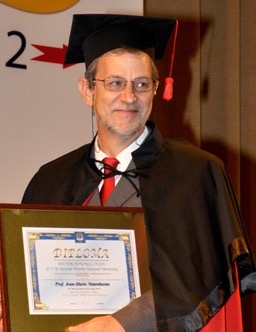 Jean-Marie Noterdaeme合作论文数vakgroep Elektrische Energie, Systemen en Automatisering, faculteit Ingenieurswetenschappen en Architectuur, Ghent University;vakgroep Toegepaste Fysica, faculteit Ingenieurswetenschappen en Architectuur, Ghent University15
 Karl Lackner合作论文数15J. Hobirk合作论文数15Roberto Bilato合作论文数15
 Michael Kaufmann合作论文数Institute of Computer Science, Department of Informatics, University of Tubingen;Faculty of Science, University of Tübingen14R. Cole合作论文数14T. Eich合作论文数EURATOM Association14B. Scott合作论文数14M. Zilker合作论文数14A. Gude合作论文数13




