The performance potential of the Cell/B.E., as well as its availability, have attracted a lot of attention from various high-performance computing (HPC) fields. While computation intensive kernels proved to be exceptionally well suited for running on the Cell, irregular data-intensive applications are usually considered as poor matches. In this paper, we present our complete solution for enabling such a data-intensive application to run efficiently on the Cell/B.E. processor. Specifically, we target radioastronomy data gridding and degridding, two resembling imaging filters based on convolutional resampling. Our solution is based on building a high-level application model, used to evaluate parallelization alternatives. Next, we choose the one with the best performance potential, and we gradually exploit this potential by applying platform-specific and application-specific optimizations. After several iterations, our target application shows a speed-up factor between 10 and 20 on a dual-Cell blade when compared with the original application running on a commodity machine. Given these results, and based on our empirical observations, we are able to pinpoint a set of ten guidelines for parallelizing similar applications on the Cell/B.E. Finally, we conclude the Cell/B.E. can provide high performance for data-intensive applications at the price of increased programming efforts and with a significant aid from aggressive application-specific optimizations.
We show that the majority of information is contained in the small number of linear combinations of the measured voltages. Therefore, a small number of synthetic beams, perhaps an order of magnitude smaller than the number of physical feeds, can be used for imaging and calibration. From the other side, only a small number of gains can be calibrated using the full-beam self-calibration approach. An algorithm to compute the beamformer weights for an optimal calibration has been described.
Over three years ago, the Core Integration team of the National Science Digital Library (NSDL) implemented a digital library based on metadata aggregation using Dublin Core and OAI-PMH. The initial expectation was that such low-barrier technologies would be relatively easy to automate and administer. While this architectural choice permitted rapid deployment of a production NSDL, our three years of experience have contradicted our original expectations of easy automation and low people cost. We have learned that alleged "low-barrier" standards are often harder to deploy than expected. In this paper we report on this experience and comment on the general cost, the functionality, and the ultimate effectiveness of this architecture.
The NSDL (National Science Digital Library) is funded by the National Science Foundation to advance science and math education. The initial product was a metadata-based digital library providing search and access to distributed resources. Our recent work recognizes the importance of context – relations, metadata, annotations – for the pedagogical value of a digital library. This new architecture uses Fedora, a tool for representing complex content, data, metadata, web-based services, and semantic relationships, as the basis of an information network overlay (INO). The INO provides an extensible knowledge base for an expanding suite of digital library services.
We describe the underlying data model and implementation of a new architecture for the National Science Digital Library (NSDL) by the Core Integration Team (CI). The architecture is based on the notion of an information network overlay. This network, implemented as a graph of digital objects in a Fedora repository, allows the representation of multiple information entities and their relationships. The architecture provides the framework for contextualization and reuse of resources, which we argue is essential for the utility of the NSDL as a tool for teaching and learning.
 Carl Lagoze合作论文数School of Information, University of Michigan;Michigan Institute for Data Science, University of Michigan4
 Dean Eckstrom合作论文数3
 Naomi Dushay合作论文数Digital Library Research Group in the Computing and Information Science at Cornell University in Ithaca, NY2
 Dean B. Krafft合作论文数Cornell University Library2John Saylor合作论文数2Susan Jesuroga合作论文数2Ellen J. Cramer合作论文数1
 Alexander S. Van Amesfoort合作论文数1
 Bruce Elmegreen合作论文数IBM1Dean Krafft合作论文数Cornell University Library1
 Kumar Golap合作论文数National Radio Astronomy1
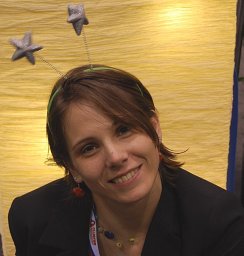 Ana Lucia Varbanescu合作论文数University of Amsterdam1Rob Van Nieuwpoort合作论文数Computer Systems group , Vrije Universiteit of Amsterdam1
 Maxim A. Voronkov合作论文数1Chris Wilper合作论文数1
 Henk Sips合作论文数Delft University of Technology1Ger van Diepen合作论文数1




