This special issue of Information, Communication, and Society is edited by the Communication, Information Technologies, and Media Sociology (CITAMS) section of the American Sociological Association (ASA) and includes papers that were first presented at either the 2022 or 2023 ASA meetings or Media Sociology Symposia. In this introduction, the editors of the special issue aim to connect the articles appearing here to the oldest, most fundamental mission of the discipline of sociology. We suggest that modern society is once again experiencing the kinds of disruption and havoc that our foundational thinkers grappled with many years ago, and that increasingly this tends to play out in and through 'the media' or 'the digital.' In other words, we want to suggest that sociologists who study communication, information technologies, and media are uniquely well-positioned to help the discipline as a whole understand the tremendous amount of upheaval facing the world today.
This special issue of Information, Communication, and Society (ICS) is edited by the Communication, Information Technologies, and Media Sociology (CITAMS) section of the American Sociological Association and includes papers that were first presented at either the 2021 or 2022 ASA meetings or Media Sociology Symposia. For this special issue, an innovative editorial approach was taken that brought the editing process into a graduate classroom. That process is described below along with a brief introduction to themes of the selected articles. Key themes for this special issue include content analysis, ethics, privacy, new economy, and digital inequality.
American public discourse is increasingly populated by the names of Black men and women killed by police, often because their deaths were caught on camera and footage of their deaths has circulated virally online. In this way they are doubly victimized, losing not only their lives but also the agency to define themselves and the ways they'd like to be remembered. At the same time, the lives of many Black victims of police violence have been commemorated using digital platforms, especially hashtags on Twitter. So what exactly does it mean to be remembered online in these contexts? To help answer this question, this article is built around a discourse analysis of 990 tweets from two such hashtags: #IfTheyGunnedMeDown and #IfIDieInPoliceCustody. In addition to pushing back against racist stereotypes and state violence, I argue that these two hashtags collect the digital claims to mnemonic freedom of thousands of Black people. The term mnemonic freedom, as I use it here, refers to the ability to ensure that the stories we tell about ourselves, and the morals and meanings of our lives, get remembered by others in the ways that we want. But more than simply that, these hashtags show how mnemonic freedom might be achieved collectively rather than individually.
Almost immediately after the terrorist attacks of September 11, 2001, Americans were urged to “never forget.” The phrase was a rallying cry for national unity at first and a rhetorical commonplace soon after. Today it seems almost absurd to think that anyone could forget, not while we continue to struggle with the social, economic, and geopolitical ramifications of 9/11. At the same time, memory is always in flux, always rewritten as new facts come to light, new intellectual currents emerge to challenge our interpretations of the past, and new events arise to test our sense of how the present moment links the past with possible futures. Even under ordinary circumstances, the memories that we collectively construct remain partial and subjective, and in the case of a national trauma like the September 11 attacks, the acts of writing and remembrance are incredibly fraught.Two engaging new books tackle the problems of memory and interpretation in a post-9/11 landscape. In Writing the 9/11 Decade: Reportage and the Evolution of the Novel, Charlie Lee-Potter examines the connections between journalism and literary fiction devoted to understanding 9/11. She grapples with the ways the September 11 attacks were made meaningful by a number of our most talented authors, while paying keen attention to the various gaps and limitations of their efforts. Meanwhile, in American Autobiography after 9/11, Megan Brown focuses on the cultural work done by memoir and other forms of life writing, analyzing the way that autobiographical texts reflect the problems and possibilities for living a meaningful life in the post-9/11 era.Lee-Potter’s wide-ranging book traces the collective memory of September 11 through journalism, personal essays, and, eventually, novels. Early chapters examine the 9/11-related writing of authors like Paul Auster, Don DeLillo, Jonathan Safran Foer, and Richard Ford. Lee-Potter questions whether these novelists, or any artists, were up to the task of confronting the complexities of this particular tragedy—one that was witnessed in real time by most of the nation and a good part of the world. How can any writer claim the authority to craft a narrative out of an event that traumatized not only survivors but millions of distant spectators? What are the ethics of meaning making when Americans’ trauma would soon be revisited on the globe in the form of an endless war on terror? Lee-Potter suggests early on that the horrors of 9/11 “made it newly necessary to produce art that is both reassuring and salving and therefore, by extension, misleading” (86). Although it “has always been the novel’s virtue . . . that it can mean many things concurrently” (98), Lee-Potter finds well-meaning novelists struggling somewhat unsuccessfully in the early years after 9/11 to do more than simply comfort their readers. At a time when truly disruptive art like Eric Fischl’s Tumbling Woman sculpture was quickly ushered out of public view, 9/11 novelists experimented with time, abstraction, and scale in order to confront what Lee-Potter calls “fiction’s apparently diminishing capacity to adequately reflect the extreme dystopia of the new millennium” (31).What Lee-Potter finds lacking in early 9/11 novels begins to emerge later in the work of writers like Nadeem Aslam, Mohsin Hamid, and Kamila Shamsie. The “conscious myopia of novelists who focused their gaze on the day of the attacks would not do” for these novelists, who instead “shook their material out of the imprisoning grip of the traumatized present, so often the territory of the journalist, while at the same time eschewing the limitations of the sentimentalized past, or the alarums of dystopic predictions” (151). With Muslim protagonists and novels set in places like Pakistan and Afghanistan, these writers were able to situate 9/11 in a global context and explore the traumas not just of the attacks themselves but of the war on terror more generally. Decentering the United States in this way enables authors and their readers to confront ideas about victimhood that are “undemocratically dished out to some” (158) in the West to the detriment and erasure of global others. But for Lee-Potter this is not merely a matter of adding non-Western perspectives; it is about the perspective that comes with time. She covers extensively journalist Amy Waldman’s novel The Submission (2011), published almost a decade after the 9/11 attacks. The Submission “attempted to say what people had not dared think yet: that possibly after ten years, far from being unable to move on, according to Waldman ‘of course we already have’” (216).The sense of possibly having moved on from 9/11 is more pronounced in Brown’s American Autobiography after 9/11, inasmuch as most of the main works she examines are not centrally about 9/11 or its impact. Instead, Brown interrogates many of the most popular life writings of the decade after September 11—from Elizabeth Gilbert’s Eat, Pray, Love (2006) to James Frey’s A Million Little Pieces (2003) to Tucker Max’s I Hope They Serve Beer in Hell (2006) to Alison Bechdel’s Fun Home (2006) to Sheryl Sandberg’s Lean In (2013)—in order to understand how they reflect a host of post-9/11 fears and aspirations. As Brown puts it, “American memoir is a technology contributing to the management of subjects by circulating norms of self-presentation and self-actualization while negotiating with post-9/11 anxieties about individual and national identity” (5). Brown illuminates the commonalities among her diverse collection of autobiographical works such that issues of personal authenticity, individual self-management, and neoliberal governance are constantly overlapping in her analysis. For example, the spiritual quest at the center of Eat, Pray, Love tells us that a balanced life is simply a profitable form of self-optimization. The fraudulent memoirs of James Frey or Nasdijj speak to the simultaneous value of authenticity and its inherently shaky foundations, especially in the anxious post-9/11 age. Brown’s book thus explores “the problem of selfhood in a ‘self-centric’ society” (119) and the need for life writing that helps readers move beyond the parochial and individualistic. Ultimately, she finds in autobiographical works both the possibility of challenging conventional ways of living under neoliberalism and “the risk of perpetuating retrograde, rather than progressive, thinking” (11).Writing the 9/11 Decade takes a unique approach by situating 9/11 novels within the larger contexts provided by journalism, art, and popular culture and supplementing its nuanced analysis of those novels with in-depth interviews from authors and other figures who played a significant role in interpreting the September 11 attacks for the American public. American Autobiography after 9/11 contains a similarly impressive array of primary source material and a similarly sharp yet sympathetic critical eye. Both works will be of value to scholars who study collective memory and popular culture, as well as any readers interested in better understanding the ways that meaning gets made in the aftermath of collective trauma. At their best, both works push us to look skeptically at any narratives that foreground the comfort or self-fulfillment of individual Americans when, for many in the United States and especially across the globe, the consequences of 9/11 are ever present.
An essay's motive or research problem consists of the rhetorical moves illuminating why that essay matters—what puzzling elements of a primary source it resolves, which contradictions in the data it explains, or what gaps in the literature it fills. This article invites college instructors to dedicate some of their classroom time to teaching students how to construct original, motive-driven arguments. More specifically, the article describes the conceptual triangle technique that uses a simple three-point concept map as the first step in active argument building. This technique is simple and flexible enough to be adapted across subject areas, data, and disciplines. The focus on scholarly motive in general and the use of the conceptual triangle in particular can be effective ways to help academic writers at all levels to develop original arguments that matter.
When the public outcry concerning the ‘Facebook experiment’ began, many commentators drew parallels to controversial social science experiments from a prior era. The infamous Milgram (1963) and Zimbardo (1973) experiments concerning the social psychology of obedience and aggression seemed in some ways obvious analogs to the Facebook experiment, at least inasmuch as all three violated norms about the treatment of human subjects in research. But besides that, what do they really have in common? In fact, a close reading of Milgram, Zimbardo, and the Facebook experiment reveals something about the way power—both as a subject of scholarly inquiry and as an element wielded by researchers—is conceptualized today. Although all three experiments were, in essence, measuring the researchers’ ability to induce an emotional or behavioral change in subjects, the Facebook experiment did much more than the others to hide such considerations and naturalize the exercise of power at work in that study. This paper thus argues that the invisibility of power in the discourse of the Facebook experiment demonstrates, in miniature, the more insidious elements of big data as a whole.
The Occupy movement has drawn attention to the political potential of online communities, and raised questions about the forms of emotional commitment that such communities engender. It has also generated a backlash, as supporters of the political-economic status quo have gone online to question or condemn the movement. This paper performs a discourse analysis of the messages left at one anti-Occupy site called We Are The 53%, in order to see whether such messages engaged with the idea that the current economic system creates unfair hardship and suffering. Surprisingly, the majority of the messages at We Are The 53% did not deny the existence of such hardship, but instead evinced a kind of superficial empathy with the suffering of others that viewed others' misfortune as ultimately manageable. The paper thus questions the progressive political value of empathy in online spaces.
The term disaster porn has evolved over time, from an epithet directed at extreme depictions of suffering in the developing world, to a broader critique today of all sorts of disaster-related media—even fictional Hollywood blockbusters. Sociologist Timothy Recuber examines how disaster porn, in all its iterations and for all its flaws, is a vital political terrain in which publics are at least implicitly asked to struggle with the social significance of the suffering of others.
 Maria Medvedeva合作论文数1Tyler Burgese合作论文数1Thi Le合作论文数1Kyle McDonald合作论文数1Jaggar DeMarco合作论文数1abraham walker合作论文数1valerie j trujillo合作论文数1Katharine Gary合作论文数1
 Annetta Mallon合作论文数1
 Ben Lyall合作论文数Monash Univ1
 Gemma Killen合作论文数Australian Natl Univ1
 Simon Copland合作论文数Res Sch Social Sci, Australian Natl Univ1
 Amber R. Crowell合作论文数Dept Sociol, Calif State Univ Fresno1
 Samantha Vilkins合作论文数Natl Ctr Epidemiol & Populat Hlth, Australian Natl Univ1
 Jennifer Le合作论文数Skaggs School of Pharmacy and Pharmaceutical Sciences, University of California, San Diego1
 Francesca Tripodi合作论文数School of Information and Library Science, University of North Carolina at Chapel Hill1Laura Dunstan合作论文数1Alexia Maddox合作论文数1
 Bianca Manago合作论文数Vanderbilt University1Judy Rose合作论文数1
 Mikayla Novak合作论文数Australian Natl Univ1
 Naomi Smith合作论文数Institute of Education, Arts and Community, Federation University Australia1
 Matthew Wade合作论文数Sch Humanities & Social Sci, La Trobe Univ1e altmann合作论文数Wicking Dementia Res & Educ Ctr, Univ Tasmania1
 Anna Jobin合作论文数ZeMKI, Univ Bremen1
 Naomi Barnes合作论文数Fac Educ, Queensland Univ Technol1
 Hedda Ransan-Cooper合作论文数College of Engineering and Computer Science, The Australian National University1
 Helen Keane合作论文数School of Sociology, Research School of Social Sciences, College of Arts and Social Sciences, The Australian National University1
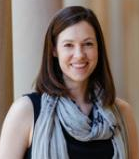 Rebecca Olson合作论文数School of Social Science, Faculty of Humanities and Social Sciences, The University of Queensland1
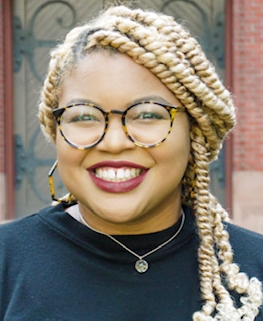 Apryl Williams合作论文数Department of Communication and Media, College of Literature, Science, and the Arts, University of Michigan;Digital Studies Institute, College of Literature, Science, and the Arts, University of Michigan;Mozilla1
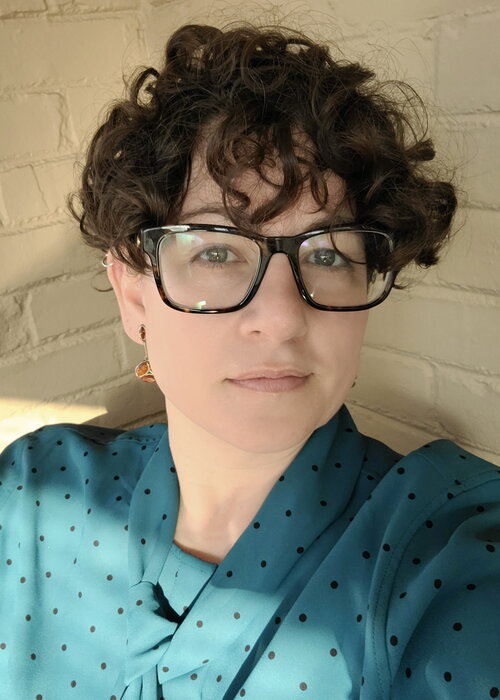 Jenny L. Davis合作论文数Department of Anthropology, College of Liberal Arts & Sciences, University of Illinois at Urbana-Champaign1
 Daniel Morrison合作论文数Department of Sociology, Vanderbilt University1
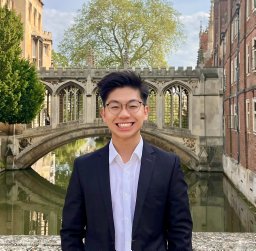 Mark Yu Zheng Wong合作论文数Singapore National Eye Center, Singapore Eye Research Institute1
 Compton D'Lane R合作论文数Department of Sociology, The University of New Orleans1
 Deana A. Rohlinger合作论文数Department of Sociology, University of California-Irvine1
 Peta S. Cook合作论文数Centre for Social Change Research, Queensland University of Technology1
 Stewart Lockie合作论文数The Cairns Institute, James Cook University1Danielle Jackson合作论文数1
 Holly Thorpe合作论文数1Peter Frase合作论文数1
 Dustin Kidd合作论文数1
 Sharon Zukin合作论文数Brooklyn College1Richard Harvey Brown合作论文数1




