ABSTRACT Labor force participation is pivotal for the economic health of individuals, families, communities, and the nation. Conversely, labor force nonparticipation represents a major challenge to economic vitality. In this study, we investigate temporal trends for those not in the labor force (NILF) among prime‐working‐age (25–54) men and women during the first quarter of the 21st century, with a focus on differences between rural and urban residents. We also seek to establish whether and how the demographic, educational, and health profiles of the population account for such trends. Drawing on data from the Current Population Survey Annual Social and Economic Supplement from 2000 to 2024, we estimate a series of sex‐specific linear probability models predicting the probability that an individual is NILF as a function of our explanatory variables and controls. The analysis reveals two broad findings. First, among prime‐working‐age men, the probability of NILF is consistently higher in rural areas and the gap is growing. Two factors are associated with a substantial share of this gap, though they do not fully attenuate it: lower education and poorer health in rural areas. Second, among prime‐working‐age women, the probability of labor force nonparticipation is initially similar in rural and urban contexts, before a higher probability of NILF emerges in rural areas during the final decade. After controlling for other factors, however, the trend shifts to higher initial probabilities of NILF in urban areas and toward residential convergence over time. Two factors are associated with this shift: lower education and poorer health in rural areas. These trends hold critical implications for rural wellbeing in the 21st century.
Purpose The Survey of Trauma, Resilience and Opportunity among Neighbourhoods in the Gulf (STRONG) is a longitudinal study assessing disaster exposures and outcomes of adults living along the US Gulf Coast. Initially conceived to examine effects of the Deepwater Horizon oil spill, five follow-up surveys have explored impacts of hurricanes and COVID-19.Participants A total of 2520 adults completed the baseline survey in 2016. Compared with the region, survey respondents were older, more likely to be female and less likely to be Hispanic.Findings to date As a longitudinal disaster cohort, STRONG provides a unique opportunity to examine disaster impacts. Research using STRONG data has explored how a wide range of disaster exposures are associated with behavioural health. Consistent with other disaster research, analyses with STRONG data suggest that resource loss is linked with worse behavioural health.
Purpose:To assess whether exposure to the 2010 Deepwater Horizon oil spill (DHOS) was related to parents' self-rated health over time. Design:3 waves of panel data were drawn from the Gulf Coast Population Impact study (2014) and Resilient Children, Youth, and Communities study (2016, 2018). Setting:Coastal Louisiana communities in high-impact DHOS areas. Participants:Respondents were parents or guardians aged 18 - 84, culled from a probability sample of households with a child aged 4 to 18 (N = 526) at the time of the 2010 DHOS. Measures:Self-rated health was measured at each wave. Self-reported physical exposure to the DHOS, economic exposure to the DHOS, and control variables were measured in 2014. Analysis:We used econometric random effects regression for panel data to assess relationships between DHOS exposures and self-rated health over time, controlling for potentially confounding covariates. Results:Both physical exposure (b = -0.39; P < 0.001) and economic exposure (b = -0.34; P < 0.001) to the DHOS had negative associations with self-rated health over the study period. Physical exposure had a larger effect size. Conclusion:Parents' physical contact with, and economic disruption from, the 2010 DHOS were tied to long-term diminished health.
Purpose: To assess whether trajectories of children’s physical health problems differ by parental college degree attainment in Louisiana areas highly impacted by the 2010 BP Deepwater Horizon oil spill (BP-DHOS). Design: Three waves of panel data (2014, 2016, and 2018) from the Gulf Coast Population Impact / Resilient Children, Youth, and Communities studies. Setting: BP-DHOS-impacted communities in coastal Louisiana. Participants: Parents of children aged 4-18 in a longitudinal probability sample (n = 392). Measures: Reported child physical health problems from the BP-DHOS, parental college degree attainment, and covariates. Analysis: Linear growth curve models are used to assess initial levels of and the rate of change in child physical unknown. The current study uses 3 waves physical health problems by parental college degree attainment. Explanatory variables are measured at baseline and the outcome variable is measured at all 3 waves. Results: Compared to children of parents without college degrees, children of college graduates had fewer initial health problems in 2014 (b = −.33; p = .02). Yet, this health advantage decreased over time, as indicated by their positive rate of change (b = .22; p = .01), such that the higher education health advantage was not statistically significant by 2018. Conclusion: Children of college graduates experienced a physical health advantage following the BP-DHOS, but this gap closed over time. The closure of the gap was due to the children of college graduates experiencing significant increases in reported health problems over the study period.
This study (1) assessed whether parent health mediated associations between exposures to the 2010 BP Deepwater Horizon oil spill (BP-DHOS) and child health, and whether child health mediated associations between BP-DHOS exposures and parent health; and (2) assessed bidirectional longitudinal associations between parent health and child health following the BP-DHOS. The study used three waves of panel data (2014, 2016, and 2018) from South Louisiana communities highly impacted by the BP-DHOS. Parents with children (aged 4–18 at the time of the interview) were interviewed based on a probability sample of households. Focal measures included economic and physical BP-DHOS exposures, self-reported parent health, and parent-reported child health. Health measures were gathered at three time points. The analyses included mediation analysis and estimating and comparing effect sizes of longitudinal cross-lagged effects between parent health and child health. Results showed that parent health partly mediated associations between BP-DHOS exposures and child health, and that child health partly mediated associations between BP-DHOS exposures and parent health. Paths from prior waves of parent health to subsequent waves of child health were positive and statistically significant as were paths from prior waves of child health to subsequent waves of parent health. The differences in size of the child-to-parent health effects and the parent-to-child health effects were not statistically significant. This study’s results extend evidence for the post-disaster effect of parent health on child health and the effects of child health on parent health. These findings support the contention that harm to the health of one’s family member following disasters operates as a form of resource loss deleterious to one’s health.
A growing body of research has demonstrated links between exposure to the BP Deepwater Horizon oil spill (DHOS) and negative consequences for well-being in the impacted region. We contribute to this literature by investigating the relationship between exposure to the DHOS (i.e., physical and economic) and subsequent perceptions of the ability to cope with adverse events (i.e., psychological resilience) among adults with children. Doing so advances prior research by (a) providing a direct test of psychological resilience (i.e., the 10-item Connor-Davidson Resilience Scale) rather than relying on proxy measures and (b) improving on cross-sectional studies by using prospective cohort data to establish temporal ordering between spill exposure and psychological resilience. Data were obtained from the 2014 Gulf Coast Population Impact study and the 2018 wave of the Resilient Children, Youth, and Communities study (N = 481). The analysis used descriptive statistics and linear regression models with adult psychological resilience (10-item Connor-Davidson Resilience Scale) as the outcome of interest. Results showed that economic DHOS exposure held a significant negative relationship with later levels of psychological resilience, whereas physical DHOS exposure did not. These findings inform policy and practice by underscoring links between socioeconomic disaster impacts and psychological resilience in the aftermath of such events.
The historic 2010 BP Deepwater Horizon Oil Spill (DHOS) led to public distress regarding potential impacts on children in nearby Gulf Coast communities. Using a community-based South Louisiana panel study of households with children, we examined the effect of fishing industry employment on changes in a subjective measure of general child health and whether economic and physical DHOS exposures played a mediating role. Fishing industry employment had a negative effect on child health compared to other industries. Economic exposure and physical exposure both mediated the effects of the fishing industry on child health, with economic exposure mediating a larger share (49.3%) of the relationship compared to physical exposure (40.5%). The importance of economic oil spill exposure in these findings highlights the significance of social determinants of health at the intersection of disasters and child vulnerability.
Does recreational marijuana legalization have the potential to transform urban spaces? Using Denver’s “Green Mile” as a case study, this study explores the potential for marijuana legalization to encourage the creation of thematic urban spaces. More specifically, the analysis contributes to understandings of gentrification by suggesting that commodified vice (i.e., marijuana) can function as a driver of gentrification, when accompanied by the evolution of societal (or gentrifier) perceptions. Utilizing a grounded theory method, we describe a specific type of commercial gentrification—marijuana gentrification—characterized by economic change and displacement due to the infusion of marijuana-related businesses and associated symbology into an area. Major elements of this process include: (1) commodification supported by the middle and upper classes that in turn serves as a magnet for other businesses frequented by the more affluent, (2) signs and symbols associated with a marijuana-themed environment that carry meanings appealing to particular urban gentrifiers, and (3) people attracted by, and with access to, the marijuana industry sharing the classic traits of gentrifiers. Explicating this process contributes to literature related to the impacts of marijuana legalization on urban spaces and adds to research on gentrification and thematic urban districts, by introducing legalized marijuana as a material foundation for both.
High underemployment has been a chronic structural feature of the rural United States for decades. In this paper, we assess whether and how inequalities in underemployment between metropolitan (metro) and nonmetropolitan (nonmetro) areas have changed over the course of the last five decades. Drawing on data from the March Current Population Survey (CPS) from 1968 to 2017, we analyze inequality in the prevalence of underemployment between metro and nonmetro areas of the United States, paying special attention to differences between white, black, and Hispanic workers. Our results show that the underlying risk of underemployment has increased in both metro and nonmetro areas over the last fifty years. Nonmetro workers have consistently faced greater employment hardship compared to their metro counterparts, and these differences cannot be fully explained by differences in population characteristics. Nonmetro ethnoracial minorities have experienced particularly poor labor market outcomes. The disadvantage of ethnoracial minority status and rural residence is especially pronounced for nonmetro black workers, among whom underemployment has remained persistently high with only modest convergence with other workers. Hispanic workers also face elevated risk of underemployment, but we observe a unique convergence between metro and nonmetro workers within this population.
The 2010 Deepwater Horizon (DWH) oil spill was the largest in U.S. history, releasing an estimated 4.9 million barrels of oil into the Gulf of Mexico. In this report, the authors explore how communities, government officials, nongovernmental organizations, businesses, and scientists can build community resilience to large oil spills.
 Leif Jensen合作论文数15
 Joachim Singelmann合作论文数11Jaishree Beedasy合作论文数9
 Michael Cope合作论文数9Chandler Thomas合作论文数9Kathryn Sweet Keating合作论文数8Kayla Fontenot合作论文数8
 Ramchand Rajeev合作论文数RAND Corp7
 Candice A. Myers合作论文数7
 Jonathan J. Sury合作论文数Reproductive Biology Laboratory, California State University7
 Jeremy Brooks合作论文数7
 Matthew T. Lee合作论文数Institute for Studies of Religion, Baylor University;Center for Medical Humanities, Compassionate Care, and Bioethics, Stony Brook University;Benson-Henry Institute for Mind Body Medicine, Massachusetts General Hospital;Institute for Quantitative Social Science, Harvard University;Department of Sociology, University of Akron;Institute for Strategic Clarity;Harvard T. H. Chan School of Public Health;Institute for Advanced Studies in Culture, University of Virginia;Abigail Adams Institute7
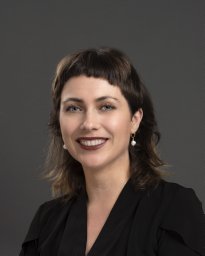 Vanessa Parks合作论文数Ctr Populat Studies, Univ Mississippi6
 Kroeger Rhiannon A合作论文数Ohio State University6
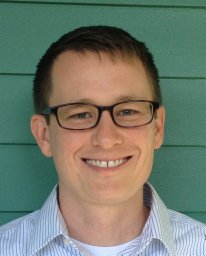 Samuel Stroope合作论文数Department of Sociology, Baylor University6
 Dudley L. Poston合作论文数Texas A&M University6
 Melissa L. Finucane合作论文数RAND Corporation/Department of Engineering and Public Policy, Carnegie Mellon University/East-West Center6
 Rogelio Saenz合作论文数Department of Sociology;Texas A & M University;Department of Sociology, Texas A & M University6
 Shannon M. Monnat合作论文数Penn State Univ, University Pk5
 Dr. Carlos Siordia合作论文数Graduate School of Public Health, University of Pittsburgh5Leah Drakeford合作论文数4
 Brian C. Thiede合作论文数Penn State Univ, University Pk4
 Troy Blanchard合作论文数Louisiana State University;Office of Electronic Services;Division of Administration;Division of Administration, Louisiana State University4Amy E Lesen合作论文数3noreen clancy合作论文数3
 Regardt J. Ferreira合作论文数Department of Social Work.3
 Andrew Parker合作论文数Dept. of Physiology Anatomy and Genetics, St John's College, University of Oxford;Institute of Biology, Otto-von-Guericke University Magdeburg3
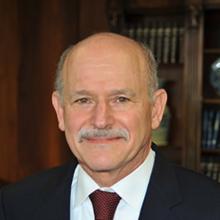 Steven B Heymsfield合作论文数Pennington Biomedical Research Center, Louisiana State University3Lynsay Ayer合作论文数Department of Psychiatry, University of Vermont College of Medicine;Virginia Commonwealth University;University of Vermont, Virginia Commonwealth University3
 Corby K. Martin合作论文数Ingestive Behavior, Weight Management & Health Promotion Laboratory, Pennington Biomedical Research Center;Human Phenotyping Core, Nutrition Obesity Research Center3
 Craig A. Bond合作论文数Department of Agricultural and Resource Economics;Colorado State University;Department of Agricultural and Resource Economics, Colorado State University3
 Shanthi Nataraj合作论文数RAND Corporation3gary cecchine合作论文数2
 Jorden E. Jackson合作论文数Penn State Univ2
 Stephanie Broyles合作论文数Pennington Biomed Res Ctr2
 Diane K. McLaughlin合作论文数Department of Agricultural Economics and Rural Sociology, Pennsylvania State University2
 Michael J. Blum合作论文数Department of Ecology and Evolutionary Biology, Tulane University2
 Anita Chandra合作论文数2Ann R. Tickamyer合作论文数Department of Sociology, University of Kentucky Lexington2Amanda Edelman合作论文数1Jacqueline Fiore合作论文数1Bruce A. Robertson合作论文数1Nick T. Van De Voorde合作论文数1
 Elizabeth L. Petrun Sayers合作论文数RAND Corp1Rachana Seelam合作论文数1
 Aaron Clark-Ginsberg合作论文数RAND Corp1
 Maggie Weden合作论文数Economics, Sociology, and Statistics, Rand Corporation1
 Lasse Jensen合作论文数Department of Chemistry, The Pennsylvania State University1
 Daniel T. Lichter合作论文数Department of Policy Analysis and Management, College of Human Ecology, Cornell University1




