The reaction of cobalt(II) hydroxide with terephthalic acid under solvothermal conditions (N,N-dime-thylformamide, 110 degrees C, 72 h) leads to the formation of three products: cobalt terephthalate (compound I), cobalt (III) dimethylaminoformatecatenane (compound II) and dimethylamine terephthalate (compound III). Cobalt terephthalate was characterized by elemental analysis, infrared spectrometry, X-ray diffraction, scanning electron microscopy, thermogravimetry and volumetric nitrogen adsorption/desorption. Compound II crystallizes in the trigonal space group R-3c:H and compound III crystallizes in the triclinic space group P-1. The coordination polyhedron around the metal ion can be described as a trigonally distorted octahedron. The sample has a constant porosity with an average pore diameter of 8.5nm and a mesoporous structure with a large surface area (141.7 m(2)/g), which corresponds to type I adsorption. Cobalt terephthalate was used for solid-phase extraction of food dye "sunset yellow", tartrazine, beta-naphthol orange and methyl orange. The results confirmed the possibility of using the proposed analytical method as a new convenient approach to extracting organic dyes from industrial and other wastewaters, where such substances are contained in insignificant concentrations, and their determination requires expensive and complex equipment. In the future, this method can be used not only for the effective removal of pollutants from industrial wastewater with subsequent regeneration of the sorbent, but also as a sample preparation method for concentrating organic dyes from dilute solutions with their subsequent elution and analysis by available methods, for example, spectrophotometry, since the lower detection limit is within 0.9 mg/L. The experimental data are described by the solid-phase extraction isotherm (R-2 > 0.921) and show the ability of cobalt terephthalate to extract up to 360 mg/g of sorbent under optimal conditions.
The work restores the history of reflecting the Siberian outskirts in the paintings and albums of the artists that were shown at the exhibitions in the Irkutsk province in the second half of the XIX century. It is said that the study, based on the handwritten materials, considers the artists’ activity to cre-ate not only paintings and graphic works but also the albums with the detailed descriptions of the Siberian outskirts, gradually presented at the events in the social and scientific space. Besides, the author describes the activity of the sci-entific societies which studied the Irkutsk province within the period of the road network construction and emphasizes that the materials, placed in the archives of Irkutsk, transmit detailed data concerning the peculiarities of creat-ing paintings and albums where the images of settlements, natural objects and architectural structures, participants of the scientific expeditions in Siberia were demonstrated.
Mononuclear nickel complexes [NiL1(NCS)2]·2DMSO (I), [NiL1(NCS)2]·DMF (II), and [NiL2(NCS)2]·0.5CH3OH·1.5H2O (III) with the distorted octahedral coordination node, where L1 and L2 are the tetradentate ligand systems derived from the products of the condensation of diacetyl with 2-hydrazinoquinoline and 2-hydrazino-4,6-dimethylpyrimidine, respectively, are synthesized. The structures of the compounds are determined by IR spectroscopy and XRD (CIF files ССDС nos. 2219793 (I), 2142035 (II), and 2219794 (III)). The quantum chemical modeling of the axial parameter of magnetic anisotropy in the zero field (D) is performed for the synthesized compounds in the framework of the SA-CASSCF+NEVPT2 method. The complexes are shown to be characterized by three-axis magnetic anisotropy close to the light magnetization plane with positive D. The axial parameter of magnetic anisotropy (Dexp = 8.79 cm−1) determined by the approximation of the magnetometry data on complex [NiL2(NCS)2]·0.5CH3OH·1.5H2O is consistent with the calculated value (Dcalc = 11.5 cm−1).
The reactions between copper(II), nickel(II) or cobalt(II) itaconates and N-heterocycles (2,2 '-bipyridine, 1,10-phenanthroline, 4 '-phenyl-2,2 ':6 ',2 ''-terpyridine) lead to new metal-containing monomers. The complex of cobalt(II) itaconate with 4 '-phenyl-2,2 ':6 ',2 ''-terpyridine crystallizes in the triclinic form with the formula unit C52H44CoN6O10 and a molar mass of 969.85 g/mol. Unit cell parameters: a 9.02 (4) angstrom, b 12.52 (5) angstrom, c 20.68 (10) angstrom, alpha 99.64 degrees, beta 99.06 degrees, gamma 100.22 (4)degrees, V 2224.64 angstrom 3, Z = 2, Z ' = 0, T = 100 K, d(calc) = 1.44 g/cm(3), packing factor 0.71, crystal size 0.30 x 0.32 x 0.18 mm. Each cobalt ion is coordinated by six nitrogen atoms from two 4 '-phenyl-2,2 ':6 ',2 ''-terpyridine molecules lying in mutually perpendicular planes with the formation of the CoN6 coordination site. Medium-strength hydrogen bonds including terpyridine ligands, itaconate ions, and water molecules lead to infinite one-dimensional chains. Thermolysis of the metal-containing monomers proceeds through three successive stages (dehydration, solid-state polymerization, and destruction) and makes it possible to obtain the M@C nanomaterials with the core-shell structure. The tribological characteristics of the obtained nanomaterials have been studied. [GRAPHICS] .
The paper studies the problems of the geochemical specialization of the Bronze Age metal items from the eastern flank of the Ural mining and metallurgical province produced at the end of the third millennium BC - the middle of the second millennium BC in the Abashevo, Sintashta, Koptyakov-Seimino and the Alakul centers. The metal geochemical markers determination was performed by means of a local quantitative chemical composition analysis of 101 solid samples with an electron X-ray microanalyzer. The selection consisted of a representative series of copper and bronze items corresponding to various stages of metallurgical conversion process from the classic archaeological sites of the Trans-Urals. Systematization of the analytical data on the chemistry of items from each metal production center made it possible to identify stable compositions of micro-impurities associated with the base ores and alloys. The Abashevo and the Sintashta culture metal demonstrated a stable correlation of excess arsenic and nickel concentrations, which was partly due to the use of the Trans-Urals ores with a high content of these elements, however, the most significant concentration of arsenic (from 2 to 5 %) was observed in the finished items rather than in refined copper ingots or semi-finished products, which may indicate intentional alloying. Tin alloys in the Sintashta culture were quite rare; they demonstrated the same chemistry as the Seimin-Turbino metallurgical traditions. Large-scale use of tin for refined copper alloying was observed only in the Koptyakov-Seimino and the Alakul series. The Alakul series contained some high-tin alloying compositions close to the ideal tin bronzes (18 % Sn). It is possible that the sources of tin for them were the Kazakhstan and the Central Asia deposits. The only impurity integrating the entire ancient metal series, according to microprobe analysis, was sulfur, due to the sulfide feed stock. Sulfur was deposited in blister from the high-copper (above 20 % Cu) sulfide-silica-carbonate mineral blends that met the Bronze Age metal production criteria. The sources of raw materials were associated with the secondary sulfides of the ophiolite deposits hyper-genesis zones in the Trans-Urals.
A condensation reaction between formyl-containing spiropyrans and iodides of 1,2,3,3-tetramethyl-3 H -indolium derivatives was studied. The reaction results in a mixture of products with a strong predominance of one of them irrespective of the structure of the starting compounds. The structures of the compounds formed during the reaction were determined based on the NMR, IR, and mass spectroscopy data. The dependence of the yield of the major reaction product on the structure of the starting compounds was studied. The prerequisites for the observed reaction pathway were established and the reaction mechanism was proposed using the results of quantum-chemical calculations based on analysis of the molecular electrostatic potential and the dual descriptor of reactivity.
The structures of 3,5-di-(tert-butyl)-2-hydroxyazobenzene (L) in the free state and in complexes with Ni2+ (I) and Pd2+ (II) cations are studied by X-ray diffraction (XRD). The same space group R 3̅ с with close unit cell parameters, the same crystal structure motif, and unusual conformations of the cupola-shaped coordination polyhedra of complexes I and II are revealed by XRD for ligand L. In complexes I and II based on this compound as the ligand, the coordinating atoms form trans-planar coordination nodes.
Effect of the anion nature on crystal structure of Zn-complexes of spironaphthopyran and their chromogenic properties in solution were studied. Complexes with zinc chloride and zinc picrate exhibited tertahedral and octahedral coordination environment of the metal ion respectively. The structure of the complex with zinc picrate demonstrates a rare example of the co-crystallization of two types of complexes differing in the number of coordinated picrate anions. The composition, stability, and absorption properties of zinc complexes in acetone essentially depend on the counter anion nature. When the coordinating ability of the counter ion increases in the range BF4- , ClO4- , NO3-, Pic-, I-, Cl-, CH3COO-, (CH3)3CCOO- the complex stability is reduced from logK = 8.7 to 2.96. This is accompanied by the chromogenic effect which is related to the decrease in the spectral shift of the long-wavelength absorption band of the complex relative to the merocyanine ligand from 846 up to 168 cm-1. The complex photo-initiated processes include fluorescence and thermally reversible dissociation. Fluorescence is characterized by band maxima in the 622-637 nm region and normal Stokes shifts of 1087-1454 cm-1 with an efficiency being weakly dependent on the anion nature. In contrast, the negative photochromism of the complexes demonstrates a significant dependence of the photo-bleaching efficiency on the anion nature in the range 0.012-0.17. The presence of a chromogenic photochromic effect along with fluorescence makes it possible to consider the complex as fluorescent switch.
New indoline spiropyrans containing chlorine and bromine atoms in position 5 of the indoline moiety of the molecule as a substituent were synthesized and studied. The structures of the synthesized compounds were confirmed by NMR and IR spectroscopy. The molecular structure of the chlorine-substituted derivative was determined by X-ray diffraction analysis, and intermolecular interactions in the crystal were studied using the CrystalExplorer21.5 software package. The spectral kinetic studies revealed photochromic properties of novel spiropyrans in an acetonitrile solution. The photoelectrochemical characteristics of dye-sensitized solar cells (DSSC) made from the synthesized compounds before and after UV irradiation were studied in comparison.
The synthesis of new indoline spiropyran by the cyclocondensation in methanol revealed that the free aldehyde group of the target spiropyran is easily converted into the dimethyl acetal moiety without the addition of an acid catalyst, giving 8′-dimethoxymethyl-1,3,3-trimethylspiro[indoline-2,2′-2H-chromene]-5,6′-dicarboxylic acid as a single reaction product. The structure of this compound was confirmed by NMR spectroscopy and mass spectrometry. The molecular structure was also established by single-crystal X-ray diffraction. The Hirshfeld surfaces were generated and analyzed and intermolecular interactions in the crystal were investigated using the CrystalExplorer software package. The reverse hydrolysis reaction of dimethyl acetal to the aldehyde group proceeds under mild conditions in dimethyl sulfoxide, as shown by NMR spectroscopy.
Based on the previous experimental and theoretical studies of the unusual dome-shaped structures of Pd II and NiII 3,5-di(tert-butyl)-2-oxyazobenzene complexes, gas-phase quantum chemical calculations were performed for related model CuII, CoII, FeII, MnII, CrII, and ZnII complexes. The calculations were carried out with full geometry optimization at the TPSSh/def2tzvp(Cu,Co,Fe,Mn,Cr,Zn)/6-311G*(C,N,O,H) level of theory. All compounds were calculated in the low-spin and high-spin states — singlet and triplet for FeII, CrII, ZnII and doublet and quartet for CuII, MnII, CoII. Metal complexes with a closed shell (Zn), a half-filled shell (Cr), and a half-filled d-subshell (Mn) have a tetrahedral structure in the gas-phase ground energy state, whereas CuII-, CoII-, and FeII-based complexes have an unusual dome-shaped structure.
A novel photochromic system based on an alkylideneisochromanedione core with heterocyclic substituents was synthesized, and its spectral luminescent and photoinduced properties were studied. The obtained iso-chromandiones containing the hexatriene fragment exist in a ring-open E-form, confirmed by the data of H-1, C-13 NMR spectroscopy and X-ray diffraction studies. The observed photoinitiated processes depend fundamentally on the nature of the heterocyclic substituents. Thiophenyl, benzo[b]thiophenyl and 1H-indolyl derivatives 5c-f are non-photochromic in the solid state, and in solutions their transformations are limited by thermally reversible E/Z-photoisomerization. Compound 5a with a furanyl substituent is photochromic in crystalline form due to the light-induced rearrangement of the ring-open hexatriene isomer into the ring-closed cyclohexadiene structure. Upon irradiation with light of 436 nm, the yellow crystals of 5a turn dark blue-green. The reverse reaction of the cycle opening and restoration of the original color of the crystals occurs extremely easily upon irradiation with visible light of 578 nm. In contrast to crystals, solutions of compounds 5a and 5b with furanyl substituents in hexane, 2-propanol, acetonitrile and DMSO are discolored when irradiated with light of 365 nm. The irreversible photorearrangement 5a,b -> 6a,b includes the stages of cyclization, the opening of the furan cycle and the formation of highly fluorescent naphthalic anhydride derivatives 6 (the quantum yield of fluorescence reaches 0.69 in hexane)), which can be used for the production of optical memory media for archive 3D discs.
The article addresses the problem of the functional purpose of shaft-type furnaces with chimneys found at the Late Bronze Age sites of Northern Eurasia. This category of thermal engineering structures became widespread in the eastern wing of the West Asian (Eurasian) metallurgical province. Thermal sets with flue channels are physical evidence of the implementation of technological algorithms of the pastoral model of metal production based primarily on multistage processing of secondary copper sulfides. Shaft furnaces with flues of the Ural-Kazakhstan region are functionally similar to the more structurally simple fi re pits-furnaces present in the structure of mining and processing complexes of the steppe Cis-Ural region. They were intended for decrepitation, pyrotechnic enrichment, and refining of ore protolith during a long fi re setting using brushwood and wood fuel at relatively low temperatures in the range of 600–800 °C. The degree of complexity of thermal engineering structures was determined by the nature of the raw materials used. Ordinary fi re pits turned out to be acceptable for ore-bearing complexes in the copper shales and sandstones of the steppe Cis-Ural region. The ores of the ultrabasic deposits of the Ural-Mugodzhar region were difficult to be processed and required the use of mine furnaces with flues, which were also characteristic of the metal production centers of the Kazakhstan mining and metallurgical region. Further improvement of thermal engineering structures with flue channels was due to the need to overcome the raw material crisis caused by the exhaustion of available sulfide reserves in secondary enrichment zones within ultrabasic deposits, and copper shale ore occurrences at the end of the Bronze Age. It required the transition to the use of chalcopyrite and greatly contributed to the discovery of iron metallurgy.
Учредитель: ФГБОУ ВО «Восточно-Сибирский государственный
Acylation of 5,7-di(tert-butyl)-2-{5,8-dimethyl-4-[(3,5-dimethylphenyl)amino]quinolin-2-yl}-3-[(3,5-dimethylphenyl)amino]tropone leads to 3-[aryl(acetyl)amino]tropone. The structure of 3-[N-acetyl(3,5-dimethylphenyl)amino]-5,7-di(tert-butyl)-2-{5,8-dimethyl-4-[(3,5-dimethylphenyl)amino]quinolin-2-yl}tropone was established by single crystal X-ray diffraction.
Features of the crystal structure of 2-{2-(6′-bromo-1,3,3-trimethylspiro[indoline-2,2′-chromene]-8′-yl)ethenyl}-1,3,3-trimethyl-3Н-indolium perchlorate have been investigated. The studied crystals have been grown under different temperature conditions and using different solvent mixtures. Intermolecular interactions and cavities in the crystals have been studied using CrystalExplorer v21.5 software package.
Solid-state photochromic indoline spiropyrans bearing a formyl group at the 6′ and 8′ positions of the 2H-chromene moiety of the molecules were characterized. The molecular structures of spiropyrans were established by single-crystal X-ray diffraction. Intermolecular interactions and voids in the crystals were investigated using the CrystalExplorer17 software package. Further studies of photochromism and mechanochromism of these spiropyrans in the crystalline state are shown to be promising.
Reaction of 1-phthalazinylhydrazone of o-diphenylphosphinobenzaldehyde (HL) with Fe(II) and Co(II) perchlorates has led to complexes of different composition and structure: [Fe(HL)2](ClO4)2 · H2O (1) and [CoL2](ClO4) · H2O (2) in spite of the use of salts with the same anion. Со2+ ion undergoes oxidation to Co3+ upon complexation. The structure of the complexes has been established by NMR spectroscopy in solution and by X-ray diffraction in crystal. X-ray diffraction has shown that complexing metal ions have octahedral structure. Compound 2 forms two independent molecules in crystal.
The Southern Urals in the 4th-2nd millennium BC was a key mining and metallurgical region of Eurasia with hundreds of copper deposits and thousands of ore occurrences developed from the beginning of the Bronze Age to the Iron Age, where three major (the Trans-Urals, Cis-Urals, and Ural-Mugodzhary) mining and metallurgical centers were located. Lead isotope ratios are used in archaeology to identify raw materials for the production of metal in antiquity. The lead isotope composition does not change during metallurgical processes and remains constant regardless of the ore roasting temperature or Red-Ox conditions of smelting this work aims to identify the potential sources of ore raw materials for the production of many copper artifacts of the steppe Cis-Urals and Trans-Urals of the Bronze Age by multicollector inductively coupled plasma mass spectrometry (MC-ICP-MS) lead isotope analysis. The results of lead isotope analysis made it possible to obtain new data for many copper artifacts (products and ingots) of various periods of the Bronze Age (4th-2nd millennia BC). The detected variations in lead isotopes indicate a rather clear connection between copper artifacts and the original ores of the Trans-Urals or Cis-Urals.
 Sergey M. Aldoshin合作论文数Laboratory of Structural Chemistry, Department of Structure of Matter, Federal Research Center of Problems of Chemical Physics and Medicinal Chemistry, Russian Academy of Sciences;Institute of the Problems of Chemical Physics, Russian Academy of Sciences110
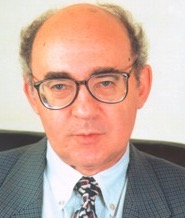 Vladimir I. Minkin合作论文数Institute of Physical and Organic Chemistry, Southern Federal University90
 G. V. Shilov合作论文数74Lev O. Atovmyan合作论文数70Andrey N. Utenyshev合作论文数40
 Boris Lukyanov合作论文数27
 Yu. A. Sayapin合作论文数27Ruven L Davidovich合作论文数23
 Leonid D. Popov合作论文数22Vitaly N Komissarov合作论文数21
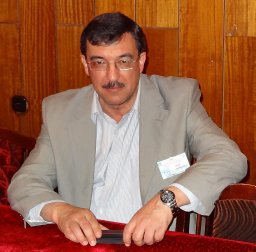 Anatoly V. Metelitsa合作论文数Institute of Physical and Organic Chemistry, Southern Federal University19VB Logvinova合作论文数18
 V. A. Bren’合作论文数18
 Artem Pugachev合作论文数17
 Igor N. Shcherbakov合作论文数Southern Federal University17MB Lukyanova合作论文数16
 Ilya V. Ozhogin合作论文数16Martin I Kabachnik合作论文数15I. V. Dorogan合作论文数14E. L. Mukhanov合作论文数14
 Alexander D. Dubonosov合作论文数14Vp Rybalkin合作论文数14Nikolai N Godovikov合作论文数14V. A. Kogan合作论文数14E. A. Gusakov合作论文数13G. S. Borodkin合作论文数13Nazmudin a Kardanov合作论文数13O. A. Raevskii合作论文数12S. A. Borodkin合作论文数12D. D. Makitova合作论文数12BS Luk'yanov合作论文数11Yu. S. Alekseenko合作论文数11Yu. P. Tupolova合作论文数11
 Anastasiia Kozlenko合作论文数10
 Sergey I. Levchenkov合作论文数Southern Scientific Center, Russian Academy of Sciences10S. O. Bezuglyi合作论文数9
 Alexandra A. Kolodina合作论文数Institute of Physical and Organic Chemistry, Southern Federal University9I. A. Rostovtseva合作论文数9Anatoly V. Chernyshev合作论文数9Eugenii N Shepelenko合作论文数9Andrey G Starikov合作论文数9Vladimir P. Kazachenko合作论文数9I. O. Tupaeva合作论文数8V. V. Lukov合作论文数8V. A. Chetverikova合作论文数7Lo Atovmyan合作论文数7BB Safoklov合作论文数7K. K. Zheltukhin合作论文数7V. E. Zubareva合作论文数7




