We report the synthesis, mesophase characterization, and ionic conductivity of a new family of liquid crystalline materials based on amphiphilic beta-cyclodextrin (beta-CD) derivatives. These unique derivatives are based on a novel design to have 14 aliphatic chains of varying lengths attached to the secondary face of beta-CD via ester linkages, and 14 O-monomethyl triethylene glycol units grafted onto the primary face via copper(i)-mediated azide-alkyne cycloaddition (CuAAC) with the help of chlorohydrin chemistry. Compared to previously reported analogues, these amphiphilic CDs exhibit a distinct molecular geometry with an expanded hydrophilic domain. Mesophase studies reveal that derivatives bearing longer aliphatic chains (>= C10) self-assemble into thermotropic liquid crystalline phases, predominantly forming smectic A (SmA) mesophases through nanophase segregation of polar and non-polar regions, while one derivative also demonstrates the ability to form a bicontinuous cubic phase that coexists with the lamellar phase. Solid-state nuclear magnetic resonance (NMR) and variable-temperature X-ray diffraction (XRD) studies confirm the presence of long-range molecular order within the SmA phases. Moreover, impedance spectroscopy reveals that these materials exhibit excellent lithium-ion conductivity, achieving a maximum of 4.86 & times; 10-3 S cm-1, suggesting their potential as a group of promising electrolytes based biodegradable scaffolds. This work underscores the potential of applying innovative molecular designs to enhance the performance of organic electrolytes.
We report the synthesis and mesomorphic studies of a family of amphiphilic β-cyclodextrin derivatives that are polyesterified at the secondary face with either 14 lauroyl or 14 stearoyl chains (apolar), and 7 tri- or tetra-ethylene glycols (polar) at the primary face. The end of each tri- and tetra-ethylene glycol chain is further modified with different terminal functionalities in term of their dipole moment (O-methyl vs O-acetyl vs O-2-cyanoethyl). This has generated several subgroups of amphiphilic β-cyclodextrin derivatives with a systematic change of their relative volumes of the hydrophobic and hydrophilic regions. Our studies showed that all these derivatives self-assemble into thermotropic liquid crystals, with the majority forming hexagonal column mesophases while three compounds form a bicontinuous cubic phase. We rationalized the mesomorphic behaviour of these compounds in term of the relative total van der Waals fractional volumes occupied by the hydrophilic and hydrophobic chains. Upon added with LiTFSI, the formed bicontinuous cubic phase (as a pure compound) was found to transition to form the more stable smectic A mesophase (composite), and both solid NMR studies and impedance spectroscopy revealed that these novel amphiphilic β-cyclodextrin-based liquid crystalline materials have the potential to be used as efficient electrolytes for lithium conduction.
To engage students in higher-order thinking skills, an inquiry-based dry laboratory experience was developed for upper-year undergraduate students, where students were introduced to machine learning approaches to solve chemical problems. Students constructed their own data set of diene and dienophile features and performed a multivariate linear regression in a Python environment to predict the energy barriers (Delta G double dagger) of a Diels-Alder system. They applied their models to a simulated drug development problem. Likert-scale surveys and qualitative interviews were utilized to collect data on student experiences. Students expressed that they felt strongly engaged in critical and creative thinking, collaboration, and metacognition. Subsequently, students felt that computational tools were more approachable, and had a stronger appreciation of how computational tools could be utilized in chemistry contexts. Students also expressed that they felt the freedom to make mistakes, reflect, and improve, embracing a growth mindset in this laboratory.
This study introduces a sustainable approach to designing organic cathode materials (OCMs) for lithium-ion batteries as a potential replacement for traditional metal-based electrodes. Utilizing green synthetic methodologies, we synthesized and characterized five distinct quinone derivatives and investigated their electrochemical attributes within Li-ion battery architectures. Notably, the observed specific capacities were lower than the theoretical predictions, suggesting limitations in achieving efficient redox reactions in a coin-cell configuration. Among the quinone derivatives studied, one variant derived from natural vanillin showed superior cycle stability, maintaining 58% capacity retention over 95 charge-discharge cycles, and achieving a Coulombic efficiency of 90%. Importantly, we discovered that the commonly used Super-P conductive carbon did not yield any measurable battery performance; instead, these quinones necessitated the incorporation of graphene nanoplatelets as the conductive matrix. Through a facile one-step synthesis in ethanol or water, we have demonstrated a viable synthetic route for producing OCMs, albeit with moderate performances, which have attempted to address common concerns of high solubility and poor redox reactivity of previous OCMs, thereby offering a sustainable pathway for the development of organic-based energy storage devices.
Capitalizing on careful assembly of benzenoid rings, benzo[ ghi ]perylene maximizes the diversity of edge features and reactivities. Experiment and theory unanimously support the notion that the sites are chemically distinguishable.
An entry from the Cambridge Structural Database, the world’s repository for small molecule crystal structures. The entry contains experimental data from a crystal diffraction study. The deposited dataset for this entry is freely available from the CCDC and typically includes 3D coordinates, cell parameters, space group, experimental conditions and quality measures.
The photophysical consequences of replacing the nitrogen heteroatom in phenothiazine with methylene are investigated for both solutions and crystalline solids. We analysed the excited state dynamics of four xanthene derivatives and observed an anomalous fluorescence from an energy level higher than the S1 state with lifetimes between 2.8 ns and 5.8 ns in solution and as solids. Additionally, the solid-state xanthene derivatives exhibited long-lived emission consistent with a triplet excited state, displaying millisecond lifetimes that ranged from 0.1 ms to 3.4 ms at ambient temperature in air. Our findings were supported by optical studies, crystallographic structural analyses, and DFT computations, which corroborated the photophysical measurements. It was concluded that the presence of the nitrogen atom in phenothiazine is crucial for achieving ultra-long emission lifetimes and that these results contribute to a deeper understanding of excited state dynamics which have potential implications for applications, such as display technologies, anticounterfeiting technologies, and sensors.
Tethering of two shape mismatched donors and acceptor leads to an unusual mesogen design.
This case study provides evidence for the appearance of multiple aggregation forms of a single organic dye, arising from its packing polymorphs in the solid state. Each aggregate can be spectroscopically matched to one polymorph, acquiring nanoscopic structural information even in the absence of conventional H- or J-type aggregation spectral features. The conversion from one polymorphic aggregate to another supports the action of Ostwald's rule of stages in organic aggregates suspended in solution. Mechanistically, dye molecules from one aggregate dissociate then renucleate the more stable aggregate form, the first demonstration for an aggregation-induced emission-active organic dye.
Developing structure-aggregation relationships of cyanine dyes is crucial for controlling their optical properties for various uses. This study develops a synthetic route and the structure-dependent self-assembly of a family of benzimidacarbocyanine dyes for J- or H-aggregation properties. It was found that both the presence and placement of halogen atoms play a defining role in the resulting supramolecular interactions of these compounds.
Exploration of the sterically-congested ethane diethyl dixanthenyl-9,9 '-dicarboxylate has revealed the dynamic behavior arising from its congested C-C bond. Interlocking 'geared' substituents and favorable dispersion interactions around this bond result in a conformational preference for partially cofacial xanthene moieties both in solid state and as dilute solutions. The weak, centrally located C-C bond is 1.628 angstrom long and permits selective thermolysis to yield two carbon-centered ethyl xanthenyl-9-carboxylate radicals, which dimerize with high fidelity into the original sterically-congested ethane. Recombination of the radicals into this symmetrical head-to-head dimer is highly reproducible - by observing the equilibrium, the bond dissociation enthalpy was calculated to be 20.4 kcal . mol(-1). The substituents around the central carbon provide insufficient stabilization against oxygen, which consumes the radicals and unbalances the dimer-radical equilibrium.
In the scientific literature, the term aqueous environment is loosely employed as it encompasses a broad range of different buffering agents. While there is an increasing number of experimental evidence that point toward specific buffer effects extending far beyond pH, the impact of the chemical nature of the buffering ions is often disregarded, especially in photochemical studies. Herein, we highlighted the importance of buffer specific effects on both the photobleaching and the singlet oxygen quantum yields of a dye in aqueous environments. For this study, we chose erythrosine B (EB) as our model photosensitizer as its photochemistry and photobleaching are well documented in the literature. We followed EB’s photobleaching via absorption spectroscopy in four different aqueous solvents, including pure water, phosphate, Tris and HEPES buffer. These buffer systems were selected because they are commonly used in biochemical and biological applications. Our results show that specific buffer effects cannot be neglected. Indeed, the singlet oxygen quantum yield for EB is significantly different in HEPES compared to the other solvents. Furthermore, we showed that EB’s photoproduct is highly dependent on the nature of the chemical buffer being used.
Core-expanded pyrenes exhibit rainbow solvatochromism, reversible acidochromism in both solution and solid-state, and reversible crystal-to-crystal mechanochromism all governed by substitution pattern.
s are listed in the order of appearance It Runs in the Family! ‘Glowing’ Report Card in MetalSensitivity for Three Organic Molecules Presenter's name: David T. Hogan Supervisor: Dr. Todd C. Sutherland Presenter's field of study: Chemistry Presenter's program: M.Sc. Student Abstract: The technology, manufacturing, and pharmaceutical industries have dramatically improved our quality of life, but they are each responsible for tremendous amounts of pollution in the form of metal-tainted water. These dissolved metallic impurities are typically removed The technology, manufacturing, and pharmaceutical industries have dramatically improved our quality of life, but they are each responsible for tremendous amounts of pollution in the form of metal-tainted water. These dissolved metallic impurities are typically removed from waste streams, butegulatory oversight is lacking in some regions of the globe. Detecting these toxic dissolved metals is important to diagnose industrial malpractice and identify clean-up sites. Organic indicators that change visible colour or glow in response to metal contaminants are simple to measure and easy to bring into the field. Our lab has investigated three structurally-related indicators in the same molecular family that change from colourless to yellow & red and emit green & orange light in the presence of dissolved aluminium and indium. The colourful response was in fact much more sensitive than competitor molecules in the scientific literature. This discussion will demonstrate that this molecular family truly deserves a ‘glowing’ report card! GIS for Delineating Stream Network Presenter's name: Mohamed Shawky Supervisor: Dr. Naser ElSheimy Presenter's field of study: Geomatics Engineering Presenter's program: Ph.D. Candidate Abstract: A Geographic Information System (GIS) is a set of computer-based techniques and methods that are used to collect, manage, analyze, and visualize geospatial data. Remote sensing-based Digital Elevation Models (DEMs) are considered one of the major sources of geospatial information, particularly for delineating stream networks. The computed geomorphometric parameters using drainage network (e.g., drainage density, texture ratio, length of overland flow, and ruggedness number) are known to be the primary inputs for many hydrological studies. The steps required to extract the networks from DEMs are filling pits, deriving flow direction, specifying flow accumulation area threshold, and assigning orders of channels. In this study, the Shuttle Radar Topography Mission (SRTM) DEM with a spatial resolution of 30 m has been used to extract the drainage networks. The eight-direction (D8), multi-flow direction (MFD), and D-infinity (DINF) algorithms have been used in the extraction of the drainage networks. The effect of using different flow path algorithms on computing different geomorphometric parameters has been explored. The initial results showed similarity between the elongation and circularity ratios computed from D8and MFD-based drainage networks. The findings of this study will help to improve the accuracy of different hydrological and geomorphological models. A Geographic Information System (GIS) is a set of computer-based techniques and methods that are used to collect, manage, analyze, and visualize geospatial data. Remote sensing-based Digital Elevation Models (DEMs) are considered one of the major sources of geospatial information, particularly for delineating stream networks. The computed geomorphometric parameters using drainage network (e.g., drainage density, texture ratio, length of overland flow, and ruggedness number) are known to be the primary inputs for many hydrological studies. The steps required to extract the networks from DEMs are filling pits, deriving flow direction, specifying flow accumulation area threshold, and assigning orders of channels. In this study, the Shuttle Radar Topography Mission (SRTM) DEM with a spatial resolution of 30 m has been used to extract the drainage networks. The eight-direction (D8), multi-flow direction (MFD), and D-infinity (DINF) algorithms have been used in the extraction of the drainage networks. The effect of using different flow path algorithms on computing different geomorphometric parameters has been explored. The initial results showed similarity between the elongation and circularity ratios computed from D8and MFD-based drainage networks. The findings of this study will help to improve the accuracy of different hydrological and geomorphological models.
The synthesis of six tetrathia-oligothiophene macrocycles is described with modest ring-closing yields between 21 and 55%. Single-crystal X-ray studies of four of the macrocycles indicated that encapsulated solvent or guest molecules were possible. A variety of guest molecules were explored for inclusion complexes via NMR, absorption, emission, and X-ray techniques. The solution-phase inclusion complexes were uninformative; yet the solid-state experiments revealed that solvent exchangeable channels exist through the macrocyclic pores.
Near-IR absorbing, self-assembling pyrene donor–acceptor chromophore with low reduction potentials.
Three chemodosimeters that exhibit up to 3000-fold enhancement in turn-on visible colour and emission in the presence of oxophilic metal cations.
 Bernie Kraatz合作论文数Department of Chemistry, Faculty of Arts and Science, University of Toronto15
 David T. Hogan合作论文数12
 Yitao Long (龙亿涛)合作论文数State Key Laboratory of Analytical Chemistry for Life Science, School of Chemistry and Chemical Engineering, Nanjing University;Anhui University of Technology;Department of Chemistry, University of Bath;School of Chemistry, University of Birmingham;Department of Chemistry, University of Western Ontario12
 Masood Parvez合作论文数Department of Chemistry, University of Calgary8
 Thomas Baumgartner合作论文数Department of Chemistry, Faculty of Science, York University7Belinda Heyne合作论文数7Press David J合作论文数6
 Jeremy Lee合作论文数Department of Biochemistry, College of Medicine, University of Saskatchewan6
 Gelfand Benjamin S合作论文数Department of Chemistry, University of Calgary5
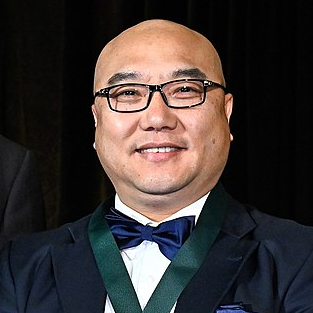 Chenzhong Li (李晨钟)合作论文数Faculty of Medicine, The Chinese University of Hong Kong, Shenzhen;Tulane University5Bromby Ashley D合作论文数5Raphael P. Jimenez合作论文数4
 Keller Samantha N合作论文数Department of Chemistry, University of Calgary4Robin Krüger合作论文数4
 Vance Williams合作论文数4Francis E. Appoh合作论文数4Shauna Schechtel合作论文数3
 Chris Gendy合作论文数3Thériault Kim D合作论文数3Austin Che合作论文数2
 Chang Chun Ling合作论文数2
 Wang Hay Kan (简宏希)合作论文数China Spallation Neutron Source, Institute of High Energy Physics, Chinese Academy of Sciences;University of Chinese Academy of Sciences2
 Diganta Sarkar合作论文数2Thomas Linder合作论文数2
 Chase L. Radford合作论文数Dept Chem, Univ Saskatchewan2
 Venkataraman Thangadurai合作论文数Department of Chemistry, University of Calgary2Murschell Amy E合作论文数2
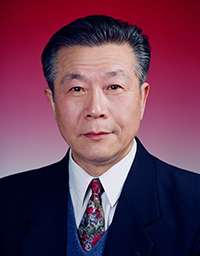 Hongyuan Chen (陈洪渊)合作论文数School of Chemistry, Nanjing University2
 Wei Ma (马巍)合作论文数School of Chemistry and Molecular Engineering, East China University of Science and Technology2
 Dawei Li (李大伟)合作论文数School of Chemistry and Molecular Engineering, East China University of Science and Technology2
 Bruce Lennox合作论文数Department of Chemistry, McGill University2
 Thomas George Back合作论文数University of Calgary2Irene Bediako-Amoa合作论文数2Somenath Chowdhury合作论文数2
 Vladimir K Michaelis合作论文数AB T6G 2G2, Univ Alberta2Anusha D. Abhayawardhana合作论文数2Terry J. Gordon合作论文数2
 Yilun Ying (应佚伦)合作论文数State Key Laboratory of Analytical Chemistry for Life Science, School of Chemistry and Chemical Engineering, Nanjing University2
 Denis M. Spasyuk合作论文数2Brandon LeBlanc合作论文数1Tyler A Tuck合作论文数1Olga Kravchenko合作论文数1Wen Zhou合作论文数1Js Lee合作论文数1
 Liyan Xing合作论文数1Zachary S Dubrawski合作论文数1
 Yang Li合作论文数1
 Subhajit Sarkar合作论文数Inst Nano Sci & Technol INST1
 Brian Baker合作论文数University of Utah Nanofab1




