In conversational AI, personalizing dialogues with persona profiles and contextual understanding is essential. Despite large language models' (LLMs) improved response coherence, effective persona integration remains a challenge. In this work, we first study two common approaches for personalizing LLMs: textual prompting and direct fine-tuning. We observed that textual prompting often struggles to yield responses that are similar to the ground truths in datasets, while direct fine-tuning tends to produce repetitive or overly generic replies. To alleviate those issues, we propose Selective Prompt Tuning (SPT), which softly prompts LLMs for personalized conversations in a selective way. Concretely, SPT initializes a set of soft prompts and uses a trainable dense retriever to adaptively select suitable soft prompts for LLMs according to different input contexts, where the prompt retriever is dynamically updated through feedback from the LLMs. Additionally, we propose context-prompt contrastive learning and prompt fusion learning to encourage the SPT to enhance the diversity of personalized conversations. Experiments on the CONVAI2 dataset demonstrate that SPT significantly enhances response diversity by up to 90%, along with improvements in other critical performance indicators. Those results highlight the efficacy of SPT in fostering engaging and personalized dialogue generation. The SPT model code is publicly available for further exploration.
In this paper, we present Cross Language Agent – Simultaneous Interpretation, CLASI, a high-quality and human-like Simultaneous Speech Translation (SiST) System. Inspired by professional human interpreters, we utilize a novel data-driven read-write strategy to balance the translation quality and latency. To address the challenge of translating in-domain terminologies, CLASI employs a multi-modal retrieving module to obtain relevant information to augment the translation. Supported by LLMs, our approach can generate error-tolerated translation by considering the input audio, historical context, and retrieved information. Experimental results show that our system outperforms other systems by significant margins. Aligned with professional human interpreters, we evaluate CLASI with a better human evaluation metric, valid information proportion (VIP), which measures the amount of information that can be successfully conveyed to the listeners. In the real-world scenarios, where the speeches are often disfluent, informal, and unclear, CLASI achieves VIP of 81.3 translation directions, respectively. In contrast, state-of-the-art commercial or open-source systems only achieve 35.4 dataset, where other systems achieve under 13 VIP.
With recent rapid growth of large language models (LLMs), discrete speech tokenization has played an important role for injecting speech into LLMs. However, this discretization gives rise to a loss of information, consequently impairing overall performance. To improve the performance of these discrete speech tokens, we present RepCodec, a novel speech representation codec for semantic speech tokenization. In contrast to audio codecs which reconstruct the raw audio, RepCodec learns a vector quantization codebook through reconstructing speech representations from speech encoders like HuBERT or data2vec. Together, the speech encoder, the codec encoder and the vector quantization codebook form a pipeline for converting speech waveforms into semantic tokens. The extensive experiments illustrate that RepCodec, by virtue of its enhanced information retention capacity, significantly outperforms the widely used k-means clustering approach in both speech understanding and generation. Furthermore, this superiority extends across various speech encoders and languages, affirming the robustness of RepCodec. We believe our method can facilitate large language modeling research on speech processing.
We propose PolyVoice, a language model-based framework for speech-to-speech translation (S2ST) system. Our framework consists of two language models: a translation language model and a speech synthesis language model. We use discretized speech units, which are generated in a fully unsupervised way, and thus our framework can be used for unwritten languages. For the speech synthesis part, we adopt the existing VALL-E X approach and build a unit-based audio language model. This grants our framework the ability to preserve the voice characteristics and the speaking style of the original speech. We examine our system on Chinese $\rightarrow$ English and English $\rightarrow$ Spanish pairs. Experimental results show that our system can generate speech with high translation quality and audio quality. Speech samples are available at https://speechtranslation.github.io/polyvoice.
The advancement of audio-language (AL) multimodal learning tasks has been significant in recent years. However, researchers face challenges due to the costly and time-consuming collection process of existing audio-language datasets, which are limited in size. To address this data scarcity issue, we introduce WavCaps, the first large-scale weakly-labelled audio captioning dataset, comprising approximately 400k audio clips with paired captions. We sourced audio clips and their raw descriptions from web sources and a sound event detection dataset. However, the online-harvested raw descriptions are highly noisy and unsuitable for direct use in tasks such as automated audio captioning. To overcome this issue, we propose a three-stage processing pipeline for filtering noisy data and generating high-quality captions, where ChatGPT, a large language model, is leveraged to filter and transform raw descriptions automatically. We conduct a comprehensive analysis of the characteristics of WavCaps dataset and evaluate it on multiple downstream audio-language multimodal learning tasks. The systems trained on WavCaps outperform previous state-of-the-art (SOTA) models by a significant margin. Our aspiration is for the WavCaps dataset we have proposed to facilitate research in audio-language multimodal learning and demonstrate the potential of utilizing ChatGPT to enhance academic research. Our dataset and codes are available at https://github.com/XinhaoMei/WavCaps.
Speech is the surface form of a finite set of phonetic units, which can be represented by discrete codes. We propose the Code BERT (CoBERT) approach for self-supervised speech representation learning. The idea is to convert an utterance to a sequence of discrete codes, and perform code representation learning, where we predict the code representations based on a masked view of the original speech input. Unlike the prior self-distillation approaches of which the teacher and the student are of the same modality, our target model predicts representations from a different modality. CoBERT outperforms the most recent state-of-the-art performance on the ASR task and brings significant improvements on the SUPERB speech translation (ST) task. Our code and models are released at https://github.com/mct10/CoBERT.
This paper introduces GigaST, a large-scale pseudo speech translation (ST) corpus. We create the corpus by translating the text in GigaSpeech, an English ASR corpus, into German and Chinese. The training set is translated by a strong machine translation system and the test set is translated by human. ST models trained with an addition of our corpus obtain new state-of-the-art results on the MuST-C English-German benchmark test set. We provide a detailed description of the translation process and verify its quality. We make the translated text data public and hope to facilitate research in speech translation. Additionally, we also release the training scripts on NeurST to make it easy to replicate our systems. GigaST dataset is available at https://st-benchmark.github.io/resources/GigaST.
Persona-based dialogue systems aim to generate consistent responses based on historical context and predefined persona. Unlike conventional dialogue generation, the persona-based dialogue needs to consider both dialogue context and persona, posing a challenge for coherent training. Specifically, this requires a delicate weight balance between context and persona. To achieve that, in this paper, we propose an effective framework with Persona-Adaptive Attention (PAA), which adaptively integrates the weights from the persona and context information via our designed attention. In addition, a dynamic masking mechanism is applied to the PAA to not only drop redundant information in context and persona but also serve as a regularization mechanism to avoid overfitting. Experimental results demonstrate the superiority of the proposed PAA framework compared to the strong baselines in both automatic and human evaluation. Moreover, the proposed PAA approach can perform equivalently well in a low-resource regime compared to models trained in a full-data setting, which achieve a similar result with only 20% to 30% of data compared to the larger models trained in the full-data setting. To fully exploit the effectiveness of our design, we designed several variants for handling the weighted information in different ways, showing the necessity and sufficiency of our weighting and masking designs.
As a subjective metric to evaluate the quality of synthesized speech, Mean opinion score (MOS) usually requires multiple annotators to score the same speech. Such an annotation approach requires a lot of manpower and is also time-consuming. MOS prediction model for automatic evaluation can significantly reduce labor cost. In previous works, it is difficult to accurately rank the quality of speech when the MOS scores are close. However, in practical applications, it is more important to correctly rank the quality of synthesis systems or sentences than simply predicting MOS scores. Meanwhile, as each annotator scores multiple audios during annotation, the score is probably a relative value based on the first or the first few speech scores given by the annotator. Motivated by the above two points, we propose a general framework for MOS prediction based on pair comparison (MOSPC), and we utilize C-Mixup algorithm to enhance the generalization performance of MOSPC. The experiments on BVCC and VCC2018 show that our framework outperforms the baselines on most of the correlation coefficient metrics, especially on the metric KTAU related to quality ranking. And our framework also surpasses the strong baseline in ranking accuracy on each fine-grained segment. These results indicate that our framework contributes to improving the ranking accuracy of speech quality.
Most existing vision-language pre-training (VLP) approaches adopt cross-modal masked language modeling (CMLM) to learn vision-language associations. However, we find that CMLM is insufficient for this purpose according to our observations: (1) Modality bias: a considerable amount of masked tokens in CMLM can be recovered with only the language information, ignoring the visual inputs. (2) Under-utilization of the unmasked tokens: CMLM primarily focuses on the masked token but it cannot simultaneously leverage other tokens to learn vision-language associations. To handle those limitations, we propose EPIC (lEveraging Per Image-Token Consistency for vision-language pre-training). In EPIC, for each image-sentence pair, we mask tokens that are salient to the image (i.e., Saliency-based Masking Strategy) and replace them with alternatives sampled from a language model (i.e., Inconsistent Token Generation Procedure), and then the model is required to determine for each token in the sentence whether it is consistent with the image (i.e., Image-Token Consistency Task). The proposed EPIC method is easily combined with pre-training methods. Extensive experiments show that the combination of the EPIC method and state-of-the-art pre-training approaches, including ViLT, ALBEF, METER, and X-VLM, leads to significant improvements on downstream tasks. Our coude is released at https://github.com/gyhdog99/epic
Personalized dialogue generation, focusing on generating highly tailored responses by leveraging persona profiles and dialogue context, has gained significant attention in conversational AI applications. However, persona profiles, a prevalent setting in current personalized dialogue datasets, typically composed of merely four to five sentences, may not offer comprehensive descriptions of the persona about the agent, posing a challenge to generate truly personalized dialogues. To handle this problem, we propose $\textbf{L}$earning Retrieval $\textbf{A}$ugmentation for $\textbf{P}$ersonalized $\textbf{D}$ial$\textbf{O}$gue $\textbf{G}$eneration ($\textbf{LAPDOG}$), which studies the potential of leveraging external knowledge for persona dialogue generation. Specifically, the proposed LAPDOG model consists of a story retriever and a dialogue generator. The story retriever uses a given persona profile as queries to retrieve relevant information from the story document, which serves as a supplementary context to augment the persona profile. The dialogue generator utilizes both the dialogue history and the augmented persona profile to generate personalized responses. For optimization, we adopt a joint training framework that collaboratively learns the story retriever and dialogue generator, where the story retriever is optimized towards desired ultimate metrics (e.g., BLEU) to retrieve content for the dialogue generator to generate personalized responses. Experiments conducted on the CONVAI2 dataset with ROCStory as a supplementary data source show that the proposed LAPDOG method substantially outperforms the baselines, indicating the effectiveness of the proposed method. The LAPDOG model code is publicly available for further exploration.
Given the great success of large language models (LLMs) across various tasks, in this paper, we introduce LLM-ST, a novel and effective speech translation model constructed upon a pre-trained LLM. By integrating the large language model (LLM) with a speech encoder and employing multi-task instruction tuning, LLM-ST can produce accurate timestamped transcriptions and translations, even from long audio inputs. Furthermore, our findings indicate that the implementation of Chain-of-Thought (CoT) prompting can yield advantages in the context of LLM-ST. Through rigorous experimentation on English and Chinese datasets, we showcase the exceptional performance of LLM-ST, establishing a new benchmark in the field of speech translation. Demo: https://speechtranslation.github.io/llm-st/.
Combining end-to-end speech translation (ST) and non-autoregressive (NAR) generation is promising in language and speech processing for their advantages of less error propagation and low latency. In this paper, we investigate the potential of connectionist temporal classification (CTC) for non-autoregressive speech translation (NAST). In particular, we develop a model consisting of two encoders that are guided by CTC to predict the source and target texts, respectively. Introducing CTC into NAST on both language sides has obvious challenges: 1) the conditional independent generation somewhat breaks the interdependency among tokens, and 2) the monotonic alignment assumption in standard CTC does not hold in translation tasks. In response, we develop a prediction-aware encoding approach and a cross-layer attention approach to address these issues. We also use curriculum learning to improve convergence of training. Experiments on the MuST-C ST benchmarks show that our NAST model achieves an average BLEU score of 29.5 with a speed-up of 5.67$\times$, which is comparable to the autoregressive counterpart and even outperforms the previous best result of 0.9 BLEU points.
Audio captioning aims to generate text descriptions of audio clips. In the real world, many objects produce similar sounds. How to accurately recognize ambiguous sounds is a major challenge for audio captioning. In this work, inspired by inherent human multimodal perception, we propose visually-aware audio captioning, which makes use of visual information to help the description of ambiguous sounding objects. Specifically, we introduce an off-the-shelf visual encoder to extract video features and incorporate the visual features into an audio captioning system. Furthermore, to better exploit complementary audio-visual contexts, we propose an audio-visual attention mechanism that adaptively integrates audio and visual context and removes the redundant information in the latent space. Experimental results on AudioCaps, the largest audio captioning dataset, show that our proposed method achieves state-of-the-art results on machine translation metrics.
Recently, speech-to-text translation has attracted more and more attention and many studies have emerged rapidly. In this paper, we present a comprehensive survey on direct speech translation aiming to summarize the current state-of-the-art techniques. First, we categorize the existing research work into three directions based on the main challenges -- modeling burden, data scarcity, and application issues. To tackle the problem of modeling burden, two main structures have been proposed, encoder-decoder framework (Transformer and the variants) and multitask frameworks. For the challenge of data scarcity, recent work resorts to many sophisticated techniques, such as data augmentation, pre-training, knowledge distillation, and multilingual modeling. We analyze and summarize the application issues, which include real-time, segmentation, named entity, gender bias, and codeswitching. Finally, we discuss some promising directions for future work.
How to solve the data scarcity problem for end-to-end speech-to-text translation (ST)? It’s well known that data augmentation is an efficient method to improve performance for many tasks by enlarging the dataset. In this paper, we propose Mix at three levels for Speech Translation (M 3 ST) method to increase the diversity of the augmented training corpus. Specifically, we conduct two phases of fine-tuning based on a pre-trained model using external machine translation (MT) data. In the first stage of fine-tuning, we mix the training corpus at three levels, including word level, sentence level and frame level, and fine-tune the entire model with mixed data. At the second stage of fine-tuning, we take both original speech sequences and original text sequences in parallel into the model to fine-tune the network, and use Jensen-Shannon divergence to regularize their outputs. Experiments on MuST-C speech translation benchmark and analysis show M 3 ST outperforms current strong baselines and achieves state-of-the-art results on eight directions with an average BLEU of 29.9.
How can speech-to-text translation (ST) perform as well as machine translation (MT)? The key point is to bridge the modality gap between speech and text so that useful MT techniques can be applied to ST. Recently, the approach of representing speech with unsupervised discrete units yields a new way to ease the modality problem. This motivates us to propose Discrete Unit Back-translation (DUB) to answer two questions: (1) Is it better to represent speech with discrete units than with continuous features in direct ST? (2) How much benefit can useful MT techniques bring to ST? With DUB, the back-translation technique can successfully be applied on direct ST and obtains an average boost of 5.5 BLEU on MuST-C En-De/Fr/Es. In the low-resource language scenario, our method achieves comparable performance to existing methods that rely on large-scale external data. Code and models are available at https://github.com/0nutation/DUB.
This paper reports on the shared tasks organized by the 20th IWSLT Conference. The shared tasks address 9 scientific challenges in spoken language translation: simultaneous and offline translation, automatic subtitling and dubbing, speech-to-speech translation, multilingual, dialect and low-resource speech translation, and formality control. The shared tasks attracted a total of 38 submissions by 31 teams. The growing interest towards spoken language translation is also witnessed by the constantly increasing number of shared task organizers and contributors to the overview paper, almost evenly distributed across industry and academia.
Machine Speech Chain integrates both end-to-end (E2E) automatic speech recognition (ASR) and neural text-to-speech (TTS) into one circle for joint training. It has been proven that it can effectively leverage a large amount of unpaired data in the spirit of data augmentation. In this paper, we explore the TTS→ASR pipeline in machine speech chain to perform domain adaptation for both E2E ASR and neural TTS models with only text data from the target domain. We conduct experiments by adapting from audiobook domain (i.e., LibriSpeech) to presentation domain (i.e., TED-LIUM). There is a relative word error rate (WER) reduction of 19.7% for the E2E ASR model on the TED-LIUM test set, and a relative WER reduction of 29.4% in synthetic speech generated by neural TTS in the presentation domain. Moreover, we observe that the gains from the proposed method and conventional adaptation methods of language models are additive.
 Mingxuan Wang合作论文数Bytedance AI Lab;Tencent12
 Yu Zhang (张宇)合作论文数Department of Computer Science and Engineering, College of Engineering, Southern University of Science and Technology10
 Qianqian Dong合作论文数ByteDance AI Lab9
 Brian Kan Wing Mak (麥鑑榮)合作论文数Department of Computer Science and Engineering, School of Engineering, The Hong Kong University of Science and Technology8
 Qiushi Huang合作论文数Southern University of Science and Technology;Computer Science Research Centre, University of Surrey7
 Xubo Liu (刘徐博)合作论文数Meta7
 Wenwu Wang合作论文数Centre for Vision, Speech and Signal Processing, School of Computer Science and Electronic Engineering, Faculty of Engineering and Physical Sciences, University of Surrey;Surrey Institute for People Centred Artificial Intelligence, University of Surrey7
 Yangbin Chen合作论文数Department of Computer Science, City University of Hong Kong, Hong Kong6
 H Lilian Tang合作论文数Computer Science Research Centre, School of Computer Science and Electronic Engineering, University of Surrey;Department of Computer Science, University of Surrey6
 Junyi Ao合作论文数Department of Computer Science and Engineering, Southern University of Science and Technology6
 Qing Li (李青)合作论文数Department of Computing, Faculty of Engineering, Hong Kong Polytechnic University6Fengpeng Yue合作论文数5Chutong Meng合作论文数4
 Xinhao Mei (梅昕浩)合作论文数Meta4Rong Ye合作论文数ByteDance AI Lab, Beijing, Peoples R China4
 Long Zhou (周龙)合作论文数Natural Language Computing Group, Microsoft Research Asia4
 Mark Plumbley合作论文数Centre for Vision, Speech and Signal Processing, Department of Electrical and Electronic Engineering, School of Computer Science and Electronic Engineering, University of Surrey4Jingsong Wang合作论文数3Yunlong Zhao合作论文数3Kexin Wang合作论文数3Qibing Bai合作论文数3
 Xin Jiang合作论文数Speech and Semantics Lab, Noah’s Ark Lab, Huawei Technologies3
 Weiwei Tu (塗威威)合作论文数LAMDA Group, Department of Computer Science and Technology, Nanjing University3
 Zhihua Wei (卫志华)合作论文数Department of Computer Science and Techonology, School of Computer Science and Technology, Tongji University3Zhichao Huang (黄志超)合作论文数3
 Xu Chen (许晨)合作论文数College of Computer Science and Technology, Harbin Engineering University3
 Sanjeev Khudanpur合作论文数Center for Language and Speech Processing, Whiting School of Engineering, Johns Hopkins University;Department of Electrical and Computer Engineering, Whiting School of Engineering, Johns Hopkins University3
 Bo Wu (吴波)合作论文数Columbia University3
 Haizhou Li (李海洲)合作论文数School of Data Science, Chinese University of Hong Kong, Shenzhen;Department of Electrical and Computer Engineering, National University of Singapore;Machine Listening Lab, University of Bremen3
 Shujie Liu (刘树杰)合作论文数Microsoft Research Asia3
 Lifeng Shang (尚利峰)合作论文数Huawei Noah's Ark Lab3
 Chengqi Zhao合作论文数ByteDance AI Lab3
 Dan Povey合作论文数Xiaomi3
 Vijayaditya Peddinti合作论文数Stealth AI Startup3Rui Wang合作论文数2
 Haohe Liu (刘濠赫)合作论文数Centre for Vision Speech and Signal Processing, University of Surrey2
 Xuxin Cheng合作论文数School of ECE, Peking University2
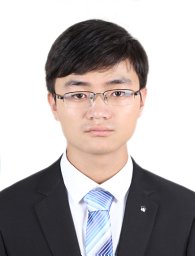 Qijie Shao合作论文数Audio Speech & Language Proc Grp ASLP NPU, Northwestern Polytech Univ2
 Chen Xiao合作论文数Huawei2
 Qiuqiang Kong (孔秋强)合作论文数Department of Electronic Engineering, The Chinese University of Hong Kong2
 Shengchen Li (李圣辰)合作论文数北京邮电大学电子工程学院2
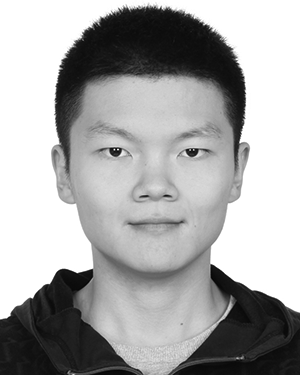 Lei He合作论文数2
 Shanbo Cheng (程善伯)合作论文数ByteDance Seed2
 Yuexian Zou (邹月娴)合作论文数School of Electronic and Computer Engineering, Peking University;Advanced Data & Signal Processing Laboratory, Peking University2
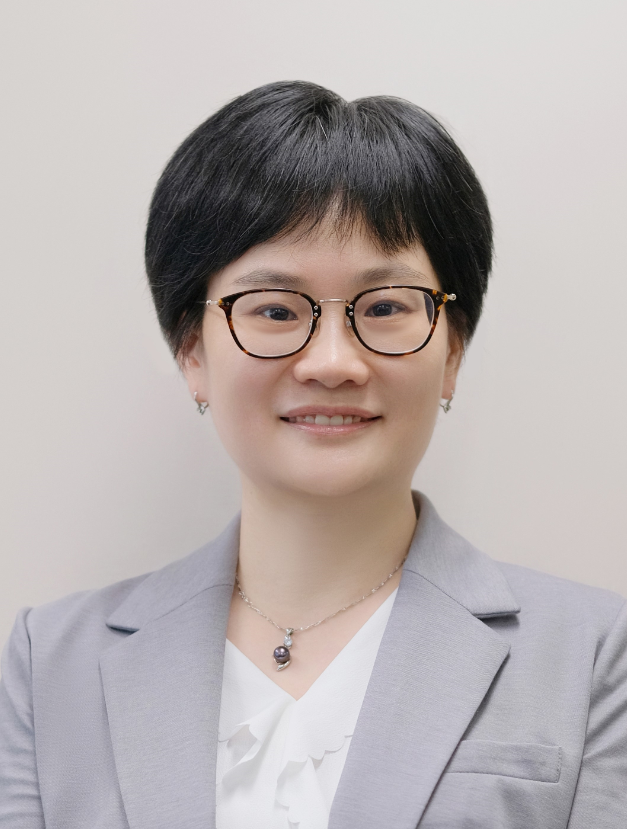 Jianping Wang (汪建平)合作论文数Multimedia Software Engineering Research Centre, City University of Hong Kong;Department of Computer Science, College of Computing, City University of Hong Kong2
 Jinyu Li合作论文数Microsoft2
 Furu Wei (韦福如)合作论文数Microsoft Research Asia2
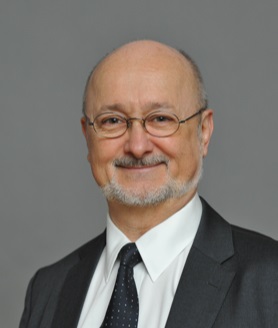 Alex Waibel合作论文数Interactive Systems Labs, Institute for Anthropomatics and Robotics, Karlsruhe Institute for Technology;InterACT;Carnegie Mellon University2
 Jingbo Zhu (朱靖波)合作论文数School of Computer Science and Engineering, Northeastern University2