Neural fields, also known as implicit neural representations (INRs), offer a powerful framework for modeling continuous geometry, but their effectiveness in high-dimensional scientific settings is limited by slow convergence and scaling challenges. In this study, we extend INR models to handle spatiotemporal and multivariate signals and show how INR features can be transferred across scientific signals to enable efficient and scalable representation across time and ensemble runs in an amortized fashion. Across controlled transformation regimes (e.g., geometric transformations and localized perturbations of synthetic fields) and high-fidelity scientific domains-including turbulent flows, fluid-material impact dynamics, and astrophysical systems-we show that transferable features improve not only signal fidelity but also the accuracy of derived geometric and physical quantities, including density gradients and vorticity. In particular, transferable features reduce iterations to reach target reconstruction quality by up to an order of magnitude, increase early-stage reconstruction quality by multiple dB (with gains exceeding 10 dB in some cases), and consistently improve gradient-based physical accuracy.
With recent advances in frontier multimodal large language models (MLLMs) for data understanding and visual reasoning, the role of LLMs has evolved from passive LLM-as-an-interface to proactive LLM-as-a-judge, enabling deeper integration into the scientific data analysis and visualization pipelines. However, existing scientific visualization agents still rely on domain experts to provide prior knowledge for specific datasets or visualization-oriented objective functions to guide the workflow through iterative feedback. This reactive, data-dependent, human-in-the-loop (HITL) paradigm is time-consuming and does not scale effectively to large-scale scientific data. In this work, we propose a Self-Directed Agent for Scientific Analysis and Visualization (SASAV), the first fully autonomous AI agent to perform scientific data analysis and generate insightful visualizations without any external prompting or HITL feedback. SASAV is a multi-agent system that automatically orchestrates data exploration workflows through our proposed components, including automated data profiling, context-aware knowledge retrieval, and reasoning-driven visualization parameter exploration, while supporting downstream interactive visualization tasks. This work establishes a foundational building block for the future AI for Science to accelerate scientific discovery and innovation at scale.
Visualizing a large-scale volumetric dataset with high resolution is challenging due to the substantial computational time and space complexity. Recent deep learning-based image inpainting methods significantly improve rendering latency by reconstructing a high-resolution image for visualization in constant time on GPU from a partially rendered image where only a portion of pixels go through the expensive rendering pipeline. However, existing solutions need to render every pixel of either a predefined regular sampling pattern or an irregular sample pattern predicted from a low-resolution image rendering. Both methods require a significant amount of expensive pixel-level rendering. In this work, we provide Importance Mask Learning (IML) and Synthesis (IMS) networks, which are the first attempts to directly synthesize important regions of the regular sampling pattern from the user's view parameters, to further minimize the number of pixels to render by jointly considering the dataset, user behavior, and the downstream reconstruction neural network. Our solution is a unified framework to handle various types of inpainting methods through the proposed differentiable compaction/decompaction layers. Experiments show our method can further improve the overall rendering latency of state-of-the-art volume visualization methods using reconstruction neural network for free when rendering scientific volumetric datasets. Our method can also directly optimize the off-the-shelf pre-trained reconstruction neural networks without elongated retraining.
The development of next-generation molecular simulation models requires moving beyond predefined functional forms toward machine learning (ML) techniques that directly capture multiscale physics. Here, we demonstrate such an approach using symbolic regression (SR) with equation learner networks and a reinforcement learning search engine to derive interpretable equations for interatomic interactions. Training data were generated through nested ensemble sampling with density functional theory (DFT) energetics, spanning crystalline to highly disordered states. The optimization of the learner network employed continuous-action Monte Carlo Tree Search (MCTS) combined with gradient descent, enabling efficient exploration of function space. For copper as a representative transition metal, an unconstrained search produced models that outperformed fixed-form Sutton–Chen EAM potentials. The SR-derived models (SR1 and SR2) reproduced key material properties—lattice constants, cohesive energies, equations of state, elastic constants, phonon dispersion, defect formation energies, surface/bulk energetics, and phase transformation with significantly improved accuracy. Furthermore, stringent melting simulations using two-phase solid-amorphous interfaces confirmed that SR models accurately capture the interplay of vibrational entropy, cohesive energy, and structural dynamics, surpassing SC-EAM in both qualitative and quantitative predictions. This highlights the potential of SR to deliver fast, accurate, flexible, and physically meaningful potentials, advancing predictive modeling across scales.
Recent advances in large language models (LLMs) have enabled agentic systems that translate natural language intent into executable scientific visualization (SciVis) tasks. Despite rapid progress, the community lacks a principled and reproducible benchmark for evaluating these emerging SciVis agents in realistic, multi-step analysis settings. We present SciVisAgentBench, a comprehensive and extensible benchmark for evaluating scientific data analysis and visualization agents. Our benchmark is grounded in a structured taxonomy spanning four dimensions: application domain, data type, complexity level, and visualization operation. It currently comprises 108 expert-crafted cases covering diverse SciVis scenarios. To enable reliable assessment, we introduce a multimodal outcome-centric evaluation pipeline that combines LLM-based judging with deterministic evaluators, including image-based metrics, code checkers, rule-based verifiers, and case-specific evaluators. We also conduct a validity study with 12 SciVis experts to examine the agreement between human and LLM judges. Using this framework, we evaluate representative SciVis agents and general-purpose coding agents to establish initial baselines and reveal capability gaps. SciVisAgentBench is designed as a living benchmark to support systematic comparison, diagnose failure modes, and drive progress in agentic SciVis. The benchmark is available at https://scivisagentbench.github.io/.
Interactive time-varying volume visualization is challenging due to its complex spatiotemporal features and sheer size of the dataset. Recent works transform the original discrete time-varying volumetric data into continuous Implicit Neural Representations (INR) to address the issues of compression, rendering, and super-resolution in both spatial and temporal domains. However, training the INR takes a long time to converge, especially when handling large-scale time-varying volumetric datasets. In this work, we proposed F-Hash, a novel feature-based multi-resolution Tesseract encoding architecture to greatly enhance the convergence speed compared with existing input encoding methods for modeling time-varying volumetric data. The proposed design incorporates multi-level collision-free hash functions that map dynamic 4D multi-resolution embedding grids without bucket waste, achieving high encoding capacity with compact encoding parameters. Our encoding method is agnostic to time-varying feature detection methods, making it a unified encoding solution for feature tracking and evolution visualization. Experiments show the F-Hash achieves state-of-the-art convergence speed in training various time-varying volumetric datasets for diverse features. We also proposed an adaptive ray marching algorithm to optimize the sample streaming for faster rendering of the time-varying neural representation.
Continuous approximations of flow data are useful for downstream analysis, differentiation, and visualization, but purely data-driven reconstructions do not, in general, preserve the governing physics. This limitation becomes particularly important when input data are physically inconsistent, whether due to low-fidelity discretizations or unmodeled discrepancies. In such cases, reconstructed fields may exhibit inaccurate PDE residuals, violated balance laws, or unreliable derived quantities. To address this, we propose a physics-informed B-spline framework that embeds physical constraints directly into the reconstruction process. The method constructs compact, continuously differentiable representations of discrete fields using tensor-product B-splines and determines spline control points by solving an optimization problem balancing data fidelity with residuals of the governing PDEs, alongside initial and boundary conditions. Leveraging exact analytical derivatives of the B-spline basis enables efficient and accurate evaluation of physical residuals without storing full-resolution fields. We refer to this approach as physics-informed multivariate functional approximation (PI-MFA). Numerical studies on the 1D convection-diffusion, 2D coupled Burgers, and 2D incompressible Navier-Stokes equations show PI-MFA reduces PDE residuals and improves global balance-law consistency. Compared with standard and regularized MFA, PI-MFA produces more physically faithful reconstructions and, for physically inconsistent data, lower approximation errors, while offering computational advantages over tested physics-informed neural networks. Overall, PI-MFA preserves the compactness, local support, and exact differentiability of classical spline spaces while producing reliable continuous flow fields for scientific analysis and visualization.
B-spline data models are a powerful way to represent scientific data sets with a functional approximation that admit analytical formulas for computing function values, derivatives, and box-aligned integrals. However, computing line integrals of these models is only efficient when the path of integration is aligned with a Cartesian direction. In many scientific disciplines, it is necessary to quickly and repeatedly compute line integrals along rays with high accuracy. Here, we demonstrate a new method for quickly integrating B-spline models along straight-line (but not axis-aligned) paths. We show that our method operates roughly an order of magnitude more efficiently than standard approximations with the trapezoidal rule for two dimensional data. The efficiency of the method is also studied in three dimensions. In three dimensions, we find the method is less efficient, yet still comparable with traditional approaches.
High-dimensional design spaces underpin a wide range of physics-based modeling and computational design tasks in science and engineering. These problems are commonly formulated as constrained black-box searches over rugged objective landscapes, where function evaluations are expensive, and gradients are unavailable or unreliable. Conventional global search engines and optimizers struggle in such settings due to the exponential scaling of design spaces, the presence of multiple local basins, and the absence of physical guidance in sampling. We present a physics-informed Monte Carlo Tree Search (MCTS) framework that extends policy-driven tree-based reinforcement concepts to continuous, high-dimensional scientific optimization. Our method integrates population-level decision trees with surrogate-guided directional sampling, reward shaping, and hierarchical switching between global exploration and local exploitation. These ingredients allow efficient traversal of non-convex, multimodal landscapes where physically meaningful optima are sparse. We benchmark our approach against standard global optimization baselines on a suite of canonical test functions, demonstrating superior or comparable performance in terms of convergence, robustness, and generalization. Beyond synthetic tests, we demonstrate physics-consistent applicability to (i) crystal structure optimization from clusters to bulk, (ii) fitting of classical interatomic potentials, and (iii) constrained engineering design problems. Across all cases, the method converges with high fidelity and evaluation efficiency while preserving physical constraints. Overall, our work establishes physics-informed tree search as a scalable and interpretable paradigm for computational design and high-dimensional scientific optimization, bridging discrete decision-making frameworks with continuous search in scientific design workflows.
Large language models (LLMs) are rapidly increasing in capability, but they still struggle with highly specialized programming tasks such as scientific visualization. We present an LLM agent, ChatVis, that aids the LLM to generate Python code for ParaView scientific visualization tasks, without the need for retraining or fine-tuning the LLM. ChatVis employs chain-of-thought prompt simplification, retrieval-augmented prompt generation using a vector database of documentation and code examples, and error checking with iterative prompt feedback to correct errors until a visualization is produced. An integral part of our approach is a benchmark suite of canonical visualization tasks, ParaView regression tests, and scientific use cases that includes comprehensive evaluation metrics. We evaluate our visualization agent by comparing results with a variety of top-performing unassisted LLMs. We find that all the metrics are significantly improved with ChatVis.
Implicit continuous models, such as functional models and implicit neural networks, are an increasingly popular method for replacing discrete data representations with continuous, high-order, and differentiable surrogates. These models offer new perspectives on the storage, transfer, and analysis of scientific data. In this paper, we introduce the first framework to directly extract complex topological features—contours, Jacobi sets, and ridge-valley graphs—from a type of continuous implicit model known as multivariate functional approximation (MFA). MFA replaces discrete data with continuous piecewise smooth functions. Given an MFA model as the input, our approach enables direct extraction of complex topological features from the model, without reverting to a discrete representation of the model. Our work is easily generalizable to any continuous implicit model that supports the queries of function values and high-order derivatives. Our work establishes the building blocks for performing topological data analysis and visualization on implicit continuous models.
With the advent of large language models (LLMs), there is a growing interest in applying LLMs to scientific tasks. In this work, we conduct an experimental study to explore applicability of LLMs for configuring, annotating, translating, explaining, and generating scientific workflows. We use 5 different workflow specific experiments and evaluate several open- and closed-source language models using state-of-the-art workflow systems. Our studies reveal that LLMs often struggle with workflow related tasks due to their lack of knowledge of scientific workflows. We further observe that the performance of LLMs varies across experiments and workflow systems. Our findings can help workflow developers and users in understanding LLMs capabilities in scientific workflows, and motivate further research applying LLMs to workflows.
Scientific computing increasingly depends on neural architecture search (NAS) to identify accurate neural networks (NNs) that facilitate breakthroughs in various fields, from protein classification to material discovery. However, conventional NAS workflows face challenges due to excessive training times and inefficient energy consumption resulting from redundant computations and inflexible orchestration. In this paper, we present A4NN.2, the next generation of the Analytics for Neural Network (A4NN) workflow, which overcomes these challenges by introducing a structural similarity engine and advanced orchestration using the Wilkins framework. These enhancements eliminate redundant training and enable modular high-performance workflow executions. A4NN.2 accelerates NN training, reduces energy consumption, and demonstrates broad applicability across benchmark datasets and scientific domains. When used to train NNs to classify protein configurations from X-ray images, A4NN.2 achieves significant efficiency gains by reducing computational costs while maintaining high accuracy, thus accelerating scientific discovery in structural biology.
Functional approximation as a high-order continuous representation provides a more accurate value and gradient query compared to the traditional discrete volume representation. Volume visualization directly rendered from functional approximation generates high-quality rendering results without high-order artifacts caused by trilinear interpolations. However, querying an encoded functional approximation is computationally expensive, especially when the input dataset is large, making functional approximation impractical for interactive visualization. In this paper, we proposed a novel functional approximation multi-resolution representation, Adaptive-FAM, which is lightweight and fast to query. We also design a GPU-accelerated out-of-core multi-resolution volume visualization framework that directly utilizes the Adaptive-FAM representation to generate high-quality rendering with interactive responsiveness. Our method can not only dramatically decrease the caching time, one of the main contributors to input latency, but also effectively improve the cache hit rate through prefetching. Our approach significantly outperforms the traditional function approximation method in terms of input latency while maintaining comparable rendering quality.
In situ approaches can accelerate the pace of scientific discoveries by allowing scientists to perform data analysis at simulation time. Current in situ workflow systems, however, face challenges in handling the growing complexity and diverse computational requirements of scientific tasks. In this work, we present Wilkins, an in situ workflow system that is designed for ease-of-use while providing scalable and efficient execution of workflow tasks. Wilkins provides a flexible workflow description interface, employs a high-performance data transport layer based on HDF5, and supports tasks with disparate data rates by providing a flow control mechanism. Wilkins seamlessly couples scientific tasks that already use HDF5, without requiring task code modifications. We demonstrate the above features using both synthetic benchmarks and two science use cases in materials science and cosmology.
The Joint Laboratory for Extreme-Scale Computing (JLESC) focuses on software challenges in high-performance computing systems to meet the needs of today’s science campaigns, which often require large resources, consist of multiple tasks, and generate vast amounts of data. In this context, extreme-scale workflows have been the key factor in enabling scientific discoveries by helping scientists automate the dependencies and data exchanges between workflow tasks, instead of managing those manually. In this paper we present representative extreme-scale workflows and feature workflow systems developed by JLESC participating institutions. We present lessons learned while developing these tools, alongside with the open challenges and future research directions in the field of extreme-scale workflows.
X-ray Bragg coherent diffraction imaging is a powerful technique for 3D materials characterization. However, obtaining X-ray diffraction data is difficult and computationally intensive, motivating the need for automated processing of coherent diffraction images, with the goal of minimizing the number of X-ray datasets needed. We automate a machine learning approach to identify crystalline line defects in samples from the raw coherent diffraction data, in a workflow coupling coherent diffraction data generation with training and inference of deep neural network defect classifiers. In particular, we adopt a continual learning approach, where we generate training data as needed based on the accuracy of the defect classifier instead of generating all training data a priori. Moreover, we develop a novel data generation mechanism to improve the efficiency of defect identification beyond the previously published continual learning approach. We call the improved method smart continual learning. The results show that our approach improves the accuracy of defect classifiers and reduces training data requirements by up to 98
Scientific workflows increasingly need to train a DNN model in real-time during an experiment (e.g. using ground truth from a simulation), while using it at the same time for inferences. Instead of sharing the same model instance, the training (producer) and inference server (consumer) often use different model replicas that are kept synchronized. In addition to efficient I/O techniques to keep the model replica of the producer and consumer synchronized, there is another important trade-off: frequent model updates enhance inference quality but may slow down training; infrequent updates may lead to less precise inference results. To address these challenges, we introduce Viper: a new I/O framework designed to determine a near-optimal checkpoint schedule and accelerate the delivery of the latest model updates. Viper builds an inference performance predictor to identify the optimal checkpoint schedule to balance the trade-off between training slowdown and inference quality improvement. It also creates a memory-first model transfer engine to accelerate model delivery through direct memory-to-memory communication. Our experiments show that Viper can reduce the model update latency by ≈ 9x using the GPU-to-GPU data transfer engine and ≈ 3x using the DRAM-to-DRAM host data transfer. The checkpoint schedule obtained from Viper's predictor also demonstrates improved cumulative inference accuracy compared to the baseline of epoch-based solutions.
Feature grid Scene Representation Networks (SRNs) have been applied to scientific data as compact functional surrogates for analysis and visualization. As SRNs are black-box lossy data representations, assessing the prediction quality is critical for scientific visualization applications to ensure that scientists can trust the information being visualized. Currently, existing architectures do not support inference time reconstruction quality assessment, as coordinate-level errors cannot be evaluated in the absence of ground truth data. By employing the uncertain neural network architecture in feature grid SRNs, we obtain prediction variances during inference time to facilitate confidence-aware data reconstruction. Specifically, we propose a parameter-efficient multi-decoder SRN (MDSRN) architecture consisting of a shared feature grid with multiple lightweight multilayer perceptron decoders. MDSRN can generate a set of plausible predictions for a given input coordinate to compute the mean as the prediction of the multi-decoder ensemble and the variance as a confidence score. The coordinate-level variance can be rendered along with the data to inform the reconstruction quality, or be integrated into uncertainty-aware volume visualization algorithms. To prevent the misalignment between the quantified variance and the prediction quality, we propose a novel variance regularization loss for ensemble learning that promotes the Regularized multi-decoder SRN (RMDSRN) to obtain a more reliable variance that correlates closely to the true model error. We comprehensively evaluate the quality of variance quantification and data reconstruction of Monte Carlo Dropout (MCD), Mean Field Variational Inference (MFVI), Deep Ensemble (DE), and Predicting Variance (PV) in comparison with our proposed MDSRN and RMDSRN applied to state-of-the-art feature grid SRNs across diverse scalar field datasets. We demonstrate that RMDSRN attains the most accurate data reconstruction and competitive variance-error correlation among uncertain SRNs under the same neural network parameter budgets. Furthermore, we present an adaptation of uncertainty-aware volume rendering and shed light on the potential of incorporating uncertain predictions in improving the quality of volume rendering for uncertain SRNs. Through ablation studies on the regularization strength and decoder count, we show that MDSRN and RMDSRN are expected to perform sufficiently well with a default configuration without requiring customized hyperparameter settings for different datasets.
Advances in high-performance computing require new ways to represent large-scale scientific data to support data storage, data transfers, and data analysis within scientific workflows. Multivariate functional approximation (MFA) has recently emerged as a new continuous meshless representation that approximates raw discrete data with a set of piecewise smooth functions. An MFA model of data thus offers a compact representation and supports high-order evaluation of values and derivatives anywhere in the domain. In this paper, we present CPE-MFA, the first critical point extraction framework designed for MFA models of large-scale, high-dimensional data. CPE-MFA extracts critical points directly from an MFA model without the need for discretization or resampling. This is the first step toward enabling continuous implicit models such as MFA to support topological data analysis at scale.
 Hanqi Guo (郭翰琦)合作论文数Department of Computer Science and Engineering, College of Engineering, The Ohio State University35
 Han-Wei Shen合作论文数Department of Computer Science and Engineering, Ohio State University30
 Orcun Yildiz合作论文数24
 David Lenz合作论文数Istariai20
 Robert B. Ross合作论文数Mathematics and Computer Science Division, Argonne National Laboratory19
 Youssef S. G. Nashed合作论文数NVIDIA18
 Franck Cappello合作论文数Mathematics and Computer Science Division, Argonne National Laboratory13
 Daniel J. Sandin合作论文数the School of Art & Design, University of Illinois at Chicago13
 Robert Kooima合作论文数Electronic Visualization Laboratory, University of Illinois at Chicago13Jinghua Ge合作论文数12
 Matthieu Dorier合作论文数Argonne National Laboratory12Andrew Johnson合作论文数11
 Chris Jacobsen合作论文数Department of Physics & Astronomy, Weinberg College of Arts & Sciences, Northwestern University11
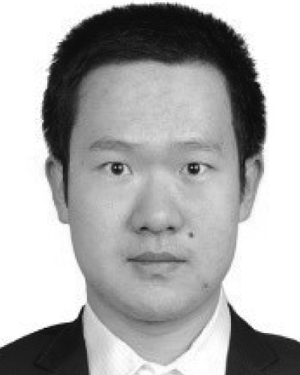 Hongfeng Yu合作论文数11
 Kwan-Liu Ma (馬匡六)合作论文数Department of Computer Science, University of California, Davis11
 Javier Girado合作论文数Qualcomm11Junjing Deng合作论文数Peking University State Key Laboratory for Artificial Microstructure and Mesoscopic Physics, School of Physics Beijing 100871 China/Advanced Photon Source, United States11
 Molly M Wolf合作论文数College of Computing, Georgia Institute of Technology10Dmitriy Morozov合作论文数Stanford University10Wesley Kendall合作论文数10
 Tom DeFanti合作论文数Electronic Visualization Laboratory, University of Illinois at Chicago;Department of Computer Science, College of Engineering, University of Illinois at Chicago;Qualcomm Institute, University of California, San Diego9
 Robert Sisneros合作论文数University of Illinois at Urbana-Champaign9
 Jason Leigh合作论文数Electronic Visualization Laboratory;University of Illinois at Chicago9
 Gabriel Antoniu合作论文数INRIA Rennes – Bretagne Atlantique Research Center;IRISA9
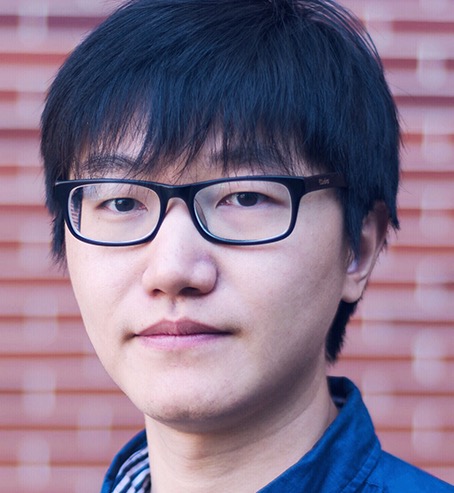 Wenbin He (何文彬)合作论文数Bosch8
 Mathew J. Cherukara合作论文数Argonne Natl Lab, Adv Photon Source, Argonne, IL 60439 USA8
 Kenneth Moreland合作论文数Oak Ridge National Laboratory8
 David J. Vine合作论文数School of Physics, Monash University8
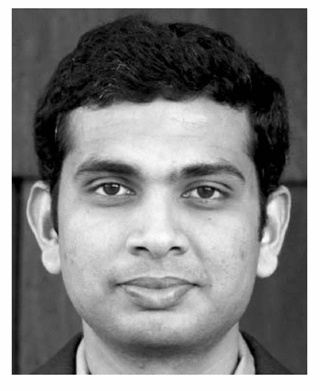 Vijay Mahadevan合作论文数University of California, San Diego8
 Bogdan Nicolae合作论文数Argonne National Laboratory8
 Iulian Grindeanu合作论文数8
 Stefan Vogt合作论文数X-Ray Science Division, Advanced Photon Source, Argonne National Laboratory7
 Matthieu Dreher合作论文数7
 Subramanian Sankaranarayanan合作论文数Department of Mechanical and Industrial Engineering, College of Engineering, University of Illinois Chicago;Nanoscale Science and Technology Division, Argonne National Laboratory;Institute of Molecular Engineering, University of Chicago7
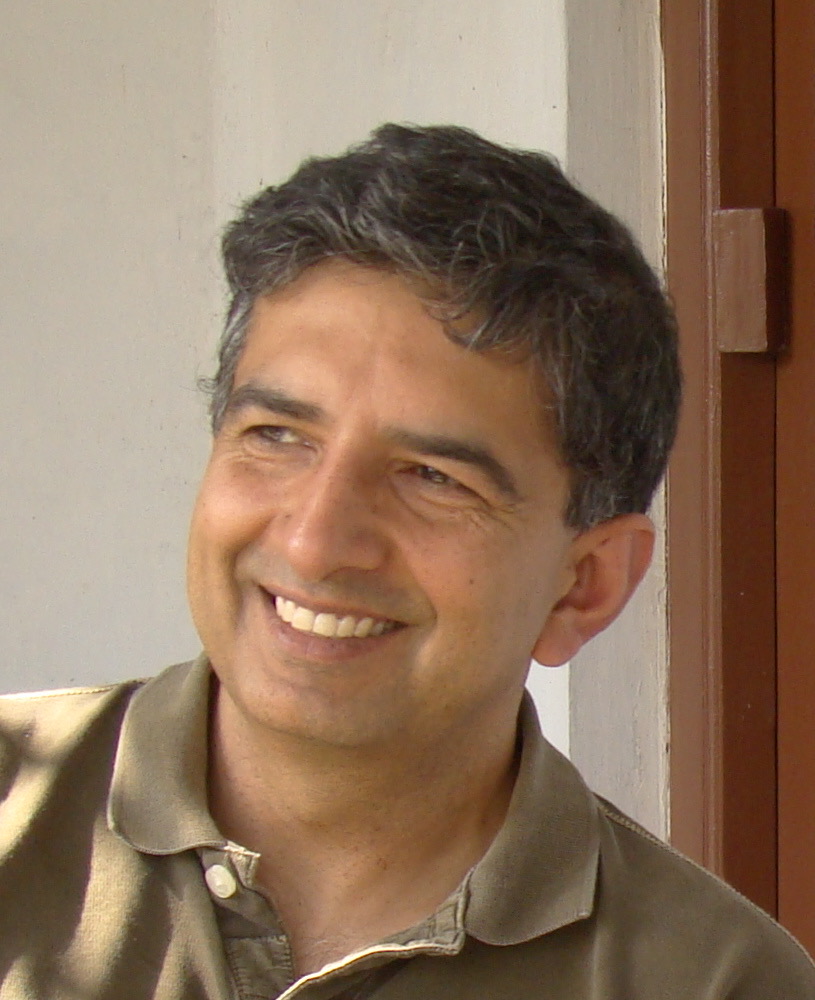 Salman Habib合作论文数Computational Science Division, Argonne National Laboratory;Kavli Institute for Cosmological Physics, University of Chicago;Northwestern Argonne Institute of Science and Engineering7
 Carolyn L. Phillips合作论文数Applied Physics Program, University of Michigan7
 Berk Geveci合作论文数Polytechnic Institute, New York University7
 Mukund Raj合作论文数7
 Raine Yeh合作论文数purdue university6Si Chen合作论文数6
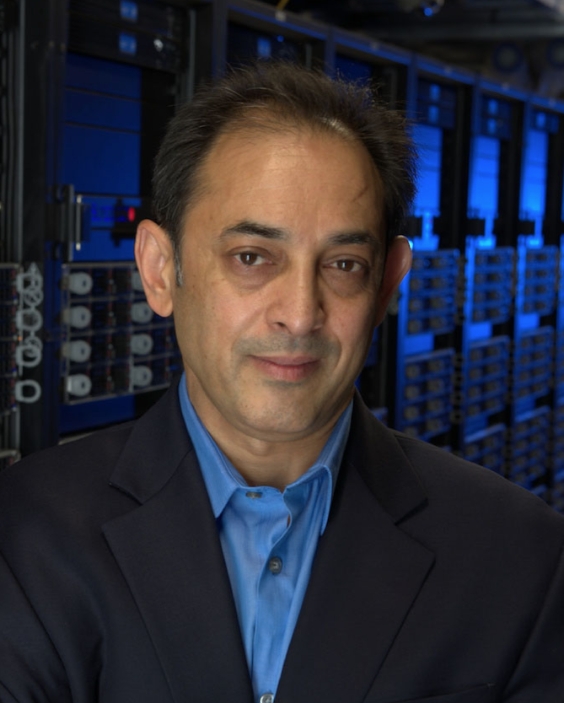 Manish Parashar合作论文数Scientific Computing and Imaging Institute, University of Utah;Kahlert School of Computing, University of Utah;Department of Computer Science, Rutgers University6
 Sasikumar Kiran合作论文数Department of Materials Science and Engineering, Rensselaer Polytechnic Institute6
 Chan Henry合作论文数6
 Jiayi Xu (徐佳逸)合作论文数Meta Platforms Inc6
 Andreas Glatz合作论文数Materials Science Division;Argonne National Laboratory;Materials Science Division, Argonne National Laboratory6
 Sheng Di合作论文数Mathematics and Computer Science Division, Argonne National Laboratory6
 Venkatram Vishwanath合作论文数Argonne Natl Lab6
 Luc Renambot合作论文数Department of Computer Science, College of Engineering, University of Illinois Chicago6
 Katrin Heitmann合作论文数High Energy Physics Division, Argonne National Laboratory;Kavli Institute for Cosmological Physics, University of Chicago6




