We present an algorithm capable of detecting diffuse, dim sources of any size in an astronomical image. These sources often defeat traditional methods for source finding, which expand regions around points of high intensity. Extended sources often have no bright points and are only detectable when viewed as a whole, so a more sophisticated approach is required. Our algorithm operates at all scales simultaneously by considering a tree of nested candidate bounding boxes, and inverts a hierarchical Bayesian generative model to obtain the probability of sources existing at given locations and sizes. This model naturally accommodates the detection of nested sources, and no prior knowledge of the distribution of a source, or even the background, is required. The algorithm scales nearly linear with the number of pixels making it feasible to run on large images, and requires minimal parameter tweaking to be effective. We demonstrate the algorithm on several types of astronomical and artificial images.
When completed the Square Kilometre Array (SKA) will feature an unprecedented rate of image generation. While previous generations of telescopes have relied on human expertise to extract scientifically interesting information from the images, the sheer data volume of the data will now make this impractical. Additionally, the rate at which data are accrued will not allow traditional imaging products to be stored indefinitely for later inspection meaning there is a strong imperative to discard uninteresting data in pseudo-real time. Here we outline components of the SKA science analysis pipeline being developed to produce a series of data products including continuum images, spectral cubes and Faraday depth spectra. We discuss a scheme to automatically extract value from these products and discard scientifically uninteresting data. This pipeline is thus expected to give both an increase in scientific productivity, and offers the possibility of reduced data archive size producing a considerable saving.
Modern convolutional networks, incorporating rectifiers and max-pooling, are neither smooth nor convex; standard guarantees therefore do not apply. Nevertheless, methods from convex optimization such as gradient descent and Adam are widely used as building blocks for deep learning algorithms. This paper provides the first convergence guarantee applicable to modern convnets, which furthermore matches a lower bound for convex nonsmooth functions. The key technical tool is the neural Taylor approximation -- a straightforward application of Taylor expansions to neural networks -- and the associated Taylor loss. Experiments on a range of optimizers, layers, and tasks provide evidence that the analysis accurately captures the dynamics of neural optimization. The second half of the paper applies the Taylor approximation to isolate the main difficulty in training rectifier nets -- that gradients are shattered -- and investigates the hypothesis that, by exploring the space of activation configurations more thoroughly, adaptive optimizers such as RMSProp and Adam are able to converge to better solutions.
© 2015 IEEE. Feature selection is an important pre-processing step, which can reduce the dimensionality of a dataset and increase the accuracy and efficiency of a learning/classification algorithm. However, existing feature selection algorithms mainly wrappers and filters have their own advantages and disadvantages. This paper proposes two filter-wrapper hybrid feature selection algorithms based on particle swarm optimisation (PSO), where the first algorithm named FastPSO combined filter and wrapper into the search process of PSO for feature selection with most of the evaluations as filters and a small number of evaluations as wrappers. The second algorithm named RapidPSO further reduced the number of wrapper evaluations. Theoretical analysis on FastPSO and RapidPSO is conducted to investigate their complexity. FastPSO and RapidPSO are compared with a pure wrapper algorithm named WrapperPSO and a pure filter algorithm named FilterPSO on nine benchmark datasets of varying difficulty. The experimental results show that both FastPSO and RapidPSO can successfully reduce the number of features and simultaneously increase the classification performance over using all features. The two proposed algorithms maintain the high classification performance achieved by WrapperPSO and significantly reduce the computational time, although the number of features is larger. At the same time, they increase the classification accuracy of FilterPSO and reduce the number of features, but increased the computational cost. FastPSO outperformed RapidPSO in terms of the classification accuracy and the number of features, but increased the computational time, which shows the trade-off between the efficiency and effectiveness. © 2015 IEEE. Personal use of this material is permitted. Permission from IEEE must be obtained for all other uses, in any current or future media, including reprinting/republishing this material for advertising or promotional purposes, creating new collective works, for resale or redistribution to servers or lists, or reuse of any copyrighted component of this work in other works.
Feature selection is a preprocessing step in classification tasks, which can reduce the dimensionality of a dataset and improve the classification accuracy and efficiency. However, many current feature selection algorithms select an unnecessarily large feature subsets, particularly on datasets with high dimensionality. This paper proposes a new particle swarm optimisation (PSO) based feature selection approach, where a new method is proposed to find the possible smallest size that potentially good feature subsets can have to guide the PSO algorithm to search for smaller feature subsets. The proposed algorithm is examined and compared with original PSO based feature selection and two typical feature selection method on twelve benchmark datasets of varying difficulty. The experimental results show that the proposed algorithm successfully further reduces the dimensionality of the dataset over original PSO and one of the conventional method, and maintains or even increases the classification performance in most cases. The proposed algorithm selects more features than the other conventional method, but achieves better classification performance in most cases, which shows that the proposed algorithm can balance the classification performance and the number of features in most cases. Furthermore, the proposed algorithm also shows better efficiency and consistency performance in terms of selecting consistent features across different stochastic runs.
The ability to extract and model the meaning in data has been key to the success of modern machine learning. Typically, data reflects a combination of multiple sources that are mixed together. For example, photographs of people’s faces reflect the subject of the photograph, lighting conditions, angle, and background scene. It is therefore natural to wish to extract these multiple, largely independent, sources, which is known as disentangling in the literature. Additional benefits of disentangling arise from the fact that the data is then simpler, meaning that there are fewer free parameters, which reduces the curse of dimensionality and aids learning. While there has been a lot of research into finding disentangled representations, it remains an open problem. This thesis considers a number of approaches to a particularly difficult version of this task: we wish to disentangle the complex causes of data in an entirely unsupervised setting. That is, given access only to unlabeled, entangled data, we search for algorithms that can identify the generative factors of that data, which we call causes. Further, we assume that causes can themselves be complex and require a high-dimensional representation. We consider three approaches to this challenge: as an inference problem, as an extension of independent components analysis, and as a learning problem. Each method is motivated, described, and tested on a set of datasets build from entangled combinations of images, most commonly MNIST digits. Where the results fall short of disentangling, the reasons for this are dissected and analysed. The last method that we describe, which is based on combinations of autoencoders that learn to predict each other’s output, shows some promise on this extremely challenging problem.
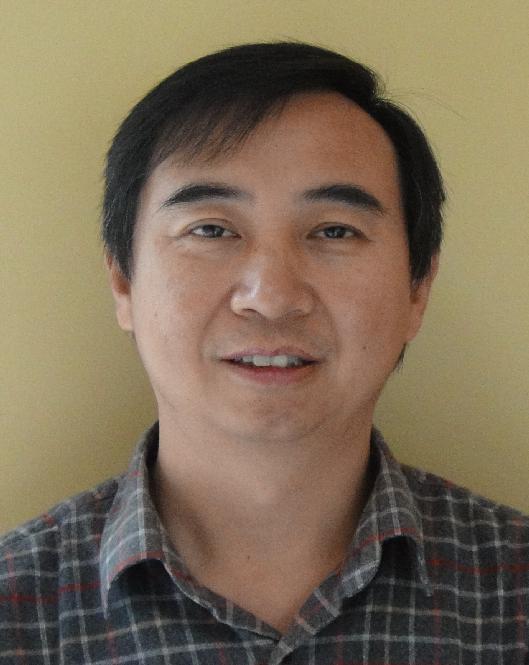 Mengjie Zhang (Meng)合作论文数School of Engineering and Computer Science, Victoria University of Wellington;Centre for Data Science and Artificial Intelligence, Victoria University of Wellington2
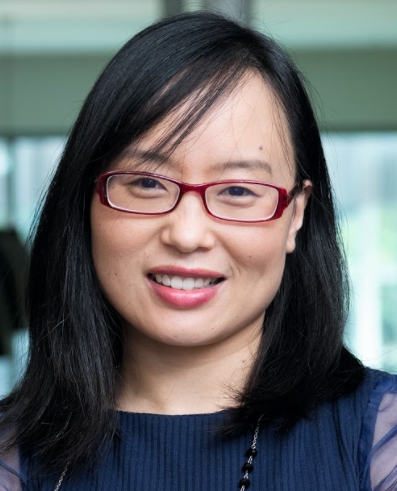 Bing Xue合作论文数School of Engineering and Computer Science, Victoria University of Wellington;Center for Data Science and Artificial Intelligence, Victoria University of Wellington2
 M. Johnston-Hollitt合作论文数School of Maths & Physics;University of Tasmania;School of Maths & Physics, University of Tasmania2
 Marcus Frean合作论文数Victoria University of Wellington2Siamak Dehghan合作论文数1
 Brian McWilliams合作论文数DeepMind1
 David W. Hogg合作论文数Center for Cosmology and Particle Physics, Department of Physics, New York University;School of Arts & Science, New York University;Center for Computational Astrophysics, Flatiron Institute1C. P. Hollitt合作论文数1
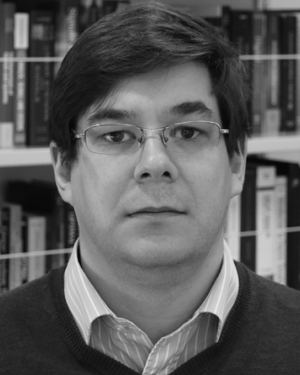 Christopher Hollitt合作论文数1
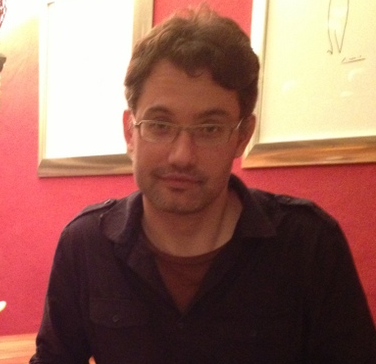 David Balduzzi合作论文数XTX Markets1




