Large-scale multireference configuration-interaction (MRD-CI) calculations in an atomic-orbital (AO) basis set containing up to f functions on As and d on hydrogen are employed to study the potential-energy curves of the π 2 (X 3 Σ − , a 1 Δ, b 1 Σ + ), the σ → π, and the π → σ 3.1 Π states; a large number of σ → σ* states; and the lowest π → s,p Rydberg series. The σ → σ* states are strongly repulsive and exhibit numerous interactions with the Rydberg members causing predissociation. The probabilities for the spin-forbidden transitions from b 1 Σ + and a 1 Δ to the X 3 Σ − ground state as well as the zero-field splittings of theX 3 Σ − and A 3 Π states have been evaluated by employing a variational perturbation scheme in which the zero-order wave functions are MRD-CI expansions. The perturber states are determined by their spin-orbit interactions, which are calculated by employing the Breit–Pauli one- and two-electron spin-orbit operator. The radiative lifetime of the b 1 Σ + state is predicted to be 0.35 ms, whereby the dominant mechanism is deactivation to the m s = ±1 component.The parallel transition is found to be much weaker. The lifetime of a 1 Δ is calculated to be 22 ms, whereby the process [Formula: see text] is favored. Both b–X and a–X transitions borrow their intensity primarily from the A 3 Π–X 3 Σ − transition and, furthermore, the 1 Π–a 1 Δ and higher 3,1 Π state spin-allowed transitions. The probability for the quadrupole b–a transition is evaluated to be three orders of magnitude smaller than the b–X transition. The calculated zero-field splitting of the X 3 Σ − ground state amounts to 101.4 cm −1 , and the fine-structure splitting between the 2, 1, and 0 + components of the A 3 Π state evaluated to be 544.5 and 674.4 cm −1 , respectively, in good accord with experimental results; whereas the calculated Λ doubling of the0 + –0 − fine-structure levels of the A 3 Π state (35.2 cm −1 vs. 44.72 cm −1 ) is too small in the present treatment. The dependence of spin-orbit effects and transition probabilities on AO basis sets and relativistic corrections to the zero-order Hamiltonian are discussed, and it is concluded that lifetime calculations for spin-forbidden processes in first- and second-row molecules can be extended in a fairly straightforward manner to systems with considerable spin-orbit interactions.
Quantum Chemistry Literature Data Base (QCLDB, http://qcldb2.ims.ac.jp) is a database of those papers published after 1978 which treat only ab initio calculations of atomic and molecular electronic structures. From about thirty core journals they are collected, surveyed, and given proper tags revealing the content and essence by theoretical and computational chemists. Those theoretical works even without reporting any computational results are also collected which are judged to have significant relevance to ab initio calculations, while no semiempirical calculations are included. QCLDB has been maintained by Quantum Chemistry Data Base Group (QCDBG). QCLDB provides information not only to chemists but also to both theoretical and experimental scientists, who want to know the state of the art theoretical aspects of chemical substances and materials. Although the last version, "QCLDB I," has been sustained and utilized steadily for almost a quarter century up to the end of 20th century, new circumstances related to the internet facility imposed re-construction of QCLDB I on QCDBG. A policy of the academic database of references has been established. The policy emphasizes that there should be a balance between data collection as research itself and utility for users. According to the policy, an unprecedented hybrid and highly academic database, QCLDB II, has been constructed and is open to all scientists via the work site.
Resonance Raman spectra are measured for copper(II) complexes ([Cu(L-R)(2)]) using a series of beta-diketiminate ligands (L) carrying different alpha-substituents (R = Me, H, CN, and NO2), and quantum chemical calculations based on density functional theory (DFT) are carried out in order to derive the force fields of the copper(II) complexes. The complexes show characteristic v(sym)(Cu-N) frequencies, reflecting the relatively long distance of Cu-N bond in [Cu(L-CN)(2)]. No obvious correlations were found for the other Raman bands between frequencies and the electron-withdrawal properties of the ligands. Resonance Raman profiles for [Cu(L-Me)(2)] and [Cu(L-H)(2)] suggest that two intense electronic absorption bands should be assigned to a charge-transfer transition accompanied by changing the Cu-N bond length and pi* <- pi transition by lengthening the C-beta-N bond with the aid of theoretical calculations. It is found that the complexes, [Cu(L-CN)(2)] and [Cu(L-NO(2))(2)] with electron-withdrawing ligands, which yield only one strong absorption band around the visible region, show mainly pi* <- 7 transition by lengthening the C-beta-N bond.
Primary processes of photoelectron transfer reactions of highly twisted 1-mesityl- (1a), 1-(2,5-dimethoxyphenyl)- (1b), and 1-(2,3,5,6-tetramethoxyphenyl)- 2,4,6-triphenylpyridinium (1c) tetrafluoroborates in butyronitrile were investigated. The charge-shift states were observed in all cases. Irradiation of 1a generated the charge-shift state (360, 475, and 550nm), which was converted with a lifetime of 21ns into the long-lived triplet state (τ=2.2μs) localized on the pyridinium moiety. On the other hand, compounds 1b and 1c generated the charge-shift states (λmax=440 and 540 and λmax=ca. 550nm as a broad absorption) of short lifetimes, 35 and 16ps, respectively, decaying exclusively to the singlet ground states.
The authors have used a modified hemi-double-stapling (HDS) technique for reconstruction after laparoscopically assisted distal gastrectomy. The stomach is resected from the greater curvature side using a linear stapler inserted into the stomach from that side at a position vertical to the line of the greater curvature. Resection of the stomach is performed by extending the resection line to the lesser curvature using laparoscopic coagulating shears. The resected specimen is examined. After placement of a purse-string suture at the duodenal stump, an anvil is inserted into the stump, and an additional suture with 2-0 silk is placed over the purse-string suture. A curved intraluminal stapler (CDH25) is inserted into the stomach through the opening made on the lesser curvature side, and the center rod of the stapler is passed through the gastric wall on the corner of the resection line at the greater curvature. Ligation with 2-0 silk is added to the center rod by suturing the gastric tissue 5-8 mm from the center rod to encircle it. The authors call this the "one-knot setup HDS," and with this method, a large-caliber anastomosis is secured. In many cases, it is difficult to observe the anastomotic site through the small incisional opening. However, under laparoscopy with the temporal abdominal wall-lift method using the Multi Flap Gate, the anastomotic site can be easily and safely observed. One-knot setup HDS combined with the temporal abdominal wall-lift method is considered a safe and simple method for performing Billroth I anastomosis in laparoscopic distal gastrectomy.
The photoinduced electron transfer of a series of meta- and para-linked triphenylamine-naphthalimide dyads, N-{3- and 4-[bis(4-R-substituted phenyl)amino]phenyl}-1,8-naphthalimide, 1m,p (R = H), 2m,p (R = Me), 3m,p (R = OMe), and 4m,p (R = NMe2) was investigated in toluene and DMF. The singlet charge-transfer (CT) states were observed in all cases. The decay rates were found to be faster in DMF (tau = 6.5 ps to 100 ps) than those in toluene (tau = 190 ps to 7 ns). The long-lived triplet CT states were observed in toluene for 3 (ca. 10% contribution, tau = 670 ns for 3m, 240 ns for 3p). No long-lived species were detected in DMF. The decay rates were somewhat faster in the para-isomers than in the meta-isomers in most cases. The photolysis of 5 (p-phenylene extended analogue of 3, R = OMe) gave a singlet CT state and a locally excited triplet state on the naphthalimide chromophore.
肝嚢胞腺癌は比較的稀な疾患とされているが, 今回, 高齢男性に発生した巨大肝嚢胞腺癌の1例を経験したので報告する.症例は84歳, 男性. 心窩部不快感を認め, 肝左葉に20×16cmの多房性嚢胞性で嚢胞壁には乳頭状結節を多数有する腫瘤を認めた. 腫瘍周囲への浸潤は認めず, 高齢, 肺気腫がありハイリスクであったため外側区域切除のみにとどめた. 組織診断では嚢胞壁部分は腺腫, 結節部分は高分化型腺癌を認め, 肝嚢胞腺癌と診断された. 本症例は高齢で巨大な肝嚢胞腺癌であったが良好な結果を得られたので若干の文献的考察を加えて報告する.
The apparent dipole moments (mu) of 2-methoxyethanot (C1E1), 2-ethoxyethanol (C2E1), 2-(2-methoxyethoxy)ethanol (C1E2) and 2-(2-ethoxyethoxy)ethanol (C2E2) were determined in heptane solutions for the mole fraction range of 0 < x < 0.03 at T = 298.15 K. To calculate mu values the molar volumes for these solutions and the refractive indices of the pure components were determined at T = 298.15 K. FT-IR spectra for these solutions were also measured at T = 298 K. The conformations of these compounds and that of the dimer of C1E1 were predicted by ab initio calculations. In order to compare the calculated results with experimental, a statistical calculation was performed. The calculated conformers of the isolated molecules correlated well with the experimental results of the dipole moment and the IR spectra.
Data concerning clinical cases of pesticide poisoning from 1998 to 2002 from the hospitals affiliated with the Japanese Association of Rural Medicine were analyzed. 346 cases of poisoning by agricultural chemicals were reported from 65 hospitals. Suicides accounted for 70% of pesticide poisoning cases, followed by accidental exposures during spraying work (16%) and accidental ingestion (8%). The majority of cases were acute or subacute systemic poisonings (90%), followed by acute dermatitis (5%) and chemical burns (3%). Organophosphate insecticide was the most frequent inducer of clinical cases (36%), followed by bipyridylium herbicide (20%) and carbamate insecticide (6%). The death rate from poisoning by the herbicide paraquat was more than 70% of clinical cases, even though it is a low-concentration product, whereas those from the alternative herbicides, glufosinate and glyphosate, were less than 10%.
A complete series of copper(ii) halide complexes [CuX(tptm)](X = F (), Cl (), Br (), I (); tptm = tris(2-pyridylthio)methyl) with a novel Cu(II)-C(sp(3)) bond has been prepared by the reactions of [Cu(tptm)(CH(3)CN)]PF(6)(.PF(6)) with corresponding halide sources of KF or n-Bu(4)NX (X = Cl, Br, I), and the trigonal bipyramidal structures have been confirmed by X-ray crystallography and/or EPR spectroscopy. The iodide complex easily liberates the iodide anion in acetonitrile forming the acetonitrile complex as a result. The EPR spectra of the complexes showed several superhyperfine structures that strongly indicated the presence of spin density on the halide ligands through the Cu-X bond. The results of DFT calculations essentially matched with the X-ray crystallographic and the EPR spectroscopic results. Cyclic voltammetry revealed a quasi-reversible reduction wave for Cu(II)/Cu(I) indicating a trigonal pyramidal coordination for Cu(I) states. A coincidence of the redox potential for all [CuX(tptm)](0/+) processes indicates that the main oxidation site in each complex is the tptm ligand.
腺様嚢胞癌の1例を経験したので,文献的考察を加え報告する.症例は53歳,女性で,左乳腺のC領域に腫瘤を触知し,近医より当院へ紹介された.左C領域に2cm大の弾性硬で, Dimpling sign陽性の腫瘤を認めた.マンモグラフィにて辺縁が微細分葉の高濃度の腫瘤を確認し,超音波検査では内部が不均一で低エコーの腫瘤像形成性病変を認めた. ABCにてclass Vと診断され,乳癌の診断にて乳房温存手術(Bp+Ax, level I)を施行した.病理組織所見では,腫瘍は嚢胞状の部分と充実性の部分を持ち,さらに腺上皮細胞群と筋上皮細胞群の2種類の細胞群が主体をなしていた.偽嚢胞内の粘液はAlcian blue陽性で,腺腔内はPAS陽性を示し腺様嚢胞癌と診断された.免疫組織化学染色でActinとS-100が陽性を示し,その発生には筋上皮細胞が大きく関与していることが推測された.
症例は45歳男性, 腹部超音波検査で約3cmの腹部腫瘤を指摘された。胃透視の圧迫像で前庭部大彎に腫瘍の存在を認めたが, 胃内視鏡検査では異常を認めなかった。CTでは胃前庭部より下垂するhypo vascularな腫瘍として認められた。胃GISTの疑いで腹腔鏡補助下に胃部分切除を施行した。腫瘍は3×2cm大の赤色の腫瘍で出血や壊死を認めず, 固有筋層から壁外性に増殖する粘膜下腫瘍であった。類円形細胞と紡錘形細胞が類上皮様, シート状に増殖し, 核分裂像は0個/10高倍率視野であった。c-kit陽性, CD34がびまん性陽性で, extramural GIST, low grade malignant potentialと診断された。GISTの概念が普及した現在, スクリーニング目的の超音波検査を行う際にも, 内視鏡検査で所見を認めないGISTの存在を念頭におく必要がある。そして手術適応のある無症状のGISTを発見し低侵襲の腹腔鏡手術を選択することに意義があると考えられた。
A 77-year-old man diagnosed with advanced gastric cancer underwent total gastrectomy with combined splenectomy and resection of the pancreatic tails in 1996. He was treated with 400 mg/day of UFT for 2 years. Serum CEA level was found to be elevated on July 5, 2001. He complained of left chest pain in December 2001. A 4 cm-sized tumor was detected in the region extending from the subcutaneous region to the left chest wall containing the osteolytic change of the left sixth rib. He was diagnosed with a chest wall metastasis from gastric cancer. He underwent radiotherapy with thermotherapy and was also treated with chemotherapy. TS-1 was administered at 80-100 mg/body/day, twice daily for 3 weeks followed by a 2-week rest interval as 1 cycle. As a results, shrinkage of the tumor was confirmed on February 14, 2002. The tumor was confirmed to have disappeared on April 17, 2002, by chest CT. A complete response of the metastatic tumor was achieved. The patient maintained a complete response for more than 12 months, but died from the chest wall metastasis recurrence and weakness on August 13, 2003. The only observed adverse event, was grade 2 leukopenia.
[structure: see text] A trimeric phenothiazine and its radical cation were prepared, and their structures were elucidated. In contrast to a largely twisted structure in the neutral species, the radical cation had a unique structure deformation that allowed charge-transfer-type conjugation from the outer phenothiazine rings to the central phenothiazine radical cation.
High level ab initio calculations using complete active space self-consistent field and multi reference single and double excitation configuration interaction methods with cc-pVDZ (correlation consistent polarized valence double ζ) and cc-pVTZ (triple ζ) basis sets have been performed to elucidate the reaction mechanism of the ion-molecule reaction, C2H2(1Σg+)+O+(4S), for which collision experiment has been performed by Chiu et al. [J. Chem. Phys. 109, 5300 (1998)]. The minor low-energy process leading to the weak spin-forbidden product C2H2+(2Πu)+O(1D) has been studied previously and will not be discussed here. The major pathways to form charge-transfer (CT) products, C2H2+(2Πu)+O(3P) (CT1) and C2H2+(4A2)+O(3P) (CT2), and the covalently bound intermediates are investigated. The approach of the oxygen atom cation to acetylene goes over an energy barrier TS1 of 29 kcal/mol (relative to the reactant) and adiabatically leads the CT2 product or a weakly bound intermediate Int1 between CT2 products. This transition state TS1 is caused by the avoided crossing between the reactant and CT2 electronic states. As the C-O distance becomes shorter beyond the above intermediate, the C1 reaction pathway is energetically more favorable than the Cs pathway and goes over the second transition state TS2 of a relative energy of 39 kcal/mol. Although this TS connects diabatically to the covalent intermediate Int2, there are many states that interact adiabatically with this diabatic state and these lead to the other charge-transfer product CT1 via either of several nonadiabatic transitions. These findings are consistent with the experiment, in which charge transfer and chemical reaction products are detected above 35 and 39 kcal/mol collision energies, respectively.
In Japan, Max von Pettenkofer is highly regarded as a pioneer of modern hygiene. The contribution of Edmund Alexander Parkes, however, is not yet sufficiently appreciated. This paper outlines the life and achievements of E.A. Parkes and discusses his influence in Japan.
Resonance Raman spectra of the anion radical and dianion of a free-base porphycene are obtained, and quantum chemical calculations based on density functional theory methods are carried out in order to derive the force fields of porphycene anions. Normal modes with similar vibrational characteristics are correlated by examining the overlaps between the different redox states in order to characterize the frequency shifts measured for reduced porphycenes in certain skeletal vibrational modes. The observed resonance Raman behavior is generally consistent with the formation of the pi anion radical and pi dianion of traps-porphycene with C-2h symmetry upon reduction.
 Masayuki Senoh合作论文数25naruhito iwasa合作论文数23S Nagahama合作论文数22Hiroyuki Kiyoku合作论文数21
 Shuji Nakamura合作论文数Materials Department, College of Engineering, University of California Santa Barbara20Yasunobu Sugimoto合作论文数19Takao Yamada合作论文数14Kohji Aoyama合作论文数14M. Sano合作论文数13Tokuya Kozaki合作论文数13Kazuyuki Chocho合作论文数12Atsushi Ueda合作论文数12Hitoshi Umemoto合作论文数12Yuki Hirose合作论文数11Kichisuke Nishimoto合作论文数11Hidenori Fujii合作论文数9Fumie Tanaka合作论文数9T Mukai合作论文数7shigeru nomura合作论文数7Hiroyuki Yamamoto合作论文数7Yoshiki Arimatsu合作论文数7
 Baohui Xu (胥宝会)合作论文数Department of Surgery, School of Medicine, Stanford University7Tadako UEDA合作论文数6
 Sigrid D. Peyerimhoff合作论文数Institute of Physical and Theoretical Chemistry, University of Bonn;Mulliken Center for Theoretical Chemistry, University of Bonn;Clausius Institute for Physical and Theoretical Chemistry, University of Bonn5
 Christel Marian合作论文数Institut fur Theoretische Chemie und Computerchemie, Heinrich-Heine-Universitat Dusseldorf;Chemistry Department, Heinrich-Heine-Universitat Dusseldorf5Yasuhiro Takeuchi合作论文数5Rainer Klotz合作论文数5toshi inoue合作论文数4Fumio Konishi合作论文数4Takashi Inushima合作论文数4Toshiharu Aotake合作论文数4Mitsuki Yoshioka合作论文数4
 Koji Aoyama合作论文数Cancer Institute, Okayama University Medical School4Konomi Obama合作论文数4Hitomi Miyagaki合作论文数4F Manda合作论文数4katsuyoshi maeda合作论文数3Yoshiyuki Kawakami合作论文数3zhiyu wang合作论文数3li qing (卿 李)合作论文数3KEIJI OKADA合作论文数3
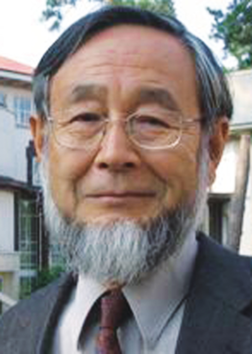 Keiji Morokuma (诸熊奎治)合作论文数Fukui Institute for Fundamental Chemistry, Kyoto University;Emory University3Yukio Nakamura合作论文数3
 Shinichi Kawaguchi合作论文数Tohoku University Molecular Medicine and Therapy3
 Kaori Fukuzawa合作论文数Mizuho Information and Research Institute, Inc.3Seichi Okeya合作论文数3Junji Teraoka合作论文数3Yoshihiro Osamura合作论文数3Shun’Ichiro Ooi合作论文数3




