We introduce MedGemma 1.5 4B, the latest model in the MedGemma collection. MedGemma 1.5 expands on MedGemma 1 by integrating additional capabilities: high-dimensional medical imaging (CT/MRI volumes and histopathology whole slide images), anatomical localization via bounding boxes, multi-timepoint chest X-ray analysis, and improved medical document understanding (lab reports, electronic health records). We detail the innovations required to enable these modalities within a single architecture, including new training data, long-context 3D volume slicing, and whole-slide pathology sampling. Compared to MedGemma 1 4B, MedGemma 1.5 4B demonstrates significant gains in these new areas, improving 3D MRI condition classification accuracy by 11
We introduce Gemma 4, a new generation of open-weight, natively multimodal language models in the Gemma model family. Designed to advance compute efficiency and reasoning, the Gemma 4 model suite features dense and Mixture-of-Experts architectures, ranging from 2.3B to 31B parameters. Alongside improved vision and audio encoders for all model sizes, we propose a unified, encoder-free architecture for our 12B model, which ingests raw audio and image patches. Furthermore, we integrate a thinking mode, enabling Gemma models to generate reasoning traces prior to responding. We improve inference speed, memory, and compute efficiency, as well as long-context abilities through critical design choices. Gemma 4 establishes a leap in performance across STEM, multimodal, and long-context benchmarks, and rivals larger, frontier open models in human-rated tasks.
We introduce VaultGemma 1B, a 1 billion parameter model within the Gemma family, fully trained with differential privacy. Pretrained on the identical data mixture used for the Gemma 2 series, VaultGemma 1B represents a significant step forward in privacy-preserving large language models. We openly release this model to the community
Artificial intelligence (AI) has significant potential in healthcare applications, but its training and deployment faces challenges due to healthcare's diverse data, complex tasks, and the need to preserve privacy. Foundation models that perform well on medical tasks and require less task-specific tuning data are critical to accelerate the development of healthcare AI applications. We introduce MedGemma, a collection of medical vision-language foundation models based on Gemma 3 4B and 27B. MedGemma demonstrates advanced medical understanding and reasoning on images and text, significantly exceeding the performance of similar-sized generative models and approaching the performance of task-specific models, while maintaining the general capabilities of the Gemma 3 base models. For out-of-distribution tasks, MedGemma achieves 2.6-10
We introduce EmbeddingGemma, a new lightweight, open text embedding model based on the Gemma 3 language model family. Our innovative training recipe strategically captures knowledge from larger models via encoder-decoder initialization and geometric embedding distillation. We improve model robustness and expressiveness with a spread-out regularizer, and ensure generalizability by merging checkpoints from varied, optimized mixtures. Evaluated on the Massive Text Embedding Benchmark (MTEB) across multilingual, English, and code domains, EmbeddingGemma (300M) achieves state-of-the-art results. Notably, it outperforms prior top models, both proprietary and open, with fewer than 500M parameters, and provides performance comparable to models double its size, offering an exceptional performance-to-cost ratio. Remarkably, this lead persists when quantizing model weights or truncating embedding outputs. This makes EmbeddingGemma particularly well-suited for low-latency and high-throughput use cases such as on-device applications. We provide ablation studies exploring our key design choices. We release EmbeddingGemma to the community to promote further research.
We introduce T5Gemma 2, the next generation of the T5Gemma family of lightweight open encoder-decoder models, featuring strong multilingual, multimodal and long-context capabilities. T5Gemma 2 follows the adaptation recipe (via UL2) in T5Gemma – adapting a pretrained decoder-only model into an encoder-decoder model, and extends it from text-only regime to multimodal based on the Gemma 3 models. We further propose two methods to improve the efficiency: tied word embedding that shares all embeddings across encoder and decoder, and merged attention that unifies decoder self- and cross-attention into a single joint module. Experiments demonstrate the generality of the adaptation strategy over architectures and modalities as well as the unique strength of the encoder-decoder architecture on long context modeling. Similar to T5Gemma, T5Gemma 2 yields comparable or better pretraining performance and significantly improved post-training performance than its Gemma 3 counterpart. We release the pretrained models (270M-270M, 1B-1B and 4B-4B) to the community for future research.
We introduce Gemma 3, a multimodal addition to the Gemma family of lightweight open models, ranging in scale from 1 to 27 billion parameters. This version introduces vision understanding abilities, a wider coverage of languages and longer context - at least 128K tokens. We also change the architecture of the model to reduce the KV-cache memory that tends to explode with long context. This is achieved by increasing the ratio of local to global attention layers, and keeping the span on local attention short. The Gemma 3 models are trained with distillation and achieve superior performance to Gemma 2 for both pre-trained and instruction finetuned versions. In particular, our novel post-training recipe significantly improves the math, chat, instruction-following and multilingual abilities, making Gemma3-4B-IT competitive with Gemma2-27B-IT and Gemma3-27B-IT comparable to Gemini-1.5-Pro across benchmarks. We release all our models to the community.
We introduce RecurrentGemma, a family of open language models which uses Google's novel Griffin architecture. Griffin combines linear recurrences with local attention to achieve excellent performance on language. It has a fixed-sized state, which reduces memory use and enables efficient inference on long sequences. We provide two sizes of models, containing 2B and 9B parameters, and provide pre-trained and instruction tuned variants for both. Our models achieve comparable performance to similarly-sized Gemma baselines despite being trained on fewer tokens.
This paper introduces CodeGemma, a collection of specialized open code models built on top of Gemma, capable of a variety of code and natural language generation tasks. We release three model variants. CodeGemma 7B pretrained (PT) and instruction-tuned (IT) variants have remarkably resilient natural language understanding, excel in mathematical reasoning, and match code capabilities of other open models. CodeGemma 2B is a state-of-the-art code completion model designed for fast code infilling and open-ended generation in latency-sensitive settings.
Fine-tuning language models~(LMs) on human-generated data remains a prevalent practice. However, the performance of such models is often limited by the quantity and diversity of high-quality human data. In this paper, we explore whether we can go beyond human data on tasks where we have access to scalar feedback, for example, on math problems where one can verify correctness. To do so, we investigate a simple self-training method based on expectation-maximization, which we call ReST$^{EM}$, where we (1) generate samples from the model and filter them using binary feedback, (2) fine-tune the model on these samples, and (3) repeat this process a few times. Testing on advanced MATH reasoning and APPS coding benchmarks using PaLM-2 models, we find that ReST$^{EM}$ scales favorably with model size and significantly surpasses fine-tuning only on human data. Overall, our findings suggest self-training with feedback can substantially reduce dependence on human-generated data.
While many capabilities of language models (LMs) improve with increased training budget, the influence of scale on hallucinations is not yet fully understood. Hallucinations come in many forms, and there is no universally accepted definition. We thus focus on studying only those hallucinations where a correct answer appears verbatim in the training set. To fully control the training data content, we construct a knowledge graph (KG)-based dataset, and use it to train a set of increasingly large LMs. We find that fora fixed dataset, larger and longer-trained LMs hallucinate less. However, hallucinating on≤5% of the training data requires an order of magnitude larger model, and thus an order of magnitude more compute, than Hoffmann et al. (2022) reported was optimal. Given this costliness, we study how hallucination detectors depend on scale. While we see detector size improves performance on fixed LM’s outputs, we find an inverse relationship between the scale of the LM and the detectability of its hallucinations.
This work introduces Gemma, a family of lightweight, state-of-the art open models built from the research and technology used to create Gemini models. Gemma models demonstrate strong performance across academic benchmarks for language understanding, reasoning, and safety. We release two sizes of models (2 billion and 7 billion parameters), and provide both pretrained and fine-tuned checkpoints. Gemma outperforms similarly sized open models on 11 out of 18 text-based tasks, and we present comprehensive evaluations of safety and responsibility aspects of the models, alongside a detailed description of model development. We believe the responsible release of LLMs is critical for improving the safety of frontier models, and for enabling the next wave of LLM innovations.
We propose a framework for classifying the capabilities and behavior of Artificial General Intelligence (AGI) models and their precursors. This framework introduces levels of AGI performance, generality, and autonomy, providing a common language to compare models, assess risks, and measure progress along the path to AGI. To develop our framework, we analyze existing definitions of AGI, and distill six principles that a useful ontology for AGI should satisfy. With these principles in mind, we propose "Levels of AGI" based on depth (performance) and breadth (generality) of capabilities, and reflect on how current systems fit into this ontology. We discuss the challenging requirements for future benchmarks that quantify the behavior and capabilities of AGI models against these levels. Finally, we discuss how these levels of AGI interact with deployment considerations such as autonomy and risk, and emphasize the importance of carefully selecting Human-AI Interaction paradigms for responsible and safe deployment of highly capable AI systems.
In this work, we introduce Gemma 2, a new addition to the Gemma family of lightweight, state-of-the-art open models, ranging in scale from 2 billion to 27 billion parameters. In this new version, we apply several known technical modifications to the Transformer architecture, such as interleaving local-global attentions (Beltagy et al., 2020a) and group-query attention (Ainslie et al., 2023). We also train the 2B and 9B models with knowledge distillation (Hinton et al., 2015) instead of next token prediction. The resulting models deliver the best performance for their size, and even offer competitive alternatives to models that are 2-3 times bigger. We release all our models to the community.
 Kathleen Kenealy合作论文数Google DeepMind9
 Armand Joulin合作论文数Google DeepMind9Cassidy Hardin合作论文数7
 Thomas Mesnard合作论文数DeepMind7
 Shreya Pathak合作论文数Department of Computer Science and Engineering, IIT Bombay7
 Noah Fiedel合作论文数Google DeepMind7
 Clément Farabet合作论文数DeepMind7Joelle K. Barral合作论文数6Alek Andreev合作论文数6
 Johan Ferret合作论文数Google DeepMind6
 Léonard Hussenot合作论文数Google6
 Sebastian Borgeaud合作论文数DeepMind6
 Morgane Riviere合作论文数Google Deepmind6
 Robert Dadashi合作论文数Google DeepMind6
 Olivier Bachem合作论文数Google DeepMind6Ravin Kumar合作论文数5
 Christopher A. Choquette-Choo合作论文数OpenAI5
 Demis Hassabis (戴密斯·哈萨比斯)合作论文数DeepMind;Isomorphic Labs5
 Sertan Girgin合作论文数Google DeepMind5
 Koray Kavukcuoglu合作论文数Google DeepMind;Google5
 Pier Giuseppe Sessa合作论文数Google DeepMind5Minh Giang合作论文数4
 Vlad Feinberg合作论文数Google DeepMind4
 Eric Noland合作论文数DeepMind4
 Elena Buchatskaya合作论文数DeepMind4Surya Bhupatiraju合作论文数Google4
 Sabela Ramos合作论文数Google DeepMind4
 Nino Vieillard合作论文数Google Brain;Inria4
 Ryan Mullins合作论文数College of Business and Behavioral Science, Clemson University4
 Zoubin Ghahramani合作论文数Department of Engineering, University of Cambridge;Google DeepMind4
 Evan Senter合作论文数Biology Department, Boston College4
 Raia Hadsell合作论文数Google DeepMind4
 Bobak Shahriari合作论文数DeepMind4
 Sarah Perrin合作论文数Google DeepMind4
 Alexandre Ramé合作论文数Google DeepMind4Charlie Chen合作论文数3Eli Collins合作论文数3
 Zhitao Gong合作论文数DeepMind3Mateo Wirth合作论文数3
 Charline Le Lan合作论文数Google DeepMind3
 Aishwarya Kamath合作论文数3
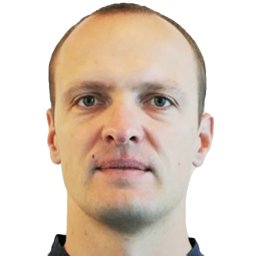 Danila Sinopalnikov合作论文数Google3
 Piotr Stanczyk合作论文数Google3
 Anton Tsitsulin合作论文数Google Research3
 Rishabh Agarwal合作论文数Meta;McGill University3
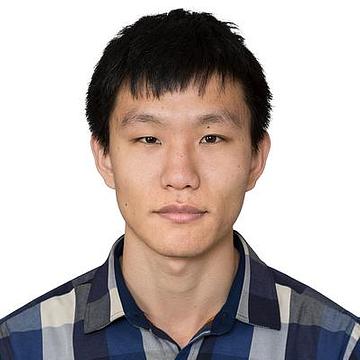 Biao Zhang (张飚)合作论文数Google DeepMind3
 S. Mehran Kazemi合作论文数Google DeepMind3
 Laurent Sifre合作论文数DeepMind3Jean-Bastien Grill合作论文数Google DeepMind3




