Any bearing faults are a leading cause of motor damage and bring economic losses. Fast and accurate identification of bearing faults is valuable for preventing damaging the whole equipment and continuously running industrial processes without interruption. Vibration signals from a running motor can be utilized to diagnose a bearing health condition. This study proposes a detection method for bearing faults based on two types of neural networks from motor vibration data. The proposed method uses an autoencoder neural network for constructing a new motor vibration feature and a feed-forward neural network for the final detection. The constructed signal feature enhances the prediction performance by focusing more on a fault type that is difficult to detect. We conducted experiments on the CWRU bearing datasets. The experimental study shows that the proposed method improves the performance of the feed-forward neural network and outperforms the other machine learning algorithms.
The large volumes of biomedical documents have been generating exponentially in modern applications. Document clustering methods play an important role in gathering textual content documents into a few meaningful coherent groups. However, clustering unstructured and unlabeled text is challenging to extract informative representations and find the relevant articles from the rapid growth biomedical literature. Therefore, traditional text document clustering methods often represent unsatisfactory results due to general non-contextualized vector space representations, which neglect the semantic relation between bio medical texts. Pre-trained language models have been gaining attention recently in variety of natural language processing tasks. In this paper, we propose a heavily pre-trained language representation BioBERT based clustering framework for biomedical document analysis in order to improve the clustering accuracy. In experimental architecture, we provide benchmarks of the pre-trained transformer model, statistical technique and word-embedding methods while incorporating with clustering algorithms. In order to distinguish the efficiency of the models, Fowlkes mallows score (FM), silhouette coefficient (SC), adjusted rand index (ARI), Davies-Bouldin score (DB) metrics are used. The comprehensive experimental results show that the BioBERT based K-means model achieves better clustering accuracies than other models.
Demand prediction for postal delivery services is useful for managing logistic operations optimally. Particularly for holiday periods, namely the Lunar New Year and Korean Thanksgiving Day (Chuseok) in South Korea, the logistics service increases sharply compared with the usual period, which makes it hard to provide reliable operation in mail centers. This study proposes a Multilayer Perceptron-based weighted ensemble method for predicting the accepted parcel volumes during special periods. The proposed method consists of two main phases: the first phase enriches the training dataset via synthetic samples using unsupervised learning; the second phase builds two Multilayer Perceptron models using internal and external factor-derived features for prediction. The final result is estimated by the weighted average predictions of these models. We conducted experiments on 25 Korean mail center datasets. The experimental study on the dataset provided by Korea Post shows better performance than other compared methods.
The World Health Organization (WHO) reported that diabetes is now one of the top ten causes of global mortality, and it is also highly ranked in Korea. The poor lifestyle, such as lack of physical activity, unhealthy diet, overweight, and tobacco usage, directly increases the risk of diabetes. It is asymptomatic at the early stage, and most patients may be diagnosed several years after onset. Over time, it can lead to cardiovascular diseases, kidney failure, blindness, and limb amputation. Nowadays, machine learning-based approaches can play an essential role in the healthcare domain for disease prediction. In this study, we have proposed a deep neural network (DNN) with a reconstruction error (RE)-based feature to predict diabetes. First, a deep autoencoder (DAE) model is used to calculate the RE-based new feature. Then, the DNN classifier learns from a combination of the new feature and other risk factors to predict diabetes. We have performed an experiment on the Korea National Health and Nutrition Examination Survey (KNHANES) dataset and compared with typical machine learning algorithms. As a result of our experiment, proposed RE-based DNN outperformed regular machine learning classifiers.
One of the tremendous topics in the music industry is an automatic music composition. In this study, we aim to build an architecture that shows how LSTM models compose music using the four emotional piano datasets. The architecture consists of four steps: data collection, data preprocessing, training the models with one and two hundred epochs, and evaluation by loss analysis. From the result of this work, the model trained for 200 epochs give the lowest loss error rate for the composing of emotional piano music. Finally, we generate four emotional melodies based on the result.
This study proposes an efficient prediction method for coronary heart disease risk based on two deep neural networks trained on well-ordered training datasets. Most real datasets include an irregular subset with higher variance than most data, and predictive models do not learn well from these datasets. While most existing prediction models learned from the whole or randomly sampled training datasets, our suggested method draws up training datasets by separating regular and highly biased subsets to build accurate prediction models. We use a two-step approach to prepare the training dataset: (1) divide the initial training dataset into two groups, commonly distributed and highly biased using Principal Component Analysis, (2) enrich the highly biased group by Variational Autoencoders. Then, two deep neural network classifiers learn from the isolated training groups separately. The well-organized training groups enable a chance to build more accurate prediction models. When predicting the risk of coronary heart disease from the given input, only one appropriate model is selected based on the reconstruction error on the Principal Component Analysis model. Dataset used in this study was collected from the Korean National Health and Nutritional Examination Survey. We have conducted two types of experiments on the dataset. The first one proved how Principal Component Analysis and Variational Autoencoder models of the proposed method improves the performance of a single deep neural network. The second experiment compared the proposed method with existing machine learning algorithms, including Naïve Bayes, Random Forest, K-Nearest Neighbor, Decision Tree, Support Vector Machine, and Adaptive Boosting. The experimental results show that the proposed method outperformed conventional machine learning algorithms by giving the accuracy of 0.892, specificity of 0.840, precision of 0.911, recall of 0.920, f-measure of 0.915, and AUC of 0.882.
Automatic anomaly detection for time-series is critical in a variety of real-world domains such as fraud detection, fault diagnosis, and patient monitoring. Current anomaly detection methods detect the remarkably low proportion of the actual abnormalities correctly. Furthermore, most of the datasets do not provide data labels, and require unsupervised approaches. By focusing on these problems, we propose a novel deep learning-based unsupervised anomaly detection approach (RE-ADTS) for time-series data, which can be applicable to batch and real-time anomaly detections. RE-ADTS consists of two modules including the time-series reconstructor and anomaly detector. The time-series reconstructor module uses the autoregressive (AR) model to find an optimal window width and prepares the subsequences for further analysis according to the width. Then, it uses a deep autoencoder (AE) model to learn the data distribution, which is then used to reconstruct a time-series close to the normal. For anomalies, their reconstruction error (RE) was higher than that of the normal data. As a result of this module, RE and compressed representation of the subsequences were estimated. Later, the anomaly detector module defines the corresponding time-series as normal or an anomaly using a RE based anomaly threshold. For batch anomaly detection, the combination of the density-based clustering technique and anomaly threshold is employed. In the case of real-time anomaly detection, only the anomaly threshold is used without the clustering process. We conducted two types of experiments on a total of 52 publicly available time-series benchmark datasets for the batch and real-time anomaly detections. Experimental results show that the proposed RE-ADTS outperformed the state-of-the-art publicly available anomaly detection methods in most cases.
With all the advanced technology nowadays, the availability of time-series data is being increased. Outlier detection is an identification of abnormal patterns that provide useful information for many kinds of applications such as fraud detection, fault diagnosis, and disease detection. However, it will require an expensive domain and professional knowledge if there is no label which indicates normal and abnormality. Therefore, an unsupervised novelty detection approach will be used. In this paper, we propose a deep learning-based approach. First, it prepares subsequences according to the optimal lag length using Autoregressive (AR) model. The selected lag length for time-series analysis defines the data context in which further analysis is performed. Then, reconstruction errors (RE) of the subsequences on deep convolutional autoencoder (CAE) models are used to estimate the outlier threshold, and density-based clustering is used to identify outliers. We have compared the proposed method with several publicly available state-of-the-art anomaly detection methods on 30 time-series benchmark datasets. These results show that our proposed deep reconstruction error based approach outperforms the compared methods in most of the cases.
%% This BibTeX bibliography file was created using BibDesk. %% https://bibdesk. sourceforge.io/ %% Created for jiaqi bao at 2020-02-06 20:34:06 -0800 %% Saved with string encoding Unicode (UTF-8) @url{optics, Author = {Chire}, Date-Added = {2020-03-06 15:10:01 -0800}, Date-Modified = {2020-03-06 15:11:31 -0800}, Lastchecked = {20 October 2011}, Urldate = {https://commons.wikimedia.org/wiki/File:DBSCAN- Illustration.svg}} @url{ae, Author = {Michela Massi}, Date-Added = {2020-03-06 15:07:04 -0800}, Date-Modified = {2020-03-06 15:11:37 -0800}, Lastchecked = {2019}, Urldate = {https://commons.wikimedia.org/wiki/File:Autoencoder_schema.png}} @url{featureset, Date-Added = {2020-02-06 20:32:52 -0800}, Date-Modified …
Developing lifelong learning algorithms are mandatory for computational systems biology. Recently, many studies have shown how to extract biologically relevant information from high-dimensional data to understand the complexity of cancer by taking the benefit of deep learning (DL). Unfortunately, new cancer growing up into the hundred types that make systems difficult to classify them efficiently. In contrast, the current state-of-the-art continual learning (CL) methods are not designed for the dynamic characteristics of high-dimensional data. And data security and privacy are some of the main issues in the biomedical field. This article addresses three practical challenges for class-incremental learning (Class-IL) such as data privacy, high-dimensionality, and incremental learning problems. To solve this, we propose a novel continual learning approach, called Deep Generative Feature Replay (DGFR), for cancer classification tasks. DGFR consists of an incremental feature selection (IFS) and a scholar network (SN). IFS is used for selecting the most significant CpG sites from high-dimensional data. We investigate different dimensions to find an optimal number of selected CpG sites. SN employs a deep generative model for generating pseudo data without accessing past samples and a neural network classifier for predicting cancer types. We use a variational autoencoder (VAE), which has been successfully applied to this research field in previous works. All networks are sequentially trained on multiple tasks in the Class-IL setting. We evaluated the proposed method on the publicly available DNA methylation data. The experimental results show that the proposed DGFR achieves a significantly superior quality of cancer classification tasks with various state-of-the-art methods in terms of accuracy.
The World Health Organization (WHO) reported that coronary heart disease (CHD) is one of the top causes of global mortality, and it is also highly ranked in Korea. The wrong lifestyle such as alcohol, tobacco, and high fatty food is directly involved in the main risk factors for CHD. In the early stage, it is possible to prevent suffering from CHD by an appropriate drug and healthy lifestyle which lead to effective treatment. In this paper, we propose a deep autoencoder based neural networks (DAE-NNs) to predict CHD risk. First, a dataset is divided into two groups by their divergence using a deep autoencoder model. Then, deep neural network (NN) classifiers are trained on each group of dataset separately. As a result, the performance measurements including accuracy, F-measure and AUC score reached 83.53%, 84.36%, and 84.02%, respectively in the Korean population. These results show that our proposed DAE-NNs approach outperformed typical data mining based classifiers for CHD risk prediction.
A multivariate time series forecasting is critical in many applications, such as signal processing, finance, air quality forecasting, and pattern recognition. In particular, determining the most relevant variables and proper lag length from multivariate time series is challenging. This paper proposes an end-to-end recurrent neural network framework equipped with an adaptive input selection mechanism to improve the prediction performance for multivariate time series forecasting. The proposed model, named AIS-RNN, consists of two main components: the first neural network learns to generate context-dependent importance weights to dynamically select the input. The selected input is then fed into the second module for predicting the target variable. The experimental results show that our proposed end-to-end approach outperforms machine learning-based baselines on several public benchmark datasets. The AIS-LSTM model achieves higher performance on a public M3 dataset than the M3-specialized models. Furthermore, the AIS-RNN gives a beneficial advantage to interpret variable importance.
With all the advanced technology nowadays, new data is being generated every minute. For example, the average size of the computer’s hard disk is 10 gigabytes in 2000, today on the Facebook website has increased 500 terabytes of new data per day [1]. Data is growing rapidly, but it is not enough valuable. Thus, it is important to extract information that is useful in the future from a large amount of data. Business intelligence (BI) systems make a prediction that supports a business decision by analyzing collected data [2]. However, the accuracy of prediction depends on a data quality. In practice, data is usually a very low quality that includes many incomplete and anomaly data. Moreover, another problem is if data size increases, query response will be slow. Previous research work, we proposed a framework based on open-source technologies for the BI systems that possibility to analyze big data efficiently and apply it to the supermarket’s BI system. Under this solution, we have studied Hadoop data storage system, Hive data warehouse software, Sqoop data transmission tool and etc., successfully implemented them. In this paper, we have added anomaly detection stage on the proposed framework to improve information about related products that are purchased together by eliminating anomaly. Also, we have made an experimental study to improve the speed of time-dependent reports by applying the dimensional model to Hive data warehouse. In dimensional model data is stored in context of the single table (centralized context), and in relational model the context is distributed over many tables. As a result of the experimental study, the dimensional model is more efficient; its query response time is shown to be at least two times faster than the relational model based data warehouse.
Coronary heart disease (CHD) is one of the top causes of death globally; if suffering from CHD, long time permanent treatments are required. Furthermore, the early detection of CHD is not easy; doctors diagnose it based on many kinds of clinical tests. Therefore, it is effective to reduce the risks of developing CHD by predicting high-risk people who will suffer from CHD. The Framingham Risk Score (FRS) is a gender-specific algorithm used to estimate at 10-years CHD risk of an individual. However, FRS cannot well estimate risk in populations other than the US population. In this study, we have proposed a deep neural network (DNN); this approach has been compared with the FRS and data mining-based CHD risk prediction models in the Korean population. As a result of our experiment, models using data mining have given higher accuracy than FRS-based prediction. Moreover, the proposed DNN has shown the highest accuracy and area under the curve (AUC) score, 82.67%, and 82.64%, respectively.
Novelty detection is a classification problem to identify abnormal patterns; therefore, it is an important task for applications such as fraud detection, fault diagnosis and disease detection. However, when there is no label that indicates normal and abnormal data, it will need expensive domain and professional knowledge, so an unsupervised novelty detection approach will be used. On the other hand, nowadays, using novelty detection on high dimensional data is a big challenge and previous research suggests approaches based on principal component analysis (PCA) and an autoencoder in order to reduce dimensionality. In this paper, we propose deep autoencoders with density based clustering (DAE-DBC); this approach calculates compressed data and error threshold from deep autoencoder model, sending the results to a density based cluster. Points that are not involved in any groups are not considered a novelty; the grouping points will be defined as a novelty group depending on the ratio of the points exceeding the error threshold. We have conducted the experiment by substituting components to show that the components of the proposed method together are more effective. As a result of the experiment, the DAE-DBC approach is more efficient; its area under the curve (AUC) is shown to be 13.5 percent higher than state-of-the-art algorithms and other versions of the proposed method that we have demonstrated.
 Keun Ho Ryu合作论文数13
 Bilguun Jargalsaikhan合作论文数Department of Computer Science, Chungbuk National University4
 Van Huy Pham合作论文数4
 Meijing Li合作论文数3
 Lkhagvadorj Munkhdalai合作论文数Chungbuk Natl Univ, Sch Elect & Comp Engn, Database Bioinformat Lab, Cheongju 28644, South Korea3
 Kwang Ho Park合作论文数Database & Bioinformat Lab, Chungbuk Natl Univ3
 Nipon Theera-Umpon合作论文数Department of Electrical Engineering, Chiang Mai University3
 Khishigsuren Davagdorj合作论文数Sch Elect & Comp Engn, Chungbuk Natl Univ2
 Oyun-Erdene Namsrai合作论文数School of Electrical & Computer Engineering, Chungbuk National University2
 Jong Yun Lee合作论文数1Van-Huy Pham合作论文数1Aniket Chavan合作论文数1
 Khongorzul Munkhbat合作论文数1Kwang Rok Kim合作论文数1
 Michela Carlotta Massi合作论文数HDSC - Health Data Science Centre, Human Technopole1
 Danish Saleem合作论文数National Renewable Energy Laboratory1
 Erdenebileg Batbaatar合作论文数Database & Bioinformat Lab, Chungbuk Natl Univ1
 Arif Sarwat合作论文数Department of Electrical and Computer Engineering, Florida International University1
 Aditya Sundararajan合作论文数1
 Ibbad Hafeez合作论文数1
 Hrushikesh Narhar Mhaskar合作论文数Institute of Mathematical Sciences, California State University1
 Yongjun Piao (朴永俊)合作论文数School of Medicine, Nankai University1Ling Wang (王玲)合作论文数School of Computer Science, Northeast Electric Power University1
 Heon Lee合作论文数Department of Materials Science and Engineering, College of Engineering, Korea University1
 Byungjoo Park合作论文数1
 Sasu Tarkoma合作论文数Faculty of Science, University of Helsinki;Department of Computer Science, University of Helsinki;Helsinki Institute of Urban and Regional Studies, Helsinki Institute of Sustainability Science1
 N. Asokan合作论文数David R. Cheriton School of Computer Science, University of Waterloo1
 Vijay Varadharajan合作论文数Department of Computing, Macquarie University1
 Youn-Hee Han合作论文数School of Internet-Media, Korea University of Technology and Education1
 Ahmad-Reza Sadeghi合作论文数System Security Lab, Technische Universitat Darmstadt1
 Ruslan Salakhutdinov合作论文数Machine Learning Department, School of Computer Science, Carnegie Mellon University1
 Gregory Piatetsky-Shapiro合作论文数1
 Pedro Domingos合作论文数Paul G. Allen School of Computer Science & Engineering, University of Washington1
 Padhraic Smyth合作论文数Department of Computer Science, School of Information and Computer Sciences, University of California, Irvine1
 Tomaso A. Poggio合作论文数Department of Brain and Cognitive Sciences, Massachusetts Institute of Technology;McGovern Institute for Brain Research, Massachusetts Institute of Technology;Computer Science and Artificial Intelligence Laboratory, Massachusetts Institute of Technology1
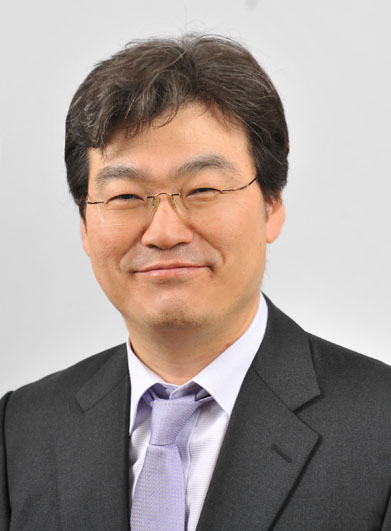 Keun Won Ryu合作论文数Department of Surgery, National Cancer Center Korea1
 Usama M. Fayyad合作论文数Yahoo;Barclays;Oasis5001
 Len Hamey合作论文数1
 Samuel Marchal合作论文数SnT - University of Luxembourg1
 Jimmy Ba合作论文数Department of Computer Science, University of Toronto1
 Durk Kingma合作论文数Anthropic1
 Nagender Aneja合作论文数Tecnia Institute of Advance Studies1
 Haniph Latchman合作论文数1
 Eunhye Kim合作论文数Data eXperience Lab, Sungkyunkwan University;Daewoo Institute of Construction Technology, Daewoo ENC1Hoon Jung合作论文数1
 Michael Gertz合作论文数Database Systems Research Group,
Institute of Computer Science,
Heidelberg University1Markus Miettinen合作论文数Helsinki University of Technology
Laboratory of Computational Engineering1
Michael Gertz合作论文数Database Systems Research Group,
Institute of Computer Science,
Heidelberg University1Markus Miettinen合作论文数Helsinki University of Technology
Laboratory of Computational Engineering1 Mahmood Yousefi-Azar合作论文数Science and Research Branch, Islamic Azad University1
 Sandhya Aneja合作论文数University of Delhi South Campus1




