CO2 with an admixture of C4F7N could serve as an eco-friendly alternative to the extreme greenhouse gas SF6 in high-voltage insulation. Streamer discharges in such gases are different from those in air due to the rapid conductivity decay in the streamer channels. Furthermore, since no effective photoionisation mechanism is known, we expect discharge growth to be more stochastic than in air. In this paper we investigate whether conventional fluid models provide an good approximation to a particle-in-cell model for negative streamers in CO2 with admixtures of 1 or 10% C4F7N Higher fractions were not included, as C4F7N admixtures in high-voltage insulation rarely exceed 10% C4F7N. We focus on 3D simulations of negative streamers. First we review cross section databases for C4F7N and CO2. Then we compare a two-term Boltzmann solver with a Monte Carlo method to compute reaction and transport coefficients from the cross sections. Afterwards we compare 3D fluid simulations with the local field (LFA) or local energy approximation (LEA) against particle simulations. In general, we find that the results of particle and fluid models are quite similar. One difference we observe is that particle simulations are intrinsically stochastic, leading to more branching. Furthermore, the LEA model does not show better agreement with the particle simulations than the LFA model. We also discuss the effect and choice of different boundary conditions on the negative rod electrode.
Based on the work of several PhD students in Amsterdam, we now have a verified model for positive streamers in air. For streamer propagation a fluid model is sufficient, while for branching the discreteness of the photo-ionization events has to be taken into account. The model results on propagation and branching have both been validated on experiments in Eindhoven, and hence a few streamers can now be modeled quantitatively in 3D. However, bursts or coronas with hundreds and more streamers are computationally not feasible. Instead of this, models of dielectric breakdown type should be developed, but based on the now known microscopic basis. We present two results in this direction: 1. The identification of steady positive and negative streamers and a revision of the concept of the stability field. 2. The analysis of streamer heads as coherent structures which allows a macroscopic characterization of the streamer head dynamics by few parameters such as radius, velocity, maximal and minimal field, ionization degree etc. (up to now only for positive streamers). Together with the branching simulations, these are stepping stones towards a reduced model of dielectric breakdown type for multi-streamer structures.The models were developed and evaluated by the PhD students Dennis Bouwman, Hani Francisco, Baohong Guo, Xiaoran Li and Zhen Wang under the supervision of Jannis Teunissen and Ute Ebert in Amsterdam, and the experiments used for model validation were performed by Ph.D. students Siebe Dijcks and Yihao Guo under the supervision of Sander Nijdam in Eindhoven. For the reduced model, we collaborate with Alejandro Luque in Granada, Spain.
The growth of streamer discharges is determined at their heads, for individual streamers as well as in collective phenomena, such as streamer trees or coronas or streamer bursts ahead of lightning leaders. Some properties of the streamer heads, such as velocity v and radius R now can be measured quite well, but this is very challenging for others such as the maximal electric field, the charge content of the streamer head and the degree of chemical excitation and ionization in the streamer channel. Here we develop, test and evaluate a macroscopic approximation for positive streamer heads in air that relates macroscopic streamer head properties to each other. In particular, we find that velocity v, radius R and background field Ebg determine the complete profile of streamer heads with photoionization, if they propagate steadily. We also review Naidis' approximate relation between v, R and the maximal field Emax. The approximate head model developed in the present paper consists of three first-order ordinary differential equations along the streamer axis. It is derived from the classical fluid model for streamer discharges by assuming axisymmetry, steady streamer propagation (i.e. with constant velocity and shape), and a spherical shape of the charge layer around the streamer head. The new reduced model agrees well with full solutions of the classical fluid model, even when it is applied to accelerating streamers. Therefore the model can be used for evaluations of experiments, like for the determination of the maximal electric field from radius and velocity of the streamer. It is also a step towards constructing reduced models for the collective dynamics of multi-streamer discharges.
CO_2 with an admixture of C_4F_7N could serve as an eco-friendly alternative to the extreme greenhouse gas SF_6 in high-voltage insulation. Streamer discharges in such gases are different from those in air due to the rapid conductivity decay in the streamer channels. Furthermore, since no effective photoionisation mechanism is known, we expect discharge growth to be more stochastic than in air. In this paper we investigate whether conventional fluid models can be used to simulate streamers in CO_2 with admixtures of C_4F_7N of 1 or 10
Lightning is a highly energetic electric discharge process in our atmosphere, evolving in several complex stages. Lightning is recognized as an essential climate variable, as it affects the concentration of greenhouse gases. It also threatens electrical and electronic devices, in particular, on elevated structures like wind turbines, and it endangers aircraft built with modern composite materials with inherently low electric conductivity. During the past decades, our fundamental understanding of atmospheric electricity has continued to evolve. For example, during the past 30 years, discharge processes were discovered in the atmosphere above thunderstorms, the so-called transient luminous events (TLEs) in the stratosphere and mesosphere, and terrestrial gamma-ray flashes (TGFs), accompanied with beams of photons, electrons and positrons, were observed from low orbiting satellites passing over thunderstorms. Lightning-like discharges also appear in plasma and high-voltage technology. The SAINT network was formed to bring the different research fields together. SAINT was the “Science And INnovation of Thunderstorms” Marie Skłodowska-Curie Innovative Training Network of the European Union Horizon 2020 program. From 2017 to 2021, 15 PhD students observed lightning processes from satellites and ground, developed models and conducted laboratory experiments. The project bridged between geophysical research, plasma technology and relevant industries. The paper presents a summary of the findings of the SAINT network collaboration.
We study radio emissions from positive streamers in air using 3D simulations, from which the radiated electric field is computed by solving Jefimenko's equations. The simulations are performed at 0.5bar $0.5\,\mathrm{b}\mathrm{a}\mathrm{r}$ using two photoionization methods: the Helmholtz approximation for a photon density and a Monte Carlo method using discrete photons, with the latter being the most realistic. We consider cases with single streamers, streamer branching, streamers interacting with preionization and streamer-streamer encounters. We do not observe a strong VHF radio signal during or after branching, which is confirmed by lab experiments. This indicates that the current inside a streamer discharge evolves approximately continuously during branching. On the other hand, stochastic fluctuations in streamer propagation due to Monte Carlo photoionization lead to more radio emission being emitted at frequencies of 100 MHz and above. Another process that leads to such high-frequency emission is the interaction of a streamer with a weakly preionized region, which can be present due to a previous discharge. In agreement with previous work, we observe the strongest and highest-frequency emission from streamer encounters. The amount of total energy that is radiated seems to depend primarily on the background electric field, and less on the particular streamer evolution. Finally, we present approximations for the maximal current along a streamer channel and a fit formula for a streamer's current moment. The lightning channels in a thunderstorm are preceded by smaller discharges, so-called streamers, which propagate at velocities of hundreds to thousands of kilometers per second. We cannot see these streamers from the ground, but we can detect their radio emission. However, it is currently not fully clear what the main mechanisms are by which streamers produce radio emission. In this paper we therefore perform 3D computer simulations of streamers under different conditions, from which we compute the resulting radio emissions. We find that streamer branching (the splitting of a streamer channel in two new ones) does not lead to a significant radio signal, which we furthermore have confirmed with lab experiments. We also show that small fluctuations in a streamer's propagation, which should also occur naturally, lead to radio emission at higher frequencies than in the absence of such fluctuations. Several other cases are also investigated, such as a "collision" between two streamers and streamers in different background electric fields. Streamer branching does not lead to significant radio emission in our simulations and lab experiments Stochastic fluctuations during streamer propagation increase radio emission at frequencies of 100 MHz and above When streamers encounter an already partially ionized region, their properties rapidly change leading to emissions up to several 100 MHz
We study how external magnetic fields from 0 to 40 T influence positive streamers in atmospheric pressure air, using 3D PIC-MCC (particle-in-cell, Monte Carlo collision) simulations. When a magnetic field $\vec{B}$ is applied perpendicular to the background electric field $\vec{E}$, the streamers deflect towards the $+\vec{B}$ and $-\vec{B}$ directions which results in a branching into two main channels. With a stronger magnetic field the angle between the branches increases, and for the 40 T case the branches grow almost parallel to the magnetic field. Due to the $\vec{E}\times\vec{B}$ drift of electrons we also observe a streamer deviation in the opposite $-\vec{E}\times\vec{B}$ direction, where the minus sign appears because positive streamers propagate opposite to the electron drift velocity. The deviation due to this $\vec{E}\times\vec{B}$ effect is smaller than the deviation parallel to $\vec{B}$. In both cases of $\vec{B}$ perpendicular and parallel to $\vec{E}$, the streamer radius decreases with the magnetic field strength. We relate our observations to the effects of electric and magnetic fields on electron transport and reaction coefficients.
In this paper, we study how streamer discharges are influenced by a previous voltage pulse using an axisymmetric fluid model. We simulate double-pulse positive streamers in N2-O2 mixtures containing 20% and 10% O2 at 1 bar. By varying the time between the pulses between 5 ns and 10 & mu;s, we observe three regimes during the second pulse: streamer continuation, inhibited growth and streamer repetition. In the streamer continuation regime, a new streamer emerges from the tip of the previous one. In the inhibited regime, the previous channel is partially re-ionized, but there is considerably less field enhancement and almost no light emission. Finally, for the longest interpulse times, a new streamer forms that is similar to the first one. The remaining electron densities at which we observe streamer continuation agree with earlier experimental work. We introduce an estimate which relates streamer continuation to the dielectric relaxation time, the background field and the pulse duration. Furthermore, we show that for interpulse times above 100 ns several electron detachment reactions significantly slow down the decay of the electron density.
We develop an axial model for single steadily propagating positive streamers in air. It uses observable parameters to estimate quantities that are difficult to measure. More specifically, for given velocity, radius, length and applied background field, our model approximates the ionization density, the maximal electric field, the channel electric field, and the width of the charge layer. These parameters determine the primary excitations of molecules and the internal currents. Our approach is to first analytically approximate electron dynamics and electric fields in different regions of a uniformly-translating streamer head, then we match the solutions on the boundaries of the different regions to model the streamer as a whole, and we use conservation laws to determine unknown quantities. We find good agreement with numerical simulations for a range of streamer lengths and background electric fields, even if they do not propagate in a steady manner. Therefore quantities that are difficult to access experimentally can be estimated from more easily measurable quantities and our approximations. The theoretical approximations also form a stepping stone towards efficient axial multi-streamer models.
4. NASA Heliophysics division should fund more in situ measurements to quantify lightning/thunderstorm effects in the upper atmosphere, including sounding rockets, short-
Streamer discharges are the primary mode of electric breakdown of air in lightning and high voltage technology. Streamer channels branch many times, which determines the developing tree-like discharge structure. Understanding these branched structures is for example important to describe streamer coronas in lightning research. We simulate branching of positive streamers in air using a 3D fluid model where photoionization is included as a discrete and stochastic process. The probability and morphology of branching are in good agreement with dedicated experiments. This demonstrates that photoionization indeed provides the noise that triggers branching, and we show that branching is remarkably sensitive to the amount of photoionization. Our comparison is therefore one of the first sensitive tests for Zheleznyak's photoionization model, confirming its validity.
We study the effect of an inhomogeneous gas density on positive streamer discharges in air using a 3D fluid model with stochastic photoionization, generalizing earlier work with a 2D axisymmetric model by Starikovskiy and Aleksandrov (2019 Plasma Sources Sci. Technol. 28 095022). We consider various types of planar and (hemi)spherical gas density gradients. Streamers propagate from a region of density n 0 towards a region of higher or lower gas density n 1 , where n 0 corresponds to 300 K and 1 b a r . We observe that streamers can always propagate into a region with a lower gas density. When streamers enter a region with a higher gas density, branching can occur at the density gradient, with branches growing in a flower-like pattern over the gradient surface. Depending on the gas density ratio, the gradient width and other factors, narrow branches are able to propagate into the higher-density gas. In a planar geometry, we find that such propagation is possible up to a gas density slope of 3.5 n 0 / m m , although this value depends on a number of conditions, such as the gradient angle. Surprisingly, a higher applied voltage makes it more difficult for streamers to penetrate into the high-density region, due to an increase of the primary streamer’s radius.
We investigate negative and positive streamers in C4F7N-CO2 mixtures through simulations. These mixtures are considered to be more environmentally friendly than the insulating gas SF6 that is widely used in high voltage technology. Simulations are performed using a 3D particle-in-cell model. Negative streamers can propagate when the background field is close to the critical field. We relate this to their short conductive channels, due to rapid electron attachment, which limits their field enhancement. Positive streamers also require a background field close to the critical field, and in addition a source of free electrons ahead of them. In our simulations these electrons are provided through an artificial stochastic background ionization process as no efficient photoionization process is known for these gases. In 3D, we can only simulate the early inception stage of positive discharges, due to the extremely high electric fields and electron densities that occur. Qualitative 2D Cartesian simulations show that the growth of these discharges is highly irregular, resulting from incoming negative streamers that connect to existing channels. The inclusion of a stochastic background ionization process also has an interesting effect on negative discharges: new streamers can be generated behind previous ones, thereby forming a chain of negative streamers.
Electric power grids will play a key role to transport energy in a sustainable way. However the switches in present high voltage grids operate on SF 6 gas, which is the worst greenhouse gas known. To investigate alternative gases, CWI (the national research institute for mathematics and computer science in the Netherlands) and Eindhoven University of Technology (TU/e) now start their third project with Hitachi Energy as the main industrial partner. While TU/e performs experiments, CWI simulates the pre-spark phenomena in these gases. These discharges are surprisingly different from discharges in air and pose new numerical challenges.
Sulfur hexafluoride (SF6) and carbon tetrafluoride (CF4) are inert gases in the atmosphere that can absorb infrared radiation and affect the climate. They have lifetimes up to 1278 years for SF6 and 50000 years for CF4. The International Panel on Climate Change lists the two as part of the most influential long-lived, well-mixed greenhouse gases, with SF6 having the highest identified global warming potential. Both gases have anthropogenic major sources. SF6 is used as an insulating gas in the electrical power industry, and CF4 is a by-product of aluminum manufacturing. In this study, we question whether atmospheric electricity significantly influences the atmospheric concentrations of these molecules. We aim to investigate SF6 and CF4 decomposition within streamers at different altitudes in the atmosphere, and then estimate the global occurrence rate of such streamers and their impact. To accomplish this, we simulate positive streamers in synthetic air that contains a small concentration of the two gases. From our simulations, we identify relations between streamer properties and the amounts of SF6 and CF4 destroyed, which can be used to estimate the rates of chemical processes in observed streamer events.
Streamer discharges can be used as a primary source of reactive species for plasma-assisted combustion. In this research we investigate positive streamers in a stoichiometric air–methane mixture at 1 bar and 300 K with a three-dimensional particle-in-cell model for the electrons. We first discuss suitable electron scattering cross sections and an extension of the photoionization mechanism to air–methane mixtures. We discuss that the addition of 9.5% methane leaves electron transport and reaction coefficients essentially unchanged, but it largely suppresses photoionization and shortens the photon mean free path. This leads to (1) accelerated streamer branching, (2) higher electric field enhancement at the streamer head, (3) lower internal electric fields, and (4) higher electron densities in the streamer channel. We also calculate the time-integrated energy density deposited during the evolution of positive streamers in background electric fields of 12.5 and 20 kV cm −1 . We find typical values of the deposited energy density in the range of 0.5–2.5 kJ m −3 within the ionized interior of streamers with a length of 5 mm; this value is rather independent of the electric fields applied here. Finally we find that the energy deposited in the inelastic electron scattering processes mainly produces reactive nitrogen species: N 2 triplet states and N, but also O and H radicals. The production of H 2 and O 2 singlet states also occurs albeit less pronounced. Our calculation of the primary production of reactive species can for example be used in global chemistry models.
In this paper, we address two main topics: steady propagation fields for positive streamers in air and streamer deceleration in fields below the steady propagation field. We generate constant-velocity positive streamers in air with an axisymmetric fluid model, by initially adjusting the applied voltage based on the streamer velocity. After an initial transient, we observe steady propagation for velocities of 3 x 10(4) m s(-1) to 1.2 x 10(5) m s(-1), during which streamer properties and the background field do not change. This propagation mode is not fully stable, in the sense that a small change in streamer properties or background field eventually leads to acceleration or deceleration. An important finding is that faster streamers are able to propagate in significantly lower background fields than slower ones, indicating that there is no unique stability field. We relate the streamer radius, velocity, maximal electric field and background electric field to a characteristic time scale for the loss of conductivity. This relation is qualitatively confirmed by studying streamers in N-2-O-2 mixtures with less oxygen than air. In such mixtures, steady streamers require lower background fields, due to a reduction in the attachment and recombination rates. We also study the deceleration of streamers, which is important to predict how far they can propagate in a low field. Stagnating streamers are simulated by applying a constant applied voltage. We show how the properties of these streamers relate to the steady cases, and present a phenomenological model with fitted coefficients that describes the evolution of the velocity and radius. Finally, we compare the lengths of the stagnated streamers with predictions based on the conventional stability field.
This dataset contains the data used to generate the results presented in the article "A computational study of accelerating, steady and fading negative streamers in ambient air". This dataset includes (1) the source code; (2) two transport data files, which contain a list of included reactions, with their reaction rate coefficients, and transport coefficients; (3) configuration files for running the simulations and (4) output log files, which contain information about the physics and numerical properties of the simulations.
In this research we analyse different plasma wave propagation mechanism of microcavity discharge in pure argon at two different pressures. Experimental results of a pulsed micro-DBD with 2 and 50 kPa argon, 180 μm gap, at room temperature, show that two distinct pressure-dependent propagation modes exist. In the low pressure regime, the discharge propagates perpendicular to the applied electric field forming distinct channels, but many vertically-oriented filaments distributed throughout the domain at high pressure discharge. And the discharge duration time in high pressure is around 5 times shorter than that in low pressure. A 2D particle-in-cell (PIC-MCC) model with chemical reactions, photoemission, and secondary electron generation, is established to investigate the formation mechanism of the two propagation modes. Models of the initial ionization processes show that there are two different breakdown mechanisms for these two pressures, where secondary emission of electrons from the dielectric is dominated either by ion impact or by photon impact. The investigation is of great significance for further reveal of the principle of microplasmas discharge.
We compare simulations and experiments of single positive streamer discharges in air at 100 mbar, aiming toward model validation. Experimentally, streamers are generated in a plate–plate geometry with a protruding needle. We are able to capture the complete time evolution of reproducible single-filament streamers with a ns gate-time camera. A 2D axisymmetric drift-diffusion-reaction fluid model is used to simulate streamers under conditions closely matching those of the experiments. Streamer velocities, radii and light emission profiles are compared between model and experiment. Good qualitative agreement is observed between the experimental and simulated optical emission profiles, and for the streamer velocity and radius during the entire evolution. Quantitatively, the simulated streamer velocity is about 20% to 30% lower at the same streamer length, and the simulated radius is about 1 mm (20% to 30%) smaller. The effect of various parameters on the agreement between model and experiment is studied, such as the used transport data, the background ionization level, the photoionization rate, the gas temperature, the voltage rise time and the voltage boundary conditions. An increase in gas temperature due to the 50 Hz experimental repetition frequency could probably account for some of the observed discrepancies.
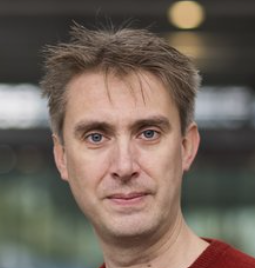 Sander Nijdam合作论文数Department of Applied Physics and Science Education, Eindhoven University of Technology85
 E. M. van Veldhuizen合作论文数70
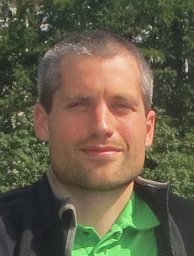 Jannis Teunissen合作论文数Centrum Wiskunde & Informatica (CWI), P.O. Box 94079, 1090 GB Amsterdam, The Netherlands66
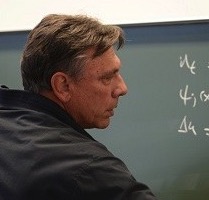 Willem Hundsdorfer合作论文数Department of Numerical Mathematics, Centrum Wiskunde & Informatica56
 Casper Rutjes合作论文数Multiscale Dynam Grp, CWI43
 Alejandro Luque合作论文数Department of Physics;Eindhoven University of Technology;Department of Physics, Eindhoven University of Technology34
 Olaf Scholten合作论文数KVI, University of Groningen31
 Aram H. Markosyan合作论文数FAIR, Meta AI25
 Stijn Buitink合作论文数Vrije Universiteit Brussel25
 Chao Li合作论文数23t m p briels合作论文数22Christoph Köhn合作论文数20
 Yoav Yair合作论文数Department of Life and Natural Sciences, University of Israel20Daria Dubrovin合作论文数Tel-Aviv University18
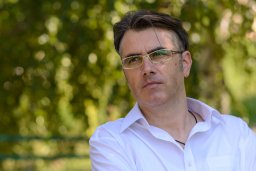 Sasa Dujko合作论文数Institute of Physics;University of Belgrade;Institute of Physics, University of Belgrade18S. Ter Veen合作论文数17
 Anna Nelles合作论文数16Gideon Wormeester合作论文数16
 Heino Falcke合作论文数Radboud University16Arthur Corstanje合作论文数16Anna Dubinova合作论文数15
 L. Rossetto合作论文数Department of Physics, and the Oskar Klein Centre for Cosmoparticle Physics, AlbaNova University Centre15
 Bernard Meulenbroek合作论文数Delft Institute of Applied Mathematics, Delft University of Technology;Mathematics Department, Delft University of Technology;Applied Mathematics Department, Faculty of Electrical Engineering, Mathematics and Computer Science, Delft University of Technology15A. Luque合作论文数14Gia Trinh合作论文数14
 Andrea Rocco合作论文数Department of Physics, University of Surrey14
 Anbang Sun (孙安邦)合作论文数School of Electrical Engineering, Xi'an Jiaotong University14
 Fabian Brau合作论文数Groupe de Physique;Academie Universitaire Wallonie-Bruxelles;Universite de Mons-Hainaut;Academie Universitaire Wallonie-Bruxelles, Universite de Mons-Hainaut14
 Jörg R. Hörandel合作论文数Department of Astrophysics, Faculty of Science, Radboud University/Department of Physics and Astronomy, Vrije Universiteit Brussel14T. N. G. Trinh合作论文数13Pim Schellart合作论文数13
 Satyendra Thoudam合作论文数Astrophysical Sciences Division;Bhabha Atomic Research Centre;Physical Research Laboratory;Physical Research Laboratory, Bhabha Atomic Research Centre13c montijn合作论文数13P. Kochkin合作论文数12Lothar Schafer合作论文数12
 Wim Van Saarloos合作论文数Leiden Instituut Onderzoek Natuurkunde, Leiden University11
 Pragati Mitra合作论文数Inst Astrophys, Vrije Univ Brussel10
 Antonio Bonardi合作论文数Dept Astrophys IMAPP, Radboud Univ Nijmegen10Tobias Winchen合作论文数III. Physikalisches Institut A, RWTH Aachen University10Manuel Arrayás合作论文数Departamento de Matemáticas y Física Aplicada;Universidad Rey Juan Carlos;Departamento de Matemáticas y Física Aplicada, Universidad Rey Juan Carlos10
 Jorg P Rachen合作论文数USA Sterrenkundig Instituut, Penn State University10
 Hani Francisco合作论文数Ctr Wiskunde & Informat CWI, Multiscale Dynam Grp9
 Behnaz Bagheri合作论文数Dept Appl Phys, Eindhoven Univ Technol9
 E.J.M. Van Heesch合作论文数9
 van Deursen, A.P.J.合作论文数9
 Danijela D. Sijacic合作论文数Wiskunde en Informatica9
 A. J. M. Pemen合作论文数Department of Physics;Department of Electrical Engineering;Technische Universiteit Eindhoven;Department of Electrical Engineering, Technische Universiteit Eindhoven8
 Jesus Emilio Enriquez合作论文数University of Texas at El Paso8
 w j m brok合作论文数8




