Systems for post-correction of OCR-results for historical texts are based on statistical correction models obtained by supervised learning. For training, suitable collections of ground truth materials are needed. In this paper we investigate the dependency of the power of automated OCR post-correction on the form of ground truth data and other training settings used for the computation of a post-correction model. The post-correction system A-PoCoTo considered here is based on a profiler service that computes a statistical profile for an OCR-ed input text. We also look in detail at the influence of the profiler resources and other settings selected for training and evaluation. As a practical result of several fine-tuning steps, a general post-correction model is achieved where experiments for a large and heterogeneous collection of OCR-ed historical texts show a consistent improvement of base OCR accuracy. The results presented are meant to provide insights for libraries that want to apply OCR post-correction to a larger spectrum of distinct OCR-ed historical printings and ask for "representative" results.
This paper deals with the task of practical and open source Handwritten Text Recognition (HTR) on German medieval manuscripts. We report on our efforts to construct mixed recognition models which can be applied out-of-the-box without any further document-specific training but also serve as a starting point for finetuning by training a new model on a few pages of transcribed text (ground truth). To train the mixed models we collected a corpus of 35 manuscripts and ca. 12.5k text lines for two widely used handwriting styles, Gothic and Bastarda cursives. Evaluating the mixed models out-of-the-box on four unseen manuscripts resulted in an average Character Error Rate (CER) of 6.22%. After training on 2, 4 and eventually 32 pages the CER dropped to 3.27%, 2.58%, and 1.65%, respectively. While the in-domain recognition and training of models (Bastarda model to Bastarda material, Gothic to Gothic) unsurprisingly yielded the best results, finetuning out-of-domain models to unseen scripts was still shown to be superior to training from scratch. Our new mixed models have been made openly available to the community.
In order to apply Optical Character Recognition (OCR) to historical printings of Latin script fully automatically, we report on our efforts to construct a widely-applicable polyfont recognition model yielding text with a Character Error Rate (CER) around 2% when applied out-of-the-box. Moreover, we show how this model can be further finetuned to specific classes of printings with little manual and computational effort. The mixed or polyfont model is trained on a wide variety of materials, in terms of age (from the 15th to the 19th century), typography (various types of Fraktur and Antiqua), and languages (among others, German, Latin, and French). To optimize the results we combined established techniques of OCR training like pretraining, data augmentation, and voting. In addition, we used various preprocessing methods to enrich the training data and obtain more robust models. We also implemented a two-stage approach which first trains on all available, considerably unbalanced data and then refines the output by training on a selected more balanced subset. Evaluations on 29 previously unseen books resulted in a CER of 1.73%, outperforming a widely used standard model with a CER of 2.84% by almost 40%. Training a more specialized model for some unseen Early Modern Latin books starting from our mixed model led to a CER of 1.47%, an improvement of up to 50% compared to training from scratch and up to 30% compared to training from the aforementioned standard model. Our new mixed model is made openly available to the community1.
In this paper we evaluate Optical Character Recognition (OCR) of 19th century Fraktur scripts without book-specific training using mixed models, i.e. models trained to recognize a variety of fonts and typesets from previously unseen sources. We describe the training process leading to strong mixed OCR models and compare them to freely available models of the popular open source engines OCRopus and Tesseract as well as the commercial state of the art system ABBYY. For evaluation, we use a varied collection of unseen data from books, journals, and a dictionary from the 19th century. The experiments show that training mixed models with real data is superior to training with synthetic data and that the novel OCR engine Calamari outperforms the other engines considerably, on average reducing ABBYYs character error rate (CER) by over 70%, resulting in an average CER below 1%.
Optical Character Recognition (OCR) on historical printings is a challenging task mainly due to the complexity of the layout and the highly variant typography. Nevertheless, in the last few years, great progress has been made in the area of historical OCR, resulting in several powerful open-source tools for preprocessing, layout analysis and segmentation, character recognition, and post-processing. The drawback of these tools often is their limited applicability by non-technical users like humanist scholars and in particular the combined use of several tools in a workflow. In this paper, we present an open-source OCR software called OCR4all, which combines state-of-the-art OCR components and continuous model training into a comprehensive workflow. While a variety of materials can already be processed fully automatically, books with more complex layouts require manual intervention by the users. This is mostly due to the fact that the required ground truth for training stronger mixed models (for segmentation, as well as text recognition) is not available, yet, neither in the desired quantity nor quality. To deal with this issue in the short run, OCR4all offers a comfortable GUI that allows error corrections not only in the final output, but already in early stages to minimize error propagations. In the long run, this constant manual correction produces large quantities of valuable, high quality training material, which can be used to improve fully automatic approaches. Further on, extensive configuration capabilities are provided to set the degree of automation of the workflow and to make adaptations to the carefully selected default parameters for specific printings, if necessary. During experiments, the fully automated application on 19th Century novels showed that OCR4all can considerably outperform the commercial state-of-the-art tool ABBYY Finereader on moderate layouts if suitably pretrained mixed OCR models are available. Furthermore, on very complex early printed books, even users with minimal or no experience were able to capture the text with manageable effort and great quality, achieving excellent Character Error Rates (CERs) below 0.5%. The architecture of OCR4all allows the easy integration (or substitution) of newly developed tools for its main components by standardized interfaces like PageXML, thus aiming at continual higher automation for historical printings.
When converting historical lexica into electronic form the goal is not only to obtain a high quality OCR result for the text but also to perform a precise automatic recognition of typographical attributes in order to capture the logical structure. For that purpose, we present a method that enables a fine-grained typography classification by training an open source OCR engine both on traditional OCR and typography recognition and show how to map the obtained typography information to the OCR recognized text output. As a test case, we used a German dictionary (Sander's Wörterbuch der Deutschen Sprache) from the 19th century, which comprises a particularly complex semantic function of typography. Despite the very challenging material, we achieved a character error rate below 0.4% and a typography recognition that assigns the correct label to close to 99% of the words. In contrast to many existing methods, our novel approach works with real historical data and can deal with frequent typography changes even within lines.
In this paper we introduce a method that significantly reduces the character error rates for OCR text obtained from OCRopus models trained on early printed books. The method uses a combination of cross fold training and confidence based voting. After allocating the available ground truth in different subsets several training processes are performed, each resulting in a specific OCR model. The OCR text generated by these models then gets voted to determine the final output by taking the recognized characters, their alternatives, and the confidence values assigned to each character into consideration. Experiments on seven early printed books show that the proposed method outperforms the standard approach considerably by reducing the amount of errors by up to 50% and more.
In this paper we describe a dataset of German and Latin \textit{ground truth} (GT) for historical OCR in the form of printed text line images paired with their transcription. This dataset, called \textit{GT4HistOCR}, consists of 313,173 line pairs covering a wide period of printing dates from incunabula from the 15th century to 19th century books printed in Fraktur types and is openly available under a CC-BY 4.0 license. The special form of GT as line image/transcription pairs makes it directly usable to train state-of-the-art recognition models for OCR software employing recurring neural networks in LSTM architecture such as Tesseract 4 or OCRopus. We also provide some pretrained OCRopus models for subcorpora of our dataset yielding between 95\% (early printings) and 98\% (19th century Fraktur printings) character accuracy rates on unseen test cases, a Perl script to harmonize GT produced by different transcription rules, and give hints on how to construct GT for OCR purposes which has requirements that may differ from linguistically motivated transcriptions.
A method is presented that significantly reduces the character error rates for OCR text obtained from OCRopus models trained on early printed books when only small amounts of diplomatic transcriptions are available. This is achieved by building from already existing models during training instead of starting from scratch. To overcome the discrepancies between the set of characters of the pretrained model and the additional ground truth the OCRopus code is adapted to allow for alphabet expansion or reduction. The character set is now capable of flexibly adding and deleting characters from the pretrained alphabet when an existing model is loaded. For our experiments we use a self-trained mixed model on early Latin prints and the two standard OCRopus models on modern English and German Fraktur texts. The evaluation on seven early printed books showed that training from the Latin mixed model reduces the average amount of errors by 43% and 26%, compared to training from scratch with 60 and 150 lines of ground truth, respectively. Furthermore, it is shown that even building from mixed models trained on standard data unrelated to the newly added training and test data can lead to significantly improved recognition results.
A semi-automatic open-source tool for layout analysis on early printed books is presented. LAREX uses a rule based connected components approach which is very fast, easily comprehensible for the user and allows an intuitive manual correction if necessary. The PageXML format is used to support integration into existing OCR workflows. Evaluations showed that LAREX provides an efficient and flexible way to segment pages of early printed books.
This article describes the results of a case study that applies Neural Network-based Optical Character Recognition (OCR) to scanned images of books printed between 1487 and 1870 by training the OCR engine OCRopus [@breuel2013high] on the RIDGES herbal text corpus [@OdebrechtEtAlSubmitted]. Training specific OCR models was possible because the necessary *ground truth* is available as error-corrected diplomatic transcriptions. The OCR results have been evaluated for accuracy against the ground truth of unseen test sets. Character and word accuracies (percentage of correctly recognized items) for the resulting machine-readable texts of individual documents range from 94% to more than 99% (character level) and from 76% to 97% (word level). This includes the earliest printed books, which were thought to be inaccessible by OCR methods until recently. Furthermore, OCR models trained on one part of the corpus consisting of books with different printing dates and different typesets *(mixed models)* have been tested for their predictive power on the books from the other part containing yet other fonts, mostly yielding character accuracies well above 90%. It therefore seems possible to construct generalized models trained on a range of fonts that can be applied to a wide variety of historical printings still giving good results. A moderate postcorrection effort of some pages will then enable the training of individual models with even better accuracies. Using this method, diachronic corpora including early printings can be constructed much faster and cheaper than by manual transcription. The OCR methods reported here open up the possibility of transforming our printed textual cultural heritage into electronic text by largely automatic means, which is a prerequisite for the mass conversion of scanned books.
In the absence of ground truth it is not possible to automatically determine the exact spectrum and occurrences of OCR errors in an OCR'ed text. Yet, for interactive postcorrection of OCR'ed historical printings it is extremely useful to have a statistical profile available that provides an estimate of error classes with associated frequencies, and that points to conjectured errors and suspicious tokens. The method introduced in Reffle (2013) computes such a profile, combining lexica, pattern sets and advanced matching techniques in a specialized Expectation Maximization (EM) procedure. Here we improve this method in three respects: First, the method in Reffle (2013) is not adaptive: user feedback obtained by actual postcorrection steps cannot be used to compute refined profiles. We introduce a variant of the method that is open for adaptivity, taking correction steps of the user into account. This leads to higher precision with respect to recognition of erroneous OCR tokens. Second, during postcorrection often new historical patterns are found. We show that adding new historical patterns to the linguistic background resources leads to a second kind of improvement, enabling even higher precision by telling historical spellings apart from OCR errors. Third, the method in Reffle (2013) does not make any active use of tokens that cannot be interpreted in the underlying channel model. We show that adding these uninterpretable tokens to the set of conjectured errors leads to a significant improvement of the recall for error detection, at the same time improving precision.
The 2-day CIS OCR Workshop on "OCR and postcorrection of early printings for digital humanities" originally held at LMU, Munich 14/15 September 2015 (see http://www.cis.lmu.de/ocrworkshop). Release date: 2016-02-25 CIS OCR Workshop by Uwe Springmann, Florian Fink is licensed under a Creative Commons Attribution-NonCommercial-ShareAlike 4.0 International License.
Dieser Beitrag stellt eine neuartige Methode zur optischen Zeichenerkennung ( Optical Character Recognition, OCR) speziell für Textvorlagen des 17. Jahrhunderts vor. Anstatt ein neues OCR-Verfahren zu entwickeln, werden zwei etablierte Open-Source-Lösungen genutzt. Die Ausgaben der Programme werden computergestützt kombiniert, um so eine möglichst genaues Textergebnis zu erhalten. Die Besonderheiten und die Güte der Methode wird anhand der Texterfassung von Gelegenheitsgedichten von Simon Dach illustriert.
Good OCR results for historical printings rely on the availability of recognition models trained on diplomatic transcriptions as ground truth, which is both a scarce resource and time-consuming to generate. Instead of having to train a separate model for each historical typeface, we propose a strategy to start from models trained on a combined set of available transcriptions in a variety of fonts. These \emph{mixed models} result in character accuracy rates over 90\% on a test set of printings from the same period of time, but without any representation in the training data, demonstrating the possibility to overcome the typography barrier by generalizing from a few typefaces to a larger set of (similar) fonts in use over a period of time. The output of these mixed models is then used as a baseline to be further improved by both fully automatic methods and semi-automatic methods involving a minimal amount of manual transcriptions. In order to evaluate the recognition quality of each model in a series of models generated during the training process in the absence of any ground truth, we introduce two readily observable quantities that correlate well with true accuracy. These quantities are \emph{mean character confidence C} (as given by the OCR engine OCRopus) and \emph{mean token lexicality L} (a distance measure of OCR tokens from modern wordforms taking historical spelling patterns into account, which can be calculated for any OCR engine). Whereas the fully automatic method is able to improve upon the result of a mixed model by only 1-2 percentage points, already 100-200 hand-corrected lines lead to much better OCR results with character error rates of only a few percent. This procedure minimizes the amount of ground truth production and does not depend on the previous construction of a specific typographic model.
We present the first large-coverage finite-state open-source morphology for Latin (called LatMor) which parses as well as generates vowel quantity information. LatMor is based on the Berlin Latin Lexicon comprising about 70,000 lemmata of classical Latin compiled by the group of Dietmar Najock in theirwork on concordances of Latin authors (see Rapsch and Najock, 1991) which was recently updated by us. Compared to the well-known Morpheus system of Crane (1991, 1998), which is written in the C programming language, based on 50,000 lemmata of Lewis and Short (1907), not well documented and therefore not easily extended, our new morphology has a larger vocabulary, is about 60 to 1200 times faster and is built in the form of finite-state transducers which can analyze as well as generate wordforms and represent the state-of-the-art implementation method in computational morphology. The current coverage of LatMor is evaluated against Morpheus and other existing systems (some of which are not openly accessible), and is shown to rank first among all systems together with the Pisa LEMLAT morphology (not yet openly accessible). Recall has been analyzed taking the Latin Dependency Treebank¹ as gold data and the remaining defect classes have been identified. LatMor is available under an open source licence to allow its wide usage by all interested parties.
Wir stellen eine neue OCR-Methode vor, mit der es erstmals möglich ist, gedruckte Texte von der Inkunabelzeit (1450-1500) bis heute mit hoher Genauigkeit (größer 95% Zeichenerkennungsrate) in elektronischen Text zu verwandeln. Bisherige Versuche der Konversion von Inkunabeln lieferten keinen brauchbaren Text (Rydberg-Cox, 2009). Die Methode beruht auf rekurrenten neuronalen Netzen mit langem Kurzzeitgedächtnis (Hochreiter und Schmidhuber, 1997), deren Anwendbarkeit auf OCR erstmals von Breuel u. a. (2013) beschrieben wurde. Durch den Vergleich von gedruckten Textzeilen mit einer diplomatischen Transkription (”ground truth“), die das Netzwerk als Input erhält, werden die internen Parameter in einem automatischen Verfahren so eingestellt, dass nach einer hinreichenden Anzahl von Lernschritten eine Erkennung neuer Textzeilen mit hoher Genauigkeit möglich wird. Das Verfahren benötigt daher Trainingsdaten in Form einer diplomatischen Transkription, wie sie im diachronen RIDGES-Korpus zur Verfügung stehen. Ein trainiertes Modell kann dann auf Drucke mit gleicher oder ähnlicher Typographie angewendet werden. Die Resultate sind sprachunabhängig und setzen kein Lexikon voraus. Damit eröffnet sich die Möglichkeit, das gedruckte Erbe auch bei sehr frühen Drucken maschinell in digitalen Text zu transformieren. Mögliche Anwendungen ergeben sich für die Suche (mit Trefferanzeige im Bild anstelle im OCR-Text) sowie, gegebenenfalls nach automatischer und manueller Nachkorrektur, für den automatisch unterstützten Aufbau von Korpora und Lexika.
This paper deals with the application of OCR methods to historical printings of Latin texts. Whereas the problem of recognizing historical printings of modern languages has been the subject of the IMPACT program, Latin has not yet been given any serious consideration despite the fact that it dominated literature production in Europe up to the 17th century. Using finite state tools and methods developed during the IMPACT program we show that efficent batch-oriented post-correction can work for Latin as well, and that a lexicon of historical Latin spelling variants can be constructed to aid in the correction phase. Initial experiments for the OCR engines Tesseract and OCRopus show that some training on historical fonts and the application of lexical resources raise character accuracies beyond those of Finereader and that accuracies above 90% may be expected even for 16th century material.
We present new or improved methods for calculating NLTE, line-blanketed model atmospheres for hot stars with winds ( spectral types A to O), with particular emphasis on fast performance. These methods have been implemented into a previous, more simple version of the model atmosphere code FASTWIND (Santolaya-Rey et al. 1997) and allow us to spectroscopically analyze large samples of massive stars in a reasonable time-scale, using state-of-the-art physics. Although this updated version of the code has already been used in a number of recent investigations, the corresponding methods have not been explained in detail so far, and no rigorous comparison with results from alternative codes has been performed. This paper intends to address both topics.In particular, we describe our ( partly approximate) approach to solve the equations of statistical equilibrium for those elements that are primarily responsible for line-blocking and blanketing, as well as an approximate treatment of the line-blocking itself, which is based on a simple statistical approach using suitable means of line opacities and emissivities. Both methods are validated by specific tests. Furthermore, we comment on our implementation of a consistent temperature structure. In the second part, we concentrate on a detailed comparison with results from two codes used in alternative spectroscopical investigations, namely CMFGEN ( Hillier & Miller 1998) and WM-Basic (Pauldrach et al. 2001). All three codes predict almost identical temperature structures and fluxes for lambda > 400 angstrom, whereas at lower wavelengths a number of discrepancies are found. Particularly in the He II continua, where fluxes and corresponding numbers of ionizing photons react extremely sensitively to subtle differences in the models, we consider any uncritical use of these quantities ( e. g., in the context of nebula diagnostics) as unreliable. Optical H/He lines as synthesized by FASTWIND are compared with results from CMFGEN, obtaining a remarkable coincidence, except for the He. singlets in the temperature range between 36 000 to 41 000 K for dwarfs and between 31 000 to 35 000 K for supergiants, where CMFGEN predicts much weaker lines. Consequences of these discrepancies are discussed. Finally, suggestions are presented as to adequately parameterize model-grids for hot stars with winds, with only one additional parameter compared to standard grids from plane-parallel, hydrostatic models.
 Christian Reul合作论文数University of Würzburg9
 Christoph Wick合作论文数Planet AI GmbH6
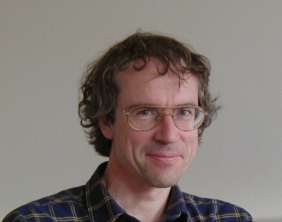 Frank Puppe合作论文数Universitat Wurzburg, Fakultat fur Mathematik und Informatik Lehrstuhl fur Kunstliche Intelligenz und Angewandte Informatik (Informatik VI)6
 Jo Puls合作论文数6Florian Fink合作论文数5A. W. A. Pauldrach合作论文数3Maximilian Wehner合作论文数2Andreas Büttner合作论文数2
 Helmut Schmid合作论文数Center for Information and Language Processing,Ludwig Maximilian University Munich2Dietmar Najock合作论文数2K. U. Schulz合作论文数Ludwig-Maximilians-Universit?t M??nchen;Centrum f??r Informations- und Sprachverarbeitung2
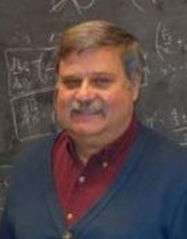 Stan Owocki合作论文数Bartol Research Institute, Department of Physics & Astronomy, University of Delaware2
 Kay-Michael Würzner合作论文数University of Potsdam2mary c lennon合作论文数1Sebastian Göttel合作论文数1Anke Luedeling合作论文数1Tobias Englmeier合作论文数1Stefan Tomasek合作论文数1CHRIST OPHER E. DENNIS合作论文数1Florian Langhanki合作论文数1Johannes Baiter合作论文数1Matthias Boenig合作论文数Berlin-Brandenburgische Akademie der Wissenschaften Deutschland1Nico Balbach合作论文数1joachim puls合作论文数1Alexander Hartelt合作论文数1
 Roberto . Oscar Jose Venero合作论文数1Klaus U. Schulz合作论文数1Alexander William Fullerton合作论文数1T. Repolust合作论文数1A. Jokuthy合作论文数1Annette Gotscharek合作论文数1Stefanie Dipper合作论文数Institute of Natural Language Processing (IMS), Stuttgart University1Anke Lüdeling合作论文数1Hermann Morgenroth合作论文数1
 Achim Feldmeier合作论文数Universitat Potsdam1M. R. Mokiem合作论文数1R. Kudritzki合作论文数1




