The International Cooperative Programme on Integrated Monitoring of Air Pollution Effects on Ecosystems (ICP IM) presents a comprehensive long-term dataset of ongoing integrated ecosystem monitoring from European forested catchments. The dataset encompasses measurements from 46 monitoring stations across 14 European countries, with temporal coverage mostly extending from the early 1990s to 2020 (48 sites are currently active). The integrated monitoring approach applies over 20 monitoring subprogrammes to simultaneously measure physical, chemical, and biological properties across multiple ecosystem compartments including atmosphere, precipitation, throughfall, soil water, groundwater, runoff water, soil, vegetation, and biota. All measurements follow standardised protocols detailed in the ICP IM Manual, ensuring data quality and comparability across sites and time periods. The dataset supports research on ecosystem responses to air pollution, climate change impacts, and biogeochemical cycling. Data are available under a Creative Commons By Attribution (CC BY) licence, providing valuable long-term environmental monitoring data for the scientific community.
Long-range transport of pollutants to the Arctic is subjected to cloud processing and wet deposition. Under cold Arctic conditions, aerosol processing by ice and mixed-phase clouds are of particular importance. In this study, the representation of aerosol wet removal in the GEM-MACH model was updated with a better representation of precipitation phases in aerosol below-cloud scavenging and the consideration for the Wegener-Bergeron-Findeisen (WBF) process in aerosol rain-out removal. Model simulations of atmospheric composition on a pan-Arctic domain at 15-km horizontal resolution were carried out for summer 2014 and spring 2015 and compared with aerosol observations at several Arctic sites. The study showed that the updated representation of the aerosol wet removal, particularly the inclusion of the WBF process effect, led to improved model simulation of aerosols both in concentration levels and size distribution. Overall, the model has better ability to simulate Arctic aerosols in summer; inorganic aerosols are simulated well, particularly over the European Arctic. However, there are still challenges for the model to capture the spring haze event over the North American Arctic and the high levels of carbonaceous aerosols observed over the Canadian Arctic Archipelago.
Risk assessment of pesticide impacts on remote ecosystems makes use of model-estimated degradation in air. Recent studies suggest these degradation rates to be overestimated, questioning current pesticide regulation. Here, we investigated the concentrations of 76 pesticides in Europe at 29 rural, coastal, mountain, and polar sites during the agricultural application season. Overall, 58 pesticides were observed in the European atmosphere. Low spatial variation of 7 pesticides suggests continental-scale atmospheric dispersal. Based on concentrations in free tropospheric air and at Arctic sites, 22 pesticides were identified to be prone to long-range atmospheric transport, which included 15 substances approved for agricultural use in Europe and 7 banned ones. Comparison between concentrations at remote sites and those found at pesticide source areas suggests long atmospheric lifetimes of atrazine, cyprodinil, spiroxamine, tebuconazole, terbuthylazine, and thiacloprid. In general, our findings suggest that atmospheric transport and persistence of pesticides have been underestimated and that their risk assessment needs to be improved.
This study addressed the scarcity of NH3 measurements in urban Europe and the diverse monitoring protocols, hindering direct data comparison. Sixty-nine datasets from Finland, France, Italy, Spain, and the UK across various site types, including industrial (IND, 8), traffic (TR, 12), urban (UB, 22), suburban (SUB, 12), and regional background (RB, 15), are analyzed to this study. Among these, 26 sites provided 5, or more, years of data for time series analysis. Despite varied protocols, necessitating future harmonization, the average NH3 concentration across sites reached 8.0 ± 8.9 μg/m3. Excluding farming/agricultural hotspots (FAHs), IND and TR sites had the highest concentrations (4.7 ± 3.2 and 4.5 ± 1.0 μg/m3), followed by UB, SUB, and RB sites (3.3 ± 1.5, 2.7 ± 1.3, and 1.0 ± 0.3 μg/m3, respectively) indicating that industrial, traffic, and other urban sources were primary contributors to NH3 outside FAH regions. When referring exclusively to the FAHs, concentrations ranged from 10.0 ± 2.3 to 15.6 ± 17.2 μg/m3, with the highest concentrations being reached in RB sites close to the farming and agricultural sources, and that, on average for FAHs there is a decreasing NH3 concentration gradient towards the city. Time trends showed that over half of the sites (18/26) observed statistically significant trends. Approximately 50 % of UB and TR sites showed a decreasing trend, while 30 % an increasing one. Meta-analysis revealed a small insignificant decreasing trend for non-FAH RB sites. In FAHs, there was a significant upward trend at a rate of 3.51[0.45,6.57]%/yr. Seasonal patterns of NH3 concentrations varied, with urban areas experiencing fluctuations influenced by surrounding emissions, particularly in FAHs. Diel variation showed differing patterns at urban monitoring sites, all with higher daytime concentrations, but with variations in peak times depending on major emission sources and meteorological patterns. These results offer valuable insights into the spatio-temporal patterns of gas-phase NH3 concentrations in urban Europe, contributing to future efforts in benchmarking NH3 pollution control in urban areas.
The chemical composition of PM2.5 was monitored simultaneously at two sites, one in a general area of the city center and one at a roadside, in Hanoi, Vietnam, during August 2019-July 2020 using 220 daily (24 h) filter samples. PM mass, water soluble ions, trace elements, organic and elemental carbon and sugar anhydrides were measured. The annual average PM2.5 concentrations, 49 and 46 mu g m(-3) at the traffic and the general urban site, respectively, exceeded the national (25 mu g m(-3)) and 2021 WHO limit values (5 mu g m(-3)). Daily PM2.5 concentrations were the highest in winter when stagnant meteorological conditions prevailed. On average, half of the resolved mass was organic matter, of which about 40% was attributable to biomass burning, most likely rice straw field burning and domestic fuel combustion. One third of PM2.5 was secondary inorganic aerosol which was dominated by sulphate hence indicating a high contribution of stationary sources like coal combustion. The elemental carbon level was higher at the traffic site, except in April 2020 during the COVID-19 restrictions. Zinc was the most common trace element with high daily variations and large differences between the sites, and it often peaked with Cd, Cl- and Pb indicating contribution of industrial sources and/or coal combustion. The highest zinc concentrations appeared on a few days and likely originated from open burning of municipal solid waste. It appeared that scattered open waste and biomass burning, as well as coal combustion, are important sources causing spikes of PM2.5 pollution in Hanoi above the general levels caused by routine industrial and traffic sources, especially during stagnant winter days. Source contributions were further studied with positive matrix factorization producing six source factors: traffic (12%), local secondary inorganic aerosol (SIA, 18%), biomass burning (19%), industry (9%), long-range transported SIA (25%) and dust (17%).
Under the EU Air Quality Directive (AQD) 2008/50/EC member states are required to undertake routine monitoring of PM2.5 composition at background stations. The AQD states for PM2.5 speciation this should include at least: nitrate (NO3), sulfate (SO42-), chloride (Cl), ammonium (NH4(+)), sodium (Na+), potassium (K+), magnesium (Mg2+), calcium (Ca2+), elemental carbon (EC) and organic carbon (OC). Until 2017, it was the responsibility of each country to determine the methodology used to report the composition for the inorganic components of PM2.5. In August 2017 a European standard method of measurement of PM2.5 inorganic chemical components (NO3, SO42-, Cl, NH4+, Na+, K+, Mg2+, Ca2+) as deposited on filters (EN16913:2017) was published. From August 2019 this then became the European standard method. This filter method is labour-intensive and provides limited time resolution and is prone to losses of volatile compounds. There is therefore increasing interest in the use of alternative automated methods. For example, the UK reports hourly PM2.5 chemical composition using the Monitor for AeRosols and Gases in Ambient air (MARGA, Metrohm, NL). This study is a pre-assessment review of available data to demonstrate if or to what extent equivalence is possible using either the MARGA or other available automatic methods, including the Aerosol Chemical Speciation Monitor (ACSM, Aerodyne Research Inc. US) and the Ambient Ion Monitor (AIM, URG, US). To demonstrate equivalence three objectives were to be met. The first two objectives focused on data capture and were met by all three instruments. The third objective was to have less than a 50% expanded uncertainty compared to the reference method for each species. Analysis of this objective was carried out using existing paired datasets available from different regions around the world. It was found that the MARGA (2006-2019 model) had the potential to demonstrate equivalence for all species in the standard, though it was only through a combination of case studies that it passed uncertainty criteria. The ACSM has the potential to demonstrate equivalence for NH4+, SO42-, and in some conditions NO3-, but did not for Cl due to its inability to quantify refractory aerosol such as sea salt. The AIM has the potential for NH4+, NO3-, SO42-, Cl and Mg2+. Future investigations are required to determine if the AIM could be optimised to meet the expanded uncertainty criterion for Na+, K+ and Ca2+. The recommendation is that a second stage to demonstrate equivalence is required which would include both laboratory and field studies of the three candidate methods and any other technologies identified with the potential to report the required species.
Abstract. Ammonia (NH3) in the atmosphere affects both the environment and human health. It is therefore increasingly recognised by policy makers as an important air pollutant that needs to be mitigated. In order to understand the effectiveness of abatement strategies, routine NH3 monitoring is required. Current reference protocols, developed in the 1990s, use daily samplers with offline analysis but there have been a number of technologies developed since, which may be applicable for high time resolution routine monitoring of NH3 at ambient concentrations. The following study is a comprehensive field intercomparison held over an intensively managed grassland in South East Scotland using currently available methods that are reported to be suitable for routine monitoring of ambient NH3. In total 13 instruments took part in the field study. The instruments include: an online ion chromatography system (MARGA, Metrohm-Applikon,NL), two wet chemistry continuous flow analysis systems (AiRRmonia, Mechatronics, NL), a photoacoustic spectrometer (NH3 monitor, LSE, NL), two mini Differential Optical Absorption Spectrometers (miniDOAS; NTB Interstate University of Applied Sciences Buchs, now part of "Eastern Switzerland University of Applied Sciences, CH and RIVM, NL), as well as seven spectrometers using cavity enhanced techniques: a Quantum Cascade Laser Absorption Spectrometer (QCLAS, Aerodyne, Inc. US), Picarro G2103 Analyzer (Picarro US), Economical NH3 Analyser (Los Gatos Research, US), Tiger-i 2000 (Tiger Optics, US) and LaserCEM® gas analyser (AP2E, FR). Assessments of the instruments’ precision at low concentrations (< 10 ppb) and at elevated concentrations (maximum reported concentration of 282 ppb) were undertaken. At elevated concentrations all instruments performed well on precision (r2 > 0.75). At concentrations below 10 ppb however, instruments fell into two distinct groups and the duplicate instruments, miniDOAS, AiRRmonia, LGR and Picarro were split across the two groups. It was found that identical instruments performed differently at low concentrations, highlighting the impact of the setup, inlet design and operation of the instrument used. Accuracy in determining absolute concentrations in the field was assessed using a calibration-free CRDS Optical Gas Standard (OGS, PTB, DE), serving as an instrumental reference standard. Accuracy was also assessed using well established metrological standards for calibration gases, i) a permeation system (ReGaS1, METAS, CH) and ii) Primary Standard gas Mixtures (PSMs) prepared by gravimetry (NPL, UK). This study showed that though the OGS good performance with respect to sensitivity and linearity with reference gas standards, this in itself is not enough for the OGS to be a field reference standard because a closed path spectrometer has limitations due to losses to surfaces in sampling NH3, which need to be taken into account. Overall, the instruments studied performed well against the standard gases but we note that not every instrument could be calibrated using gas standards due to incompatible inlet designs and limitations in the gas flow rates of the standards. This work provides evidence that though NH3 instrumentation have greatly progressed in measurement precision, there is still further work required to quantify the accuracy of these systems under field conditions. It is the recommendation of this study that the use of instruments for routine monitoring of NH3 needs to be set out in standard operating protocols for inlet set-up, calibration and routine maintenance, in order for datasets to be comparable.
Abstract. Aerosol particles play an important in role in the microphysics of clouds and hence on their likelihood to precipitate. In the changing climate already dry areas such as the United Arab Emirates (UAE) are predicted to become even drier. Comprehensive observations of the daily and seasonal variation in aerosol particle properties in such locations are required reducing the uncertainty in such predictions. We analyse observations from a one-year measurement campaign at a background location in the United Arab Emirates to investigate the properties of aerosol particles in this region, study the impact of boundary layer mixing on background aerosol particle properties measured at the surface and study the temporal evolution of the aerosol particle cloud formation potential in the region. We used in-situ aerosol particle measurements to characterise the aerosol particle composition, size, number and cloud condensation nuclei (CCN) properties, in-situ SO2 measurements as an anthropogenic signature and a long-range scanning Doppler lidar to provide vertical profiles of the horizontal wind and turbulent properties to monitor the evolution of the boundary layer. Anthropogenic sulphate dominated the aerosol particle mass composition in this location. There was a clear diurnal cycle in the surface wind direction, which had a strong impact on aerosol particle total number concentration, SO2 concentration and black carbon mass concentration. Local sources were the predominant source of black carbon, as concentrations clearly depended on the presence of turbulent mixing, with much higher values during calm nights. The measured concentrations of SO2, instead, were highly dependent on the surface wind direction as well as on the depth of the boundary layer when entrainment from the advected elevated layers occurred. The wind direction at the surface or of the elevated layer suggests that the cities of Dubai, Abu Dhabi and other coastal conurbations were the remote sources of SO2. We observed new aerosol particle formation events almost every day (on four days out of five on average). Calm nights had the highest CCN number concentrations and lowest κ values and activation fractions. We did not observe any clear dependence of CCN number concentration and κ parameter on the height of the daytime boundary layer, whereas the activation fraction did show a slight increase with increasing boundary layer height, due to the change in the shape of the aerosol particle size distribution where the relative portion of larger aerosol particles increased with increasing boundary layer height. We believe that this indicates that size is more important than chemistry for aerosol particle CCN activation at this site. The combination of instrumentation used in this campaign enabled us to identify periods when anthropogenic pollution from remote sources that had been transported in elevated layers was present, and had been mixed down to the surface in the growing boundary layer.
Ammonia (NH3) in the atmosphere affects both the environment and human health. It is therefore increasingly recognised by policy makers as an important air pollutant that needs to be mitigated, though it still remains unregulated in many countries. In order to understand the effectiveness of abatement strategies, routine NH3 monitoring is required. Current reference protocols, first developed in the 1990s, use daily samplers with offline analysis; however, there have been a number of technologies developed since, which may be applicable for high time resolution routine monitoring of NH3 at ambient concentrations. The following study is a comprehensive field intercomparison held over an intensively managed grassland in southeastern Scotland using currently available methods that are reported to be suitable for routine monitoring of ambient NH3. In total, 13 instruments took part in the field study, including commercially available technologies, research prototype instruments, and legacy instruments. Assessments of the instruments' precision at low concentrations (< 10 ppb) and at elevated concentrations (maximum reported concentration of 282 ppb) were undertaken. At elevated concentrations, all instruments performed well and with precision (r2 > 0.75). At concentrations below 10 ppb, however, precision decreased, and instruments fell into two distinct groups, with duplicate instruments split across the two groups. It was found that duplicate instruments performed differently as a result of differences in instrument setup, inlet design, and operation of the instrument. New metrological standards were used to evaluate the accuracy in determining absolute concentrations in the field. A calibration-free CRDS optical gas standard (OGS, PTB, DE) served as an instrumental reference standard, and instrument operation was assessed against metrological calibration gases from (i) a permeation system (ReGaS1, METAS, CH) and (ii) primary standard gas mixtures (PSMs) prepared by gravimetry (NPL, UK). This study suggests that, although the OGS gives good performance with respect to sensitivity and linearity against the reference gas standards, this in itself is not enough for the OGS to be a field reference standard, because in field applications, a closed path spectrometer has limitations due to losses to surfaces in sampling NH3, which are not currently taken into account by the OGS. Overall, the instruments compared with the metrological standards performed well, but not every instrument could be compared to the reference gas standards due to incompatible inlet designs and limitations in the gas flow rates of the standards. This work provides evidence that, although NH3 instrumentation have greatly progressed in measurement precision, there is still further work required to quantify the accuracy of these systems under field conditions. It is the recommendation of this study that the use of instruments for routine monitoring of NH3 needs to be set out in standard operating protocols for inlet setup, calibration, and routine maintenance in order for datasets to be comparable.
Abstract. We measured amine and guanidine emission rates from a boreal forest floor in Finland with 1-h time resolution, using an online ion chromatograph (instrument for Measuring AeRosols and Gases in Ambient air – MARGA) coupled with an electrospray ionization-quadrupole mass spectrometer (MS). MARGA-MS was connected to a closed dynamic flow-through poly(methyl methacrylate) chamber. Chamber recovery for the emission measurements was tested semi-quantitatively for monomethyl-, dimethyl- and trimethylamine (MMA, DMA and TMA), and the results were 19 %, 29 % and 24 %, respectively. MMA, DMA and TMA showed maximum emission rates in July, but the highest emission rates for guanidine were in April, when snow was melting. The MMA, DMA and TMA emission rates also clearly varied diurnally, especially in July with maxima at afternoon. Diethylamine (DEA) also showed higher emission rates, with clear diurnal cycles in July. Other amine emission rates were mostly below the detection limits. The temperature dependencies of the emissions were studied, and we noted a correlation between the emission rates and chamber temperature (Tchamber). Especially in July emission rates of DMA followed Tchamber measured two hours earlier and guanidine showed a similar pattern. On the other hand, the TMA emission rates correlated with Tchamber measured at the same time. This could be due to lower vaporizing temperature of TMA. Emission rates of DMA and TMA showed some air temperature (Tair) dependency, but for MMA dependency was not as clear.
This project summarizes the results from 2000–2020and evaluates the trueness andthequality control (QC) procedures of the ongoing polycyclic aromatic hydrocarbon (PAH)and trace element measurements in Finlandrelating to Air Quality (AQ) Directive 2004/107/EC. The evaluation was focused on benzo(a)pyrene and other PAH compounds as well as arsenic, cadmium and nickel in PM10and deposition. Additionally, it included lead and other metals in PM10and deposition, gaseous mercury and mercury deposition, andbriefly other specificAQ measurements such as volatile organic compounds (VOC)and PM2.5chemical composition. This project was conducted by the National Reference Laboratory on air quality and thiswas the first time these measurements were assessed. A major part of the project was field and laboratory audits of the ongoing PAH and metal measurements. Other measurements were briefly evaluated through interviews and available literature. In addition, the national AQ database, the expertise of local measurement networks and related publications were utilised. In total, all theseven measurement networks performing PAH and metal measurements in 2019–2020took part in the audits. Eleven stations were audited while these measurements are performed at 22 AQ stations in Finland. For the large networks, one station was chosen to represent the performance of the network. The audits included also six laboratories performing the analysis of the collected samples. The audits revealed the compliance of the measurements with the AQ Decree 113/2017, Directive 2004/107/EC and Standards of the European Committee for Standardization(CEN). In addition, general information of the measurements, instruments and quality control procedures were gained. The results of the laboratory audits were confidential,but this report includes general findings, and the measurement networks were informed on the audit results with the permission of the participating laboratories. As a conclusion, the measurementmethodsusedwere mainly reference methods. Currently, all sampling methods were reference methods; however, before 2018 three networks used other methods that may have underestimated concentrations. Regarding these measurements, it should be noted the results are notcomparable with the reference method. Laboratory methods were reference methods excluding two cases, where the first was considered an acceptable equivalent method. For the other, a change to a reference method was strongly recommended and this realized in 2020. For some new measurements, the ongoing QC procedures were not yet fully established, and advice were given. Some networks used consultant for calibration and maintenance, and thus theywere not fully aware of the QC procedures. EN Standards were mostly followed. Main concerns were related to the checks of flow and calculation of measurement uncertainty, and suggestions for improvement were given. When the measurement networks implement the recommendations given inthe audits, it can be concluded that the EN Standards are adequately followed in the networks. In the ongoing sampling, clear factors risking the trueness of the result were not found. This applies also for the laboratory analyses in 2020. One network had concentrations above the target value, and theindicative measurementsshould be updated to fixed measurements.
Table ST1.Line equations (y) for chamber temperatureemission rate -plots.For DMA and guanidine the the R 2values were better, when temperatures were moved 2 hours above.For DMA best fit was with exponential function, and for DMA and guanidine with linear function.
The Station for Measuring Ecosystem–Atmosphere Relations (SMEAR) II is well known among atmospheric scientists due to the immense amount of observational data it provides of the Earth–atmosphere interface. Moreover, SMEAR II plays an important role for the large European research infrastructure, enabling the large scientific community to tackle climate- and air-pollution-related questions, utilizing the high-quality long-term data sets recorded at the site. So far, this well-documented site was missing the description of the seasonal variation in aerosol chemical composition, which helps understanding the complex biogeochemical and physical processes governing the forest ecosystem. Here, we report the sub-micrometer aerosol chemical composition and its variability, employing data measured between 2012 and 2018 using an Aerosol Chemical Speciation Monitor (ACSM). We observed a bimodal seasonal trend in the sub-micrometer aerosol concentration culminating in February (2.7, 1.6, and 5.1 µg m−3 for the median, 25th, and 75th percentiles, respectively) and July (4.2, 2.2, and 5.7 µg m−3 for the median, 25th, and 75th percentiles, respectively). The wintertime maximum was linked to an enhanced presence of inorganic aerosol species (ca. 50 %), whereas the summertime maximum (ca. 80 % organics) was linked to biogenic secondary organic aerosol (SOA) formation. During the exceptionally hot months of July of 2014 and 2018, the organic aerosol concentrations were up to 70 % higher than the 7-year July mean. The projected increase in heat wave frequency over Finland will most likely influence the loading and chemical composition of aerosol particles in the future. Our findings suggest strong influence of meteorological conditions such as radiation, ambient temperature, and wind speed and direction on aerosol chemical composition. To our understanding, this is the longest time series reported describing the aerosol chemical composition measured online in the boreal region, but the continuous monitoring will also be maintained in the future.
Atmospheric trace elements (Al, As, Cd, Co, Cr, Cu, Fe, Mn, Ni, Pb, V, Zn) in particulate matter have been measured since 1996 at Pallas, a subarctic site in Finland. The results indicate a very low level of pollution as the concentrations were among the lowest measured in Europe. The annual average concentration during the whole time series (1996-2018), from the lowest values to the highest, was Co < Cd < Cr < As < V < Ni < Cu < Mn < Pb < Zn < Al < Fe, ranging from 0.02 to 20 ng m(-3). For the priority elements As, Cd, Ni and Pb, the annual average concentration was 0.10, 0.02, 0.21 and 0.65 ng m(-3), respectively, in 2018. The concentrations were compared with the results from three other sites in Finland, and a clear south-to-north decreasing gradient was found for most elements except for Ni, which was found to be mostly associated with emissions from the Kola Peninsula together with the trace elements of Cu, As and Co, as confirmed by the source apportionment analysis using positive matrix factorization. Cd, Pb, V and Zn were attributed to long-range transported (LRT) pollutants originating from combustion while Al, Fe and Mn were related to the soil origin. Gaseous Hg was included in the source analysis and was found in a separate LRT and marine factors. Considering the full time series, a trend analysis showed statistically significant decreasing trends for As, Cd, Co, Cu, Ni, Pb and V up to 64% in the whole period. Since 2010, six elements (Cd, Co, Ni, Pb, V, Zn) have continued the positive development of declining trends (P < 0.05) with changes between 25% and 53% during the period. No statistically significant increasing trends were observed for the studied elements.
New particle formation (NPF) provides a large source of atmospheric aerosols, which affect the climate and human health. In recent chamber studies, ion-induced nucleation (IIN) has been discovered as an important pathway of forming particles; however, atmospheric investigation remains incomplete. For this study, we investigated the air anion compositions in the boreal forest in southern Finland for three consecutive springs, with a special focus on H2SO4-NH3 anion clusters. We found that the ratio between the concentrations of highly oxygenated organic molecules (HOMs) and H2SO4 controlled the appearance of H2SO4-NH3 clusters (3<no.S<13): all such clusters were observed when [HOM] ∕ [H2SO4] was smaller than 30. The number of H2SO4 molecules in the largest observable cluster correlated with the probability of ion-induced nucleation (IIN) occurrence, which reached almost 100 % when the largest observable cluster contained six or more H2SO4 molecules. During selected cases when the time evolution of H2SO4-NH3 clusters could be tracked, the calculated ion growth rates exhibited good agreement across measurement methods and cluster (particle) sizes. In these cases, H2SO4-NH3 clusters alone could explain ion growth up to 3 nm (mobility diameter). IIN events also occurred in the absence of H2SO4-NH3, implying that other NPF mechanisms also prevail at this site, most likely involving HOMs. It seems that H2SO4 and HOMs both affect the occurrence of an IIN event, but their ratio ([HOMs] ∕ [H2SO4]) defines the primary mechanism of the event. Since that ratio is strongly influenced by solar radiation and temperature, the IIN mechanism ought to vary depending on conditions and seasons.
We measured amines in boreal forest air in Finland both in gas and particle phases with 1 h time resolution using an online ion chromatograph (instrument for Measuring AeRosols and Gases in Ambient Air – MARGA) connected to an electrospray ionization quadrupole mass spectrometer (MS). The developed MARGA-MS method was able to separate and detect seven different amines: monomethylamine (MMA), dimethylamine (DMA), trimethylamine (TMA), ethylamine (EA), diethylamine (DEA), propylamine (PA), and butylamine (BA). The detection limits of the method for amines were low (0.2–3.1 ng m−3), the accuracy of ICMS analysis was 11–37 %, and the precision 10–15 %. The proper measurements in the boreal forest covered about 8 weeks between March and December 2015. The amines were found to be an inhomogeneous group of compounds, showing different seasonal and diurnal variability. Total MMA (MMA(tot)) peaked together with the sum of ammonia and ammonium ions already in March. In March, monthly means for MMA were< 2.4 and 6.8± 9.1 ng m−3 in gas and aerosol phases, respectively, and for NH3 and NH+4 these were 52± 16 and 425± 371 ng m−3, respectively. Monthly medians in March for MMA(tot), NH3, and NH+4 were < 2.4, 19 and 90 ng m−3, respectively. DMA(tot) and TMA(tot) had summer maxima indicating biogenic sources. We observed diurnal variation for DMA(tot) but not for TMA(tot). The highest concentrations of these compounds were measured in July. Then, monthly means for DMA were < 3.1 and 8.4± 3.1 ng m−3 in gas and aerosol phases, respectively, and for TMA these were 0.4± 0.1 and 1.8± 0.5 ng m−3. Monthly medians in July for DMA were below the detection limit (DL) and 4.9 ng m−3 in gas and aerosol phases, respectively, and for TMA these were 0.4 and 1.4 ng m−3. When relative humidity of air was > 90 %, gas-phase DMA correlated well with 1.1–2 nm particle number concentration (R2 = 0.63) suggesting that it participates in atmospheric clustering. EA concentrations were low all the time. Its July means were < 0.36 and 0.4± 0.4 ng m−3 in gas and aerosol phases, respectively, but individual concentration data correlated well with monoterpene concentrations in July. Monthly means of PA and BA were below detection limits at all times.
We report flow tube measurements of the effective sulfuric acid diffusion coefficient at ranges of different relative humidities (from similar to 4 to 70%), temperatures (278, 288 and 298 K) and initial H2SO4 concentrations (from 1 x 10(6) to 1 x 10(8) molecules.cm(-3)). The measurements were carried out under laminar flow of humidified air containing trace amounts of impurities such as amines (few ppt), thus representing typical conditions met in Earth's continental boundary layer. The diffusion coefficients were calculated from the sulfuric acid wall loss rate coefficients that were obtained by measuring H2SO4 concentration continuously at seven different positions along the flow tube with a chemical ionization mass spectrometer (CIMS). The wall loss rate coefficients and laminar flow conditions were verified with additional computational fluid dynamics (CFD) model FLUENT simulations. The determined effective sulfuric acid diffusion coefficients decreased with increasing relative humidity, as also seen in previous experiments, and had a rather strong power dependence with respect to temperature, around proportional to T-5.6, which is in disagreement with the expected temperature dependence of similar to T-1.75 for pure vapours. Further clustering kinetics simulations using quantum chemical data showed that the effective diffusion coefficient is lowered by the increased diffusion volume of H2SO4 molecules via a temperature-dependent attachment of base impurities like amines. Thus, the measurements and simulations suggest that in the atmosphere the attachment of sulfuric acid molecules with base molecules can lead to a lower than expected effective sulfuric acid diffusion coefficient with a higher than expected temperature dependence.
We present ambient observations of dimeric monoterpene oxidation products (C16-20HyO6-9) in gas and particle phases in the boreal forest in Finland in spring 2013 and 2014, detected with a chemical ionization mass spectrometer with a filter inlet for gases and aerosols employing acetate and iodide as reagent ions. These are among the first online dual-phase observations of such dimers in the atmosphere. Estimated saturation concentrations of 10(-15) to 10(-6)mu gm(-3) (based on observed thermal desorptions and group-contribution methods) and measured gas-phase concentrations of 10(-3) to 10(-2)mu gm(-3) (similar to 10(6)-10(7)moleculescm(-3)) corroborate a gas-phase formation mechanism. Regular new particle formation (NPF) events allowed insights into the potential role dimers may play for atmospheric NPF and growth. The observationally constrained Model for Acid-Base chemistry in NAnoparticle Growth indicates a contribution of similar to 5% to early stage particle growth from the similar to 60 gaseous dimer compounds.Plain Language Summary Atmospheric aerosol particles influence climate and air quality. We present new insights into how emissions of volatile organic compounds from trees are transformed in the atmosphere to contribute to the formation and growth of aerosol particles. We detected for the first time over a forest, a group of organic molecules, known to grow particles, in the gas phase at levels far higher than expected. Previous measurements had only measured them in the particles. This finding provides guidance on how models of aerosol formation and growth should describe their appearance and fate in the atmosphere.
 Markku Kulmala (马库·库马拉)合作论文数Institute for Atmospheric and Earth System Research, Faculty of Science, University of Helsinki;Institute for Atmospheric and Earth System Research;Nanjing University27
 Tuukka Petäjä合作论文数Institute for Atmospheric and Earth System Research, Faculty of Science, University of Helsinki17
 Hannele Hakola合作论文数Finnish Meteorological Institute16
 Risto Hillamo合作论文数15
 Heidi Hellen合作论文数Air Quality Group, Finnish Meteorological Institute;Institute for Atmospheric and Earth System Research, University of Helsinki13Heikki Lihavainen合作论文数9Sanna Saarikoski合作论文数Finnish Meteorological Institute;Research and Development;Finnish Meteorological Institute8Aki Virkkula合作论文数7
 Jorma Jokiniemi合作论文数7Minna Aurela合作论文数7
 Mikko Sipilä合作论文数Institute for Atmospheric and Earth System Research, Faculty of Science, University of Helsinki;Department of Physics, University of Helsinki7
 Jussi Paatero合作论文数Finnish Meteorological Institute7
 Marja Hemmila合作论文数6Antti-Jussi Kieloaho合作论文数Nat Resources Inst Finland6
 Veli-Matti Kerminen合作论文数Department of Physics, University of Helsinki;Institute for Atmospheric and Earth System Research, University of Helsinki6
 Ilona Riipinen合作论文数Department of Chemical Engineering,Carnegie Mellon Universitynd6
 Eiko Nemitz合作论文数UK Centre for Ecology & Hydrology6
 Kelley C. Barsanti合作论文数Atmospheric Chemistry Observations and Modeling Laboratory, National Center for Atmospheric Research6
 Katriina Kyllonen合作论文数6
 Heikki Junninen合作论文数Laboratory of Atmospheric and Environmental Sciences, University of Tartu;Institute of Physics, Faculty of Science and Technology, University of Tartu6
 Mikael Ehn合作论文数Institute for Atmospheric and Earth System Research, Faculty of Science, University of Helsinki6
 Raimo O. Salonen合作论文数6Mika Vestenius合作论文数5Mikko Äijälä合作论文数Department of Physics, University of Helsinki5Brus David合作论文数Laboratory of Aerosol Chemistry and Physics, Institute of Chemical Process Fundamentals AS CR, v.v.i., CZ-16502 Prague, Czech Republic. brus@icpf.cas.cz5Maija-Riitta Hirvonen合作论文数5
 Douglas Worsnop合作论文数Aerodyne Research;Department of Physics, University of Helsinki5
 Pasi Jalava合作论文数Department of Environmental and Biological Sciences, Faculty of Science, Forestry and Technology, University of Eastern Finland5
 A.-P. Hyvärinen合作论文数Finnish Meteorological Institute5
 Pia Anttila合作论文数Air Quality Research, Finnish Meteorological Institute5Arto Pennanen合作论文数5Eija Asmi合作论文数5Maija Tapanainen合作论文数5Taina Yli-Juuti合作论文数4
 Lea Hildebrandt Ruiz合作论文数Department of Biomedical Engineering, Cockrell School of Engineering, University of Texas at Austin4Sarah Leeson合作论文数4
 Jean-Eudes Petit合作论文数Laboratoire des Sciences du Climat et de l'Environnement, Université Paris-Saclay4
 Tuija Jokinen合作论文数Department of Physics, University of Helsinki;Department of Physics, University of Helsinki4
 Hanna Vehkamäki合作论文数Institute for Atmospheric and Earth System Research, Faculty of Science, University Of Helsinki4Juho Aalto合作论文数4Neitola Kimmo合作论文数4
 Rene Otjes合作论文数4
 Karri Saarnio合作论文数4
 Niku Kivekäs合作论文数ACTRIS4
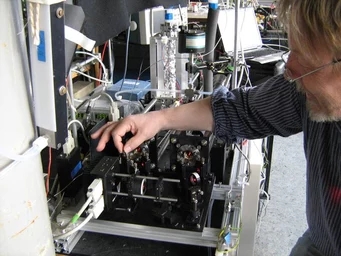 John N. Crowley合作论文数Division of Atmospheric Chemistry, Max-Planck-Institut fur Chemie4
 Darius Ceburnis合作论文数Department of Experimental Physics, School of Physics, National University of Ireland Galway;Mace Head Atmospheric Research Station4Jarkko Tissari合作论文数4
 Lee Mauldin合作论文数Department of Atmospheric and Oceanic Sciences, College of Arts and Sciences, University of Colorado Boulder4Christine Braban合作论文数The University Chemical Laboratory, University of Cambridge4




