At the northern boundary of the NE Atlantic upwelling system, seasonal wind patterns that facilitate the influx of nutrient-rich waters, combined with the presence of protected embayments known as the Galician Rias, have established this region as the third largest producer of mussels in the planet. Since the early 1970s, the need to ensure sustainable exploitation of this natural resource has prompted scientific and administrative efforts to identify environmental conditions that optimize mussel farming and to clarify the impacts of mussel cultivation on marine food web dynamics. This article synthesizes scientific advances from recent decades, including research on turnover times in the Galician Rias and diverse methodologies for defining ecosystem carrying capacity. Recent in situ analyses have revealed intense turbulent flows in and around mussel cultivation units, thereby challenging earlier carrying capacity models that assumed linear water flow through rafts and cultivation polygons. This finding highlights the importance of incorporating seasonal fluctuations in food availability, both within and beyond the turbulent zone, when evaluating the future sustainability of mussel aquaculture. Additionally, the strong dependence of regional productivity on wind regime seasonality requires that any modeling of mussel farming in the Galician Rias should consider potential hydrographic and hydrodynamic changes within the embayments, whether due to interannual ocean-atmosphere variability or global climate change. Such an integrated approach is essential for developing an action plan that ensures the long-term sustainability of mussel farming in the Galician Rias.
Interest on the potential CO2 sequestration of marine bivalve aquaculture has increased during the last decade. However, there is still some controversy about which biological processes are involved and how to estimate their contribution to the carbon footprint of bivalve aquaculture. This work considers the dissolved inorganic carbon, CO2 and alkalinity fluxes linked to flesh and shell growth, calcification, respiration, faeces egestion, and ammonia excretion, accounting also for the RDOC production associated to these processes. We have developed an algorithm for a dynamic estimation of these fluxes based on a net production DEB growth model for mussels. The resulting model has been implemented in Python to create a toolbox with a graphical user interface. This toolbox allows the selection of different culture strategies, in terms of seeding date, seed size and culture length, and consequently analyzes the carbon footprint and impact on the carbonate chemistry of seawater of aquaculture management.
BIOLOGICAL DATA to estimate the carbon dioxide budget of cultured mussels metabolism in the highly productive Northwest Iberian upwelling system. Álvarez-Salgado et al. (2022) estimate the carbon dioxide and total alkalinity budgets due to the Mediterranean mussels (Mytilus galloprovicialis) growing in suspended culture in a low seston environment such as the Galician Rías (NW Spain). This database contains the biological data needed to estimate the carbon dioxide fluxes and changes in total alkalinity induced by the different biological processes involved in mussel growth. Manuscript available at: https://doi.org/10.1016/j.scitotenv.2022.157867 Álvarez-Salgado, X.A., Fernández-Reiriz, M.J., Fuentes-Santos, I., Antelo, L.T., Alonso, A.A., Labarta, U., 2022. CO2 budget of cultured mussels metabolism in the highly productive Northwest Iberian upwelling system. Sci. Total Environ. 849, 157867.
Assessing the carbon footprint of marine bivalve aquaculture demands an accurate estimation of the CO2 release associated to capital goods and aquaculture operations but also to the metabolic CO2 budget of the cultured species. Nowadays, there are discrepancies on the processes to include in that budget, how to estimate them, and which scale should be applied, from individual to ecosystem. Site-specific environmental conditions and culture methods also affect significantly the estimates. Here, we have gathered environmental, biochemical and metabolic data from published scientific articles, reports and existing databases to present the metabolic CO2 budget for mussel aquaculture in the coastal inlets of the Northwest Iberian upwelling. We analyse the contribution of mussel flesh and shell production jointly and separately. At the individual scale, the shell CO2 budget is estimated from CO2 removal by shell matrix protein synthesis and CO2 release during calcification and respiration to support shell maintenance. Organic carbon in mussel flesh and CO2 released by respiration to support flesh maintenance contribute to the flesh CO2 budget. Only calcification and respiration processes are considered when estimating the metabolic carbon footprint of individual mussels because organic carbon in mussel flesh and shell returns to the atmosphere as CO2 in a relatively short period. While the metabolic carbon footprint associated to mussel shell remains constant at 365 kg CO2 per ton of shell, it varies from 92 to 578 kg CO2 per ton of mussel flesh. This large variability depends on mussel seeding time and harvesting size, due to the differential seasonal growth patterns of flesh and shell. Inclusion of the CO2 potentially immobilised in mussel faeces buried in the sediments would lead to a reduction of the metabolic carbon footprint estimates by up to 6 % compared with the individual estimates.
Forecasting of climate change impacts on marine aquaculture production has become a major research task, which requires taking into account the biases and uncertainties arising from ocean climate models in coastal areas, as well as considering culture management strategies. Focusing on the suspended mussel culture in the NW Iberian coastal upwelling system, we simulated current and future mussel growth by means of a multistructural net production Dynamic Energy Budget (DEB) model. We considered two scenarios and three ocean climate models to account for climate uncertainty, and applied a bias correction to the climate models in coastal areas. Our results show that the predicted impact of climate change on mussel growth is low compared with the role of the seeding time. However, the response of mussels varied across climate models, ranging from a minor growth decline to a moderate growth increase. Therefore, this work confirms that an accurate forecasting of climate change impacts on shellfish aquaculture should take into account the variability linked to both management strategies and climate uncertainty.
Understanding and modelling bivalve growth dynamics under variable environmental conditions are crucial for the development of management and sustainability aquaculture plans. This work proposes a new dynamic bivalve growth model that combines net production Dynamic Energy Budget (DEB) theory and the species-specific growth dynamics of the Ecophysiological Model for Mussels (EMMY). In our approach, the assimilated energy is first used for metabolic requirements, and the surplus partitioned between shell formation, somatic growth, reserves and reproduction. We also incorporate site-specific estimates for feeding and spawning. We compare the performance of our model with a standard DEB model for the simulation of mussel growth in a low seston environment (Ría de Ares-Betanzos, NW Spain). Our model provides realistic estimations of shell and soft tissue growth, while the standard DEB model overestimates soft tissue growth. Indeed the Relative Mean Square Error (RMSE), which measures the discrepancy between field and simulated shell-soft tissue relationships, of our model is below 10% of that obtained with the standard DEB. Our model also captures the different effects of environmental variability on shell and flesh growth.
Flesh yield of commercial mussels cultured in the Ría de Ares-Betanzos (A Coruña, NW Spain). The flesh yield is calculated as the percentage of the total weight of 1 kg of live mussels > 50 mm collected in a mussel raft that is meat weight after opening the valves with water vapour. Flesh yield data have been aggregated monthly and the seasonal cycle of each year has been adjusted to the following harmonic function: FY (%) = A1 + A2* cosine (2*Pi*t/12 + A3) where A1 is the seasonal average value of FY, A2 is half the amplitude of the seasonal cycle of FY; and A3 is the month of the year when FY is halfway between the seasonal minimum and the seasonal maximum. The values of A1, A2 and A3 for years 2002 to 2012 are reported for the two mussel cultivation areas of the Ría de Ares-Betanzos (Arnela and Lorbé) These data have been published in X.A. Álvarez-Salgado, U. Labarta, V. Vinseiro and M.J. Fernández Reiriz (2017). Environmental drivers of mussels flesh yield in a coastal upwelling system. Ecological Indicators 79, 323-329.
The mussels industry with a production that accounts for more than twenty five percent of the fresh product landings from the sea, and the full-time employment of more than 8000 people, is by far the largest productive activity of the Galician sea. In the 1980s was noticed an increase in productivity related to processes of innovation in the industry of mussel. Together with it, the first organizational forms of the Galician-based production sector was constituted, with a spatial and administrative reordering for mussel rafts and crops. A new reality of the sector was maintained in both the marketing guidelines and the fact of initiating a vertical integration between the mussel industry and the commercialization. Everything was accompanied by changes in markets and strong tensions: derived from red tides that limit the operating cycle and even its profitability and also from the conflicts between the producing and transforming organizations, added to the competition in the markets of other countries, mainly Chile. The reality of mussel culture and markets leads to a reformulation in the industry, with strategies for territorial diversification of suppliers, new technological improvements in production and even organizational, economic, and bioecological innovations.
Determining the magnitude and causes of intrinsic variability is a main issue in the analysis of bivalve growth. Inter-individual variability in bivalve growth has been attributed to differences in the physiological performance. This hypothesis has been commonly tested comparing the physiological rates of fast and slow growers after size differentiation has occurred. This experimental design may detect a link between growth and physiological performance, but we cannot interpret the posterior physiological performance as a driver for the prior growth variability. Considering these limitations, this work introduces a new methodological framework for the analysis of bivalve growth variability. We have conducted sequential measurements of size and physiological performance (feeding, digestion and metabolic rates) in even-sized mussels growing under homogeneous environmental conditions. This experimental design allows us to distinguish between changes over time within individuals, i.e. growth and trends in the physiological rates, from differences between individuals with respect to a baseline level. In addition, Functional Data Analysis provides powerful tools to summarize all the information obtained in the exhaustive sampling scheme and to test whether differences in the physiological performance enhance growth dispersion. Our results report an increasing dispersion in both size and physiological performance over time. Although mussels grew during the experiment, it is difficult to detect any increasing or decreasing temporal pattern in their feeding, digestion and metabolic rates due to the large inter-individual variability. Comparison between the growth and physiological patterns of mussels with final size above (fast growers) and below (slow growers) the median found that fast growers had larger feeding and digestion rates and lower metabolic expenditures during the experimental culture than mussels with slow growth, which agrees with the hypothesis of a physiological basis for bivalve growth variability.
The fast rise of aquaculture practices during the last decades has increased the need of adopting culture strategies to optimize production and guarantee the sustainability of the sector. This study aimed to provide a management tool to help mussel farmers identify optimal culture strategies and use production inputs efficiently. For this purpose, we evaluated the productivity and efficiency of different stocking densities and culture durations by the joint application of parametric and nonparametric frontier analysis at the farm scale. The translog production function outperformed the Cobb-Douglas model currently applied in most farm-scale frontier analyses. This model estimates that the optimal culture density is ca. 700indm(-1), given that at lower densities, efficiency decreases (under-usage of available space) and mussel quality did not improve, and at higher densities, mortality and dislodgements from the ropes led to economic losses. This work also showed that marginal analysis does not provide an accurate estimation of the economic efficiency when unitary costs and prices are not constant. According to the Malmquist indices, mussel farmers should shorten the culture period to improve their productivity. All these results support the joint use of parametric and nonparametric frontier analysis as management tool for optimizing input use and scheduling aquaculture production.
We analysed the effect of temperature, coupled with food ingestion rate (IR), on the fatty acid (FA) profile of female and male clams conditioned in two groups: L (low IR at 14 and 18 °C) and H (high IR at 18 and 22 °C). Significant differences for group L, both 18L and 14L with low IR and slow gonadal development, owed to differences in energy balance between 18L clams (negative energy balance) and 14L clams (positive energy balance). Plasmalogens (DMA 18:0) and non-methylene-interrupted FAs might protect against reactive oxygen species and preserve the integrity of the cell membranes during food stress in 18L clams. Differences in composition for group H, both 18H and 22H with high food intake, positive energetic balance and complete and similar gonadal occupation index (GOI), probably owed to the greater energy levels at 18 °C than at 22 °C. Clams at 22 °C H increased the oxidation of short-chained PUFA 18:3ω3 and 18:3ω6 to maintain the same GOI as 18H clams. Regarding the sexual differences, the greater accumulation of 20:5ω3 and 20:4ω6 in females might be related with oocyte maturation and release during spawning, while the greatest levels of 22:6ω3 in males might be involved in spermatocyte membranes synthesis.
Eastern boundary coastal upwelling ecosystems (EBUEs) are highly sensitive to climate variability, particularly to coastal wind change. Here, we test the response of the flesh yield of blue mussels cultured in the northern boundary of the Iberian-Canary current EBUE to climate-related variables. Significant relationships were found between the annual mean, seasonal build-up and phenology of the mussel flesh yield with meteorological variables such as continental runoff, intensity and direction of coastal winds, and solar radiation. Our analysis shows that better flesh yields occur during years characterised by dry winters, accompanied by early springs and followed by summers dominated by strong northerly winds that produce intense upwelling. Compared with other EBUEs, upwelling has weakened in the study area over the last fifty years, implying an overall decrease in mussel flesh yield. However, future climate scenarios suggest that coastal upwelling will intensify over the 21th century, particularly during the summer months, which would lead to a recovery of mussel flesh yield.
This study aims to analyze the seasonal variations in seston biochemical compounds (biopolymeric organic carbon (C-BPC), i.e. the sum of proteins, carbohydrates and lipids) in order to infer the bioavailable organic fraction controlling food absorption by mussels cultured in a Galician Ria. Different proxies for high-quality food (including C-BPC) vs. energy absorbed by mussels were explored to elucidate the validity of each proxy in an embayment of intensive mussel cultivation.Our results showed a strong correlation between C-BPC and both the organic fraction (f) and the carbon equivalent of Chloropyll-a (C-Chl-a) in the seston. This fact points to variations in C-BPC (predominantly composed of proteins) are strongly linked with the phytoplankton fluctuations, which in turn are modulated by the seasonal upwelling regime. Maximum total energy absorbed by mussels (about 97%) occurred during the spring phytoplankton bloom, when high-quality organic carbon (high C-BPC) dominated the seston. Minimum energy absorbed (56%) occurred during winter, when continental runoff and local resuspension of surface sediments reintroduce into the water column more refractory organic compounds not favourable to the mussel diet. These results allowed us to establish that parameters such as f, C-Chl-a, and C-BPC have close correlations with physiological responses in mussels and could be used as proxies for food quality. Nonetheless, the use of these high-quality food estimations should be considered according to particularities of each ecosystem.
Understanding biological processes, such as growth, is crucial to development management and sustainability plans for bivalve populations. Von Bertalanffy and Gompertz models have been commonly used to fit bivalve growth. These models assume that individual growth is only determined by size, overlooking the effects of environmental and intrinsic conditions on growth patterns. The comparison between classical models and nonparametric GAM (generalized additive models) fits conducted in this work shows that the latter provide a more realistic approach of mussel growth measured in terms of shell length, and dry weight of hard and soft tissues. GAM fits detected a reduction in growth during the cold season, under unfavourable nutritional conditions. These fits also captured the decoupling between hard and soft tissue growth, widely addressed in the literature but not incorporated in growth models. In addition a GAM fit of condition index allowed us to explain annual changes in resources allocation, identifying the asymptotic growth of shell and the effects of the reproductive cycle on soft tissue fluctuations.
Identifying the environmental factors driving larval settlement processes is crucial to understand the population dynamics of marine invertebrates. This work aims to go a step ahead and predict larval presence and intensity. For this purpose we consider the influence of solar irradiance, wind regime and continental runoff on the settlement processes. For the first time, we conducted a 5-years weekly monitoring of Mytilus galloprovincialis settlement on artificial suspended substrates, which allowed us to search for interannual variability in the settlement patterns. Comparison between the seasonal pattern of larval settlement and solar irradiance, as well as the well-known effect of solar irradiance on water temperature and food availability, suggest that solar irradiance indirectly influences the settlement process, and support the use of this meteorological variable to predict settlement occurrence. Our results show that solar irradiance allows predicting the beginning and end of the settlement cycle a month in advance: Particularly we have observed that solar irradiance during late winter indirectly drives the timing and intensity of the settlement onset, Finally, a functional generalise additive model, which considers the influence of solar irradiance and continental runoff on the settlement process, provides an accurate prediction of settlement intensity a fortnight in advance.
Allometric relationships between biometric parameters (i.e., soft body and shell weights and shell organic content vs. shell length) as well as for routine and standard metabolic and ammonia excretion rates related to flesh weight and shell length were estimated and compared for subtidal and intertidal populations of Mytilus galloprovincialis in Galicia (NW Spain). This is the first report on allometric size-scaling of excretion and metabolic (both routine and standard) rates in this species. No evidences of differences in size exponent were found between physiological rates or between both populations for any physiological rate. Intercepts of regression lines were significantly higher in subtidal than in intertidal mussels, indicating greater levels of energy expenditure in the former. However, metabolic scope for feeding and growth was about two-fold in intertidal mussels, pointing to a reduced growth efficiency compared with subtidal mussels. Evolution of biometric parameters of body components with size indicated that subtidal mussels allocated energy resources preferably into flesh growth, achieving higher condition indices, while intertidal mussels put more effort on shell calcification and thickening which resulted in heavier shells of reduced organic content. These differentiated growth “strategies” of both populations could be related to their differences in growth efficiencies.
 Maria Jose. Fernandez-Reiriz合作论文数Inst Invest Marinas, CSIC72
 M. J. Fernández Reiriz合作论文数35
 X. Anton Alvarez-Salgado合作论文数Institut de Ciencies del Mar-CSIC28
 Isabel Fuentes-Santos合作论文数Consejo Superior de Investigaciones Científicas (CSIC),, Instituto de Investigaciones Marinas19
 Ramon Filgueira合作论文数Marine Affairs Program, Dalhousie University18e c lopez veiga合作论文数16Laura G. Peteiro合作论文数Instituto de Investigaciones Marinas, CSIC16antonio vazquez合作论文数15jose r fuertesgamundi合作论文数14j ma alonsoallende合作论文数14
 Jose MF Babarro合作论文数13
 M. Albentosa合作论文数Centro Oceanográfico de A Coruña12m j ferreiro合作论文数12ma jose fernandezreiriz合作论文数11g perezgandaras合作论文数11Ricardo Beiras合作论文数College of Marine Science, University of Vigo11
 Silvia Piedracoba合作论文数11
 Jorge Navarro合作论文数10a perezcamacho合作论文数9alhambra m cubillo合作论文数9
 Jade Irisarri Cal合作论文数Consejo Superior de Investigaciones Científicas (CSIC),, Instituto de Investigaciones Marinas9AP Camacho合作论文数8
 Pedro Duarte合作论文数7
 E. Navarro合作论文数Facultad de Ciencias, Universidad del Paı́s Vasco/Euskal Herriko Unibertsitatea6
 Fg Figueiras合作论文数Instituto de Investigacións Mariñas, CSIC6m g larraneta合作论文数5
 E. Aguiar合作论文数SOCIB5j touron合作论文数5
 Miquel Planas合作论文数Department of Ecology and Marine Resources, Instituto de Investigaciones Marinas (CSIC),5
 José L. Garrido合作论文数Universidad de Jaen, Universidad de Jaen5
 Gabriel Roson合作论文数Facultade de Ciencias do Mar, Universidade de Vigo5
 Javier Tourón合作论文数The University of Sydney4
 Peter J Cranford合作论文数Department of Fisheries and Oceans, Bedford Institute of Oceanography4
 Luis Freites合作论文数Instituto Oceanográfico de Venezuela, Universidad de Oriente4A. Velasco合作论文数3
 M. Delgado合作论文数Instituto Español de Oceanografía3
 Antonio A. Alonso合作论文数Department of Food Technology, Instituto de Investigaciones Marinas, Consejo Superior de Investigaciones Cientificas3
 Juan Freire合作论文数Bioloxı́a Vexetal e Ecoloxı́a, Universidade da Coruña3
 Juan Ignacio P. Iglesias合作论文数Facultad de Ciencias, Universidad del Paı́s Vasco/Euskal Herriko Unibertsitatea3
 D. Zúñiga合作论文数Dept. d'Estratigrafia, Paleontologia i Geociències Marines, Universitat de Barcelona3
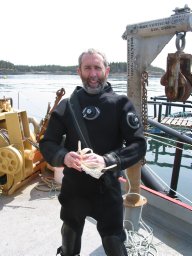 Shawn M.C. Robinson合作论文数Department of Fisheries and Oceans, St. Andrews Biological Station3JIP Iglesias合作论文数2jesus sebastian合作论文数2J Navarro合作论文数2
 Kristina Arranz合作论文数UPV EHU, Univ Pais Vasco Euskal Herriko Unibertsitatea2Sakuma Kay合作论文数2
 Solfrid Saetre Hjollo合作论文数2Eduardo Cabello合作论文数2
 Luis T. Antelo合作论文数2




