We present a scheme that spatially couples two gyrokinetic codes using first-principles. Coupled equations are presented and a necessary and sufficient condition for ensuring accuracy is derived. This new scheme couples both the field and the particle distribution function. The coupling of the distribution function is only performed once every few time-steps, using a five-dimensional (5D) grid to communicate the distribution function between the two codes. This 5D grid interface enables the coupling of different types of codes and models, such as particle and continuum codes, or delta-f and total-f models. Transferring information from the 5D grid to the marker particle weights is achieved using a new resampling technique. Demonstration of the coupling scheme is shown using two XGC gyrokinetic simulations for both the core and edge. We also apply the coupling scheme to two continuum simulations for a one-dimensional advection–diffusion problem.
In simulations of partial differential equations using particle-in-cell (PIC) methods, it is often advantageous to resample the particle distribution function to increase simulation accuracy, reduce compute cost, and/or avoid numerical instabilities. We introduce an algorithm for particle resampling called Moment Preserving Contrained Resampling (MPCR). The general algorithm partitions the system space into smaller subsets and is designed to conserve any number of particle and grid quantities with a high degree of accuracy (i.e. machine accuracy). The resampling scheme can be integrated into any PIC code. The advantages of MPCR, including performance, accuracy, and stability, are presented by examining several numerical tests, including a use-case study in gyrokinetic fusion plasma simulations. The tests demonstrate that while the computational cost of MPCR is negligible compared to the nascent particle evolution in PIC methods, periodic particle resampling yields a significant improvement in the accuracy and stability of the results.
We consider numerical methods for initial value problems that employ a two stage approach consisting of solution on a relatively coarse discretization followed by solution on a relatively fine discretization. Examples include adaptive error control, parallel-in-time solution schemes, and efficient solution of adjoint problems for computing a posteriori error estimates. We describe a general formulation of two stage computations then perform a general a posteriori error analysis based on computable residuals and solution of an adjoint problem. The analysis accommodates various variations in the two stage computation and in formulation of the adjoint problems. We apply the analysis to compute "dual-weighted" a posteriori error estimates, to develop novel algorithms for efficient solution that take into account cancellation of error, and to the Parareal Algorithm. We test the various results using several numerical examples.
 Choongseock Chang合作论文数Princeton Plasma Physics Laboratory2
 Robert Hager合作论文数2
 Donald Estep合作论文数Department of Mathematics;Colorado State University;Department of Mathematics, Colorado State University2
 Don Estep合作论文数1
 Pallavi Trivedi合作论文数Princeton Plasma Phys Lab, Princeton, NJ 08543 USA1
 albert mollen合作论文数Princeton Plasma Phys Lab, POB 451, Princeton, NJ 08543 USA1
 Junyi Cheng合作论文数1
 Ruonan Wang合作论文数Oak Ridge Natl Lab, Oak Ridge, TN 37831 USA1Gabriele Merlo合作论文数Univ Texas Austin1
 Julien Dominski合作论文数Princeton Plasma Phys Lab, POB 451, Princeton, NJ 08543 USA1
 E. Suchyta合作论文数Comp Sci & Math Div, Oak Ridge Natl Lab1S. Ku合作论文数1Lee F. Ricketson合作论文数1
 Amitava Bhattacharjee合作论文数Princeton Plasma Physics Laboratory, Princeton University;Department of Astrophysical Sciences, Princeton University;Princeton Center for Heliophysics, Princeton University1
 Norbert Podhorszki合作论文数Research Institute for Measurement and Computing;Hungarian Academy of Sciences;Research Institute for Measurement and Computing, Hungarian Academy of Sciences1J. Sandelin合作论文数1
 Frank Jenko合作论文数1
 Dave Pugmire合作论文数Computer Science and Mathematics Division, Oak Ridge National Laboratory1
 J. A. F. Hittinger合作论文数Center for Applied Scientific Computing, Lawrence Livermore National Laboratory1
 Kai Germaschewski合作论文数College of Engineering and Physical Sciences, University of New Hampshire;Space Science Center, Institute for the Study of Earth, Oceans, and Space, University of New Hampshire1Jehanzeb Hameed Chaudhry合作论文数1
 Craig Michoski合作论文数Institute for Computational Engineering and Sciences (ICES),, University of Texas1
 Scott Klasky合作论文数Scientific Computing Group within the National Center for Computational Sciences (NCCS)1
 Simon John Tavener合作论文数Department of Mathematics, Colorado State University1
 Jong Youl Choi合作论文数Indiana University1
 Scott Parker合作论文数Department of Physics, College of Arts and Sciences, University of Colorado Boulder;Renewable and Sustainable Energy Institute, University of Colorado Boulder1
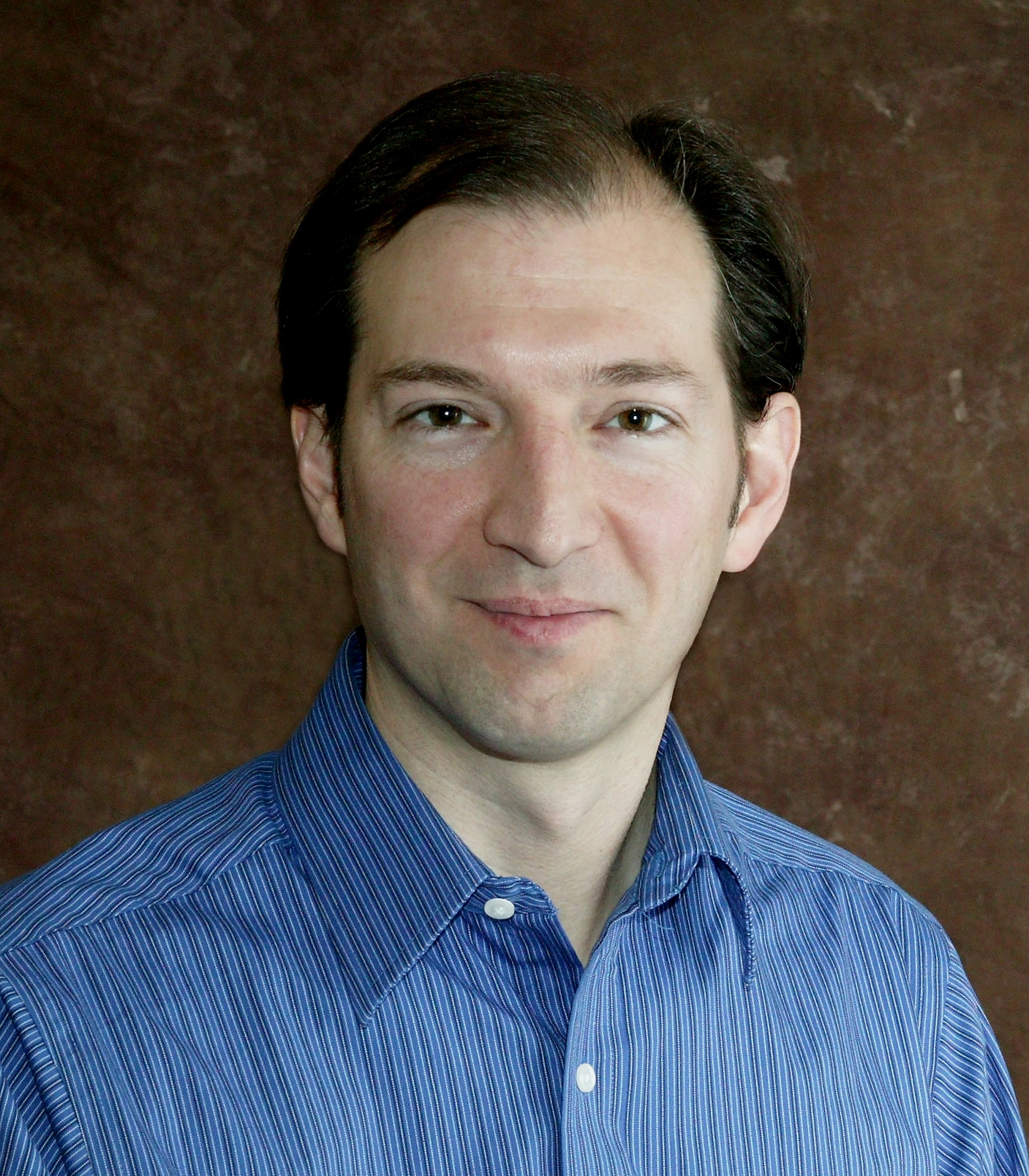 Stephane Ethier合作论文数Princeton Plasma Physics Laboratory1
 Danial Faghihi合作论文数Department of Civil and Environmental Engineering, Louisiana State University1
 Salomon Janhunen合作论文数Euratom-Tekes Association, Aalto University1
 Robert Moser合作论文数Walker Department of Mechanical Engineering, Cockrell School of Engineering, University of Texas at Austin1




