Transglutaminase 2 (TG2 or TGM2) is a multi-functional enzyme which catalyzes transamidation reactions or acts as a G-protein in intracellular signalling. Tgm2-/- Mice lacking TG2 activity are glucose intolerant and show impairment of insulin secretion, suggesting an important physiological role for TG2 in the pancreatic beta cell. We have previously described a TGM2 heterozygous missense mutation ((c.998A>G, p.N333S) in a 14 year-old patient with insulin-treated diabetes and in his diabetic father. The aim of this study was to further investigate the role of TG2 in early-onset type 2 diabetes. We analysed the TGM2 gene in 205 patients with clinically defined Maturity Onset Diabetes of the Young (MODY) or early-onset type 2 diabetes. We found two novel heterozygous mutations (c.989T>G, p.M330R; c.992T>A, p.I331N), which were not detected in 300 normoglycemic controls. All mutations were in residues which are located close to the catalytic site and impaired transamidating activity in vitro. Gene expression of TGM family genes and localization of TG2 in normal human pancreas indicated that TG2 is the only transglutaminase significantly expressed in human pancreatic islet cells. We conclude that reduced TG2 activity can contribute to disorders of glucose metabolism possibly via an impairment of insulin secretion.
CONTEXTCongenital adrenal hyperplasia (CAH) is a group of autosomal recessive disorders most often caused by enzyme 21-hydroxylase deficiency. Most mutations causing enzymatic deficiency are generated by recombinations between the active gene CYP21 and the pseudogene CYP21P. Only 1-2% of affected alleles result from spontaneous mutations. The phenotype of CAH varies greatly, usually classified as classical or nonclassical, depending on variable degree in 21-hydroxylase activity. Here we report a divergent phenotype of two human leukocyte antigen identical siblings, affected by nonclassical and classical CAH caused by 21-hydroxylase deficiency due to different genotype.PATIENTS AND METHODSUsing direct sequencing method and Southern blot, we studied two children (one male and one female), affected, respectively, by nonclassical and classical CAH and their parents.RESULTSThe mother was heterozygous for the Q318X mutation, and the father was heterozygous for the V281L mutation. The brother was a compound heterozygote for the mutations V281L and Q318X, whereas the proband was compound heterozygote for the Q318X mutation and a large conversion. The two children are human leukocyte antigen identical (A*02;B*14;DRB1*01/A*33;B*14;DRB1*03).CONCLUSIONSDifferent phenotype of the proband is the result of compound heterozygosity for the maternal mutation Q318X and a de novo large conversion.
Activation of inflammatory pathways may contribute to the beginning and the progression of both atherosclerosis and type 2 diabetes. Here we report a novel interaction between insulin action and control of inflammation, resulting in glucose intolerance and vascular inflammation and amenable to therapeutic modulation. In insulin receptor heterozygous (Insr(+/-)) mice, we identified the deficiency of tissue inhibitor of metalloproteinase 3 (Timp3, an inhibitor of both TNF-alpha-converting enzyme [TACE] and MMPs) as a common bond between glucose intolerance and vascular inflammation. Among Insr(+/-) mice, those that develop diabetes have reduced Timp3 and increased TACE activity. Unchecked TACE activity causes an increase in levels of soluble TNF-alpha, which subsequently promotes diabetes and vascular inflammation. Double heterozygous Insr(+/-)Timp3(+/-) mice develop mild hyperglycemia and hyperinsulinemia at 3 months and overt glucose intolerance and hyperinsulinemia at 6 months. A therapeutic role for Timp3/TACE modulation is supported by the observation that pharmacological inhibition of TACE led to marked reduction of hyperglycemia and vascular inflammation in Insr(+/-) diabetic mice, as well as by the observation of increased insulin sensitivity in Tace(+/-) mice compared with WT mice. Our results suggest that an interplay between reduced insulin action and unchecked TACE activity promotes diabetes and vascular inflammation.
The occurrence of post-operative pain, although less severe and frequent than in open surgery, may affect length of hospital stay and early return to normal activity in some patients operated on with laparoscopic surgery. Although several pathogenetic factors have been indicated in the literature, the mechanism responsible for post-operative pain after laparoscopy; still remains unclear. In this study the Authors evaluated post-operative pain in 90 patients submitted to laparoscopic cholecystectomy and correlated it to the length of operation, endoabdominal CO2 pressure maintained during surgery, and use of local anesthesia instilled din the liver bed and in the sites of introduction of trocars. Measuring post-operative pain by means of a modified Scott-Huskisson Visual Analogue Scale, no difference in the severity of the pain was noted in the two subgroups of patients with a length of operation inferior or superior to 60 minutes, respectively. Conversely, a statistical significant difference (p = 0.04 and p = 0.049 according to Fisher exact test and Pearson test, respectively) was observed evaluating the use of local anesthesia and the level of CO2 endoabdominal pressure, with less pain in patients whose pressure was maintained under 10 mmHg and in patients treated with instillation of local anesthetic drugs in the liver bed and in the sites of introduction of trocars.
 Ottavia Porzio合作论文数4Massimo Federici合作论文数Department of Systems Medicine, University of Rome Tor Vergata3
 Giorgio Federici合作论文数3M Malaponti合作论文数2O. Massa合作论文数2
 Paola Marchetti合作论文数2T. Hansen合作论文数2Cristina Colombo合作论文数2
 Gerry Melino合作论文数Department of Experimental Medicine, Faculty of Medicine, University of Rome 'Tor Vergata'2
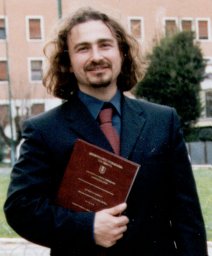 Alessandro Terrinoni合作论文数Biochemistry Laboratory;Vergata University;Biochemistry Laboratory, Vergata University2
 Fabrizio Barbetti合作论文数2Pal R. Njolstad合作论文数1P Murabito合作论文数1
 Marco Andreani合作论文数1M. Serino合作论文数1R. Menghini合作论文数1Sw Sunnarborg合作论文数1
 Alessandro Mauriello合作论文数1g alongi合作论文数1David C Lee合作论文数1
 Rosario Vecchio合作论文数1P. Sbraccia合作论文数1
 S. Rizza合作论文数Gastroenterol & Digest Endoscopy Unit, AOU Citta Salute & Sci1R Lauro合作论文数1
 Marcello Di Martino合作论文数Hepato-Biliary and Liver Transplantation Department, AORN Cardarelli1
 Davide Lauro合作论文数Dept Syst Med, Univ Roma Tor Vergata1
 Emiliano Giardina合作论文数Genomic Medicine Laboratory UlLDM, IRCCS Fondazione Santa Lucia1
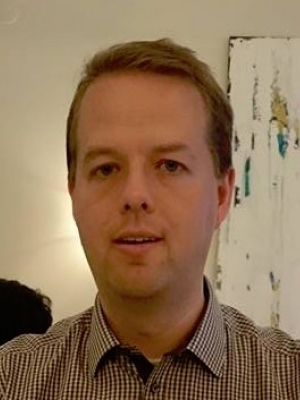 Anders Johansen合作论文数Lund Observatory, Department of Astronomy and Theoretical Physics, Lund University;GLOBE Institute, University of Copenhagen1
 Rama Khokha合作论文数Department of Medical Biophysics, Temerty Faculty of Medicine, University of Toronto;Department of Laboratory Medicine and Pathobiology, University of Toronto;MaRS Centre, University of Toronto1Martine Vaxillaire合作论文数1
 Giorgio Sesti合作论文数Dipartimento Di Medicina Clinica E Molecolare, Università degli Studi Sapienza di Roma1Domenico Accili合作论文数1
 Andrew Hattersley合作论文数Medical School, University of Exeter;Institute of Biomedical & Clinical Science, University of Exeter;Royal Devon and Exeter Hospital;Royal Devon & Exeter NHS Foundation Trust1
 Oluf Borbye Pedersen合作论文数Center for Basic Metabolic Research, University of Copenhagen;Department of Clinical Medicine, Faculty of Health and Medical Sciences, University of Copenhagen;Department of Medicine, Herlev Hospital1
 Michele Menicagli合作论文数1
 Marco Cappa合作论文数Bambino Gesù Children's Hospital1Angela Acquafredda合作论文数1
 Luciano Cavallo合作论文数1
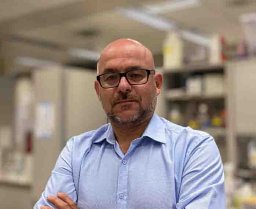 Mourad Ferdaoussi合作论文数1
 Calogero Rinzivillo合作论文数1Franco Meschi合作论文数Clinica Pediatrica, H San Raffaele;Fax: 2-26432626 IT1
 Marta Letizia Hribal合作论文数Scuola di Medicina e Chirurgia, Università Magna Graecia di Catanzaro1Daniela Campani合作论文数1
 Veronica Marchetti合作论文数1Federico Bertuzzi合作论文数1
 Philippe Froguel合作论文数Lille University Hospital;Department of Genomics of Common Disease, School of Public Health, Imperial College London1
 Manuela Testi合作论文数1




