Amyloid fibrils have been associated with human disease for many decades, but it has also become apparent that they play a functional, non-disease-related role in e.g. bacteria and mammals. Moreover, they have been shown to possess interesting mechanical properties that can be harnessed for future man-made applications. Here, the mechanical behaviour of SSTSAA microcrystals has been investigated. The SSTSAA peptide organization in these microcrystals has been related to that in the corresponding amyloid fibrils. Using high-pressure X-ray diffraction experiments, the bulk modulus K, which is the reciprocal of the compressibility β, has been calculated to be 2.48 GPa. This indicates that the fibrils are tightly packed, although the packing of most native globular proteins is even better. It is shown that the value of the bulk modulus is mainly determined by the compression along the c-axis, that relates to the inter-sheet distance in the fibrils. These findings corroborate earlier data obtained by AFM and molecular dynamics simulations that showed that mechanical resistance varies according to the direction of the applied strain, which can be related to packing and hydrogen bond contributions. Pressure experiments provide complementary information to these techniques and help to acquire a full mechanical characterization of biomolecular assemblies. This article is part of the theme issue 'Exploring the length scales, timescales and chemistry of challenging materials (Part 2)'.
The high-pressure behavior of monoclinic VO_2 is revisited by a combination of Raman spectroscopy and X-ray diffraction on a single crystal under hydrostatic conditions at room temperature. A soft mode is observed up to P_c = 13.9(1) GPa. At this pressure, an isostructural phase transition between two monoclinic phases M_1 and M_1' hinders this instability. The features of this transformation (no apparent volume jump) indicate that the compression at ambient temperature passes close to a critical point. An analysis based on the Landau theory of phase transitions gives a complete description of the P-T phase diagram. The M1' is characterized by spontaneous displacements of the oxygen sub-lattice without any strong modification of the VV dimers distances nor the twist angle of vanadium chains. The spontaneous displacements of oxygen and the spontaneous deformations of the (b_M1, c_M1) plane follow the same quadratic dependence with pressure and scales with spontaneous shifts of the Raman phonons located at 225, 260 and 310 cm^-1. Pressure-induced shifts of the Raman peaks allows for new assignment of several Raman modes. In particular, the A_g(1)+B_g(1) modes at 145 cm^-1 are identified as the vanadium displacive phonons. A second transformation in the metallic phase X, which is found triclinic (P1̅) is observed starting at 32 GPa, with a wide coexistence region (up to 42 GPa). Upon decompression, phase X transforms, between 20 GPa and 3 GPa, to another phase that is neither the M_1' nor M_1 phase. The structural transitions identified under pressure match with all the previously reported electronic modifications confirming that lattice and electronic degrees of freedom are closely coupled in this correlated material.
The high-pressure behavior of monoclinic VO2 is revisited by a combination of Raman spectroscopy and x-ray diffraction on a single crystal under hydrostatic conditions at room temperature. A soft mode is observed up to Pc = 13.9(1) GPa. At this pressure, an isostructural phase transition between two monoclinic phases M1 and M1 hinders this instability. The features of this transformation (no apparent volume jump) indicate that the compression at ambient temperature passes close to a critical point. An analysis based on the Landau theory of phase transitions gives a complete description of the P -T phase diagram. The M1 is characterized by spontaneous displacements of the oxygen sublattice without any strong modification of the VV dimers distances nor the twist angle of vanadium chains. The spontaneous displacements of oxygen and the spontaneous deformations of the (bM1, cM1) plane follow the same quadratic dependence with pressure and scales with spontaneous shifts of the Raman phonons located at 225, 260, and 310 cm-1. Pressure-induced shifts of the Raman peaks allow for new assignment of several Raman modes. In particular, the Ag(1) +Bg(1) modes at 145 cm-1 are identified as the vanadium displacive phonons. A second transformation in the metallic phase X, which is found triclinic (P1 over bar ) is observed starting at 32 GPa, with a wide coexistence region (up to 42 GPa). Upon decompression, phase X transforms, between 20 and 3 GPa, to another phase that is neither the M1 norM1 phase. The structural transitions identified under pressure match with all the previously reported electronic modifications confirming that lattice and electronic degrees of freedom are closely coupled in this correlated material.
Deep levels studies on a set of n-GaN films grown by MOCVD and HVPE reveal the presence of electron traps with levels near Ec−0.25 eV, Ec−0.55 eV, Ec−0.8 eV, Ec−1 eV, hole traps with levels near Ev+0.9 eV and a band of relatively shallow states in the lower half of the bandgap. The total density of these latter states was estimated to be some 1016 cm−3 and they were tentatively associated with dislocations in GaN based on their high concentration and band-like character. None of the electron or hole traps could be unambiguously related with strong changes of diffusion lengths of minority carriers in various samples. It is proposed that such changes occur due to different surface recombination velocities. An important role of Ec−0.55 eV traps in persistent photoconductivity phenomena in n-GaN has been demonstrated.
Single-walled carbon nanotubes (SWCNTs) can be sorted by their structural parameters using organic molecules and polymers: some of which, demonstrating a profound affinity only for specific nanotubes, form dense coatings on them. Here, analyzing well-known examples of flavin group molecules and those of 2,4-dichlorophenoxyacetic acid, we show for the first time that successful formation of the considered coatings depends on the ability of molecules to wrap around the SWCNT in a commensurate way. Commensurability provides a decrease in the free energy of the resulting bilayer system and makes the coating much more stable. Concurrently, it strongly relates the nanotube chiral vector with the geometric characteristics of the adhering molecules, which leads to revealed selection rules. If they are not satisfied, the deposition of molecules does not occur or is insignificant. The proposed theory unambiguously explains known experimental results on the formation of spiral wrappings of SWCNTs by flavin group molecules and points out other organic molecules and polymers suitable for effective CNT sorting.
The negative thermal expansion material potassium cadmium dicyanoargentate, KCd[Ag(CN)2]3, is studied at high pressure using a combination of X-ray single-crystal diffraction, X-ray powder diffraction, infrared and Raman spectroscopy, and density functional theory calculations. In common with the isostructural manganese analogue, KMn[Ag(CN)2]3, this material is shown to exhibit very strong negative linear compressibility (NLC) in the crystallographic c direction due to structure hinging. We find increased structural flexibility results in enhanced NLC and NTE properties, but this also leads to two pressure-induced phase transitions-to very large unit cells involving octahedral tilting and shearing of the structure-below 2 GPa. The presence of potassium cations has an important effect on the mechanical and thermodynamic properties of this family, while the chemical versatility demonstrated here is of considerable interest to tune unusual mechanical properties for application.
A Minelli, S Souliou, A Romero, V Dmitriev, A Bosak University of Oxford, Inorganic Chemistry Laboratory, Oxford, UK, Institut for solid state physics, Karlsruhe institute of technology, Germany, Department of Physics and Astronomy, West Virginia University, WV, European Synchrotron Radiation Facility (ESRF), Grenoble, France, European Synchrotron Radiation Facikity (ESRF), Grenoble, France Arianna.minelli@chem.ox.ac.uk
The high pressure lattice dynamics of rhombohedral antimony have been studied by a combination of diffuse scattering and inelastic x-ray scattering. The evolution of the phonon behavior as a function of pressure was analyzed by means of two theoretical approaches: density functional perturbation theory and symmetry-based phenomenological phase transition analysis. This paper focuses on the first structural phase transition, SbI-SbIV, and the role of vibrations in leading the transition. The phonon dispersion exhibits complex behavior as one approaches the structural transition, with the branches, corresponding to the two transitions happening at high pressure in the Va elements (A7-to-BCC and A7-to-PC) both showing softening.
Heteroatom-doped carbon materials (HDCM) are perspective Pt-free alternatives for applications in fuel cells. The Fe,Co,Zn-N/C catalysts were obtained by pyrolysis (at 700 degrees C in Ar) of sacrificial bimetallic zeolitic imidazolate frameworks (Co,Zn-ZIF), prepared with different Co/Zn ratio by a microwave-assisted solvothermal synthesis (at 140 degrees C in DMF for 2 h). Co,Zn-ZIF hybrids were impregnated with a Fe-II-phenanthroline complex before the pyrolysis. The structural properties of prepared materials were assessed primarily by X-ray diffraction (XRD) and transmission electron microscopy (TEM), while X-ray fluorescence (XRF) and the scanning transmission electron microscopy with energy-dispersive X-ray spectroscopy (STEM-EDS) mapping and were used for the elemental content analysis. Because in the obtained HDCM both Fe and Co participate in formation of the bamboo-like structures, synchrotron-based X-ray absorption spectroscopy (XAS) studies were performed at their K-edges. The results of in situ XAS measurements during carbonization of Fe,Co,Zn-ZIF upon heating (up to 500 degrees C in Ar) as well as operando XAS measurements during the electrochemical cycling of HDCM are reported. The registered changes in the oxidative state of Fe and Co (XANES) and in their coordinative environment (EXAFS) were analyzed. The study is complemented by the electrochemical tests of the synthesized HDCM (in 0.1 M HClO4 solution) towards the oxygen reduction reaction, demonstrating their high efficiency and stability in acidic medium. (C) 2019 Hydrogen Energy Publications LLC. Published by Elsevier Ltd. All rights reserved.
The availability of experimental methods that probe a material's structure, complex and dynamic, at different length and time scales is key to obtain fundamental insight in technologically relevant materials.Progress relies on the development of innovative materials utilizing an in-depth understanding of the interplay between a material's structure and its macroscopic properties.BM31 of the Swiss Norwegian Beam Lines, offers the possibility to combine X-ray absorption spectroscopy (XAS) and X-ray powder diffraction (XRD) in an alternating fashion in the same experimental setup.SNBL aims at extending these capabilities, by upgrading the current setup with a new CdTe area detector and focusing options.This will allow to i) implement pair distribution function analysis (PDF) of total scattering data, enabling combined XRD-PDF-XAS experiments and ii) enhance appreciably both the temporal (~1 s for XAS, ~100 ms for XRD-PDF) and spatial resolution (~100 × 100 μm
Self-assembly of chromophores nanoconfined in porous materials such as zeolite L has led to technologically relevant host-guest systems exploited in solar energy harvesting, photonics, nanodiagnostics and information technology. The response of these hybrid materials to compression, which would be crucial to enhance their application range, has never been explored to date. By a joint high-pressure in situ synchrotron X-ray powder diffraction and ab initio molecular dynamics approach, herein we unravel the high-pressure behaviour of hybrid composites of zeolite L with fluorenone dye. High-pressure experiments were performed up to 6 GPa using non-penetrating pressure transmitting media to study the effect of dye loading on the structural properties of the materials under compression. Computational modelling provided molecular-level insight on the response to compression of the confined dye assemblies, evidencing a pressure-induced strengthening of the interaction between the fluorenone carbonyl group and zeolite L potassium cations. Our results reveal an impressive stability of the fluorenone-zeolite L composites at GPa pressures. The remarkable resilience of the supramolecular organization of dye molecules hyperconfined in zeolite L channels may open the way to the realization of optical devices able to maintain their functionality under extreme conditions.
The review deals with studies carried out at the BM01 diffraction beam line of the European Synchrotron Radiation Facility. X-ray diffraction analysis of single-crystal proton conductors demonstrates the possibilities of a precise diffraction experiment in which phase transitions associated with the release of crystallization water and transformation of the network of hydrogen contacts are investigated. Scanning of reciprocal space with the help of a 2D detector enables us to determine the new phase symmetry in a thin-film multiferroic sample based on bismuth ferrite (the given phase is stable only under thin-film conditions). A combination of Bragg and diffusion scattering processes is employed to investigate the interdependence between the structure and dynamics of a crystal lattice and the physical properties of a relaxor material with a perovskite-like structure. The complementarity and synergy of neutron and synchrotron experiments are demonstrated using the combined study of materials from the manganese-silicide group, which has revealed a nontrivial relationship between magnetic and crystallographic chiralities in noncollinear magnets. Although the given review is limited to only a few experiments carried out by Russian scientists at the BM01 beam line, they still illustrate a variety of problems that can be solved using a modern diffraction station where the bending magnet of a third-generation synchrotron is employed as the synchrotron radiation source.
A heteroatom-doped carbon-based electrocatalyst for the oxygen reduction reaction (ORR) was prepared from a hybrid zeolitic imidazolate framework (ZIF) using a step-by-step approach. A bimetallic Co,Zn-ZIF was synthesized by a microwave-assisted method and then enriched with Fe and N. The resulting ZIF was pyrolysed at 700 degrees C in an inert atmosphere, producing a complex morphology including an amorphous carbon matrix, cobalt nanoparticles and bamboo-like nanotubes. A range of techniques were used to characterize the initial ZIF and the resulting catalyst. The catalytic activity and stability of the carbon-based electrocatalyst towards the ORR were investigated by cyclic voltammetry and chronoamperometry using a rotating disc electrode (RDE) in an acidic medium. The highest electrocatalytic activity for the ORR was reached when an equal weight of commercial carbon black (Vulcan XC-72) was added to the composite. Analysis of Koutecky-Levich plots showed that the reaction followed a four-electron transfer mechanism. A durability test over 1000 cycles showed no signs of decreasing catalytic activity. This catalyst appears to be a promising material for application in fuel cells.
The host-guest structures of elements at high pressure discovered a decade ago still leave many open questions due to the lack of precise models based on full exploitation of the diffraction data. This concerns in particular Ba IV, which is stable in the range 12-45 GPa. With the example of phase Ba IVb, which is characterized here for the first time, a systematic analysis is presented of possible host-guest structure models based on high-quality single-crystal diffraction data obtained with synchrotron radiation at six different pressures between 16.5 and 19.6 GPa. It is shown that a new incommensurately modulated (IM) structure model better fits the experimental data. Unlike the composite models which are commonly reported for the Ba IV phases, the IM model reveals a density wave and its pressure-dependent evolution. The crucial role played by the selected model in the interpretation of structure evolution under pressure is discussed. The findings give a new experimental basis for a better understanding of the nature of host-guest structures.
The VF3-type compound GaF3has been studied by high-pressure angle-dispersive X-ray diffraction in the pressure range from 0.0001 to 10 GPa. The compression mechanism was found to be highly anisotropic. Thec-axis shows little pressure dependence (≈0.4%), but exhibits negative linear compressibility up to ≈3 GPa where it achieves its maximum length. In contrast, the length of thea-axis is reduced by ≈8.8% at the highest measured pressure and an anomalous reduction in the linear compressibility is observed at 4 GPa. The zero pressure bulk modulusB0was determined toB0= 28(1) GPa. The compression mechanism of GaF3is discussed in terms of deformation of an 8/3/c2 sphere-packing model. The volume reduction of GaF3is mainly achieved through coupled rotations of the GaF6octahedra within the entire measured pressure range, which reduces the volume of the cubooctahedral voids. In addition, the volume of the GaF6octahedra also decreases forp≲ 4.0 GPa, but remains constant above this pressure. The volume reduction of the GaF6octahedra is accompanied by an increasing octahedral strain. Isosurfaces of the procrystal electron density are used for visualization of the cubooctahedral voids at different pressures.
A complex study of the structure of β-boron single crystal grown by the floating-zone method, with sizes significantly exceeding the analogs known in the literature, has been performed. The study includes X-ray diffraction analysis and X-ray diffractometry (measurement of pole figures and rocking curves), performed on both laboratory and synchrotron sources; atomic-resolution scanning transmission electron microscopy with spherical aberration correction; and energy-dispersive microanalysis. X-ray diffraction analysis using synchrotron radiation has been used to refine the β-boron structure and find impurity Si atoms. The relative variations in the unit-cell parameters a and c for the crystal bulk are found to be δa/a ≈ 0.4 and δc/c ≈ 0.1%. X-ray diffractometry has revealed that the single-crystal growth axis coincides with the [\(2\bar 2013\)] crystallographic axis and makes an angle of 21.12° with the [0001] threefold axis. Electron microscopy data have confirmed that the sample under study is a β-boron crystal, which may contain 0.3–0.4 at % Si as an impurity. Planar defects (stacking faults and dislocations) are found. The results of additional measurements of the temperature dependence of the thermal conductivity of the crystal in the range of 50–300 K are indicative of its high structural quality.
Single crystal synchrotron X-ray diffraction as a function of temperature and pressure has revealed a complex biphase mixture in superconducting FeSe. Based on our experimental results we construct a phase diagram where structural behavior and superconducting properties of FeSe are found to be correlated. We show that below 6 GPa, where pressure promotes the superconducting critical temperature, the FeSe structure is composed of 2D layers of edge-shared FeSe4 tetrahedra, while above 6 GPa the superconductivity is strongly suppressed on formation of a new orthorhombic polymorph characterized by a 3D network of face sharing FeSe6 octahedra. Therefore changes in topology and connectivity of the FeSe structure are found to be detrimental for superconductivity to exist. This previously controversial crystal structure of the high pressure polymorph of FeSe was also unambiguously determined. High pressure FeSe adopts an orthorhombic MnP-type structure (Pnma) which corresponds to a slightly distorted hexagonal NiAs-type arrangement (P63/mmc). The structural transformation from the low- to high-pressure FeSe polymorph is first order in nature and is manifested as antiparallel displacements within the Fe and Se sublattices.
 Dmitry Chernyshov合作论文数61
 Yaroslav Filinchuk合作论文数Institute of Condensed Matter and Nanosciences, University Catholique de Louvain40
 Leonid Dubrovinsky合作论文数Bavarian Research Institute of Experimental Geochemistry and Geophysics, University of Bayreuth;Laboratory of Crystallography, Department of Physics, University of Bayreuth;Faculty of Biology, Chemistry and Earth Sciences, University of Bayreuth35Pierre Tolédano合作论文数34Hans-Peter Weber合作论文数ACCE24LM RABKIN合作论文数14
 Alexandr Talyzin合作论文数Department of Physics, Umeå University14
 Natalia Dubrovinskaia合作论文数Bayerisches Geoinstitut, Universität Bayreuth14Giovanna Vezzalini合作论文数13Sergey B Rochal合作论文数12
 Denis Machon合作论文数Laboratoire PMCN, Université Lyon 112
 Simona Quartieri合作论文数12
 Dyadkin Vadim合作论文数Swiss-Norwegian Beamlines at the European Synchrotron Radiation Facility11Hansrudolf Hagemann合作论文数Department of Physical Chemistry, School of Chemistry and Biochemistry, Faculté des Sciences, University of Geneva10
 Yu. I. Yuzyuk合作论文数10
 Pierre Bouvier合作论文数10LA SHUVALOV合作论文数9Ym Gufan合作论文数9
 Aram Bugaev合作论文数9
 Torben René Jensen合作论文数Department of Chemistry, Aarhus University;Interdisciplinary Nanoscience Center, Aarhus University9Sb Roshal合作论文数8
 Ekaterina Pomjakushina合作论文数Paul Scherrer Institute8Alexander S. Usikov合作论文数8
 S.v. Grigoriev合作论文数8
 Alexander V. Soldatov合作论文数7VV LOSHKAREV合作论文数7
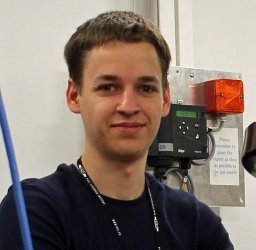 Lomachenko Kirill A合作论文数Department of Chemistry and NIS Centre of Excellence, University of Turin7
 Andrzej Grzechnik合作论文数Institute of Crystallography, RWTH Aachen University7
 Rossella Arletti合作论文数7
 Vladimir L Lorman合作论文数7
 Alexei Bosak合作论文数European Synchrotron Radiation Facility7
 Bertil Sundqvist合作论文数Department of Physics, Umea University7
 Julien Haines合作论文数Institut Charles Gerhardt Montpellier7
 Vitali Prakapenka合作论文数University of Chicago7Na Dubrovinskaia合作论文数6A. Kuznetsov合作论文数6
 Bo Richter合作论文数6
 Kazimierz Conder合作论文数Solid State Chemistry Group, Paul Scherrer Institute6D. Menzel合作论文数6
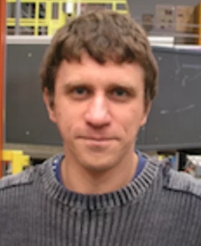 Vladimir Pomjakushin合作论文数Laboratory for Neutron Scattering and Imaging, Center for Neutron and Muon Sciences, Paul Scherrer Institute6
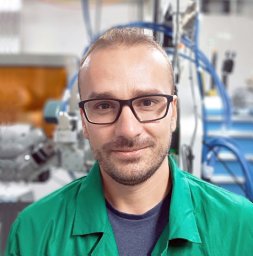 Volodymyr Svitlyk合作论文数Department of Chemistry and Chemical Biology, McMaster University6
 Evgeny Moskvin合作论文数6
 Innokenty Kantor合作论文数Department of Physics, Technical University of Denmark6T. Le Bihan合作论文数6J-Y Gesland合作论文数5
 Raul Quesada Cabrera合作论文数Chemistry Department, Faculty of Mathematical & Physical Sciences, University College London5
 Andriy Nevidomskyy合作论文数Department of Physics and Astronomy, Rice University5
 Guillaume Maurin合作论文数Institut Charles Gerhardt Montpellier, Universite de Montpellier;Institut Universitaire de France5
 Christian Serre合作论文数Département de Chimie, École Normale Supérieure;Institut des Matériaux Poreux de Paris, Centre National de la Recherche Scientifique;École Supérieure de Physique et de Chimie Industrielles5




