The administrative demands for efficient management of rehabilitation are intended to be met by the new concept of "Rehabilitationsabklarung". It is applied mainly in difficult cases, but comparable basic elements can be found in these, as seen from typical problem cases of rehabilitation handled in practice by employers' insurance liability associations. After determination of the need constellations for specific Rehabilitationsabklarung the particular criteria of efficiency for this new "tool" in the work of such associations can be presented against the backdrop of the administrative management so far. Overall, this shows that the newly designed method of Rehabilitationsabklarung with its specific orientation to the workplace corresponds to the current legal and socio-political demands for holistic rehabilitation, the main object being reintegration of the individual insured person into working life. It should be used consistently. Its success depends heavily on continuous monitoring of the validity of the results obtained on evaluation. The specialised Rehabilitationsabklarung centre model offers a good potential for its successful establishment in procedures for dealing with cases involving accidents and with rehabilitation cases. Its long-term success would not only be a lasting aid to accident insurance companies in fulfilment of their work, but would also be a support to employers' insurance liability insurance associations.
La production des oléfines légères : éthylène, propylène et butadiène est actuellement entièrement basée sur le vapocraquage d'hydrocarbures dans des fours tubulaires. L'industrie doit faire face à un problème de coûts de production croissants, en grande partie dû au renchérissement des hydrocarbures et de l'énergie. D'autres procédés que le vapocraquage ont été proposés pour favoriser la diversification sur le plan des matières premières ; certains ont même été exploités industriellement. Le présent article fait le point sur l'état des développements en cours concernant plus particulièrement les procédés suivants : - craquage autothermique ; - craquage par caloporteur solide ; - craquage cyclique ; - craquage catalytique ; - prétraitement de charges lourdes ; - oléfines à partir de gaz de synthèse ; - oléfines à partir de biomasse. The production of light olefins (ethylene, propylene and butadien) is now based entirely on hydrocarbon steam cracking in pipe stills. The industry must face the problem of increasing production costs, largely due to the higher costs of hydrocarbons and energy. Processes other than steam cracking have been proposed to promote diversification with regard to raw materials, and some such processes have even operated industrially. This article sums up the state of ongoing developments concerning in particular the following processes: a) autothermal cracking; b) cracking by a solid heat carrier; c) cyclic cracking; d) catalytic cracking ; e) preprocessing of heavy feeds; f) olefins from synthetic gas; g) olefins from biomass.
Preparing BaMnAlF7 we obtained single crystals of Ba3Al2F12 as a by-product (a = 1020.3(2), b = 988.5(1), c = 952.2(1) pm, space group Pnnm, Z = 4). The redetermination confirmed the structure already known, but improved the results (R-1' = 0.028 and wR(2) = 0.06 for 1908 and 2717 reflections, resp.). An interpretation is given for the relation of distances within the tetrameric anion [Al4F20](8-) (average Al-F: 180,1 pm). The construction of the cationic frame [Ba3F2](4+) is discussed.
AbstractFor Abstract see ChemInform Abstract in Full Text.
AbstractBei der Darstellung von BaMnAlF7 erhielten wir als Nebenprodukt Einkristalle von Ba3Al2F12 (a = 1020, 3(2), b = 988, 5(1), c = 952, 2(1) pm, Raumgruppe Pnnm, Z = 4). Die erneute Verfeinerung bestätigte die schon bekannte Struktur, lieferte aber verbesserte Ergebnisse (R1′ = 0, 028 bzw. wR2 = 0, 06 für 1908 bzw. 2717 Reflexe), die hinsichtlich der Abstandsverhältnisse im tetrameren Anion [Al4F20]8— (Mittelwert Al—F: 180, 1 pm) gedeutet werden. Der Aufbau des kationischen Gerüsts [Ba3F2]4+ wird diskutiert.
AbstractFor Abstract see ChemInform Abstract in Full Text.
Studies to grow single crystals Of Cs2ZnCu3F10 (a = 715.9, b = 737.7, c = 943.6 pm, beta = 97.25degrees from powder data), deriving from CsCu2F5 by substitution, yielded as a by product crystals (of possibly zinc containing) Cs7Cu6F19 (a = 1559.3(3), b = 622.9(1), c = 1176.0(2) pm, beta = 99.05(3)degrees), at which a complete X-ray crystal structure determination was performed. Though most and all of the stronger reflections permitted refinement in space group C2/m of the Ba7Ir6O19 type, consideration of the weaker reflections confirmed the space group of the Cs7Cu6F19 type already known, but redetermined in P2(1)/a setting. With respect to the description in C2/m an average atom displacement of 6 pm resulted, only about a third of the amount of 16 pin for the structure documented in the literature. The Jahn-Teller distortion, possibly softened by partial Zn substitution, and the structural features are discussed.
Bereits deswegen kommt dem ersuchten Gutachter eine besondere Verantwortung hinsichtlich des Gutachtenauftrags zu: im Interesse einer sachgerechten Begutachtung und korrekten Feststellung der “medizinischen Wahrheit”– zur Aufklärung eines klärungsbedürften Sachverhalts für eine richtige Verwaltungsentscheidung – besteht insoweit eine “partnerschaftliche Qualitätsgemeinschaft”. Daneben ist der Gutachtenauftrag vom Arzt auch speziell im Rahmen der eigenen (alleinverantwortlichen) ordnungsgemäßen Begutachtungsarbeit zu prüfen. Mit den Empfehlungen soll für diese Bemühungen eine praktische Hilfe angeboten werden, und zwar vor allem für den (noch) weniger gutachterlich erfahrenen ärztlichen Mitarbeiter.
Single crystals of six compounds (Ba2CaMM2F14)-M-II-F-III were prepared to refine their usovite type structure (space group C2/c, Z = 4) using X-ray diffractometer data. The cell parameters of the phases studied with (MM2III)-M-II = MnV2, FeV2, CuMn2, MnFe2, CuFe2 und CuGa2 are within the range 1374 less than or equal to a/pm less than or equal to 1384, 534 less than or equal to b/pm less than or equal to 5542, 1474 less than or equal to c/pm less than or equal to 1510, 91.3 less than or equal to beta/degrees less than or equal to 93,2. The atoms Ca and M-II are incompletely ordered on the 8- and 6-coordinated positions, 4e and 4b, respectively. In the case of Ba2CaFeV2F]4 and Ba2CaCuGa2F14 there is reciprocal substitution (x 0,1): (Ca1-xMxII) (4e) and ((M1-xCax)-Ca-II) (4b). In the case of the other usovites Ca-enriched phases Ba2Ca((M1-yCay)-Ca-II)(M2F14)-F-III occured (up to y approximate to 0.35), exhibiting partial substitution at the octahedral position (4b) only, showing a corresponding increase in M-II-F distances. The distortion of [(MF6)-F-II] and [(MF6)-F-III] octahedra within the structure is considerably enhanced on replacement by Cull and Muni. The results of powder magnetic susceptibility measurements of Ba2CaMnV2F14 and Ba2CaFeV2F14 (T-N approximate to 7K) are reported.
X-ray structure determinations of single crystals showed that compounds Cs2MCu3F10 crystallize with Z = 2 in space group P2(1)/n (No. 14) (M = Mn) of the CsCu2F5 type resp, in its super-group 12/m (No.12) (M = Mg, Co, Ni). Cs2MgCu3F10: a = 714.9(1), b = 736.8(1), c = 940.4(1)pm, b = 96.29(1)degrees, (Mg-F: 199.2 pm), Cs2MnCu3F10: a = 725.1(1), b = 742,7(1), c = 951.0(2) pm, b = 97.28(3)degrees, (Mn-F: 209.1 pm); Cs2CoCu3F10: a = 717.8(3), b = 739.1(2), c = 939.4(4) pm, b = 97.49(2)degrees, (Co-F: 203.1 pm); Cs2NiCu3F10: a = 716.3(1), b = 737.7(1), c = 938.2(2) pm, b = 97.09(1)degrees, (Ni-F: 201.0 pm). As determined directly for the Mg compound and generally concluded from the average distances M-F noted, M substitution concerns mainly the octahedrally coordinated position of the CsCu2F5 structure, the distortion of which is very much reduced thereby. Within the remaining [CuF4] and [CuF5] coordinations, in contrast to CsCu2F5, one F ligand is disordered, in case of the Mn compound the pyramidally coordinated Cu atom, too. The magnetic properties are complex and point to frustration and spin glass effects. Only at the diamagnetically substituted variants with M = Mg, Zn no Neel point appears, which is reached at 27, 23, 36 and 55 K for M = Mn, Co, Ni and Cu, resp.. At lower temperatures ferri- resp. weak ferromagnetism and hysteresis is observed.
AbstractChemInform is a weekly Abstracting Service, delivering concise information at a glance that was extracted from about 100 leading journals. To access a ChemInform Abstract of an article which was published elsewhere, please select a “Full Text” option. The original article is trackable via the “References” option.
AbstractChemInform is a weekly Abstracting Service, delivering concise information at a glance that was extracted from about 100 leading journals. To access a ChemInform Abstract of an article which was published elsewhere, please select a “Full Text” option. The original article is trackable via the “References” option.
A study on the mechanism of the well-documented hypervalent iodine-mediated allylic oxidation of glycals leading to 2,3-dihydro-4H-pyran-4-ones is presented. Notable features are the isolation of ring-contracted by-products 6 and 7, which are produced upon oxidation of per-O-benzylated glycal 4, as well as the characterization of carbohydrate-derived tetrahydrofurfurals 12a and 13a, which are formed by the conformation-dependent oxidation of glycals 9a and 10b. In addition, the iodine(III)-mediated oxidation process has been studied by in situ NMR spectroscopy of lyre-configured glycals 14a,b. Intermediate alkylphenyliodonium species 19b,d and 2-enopyranosides 16a and 20a have been characterized by their NMR signals. These data support a plausible mechanism that is initiated by electrophilic attack of the iodine(III) reagent on the electron-rich enol ether double bond of the glycal. This is followed by the breaking of a bond beta,gamma-positioned in relation to the carbohydrate-bound iodine and subsequent reductive elimination of iodobenzene. Thus, depending on the glycals employed, a number of diverse oxidation products may be formed.
AbstractChemInform is a weekly Abstracting Service, delivering concise information at a glance that was extracted from about 100 leading journals. To access a ChemInform Abstract of an article which was published elsewhere, please select a “Full Text” option. The original article is trackable via the “References” option.
AbstractChemInform is a weekly Abstracting Service, delivering concise information at a glance that was extracted from about 100 leading journals. To access a ChemInform Abstract of an article which was published elsewhere, please select a “Full Text” option. The original article is trackable via the “References” option.
Single crystals of the triclinic compound NO2(NO)(3)[Zr(NO3)(5)](4) (a = 1376.3(6), b = 1376.9(11), c = 1632.0(7) pm, alpha = 114.63 degrees(5), beta = 114.90 degrees(4), gamma = 90.34 degrees(5); P1, Z = 2) have been investigated by x-ray diffraction and Raman spectroscopy. The crystals were prepared by reaction of N2O5 with ZrCl4. The product was sublimed and crystallised in nitroethane.
 Dietrich Babel合作论文数8frank menzel合作论文数3Jacques Darriet合作论文数3S. Ebinal合作论文数3A LELIRZIN合作论文数3D. Babel合作论文数2M. Picciotti合作论文数2
 Tressaud Alain合作论文数Centre National De La Recherche Scientifique;Institut de Chimie de la Matière Condensée de Bordeaux2Eberhard Stumpp合作论文数2Patrik Dahlke合作论文数2A. GARMING合作论文数1J. HARDERS合作论文数1Jl Soubeyroux合作论文数1j pebler合作论文数1P. Zugenmaier合作论文数1Lars Rose合作论文数1Alexander Jung合作论文数1
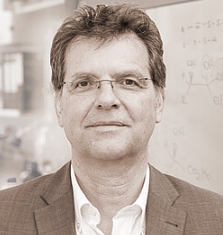 Andreas Kirschning合作论文数Institute of Organic Chemistry, Faculty of Natural Sciences, Leibniz Universitat Hannover1Irene T. Weber合作论文数1Monika Ries合作论文数1Peter Scharff合作论文数1C. Tanke合作论文数1C. Rehwinkel合作论文数1
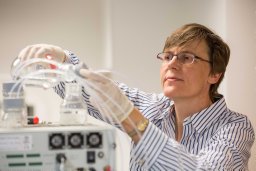 Birgit Schilling合作论文数Buck Institute for Age Research1H. Kull合作论文数1G. Bir合作论文数1Holger Monenschein合作论文数1R. Gerken合作论文数1
 Dieter Eckhard Kaufmann合作论文数Institute of Organic Chemistry, Clausthal University of Technology1W. Thyen合作论文数1




